Categories
NFL (American Football)

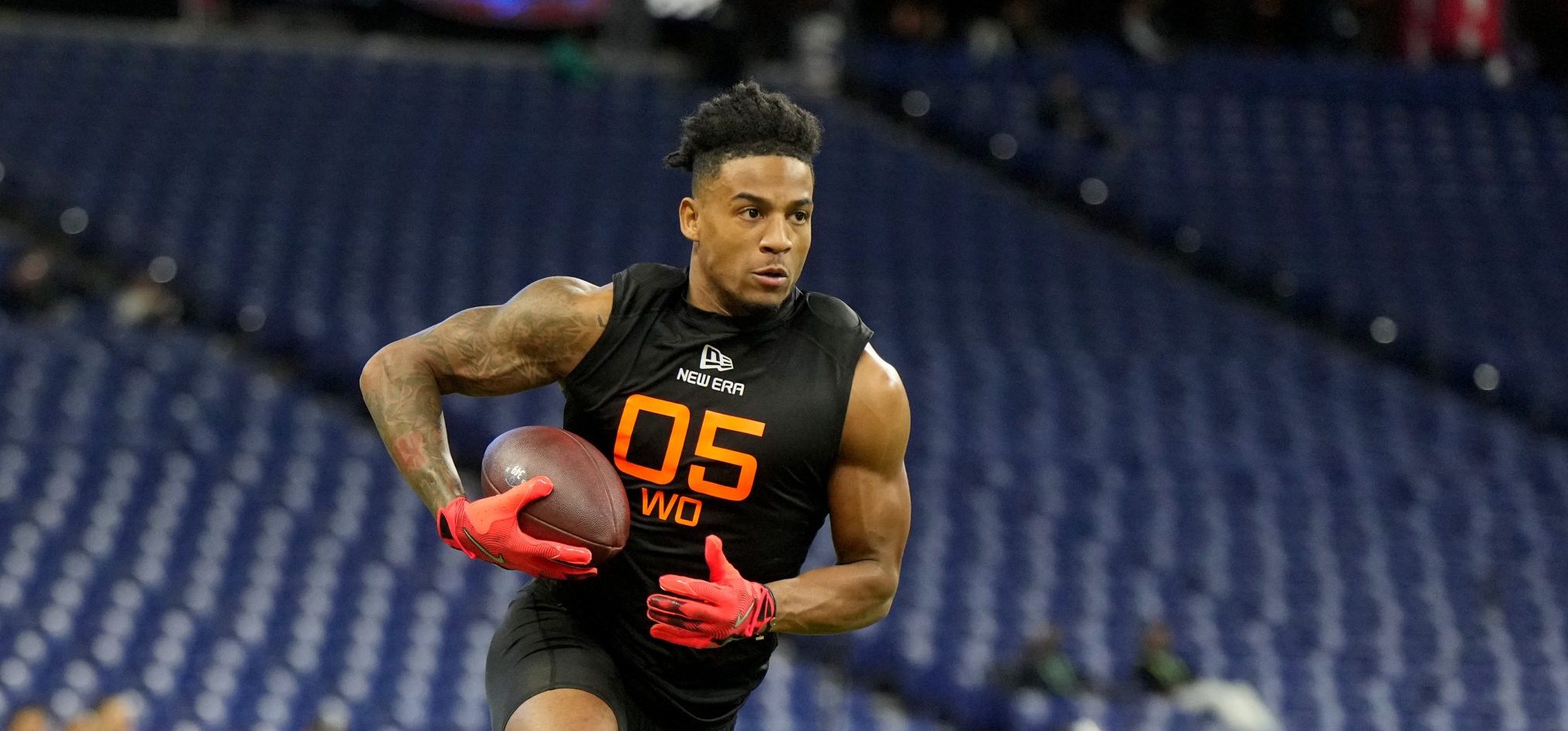
NFL Draft Top Prospect Isaiah Bond turned himself into police just days before the Draft

Isaiah Bond, a wide receiver prospect in the upcoming 2025 NFL Draft, turned himself in to Frisco, Texas, police on Thursday, April 10, 2025, in response to an outstanding warrant for sexual assault. Bond, 21, was released after posting a $25,000 bond.

In a statement posted to Instagram, Bond asserted his innocence and emphasized his cooperation with authorities:

“Regarding the accusation made against me, I would appreciate the time and opportunity to defend myself and prove the claims made, patently false. I am in full cooperation with the authorities and will remain a willing and active participant in the investigation. Unfortunately, claims like these prove … judgment until the authorities provide a complete … .”

Bond, who played his first two collegiate seasons at Alabama before transferring to Texas for the 2024 season, recorded 34 receptions for 540 yards and five … with the Longhorns. He also added 98 rushing yards and a … the ground.

Known for his speed, Bond ran a 4.39 … and posted times of 4.34 and 4.35 seconds at Texas’ Pro Day. He has had pre-draft visits with several NFL teams, including the Browns, Packers, Chiefs, Bills, Falcons, and Titans.

Despite the legal issues, Bond remains a projected Day 2 pick in the draft, with ESPN ranking him as the tenth-best receiver in the class. The 2025 NFL Draft is scheduled to take place in Green Bay from April 24 to 26.

Categories
Wrestling

Penn St. triumphs once more; Hendrickson shocks Steveson

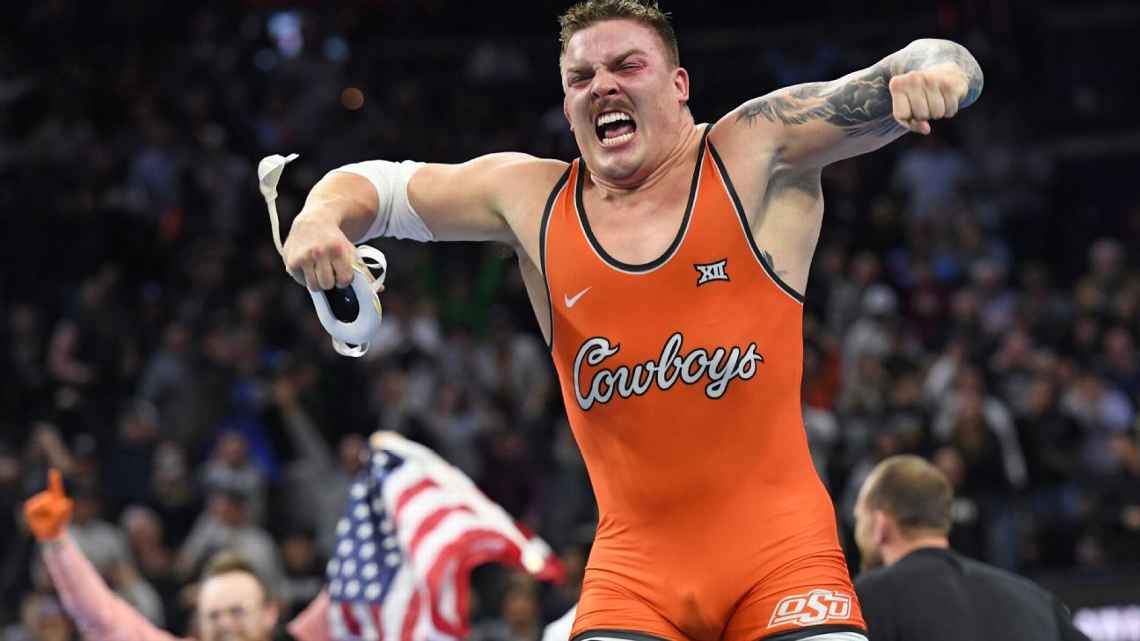
Oklahoma State’s Wyatt Hendrickson shocked Olympic gold medalist Gable Steveson with a 5-4 victory in the heavyweight final at the NCAA men’s wrestling championships on Saturday night, with President Donald Trump present.

Hendrickson, who transferred from Air Force, was behind in the final match until he scored a takedown in the last minute, marking the only takedown Steveson allowed all season.

After his win, Hendrickson saluted Trump, draped a U.S. flag over his shoulders, and went over to shake Trump’s hand and hug him in celebration. Trump had attended the event previously in 2023, when he was a presidential candidate and the tournament was held in Tulsa, Oklahoma.

“It’s bigger than worlds, Olympics, anything,” an emotional Hendrickson said right after the victory.

He became the first Oklahoma State wrestler to win an NCAA heavyweight title since Steve Mocco in 2005.

Minnesota’s Steveson, who was aiming for his third national title, had a 70-match winning streak. The 2021 and 2022 national champion retired after the 2022 event. He tried professional wrestling with WWE, mostly with the NXT developmental brand. After being released, he tried out for the Buffalo Bills last year, despite never playing organized football. He didn’t make the roster and later returned to Minnesota for this season.

Steveson started the third period with a 3-2 lead, but Hendrickson scored a takedown with about 20 seconds left. The crowd erupted as the clock ran out.

The two had met once before, with Steveson winning by technical fall in the second round of the 2021 NCAA tournament.

Penn State earned its third four-peat, dominating the competition to claim its 12th national title in men’s Division I wrestling under coach Cael Sanderson. Only Iowa’s Dan Gable has more titles, with 15.

Carter Starocci won his unprecedented fifth national title, defeating Northern Iowa’s Parker Keckeisen 4-3 in the 184-pound final. Keckeisen was the defending champion in the weight class.

Starocci, whose previous four titles were at 174 pounds, stayed humble about his achievement.

“It means a lot to me, but as for me — I never want to downplay the moment — but I mean, it’s always cool, but one thing that Coach Cael really instills in us, this is all just preparation for the next thing.”

Penn State’s Carter Starocci won four NCAA titles at 174 pounds and made it an unprecedented fifth with a win

Penn State, becoming just the second program to have 10 All-Americans in one season (Minnesota did it in 2001), scored 177 points, surpassing its record from last year. The Nittany Lions secured another championship when Mitchell Mesenbrink won the 165-pound final with an 8-2 victory over Iowa’s Michael Caliendo. Mesenbrink remained undefeated this season after losing in the national final the previous year.

Nebraska finished second with 117 points and had its best tournament ever, with Ridge Lovett winning at 149 pounds and Antrell Taylor winning at 157 pounds. Oklahoma State placed third with 102.5 points, and Iowa finished fourth with 81 points.

NC State freshman Vincent Robinson defeated Oklahoma State’s Troy Spratley 2-1 at 125 pounds, and Illinois’ Lucas Byrd won 3-2 over Iowa’s Drake Ayala at 133 pounds.

At 141 pounds, Ohio State’s Jesse Mendez came back from a 5-0 deficit to defeat Nebraska’s Brock Hardy 12-9, earning his second consecutive national title. Hardy was the No. 1 seed.

At 149 pounds, Lovett defeated defending champion Caleb Henson of Virginia Tech 1-0. Lovett became the first Nebraska wrestler to win a national title since Jordan Burroughs in 2011.

Taylor of Nebraska held on to beat Purdue’s Joey Blaze 4-2 at 157 pounds.

Oklahoma State’s Dean Hamiti won the 174-pound title, defeating Missouri’s Keegan O’Toole 4-1 in overtime. O’Toole, the national champion at 165 in 2022 and 2023, challenged a takedown during regulation, which was reversed and allowed him to reach overtime. In sudden victory, another takedown was challenged, but this time, it was upheld, and Hamiti celebrated with first-year coach David Taylor.

Iowa’s Stephen Buchanan defeated Penn State’s Josh Barr 5-2 in the 197-pound final. Buchanan has been an All-American at Wyoming, Oklahoma, and now Iowa.

Categories
MLB (Baseball)

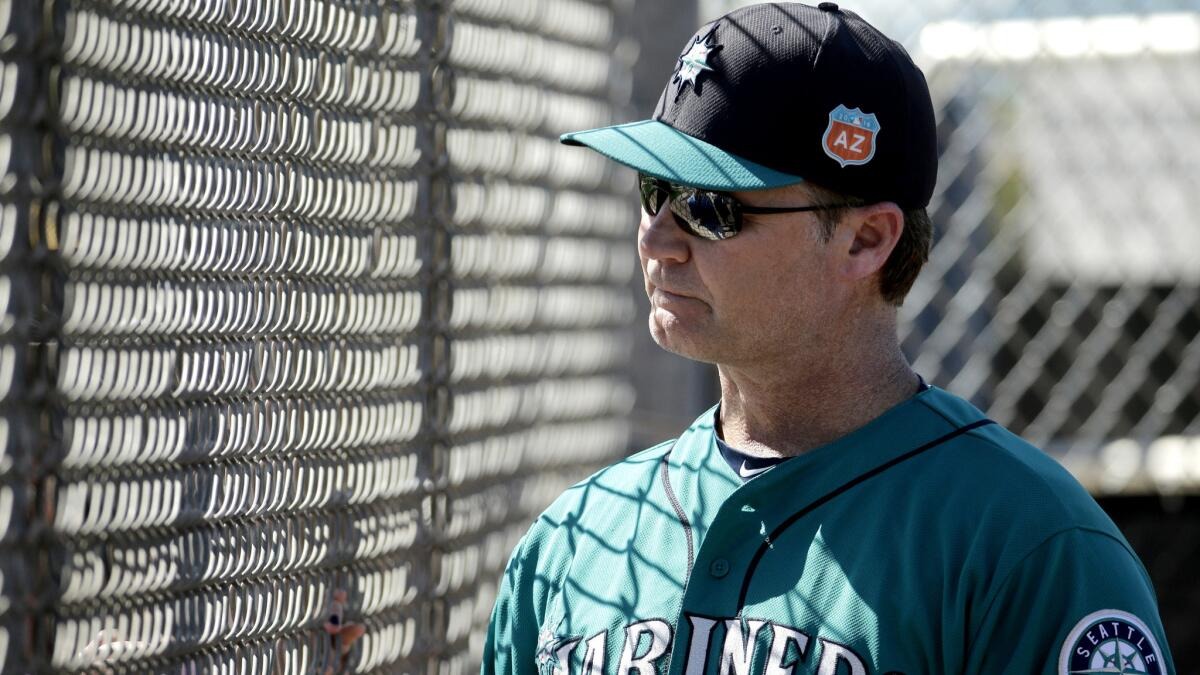
How Scott Servais Has Shaped the Seattle Mariners’ Success

Over that 53-game stretch, the Seattle Mariners struggled to a 20-33 mark, a slump that ranks as the second worst in the league, with only the Chicago White Sox faring worse. The downturn was especially frustrating for a team that had built a reputation on pitching depth and timely hitting, only to see those strengths evaporate when they needed them most.

Despite the disastrous changes that led to his exit, Scott Servais leaves his position with one of the most accomplished managerial résumés in franchise history. During his nine years at the helm, Servais amassed a win-loss record of 680-642.

Those 680 victories are the second-most in team history, as is his .514 winning percentage. He also oversaw the development of young talent and helped guide the team through several different roster makeovers.

Nine years, 680 wins, and a legacy of development for Scott Servais (Seattle Mariners)

Lou Piniella remains the franchise’s most successful manager, with 840 wins against 711 losses and a .541 winning percentage. However, while Piniella managed a team loaded with All-Stars in the late 1990s and early 2000s, Servais had to go through a different challenge—rebuilding the Mariners into a contender after years of disappointment.

Both Piniella and Servais guided the Mariners to the playoffs, with Piniella leading postseason runs in 1995, 1997, 2000, and 2001. Servais, meanwhile, was responsible for managing the 2022 team that finally ended Seattle’s 21-year postseason drought. That playoff appearance, which included an emotional Wild Card series victory over the Toronto Blue Jays, was viewed as a turning point for the franchise.

A Lasting Impact on the Franchise

When Scott Servais took charge, the franchise had already endured over a decade without playoff baseball. Under his leadership, the club navigated a rebuild that ushered in a new core, including franchise centerpiece Julio Rodríguez, catcher Cal Raleigh, and one of the strongest starting rotations in the league today.

He helped mold Rodríguez into one of the game’s brightest stars, guiding him through his Rookie of the Year campaign in 2022. Servais also played a crucial role in helping Seattle establish a winning culture, even if the final stretch of his tenure didn’t reflect that success. He developed strong relationships with his players, earning their respect through his steady leadership and emphasis on accountability.

While his departure from Seattle was abrupt and disappointing, the contributions he made to the organization over the years remain undeniable. The Mariners now face the challenge of finding a new leader to build on the foundation Servais helped establish.

Categories
MLB (Baseball)

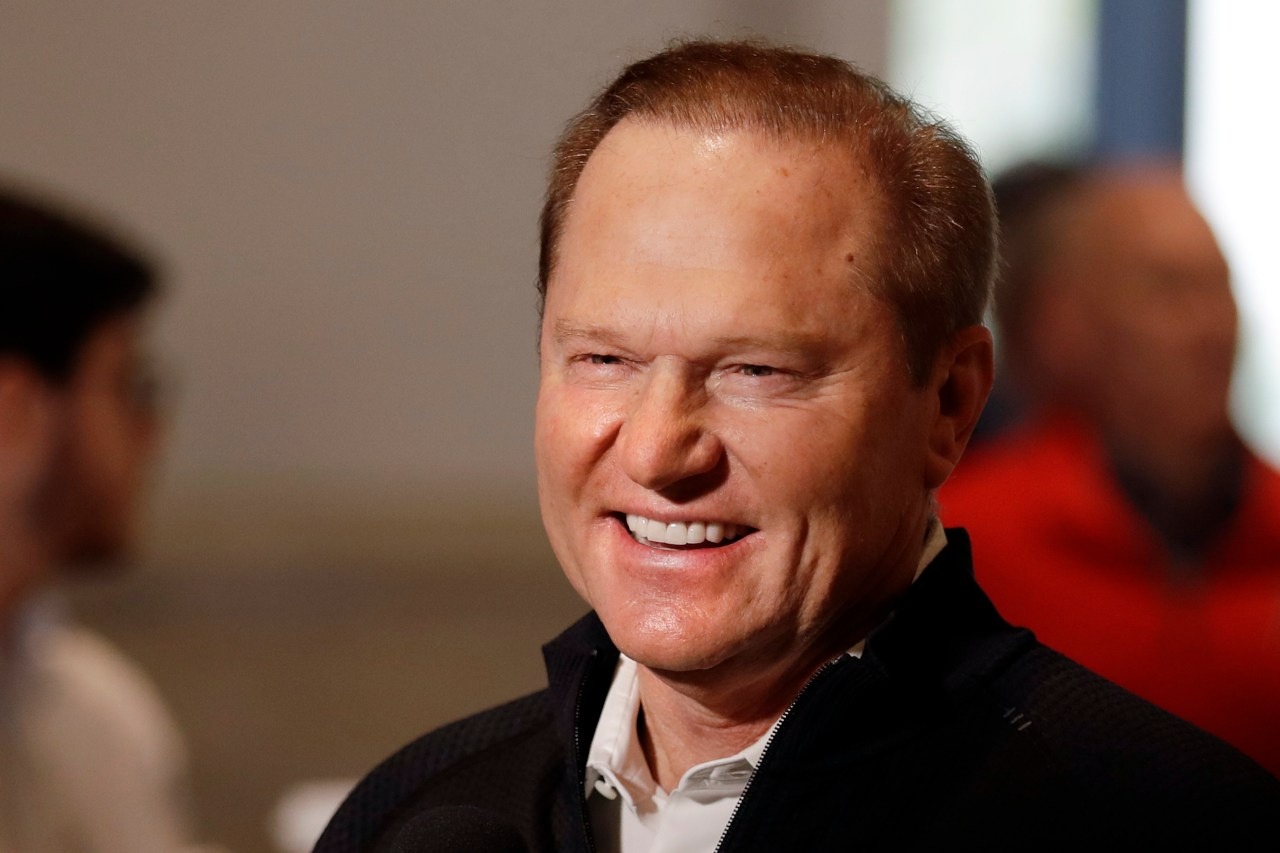
How Scott Boras Transformed the Business of Baseball Deals

Observing Boras over the past week made it clear that he isn’t slowing down. He had at least ten clients taking part in either the All-Star Futures Game or the All-Star Game itself. In typical fashion, he made time to check in with all of them and their families in person. That’s just part of his approach.

On Saturday, he was seen engaging with the families of top young talents like Rangers prospect Sebastian Walcott and Druw Jones, whose father, Andruw, was also a Boras client. Reactions to Boras tend to vary.

Boras faces mixed reactions, from praise to confrontation, at the Futures Game (Getty Image)

While Walcott’s father, Jeffrey, praised him for educating their family on the business of baseball, another parent of a Futures Game player confronted him over something he had said previously.

A Legacy that Continues to Grow

Unlike some of his peers, he has no interest in branching out to other sports or selling to a larger entertainment-focused firm. Right now, his priority is pushing for changes to the MLB Draft system, which he believes shortchanges talented players. It’s a topic he’s passionate about and could discuss for hours.

“We’re completely focused on baseball,” Boras said. “Our only goal is to be the best at what we do.” Though he isn’t giving it much thought—or perhaps any at all—the possibility exists that one day he could become the first agent to be enshrined in Cooperstown.

That honor wouldn’t come quickly. Marvin Miller, the only non-player from the labor movement to be inducted, lived to 95 and wasn’t elected until nearly a decade after his passing.

Categories
MLB (Baseball)

Can Rob Manfred Adapt Baseball Game for the Modern Era?

There was already little hope for maintaining tradition in North America’s major professional sports, but the floor somehow managed to drop even further. NFL commissioner Roger Goodell had already stirred controversy by suggesting that the Super Bowl should be held internationally and moved to Presidents’ Day weekend.

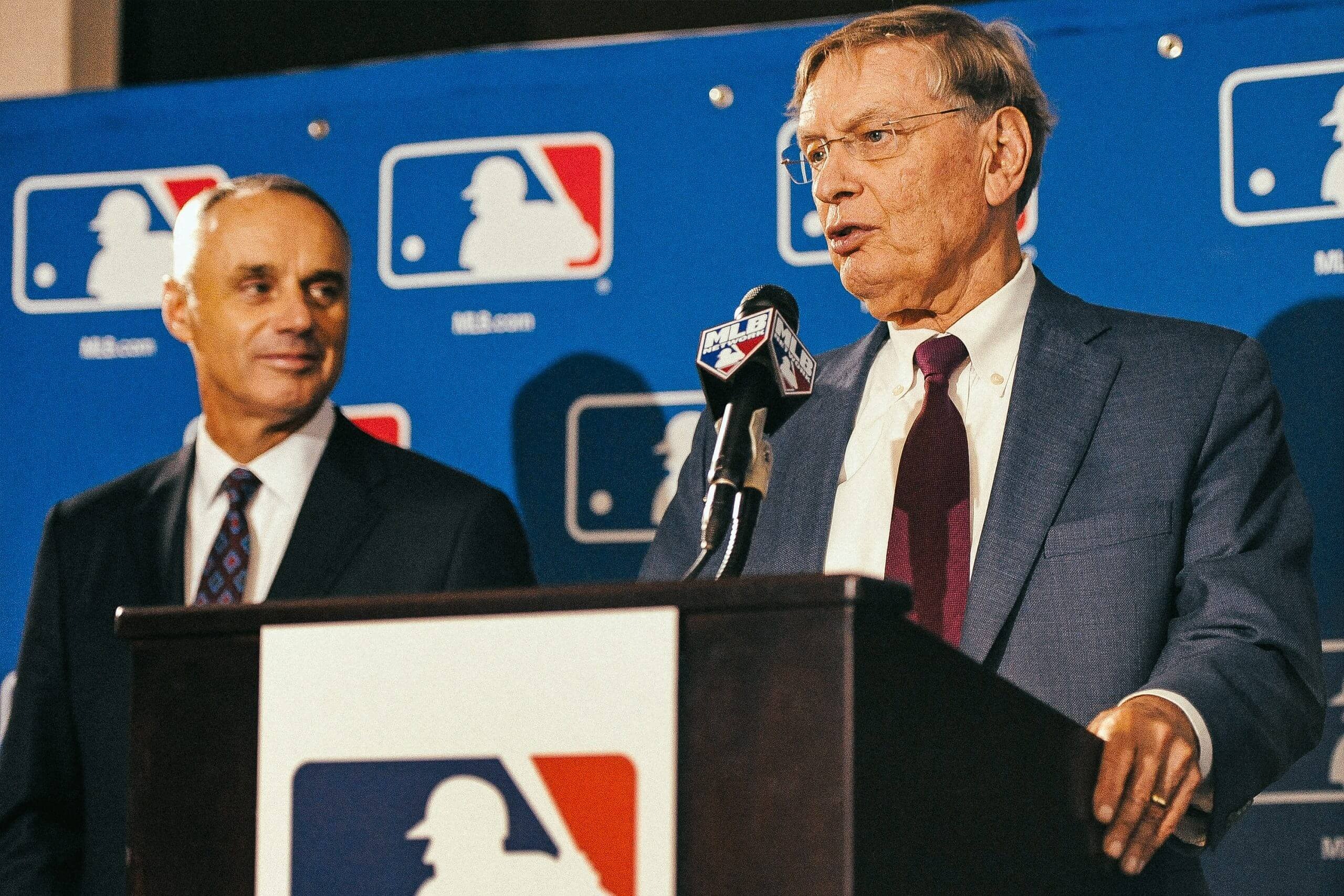
However, MLB commissioner Rob Manfred has taken an even more destructive approach, driving his pickaxe into the very foundation of baseball as America’s pastime. Jayson Stark of The Athletic detailed a concept called The Golden At-Bat Rule, which would allow a team to send any player to the plate at any time during a game.

Baseball fans question if this is the breaking point for MLB leadership (Baltimore Orioles)

The idea is that it would be used in late-game situations to create more drama, but why on earth is this even being entertained? While some of Manfred’s rule changes have arguably had a positive impact on the game, this proposal is absurd. If there was ever a move that should lead to a commissioner’s firing, it’s this.

To put it into perspective, imagine NHL commissioner Gary Bettman deciding that the league’s Stadium Series should be expanded to include the entire Stanley Cup Playoffs. Sure, more tickets could be sold, but good luck keeping the ice intact at stadiums in Tampa or Los Angeles when the weather starts heating up in early summer.

The concept is ridiculous. Instead of continuing to float these outlandish ideas, Manfred should be forced to spend an entire season stuck inside the Tampa Bay Rays’ crumbling stadium.

For those wanting more updates and analysis, MLB Insider Robert Murray provides insights on The Baseball Insiders podcast. You can also subscribe to The Moonshot, a weekly MLB newsletter, and join the community on Discord to stay informed during the offseason.

The Golden At-Bat Rule Would Be a Disaster for MLB

While some level of change is inevitable in baseball, certain aspects of the game should remain untouched. Initially, the idea of implementing the designated hitter in both leagues seemed like a mistake.

However, after the COVID-19 pandemic and the realization that it created 15 more high-paying jobs for the MLBPA to negotiate, the rule became easier to accept—just like the extra-innings ghost runner during regular-season games.

This latest proposal, however, crosses a line. One of baseball’s fundamental principles is that players must bat in order, and this rule would completely destroy that tradition. Changing the game to this extent is beyond foolish. What happens if a manager misuses the rule? Should he be met with a barrage of thrown objects in frustration?

Baseball has already done enough damage to its own reputation over the years, whether it was the alienation of fans due to the 1994-95 strike, the unchecked Steroid Era that followed, or the sport’s inability to keep pace with a changing media environment in the streaming era.

Manfred, along with anyone who supports this ludicrous idea, should be forced to repeatedly kick the MLB commissioner’s so-called “piece of metal” trophy until their feet give out.

If this rule ever becomes reality, it might be impossible to watch another Major League Baseball game again.

Categories
MLB (Baseball)

Jerry Reinsdorf’s Role in Transforming the Bulls and White Sox

Jerry Reinsdorf, a certified public accountant and attorney, owns both the Chicago White Sox in Major League Baseball and the Chicago Bulls in the National Basketball Association.

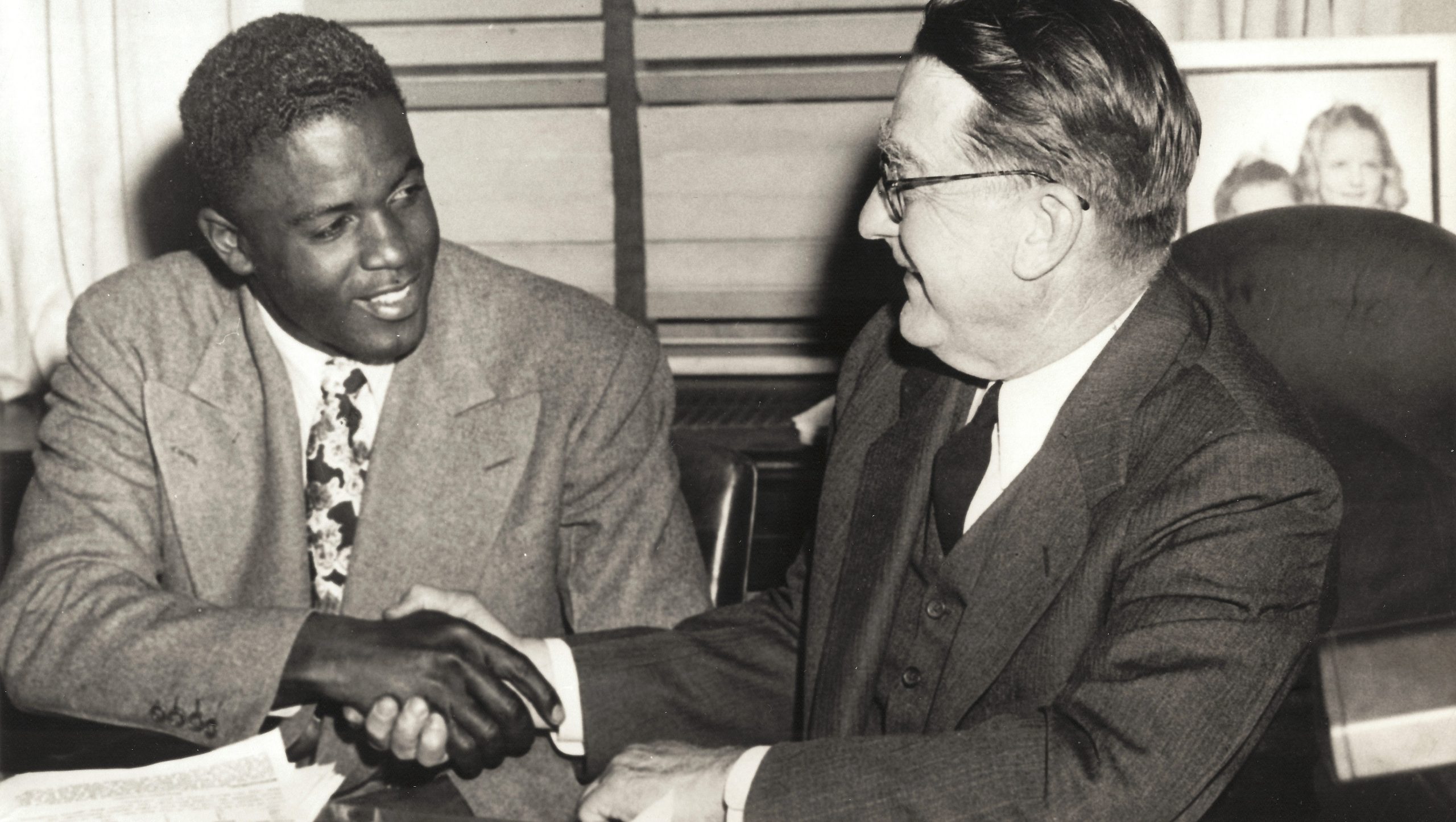
Born in Brooklyn, New York, he was present at Ebbets Field in April 1947 when Jackie Robinson made his historic debut for the Brooklyn Dodgers. His academic journey took him to George Washington University for his undergraduate degree before earning a law degree from Northwestern University.

Taking ownership of the White Sox in 1981 and acquiring the Bulls in 1985, Reinsdorf wasted no time in making an impact on both franchises. The Bulls became one of the most dominant teams in NBA history, securing six championships within an eight-year span from 1991 to 1993 and again from 1996 to 1998.

From Brooklyn to Chicago, Reinsdorf’s journey in sports ownership is legendary (Chicago White Sox/Chicago Bulls)

Beginning on November 20, 1987, the team sold out every game until Michael Jordan retired in 1999. The White Sox also made strides under his leadership, reaching the playoffs in 1983 after a 24-year drought.

The team would go on to earn postseason berths in 1993 and 2000 before finally capturing the World Series title in 2005. This victory ended the franchise’s championship drought dating back to 1917 and placed Reinsdorf in exclusive company as only the third owner in North American professional sports history to win titles in two different major leagues.

Honoring his influence in basketball, the Naismith Memorial Basketball Hall of Fame inducted Reinsdorf in 2016. His contributions extend beyond team success, as he has played a major role in philanthropy throughout Chicago.

His efforts through the Chicago White Sox and Bulls Charities earned him the Jefferson Award in 2011 for “Greatest Public Service Benefiting the Disadvantaged.” Living in Chicago, Reinsdorf has been married to his wife, Martyl, for more than six decades. His son, Michael, currently serves as the president of the Chicago Bulls.

Interview with Jerry Reinsdorf

Interview conducted by Ethan Cuccarese (BBA in Sport Management) and Ryan Riffenburgh (MS in Sport Management) on April 9, 2020

The circumstances surrounding this pandemic are unlike anything I have witnessed in all my years in Major League Baseball. The closest comparison would be the baseball strikes of 1981 and 1994, but even those situations were different because we always knew a resolution would eventually come, allowing the sport to resume.

What makes this so unique is the uncertainty—we have no clear answer on when or how this will end. Questions remain about a potential vaccine, a cure, and the timeline for when it will be safe to return to the field. Looking back on my lifetime, nothing else has arrived so suddenly or created this level of unpredictability.

The specific moment when spring training was officially canceled does not stand out in my memory. There was a gradual buildup, and the situation became increasingly apparent rather than revealing as an abrupt decision.

My primary concern was the effect this would have on attendance, but beyond that, my biggest question was simply, “How long will this go on?” Right now, no one truly knows what the future holds.

My usual daily routine has been completely upended. Under normal circumstances, I would spend my days at either the White Sox’s home ballpark, Guaranteed Rate Field, or at the Bulls’ practice facility. Currently, I am not even in Chicago. I decided to remain in Arizona, where the weather is more favorable, allowing me to spend some time outdoors.

This arrangement works for now, but when temperatures in Arizona hit 100 degrees while Chicago enjoys a more comfortable 75, I’ll make my way back. At the moment, most of my time is dedicated to handling the challenges brought about by this situation.

There are still numerous unanswered questions. Will a season take place? How do we manage our commitments to season ticket holders? What is the best way to handle sponsorships? We are in constant dialogue with our business partners and sponsors, searching for ways to assist them despite the absence of games.

With everything going on, there is never a moment where I feel idle. My days are just as busy as before, but now everything happens over the phone and through a computer screen.

White Sox chairman Jerry Reinsdorf (Chicago White Sox/Chicago Bulls)

Since I’m based in Arizona, I operate on a different schedule—being three hours behind the MLB offices in New York and two hours behind Chicago means my workday wraps up earlier. By the time late afternoon arrives, reaching anyone on the East Coast becomes impossible, which allows for more relaxed evenings.

Maintaining strong connections with season ticket holders remains a top priority. Each one has a designated account executive, and we make sure to keep them informed to the best of our ability—though, at this stage, information is limited.

Rather than focusing on the usual aspects of running a sports franchise, we are now dealing with the process of scaling back operations. Looking ahead, uncertainty surrounds next year as well. The NBA season typically begins in late October, but even training camp remains a question mark.

For baseball, spring training is scheduled to start in February 2021, yet it is impossible to predict whether that will happen as planned. Instead of concentrating on the excitement of competition, our attention is on these looming uncertainties.

Competition is something I deeply miss. Watching games and striving to win more often than we lose is what I enjoy most. The anticipation surrounding this season was high, and now it is frustrating to be unable to play. Beyond that, I miss the people I work with every day. They are truly wonderful individuals, and I genuinely enjoy being around them. And, of course, I miss simply getting out of the house.

New business opportunities will likely emerge as a result of this situation. No matter the circumstances, there will always be individuals who find ways to profit—whether by developing testing kits or producing masks. Personally, I have no interest in pursuing anything new at this stage of my life, but I am certain that plenty of innovative people will seize the moment.

On the baseball side of things, all rosters are currently frozen, but that does not present much of a problem. The real issue is the lack of games. Once everything returns to normal, trades, free-agent signings, and other roster moves will resume as usual.

Categories
MLB (Baseball)

San Francisco Giants: The Lasting Legacy of Bob Melvin in Baseball

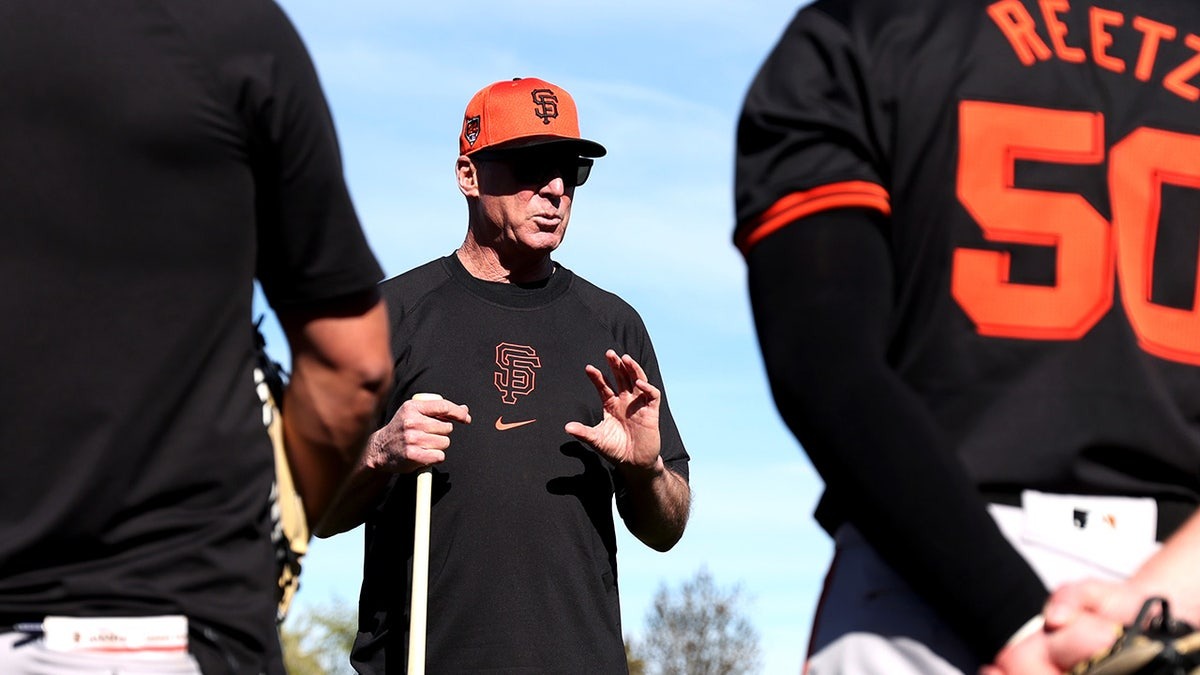
Bob Melvin ‘79 sees baseball as more than just a sport—it’s an integral part of his life and identity. A former Major League catcher with years of experience as a coach, he now holds the position of general manager for the San Francisco Giants. Growing up in Menlo Park, Melvin’s roots in the community run deep.

His time at M-A was filled with athletic involvement, as he competed in baseball, basketball, and golf. Early in high school, basketball was his primary passion. Playing on M-A’s basketball team during the 1978-79 season, he helped lead the squad to the CCS finals, where they lost to Saratoga in a 113-103 game—one of the highest-scoring contests in PAL history at the time.

A scout’s blunt remark fueled Melvin’s drive to prove himself on the field (San Francisco Giants)

“M-A basketball was something special,” he recalled. “The energy at those games was incredible, with packed stands and sold-out crowds. Baseball, on the other hand, was a different experience. If 50 people showed up for a game, that was considered a great turnout.”

As he entered his junior year, his focus shifted more toward baseball when scouts began showing up to watch him play. “Once I realized scouts were there for me, it became clear that baseball was going to be my path,” he said.

An experience with a scout stuck with him. “I remember trying to lay down a bunt for a hit, but I popped it up and the catcher caught it. As I walked back to the bench, I overheard a scout say, ‘I drove 350 miles to watch this kid bunt?’ That moment made me realize I had to step up and prove myself.”

One of the most influential figures in Melvin’s baseball journey was his high school coach, Frank Bettencourt. “I consider myself fortunate to have played under him,” he said. “There’s no question he played a huge role in shaping my career—after all, I’m still in baseball today.”

His performance on the field was outstanding, batting .474 as a junior and .529 as a senior. His accomplishments earned him a place in M-A’s Hall of Fame, recognizing his impact on the baseball program.

After high school, Melvin had a tough decision to make. He had been drafted by the Baltimore Orioles but at the end chose to attend UC Berkeley, where he played catcher for the Golden Bears. “I was just 17, and I didn’t feel ready to jump straight into professional baseball,” he said. “Going to Berkeley seemed like the right move.”

College Baseball and the Transition to the Pros

During his freshman year, the Golden Bears made it to the College World Series semi-finals. “Balancing baseball and academics in such a competitive environment was no easy task,” he admitted. “I was there to play baseball, but the academic side of things was definitely a challenge.”

His time in college was brief, as the Detroit Tigers selected him as the second pick in the first round of the 1981 MLB Draft after just one year at Berkeley. “Everything moved fast,” he recalled. “One minute, I was in college, and the next, I was heading to Florida for spring training.”

Breaking into professional baseball came with its own set of challenges. “I had always been one of the top players and a leader on my teams, but now I was surrounded by guys who were just as talented,” he said. “The level of competition hit me quickly, and I realized I had a lot of work to do.”

Melvin worked his way through the minor league system as a catcher, climbing from Single-A to Triple-A with the Tigers. “Reaching the big leagues is no easy feat,” he said. “At one point, I was in Triple-A but got sent back down to Double-A, and it felt like a major problems. You have to believe in yourself and stay confident in your ability to make it to the majors.”

His big-league debut came in 1985 with the Tigers. After one season, he was traded to the San Francisco Giants, where he spent three years before moving on to the Baltimore Orioles, Kansas City Royals, Boston Red Sox, New York Yankees, and Chicago White Sox over the course of a decade.

Transitioning between teams became a regular part of his career, requiring him to adjust to new environments constantly. “Getting traded for the first time was tough,” he admitted. “That was the team I had grown with, and it was hard to leave. But once it happened, I understood that baseball is a business. Moving around opened up more opportunities for me.”

Life as a professional athlete also meant frequent travel. “You get used to it,” he said. “There’s a home base, but during the season, you’re always on the move. It’s just part of the job.”

One of his most memorable experiences came in 1989 when he reached the World Series with the Giants. Though the team was swept 4-0 by the Oakland A’s, he still considers it one of the standout moments of his career.

Following his retirement as a player, Melvin transitioned into coaching. He started as a scout for the Milwaukee Brewers in 1996, evaluating prospects before eventually taking on coaching roles in the minor leagues.

His coaching career quickly progressed, leading to a spot as the Brewers’ bench coach in the major leagues. He worked under manager Phil Garner, a former Giants teammate, and played a key role in strategic decisions during games.

Melvin’s coaching journey included three years in the minor leagues, two seasons as a major league coach with the Brewers, and a stint as the Arizona Diamondbacks’ bench coach from 2001 to 2002. He was part of the staff when the Diamondbacks won the World Series in 2001. “Coaching was a natural step for me,” he said. “I considered other paths, but baseball was always where my passion lay.”

His time as a bench coach helped prepare him for a managerial role. “It forces you to think like a manager,” he explained. “You need to anticipate decisions, provide insights, and view the game from a strategic standpoint.”

Bob Melvin: Managing at the Highest Level

In 2003, he took the helm as manager of the Seattle Mariners. “Becoming a manager wasn’t something I had actively pursued, but Phil Garner always told me I would end up in that role,” he said. “At some point, it just felt inevitable.”

Choosing college over the pros, Melvin’s path to MLB took a thoughtful detour (San Francisco Giants)

Following two seasons in Seattle, he managed the Arizona Diamondbacks from 2005 to 2009. He later served as a special assistant scout for the New York Mets in 2010 before taking on the managerial role for the Oakland A’s, a position he held for 11 seasons. “Returning to the Bay Area was an incredible opportunity,” he said.

After a successful run with the A’s, Melvin spent two seasons managing the San Diego Padres before stepping into his current role as the San Francisco Giants’ manager in 2023. “It’s honestly a dream come true,” he said. “Thinking back to my time at M-A, I never imagined I’d not only play for the Giants but also manage both the A’s and the Giants. It still feels surreal.”

Walking into the Giants’ ballpark brings back childhood memories for Melvin. “I think about all those times I went to Giants games as a kid,” he said. “Now, leading this team in my hometown comes with a great sense of responsibility.”

His game-day routine is meticulous, involving lineup preparation, player reports, overseeing batting practice, pregame meetings, and press conferences. “The daily routine is something I thrive on,” he said.

While he remains involved in team practices, his managerial role places a greater emphasis on in-game strategy and decision-making under pressure. “Of course, I love the competition, but what truly matters are the relationships you build with the players,” he said. “Those bonds are what make this job meaningful.”

The sport has provided valuable life lessons. “Baseball teaches you to handle problems,” he said. “Injuries happen, bad games happen, but learning how to deal with challenges in sports prepares you for adversity in life.”

For Melvin, the connection between the Giants and their fans is special. “Seeing everyone leaving the ballpark in black and orange makes me realize we’re not just playing a game—we’re bringing entertainment to an entire city,” he said. “It’s incredible to witness how much this team means to San Francisco.”

Looking ahead, he has one clear objective. “Winning a World Series in San Francisco is the ultimate goal,” he said. “I can’t even put into words what that would mean to me.”

To current M-A student-athletes, Melvin offers simple advice. “Enjoy every moment,” he said. “Sports should be fun, and you never know how long your career will last. Make the most of it and appreciate how it prepares you for whatever comes next.”

Categories
MLB (Baseball)

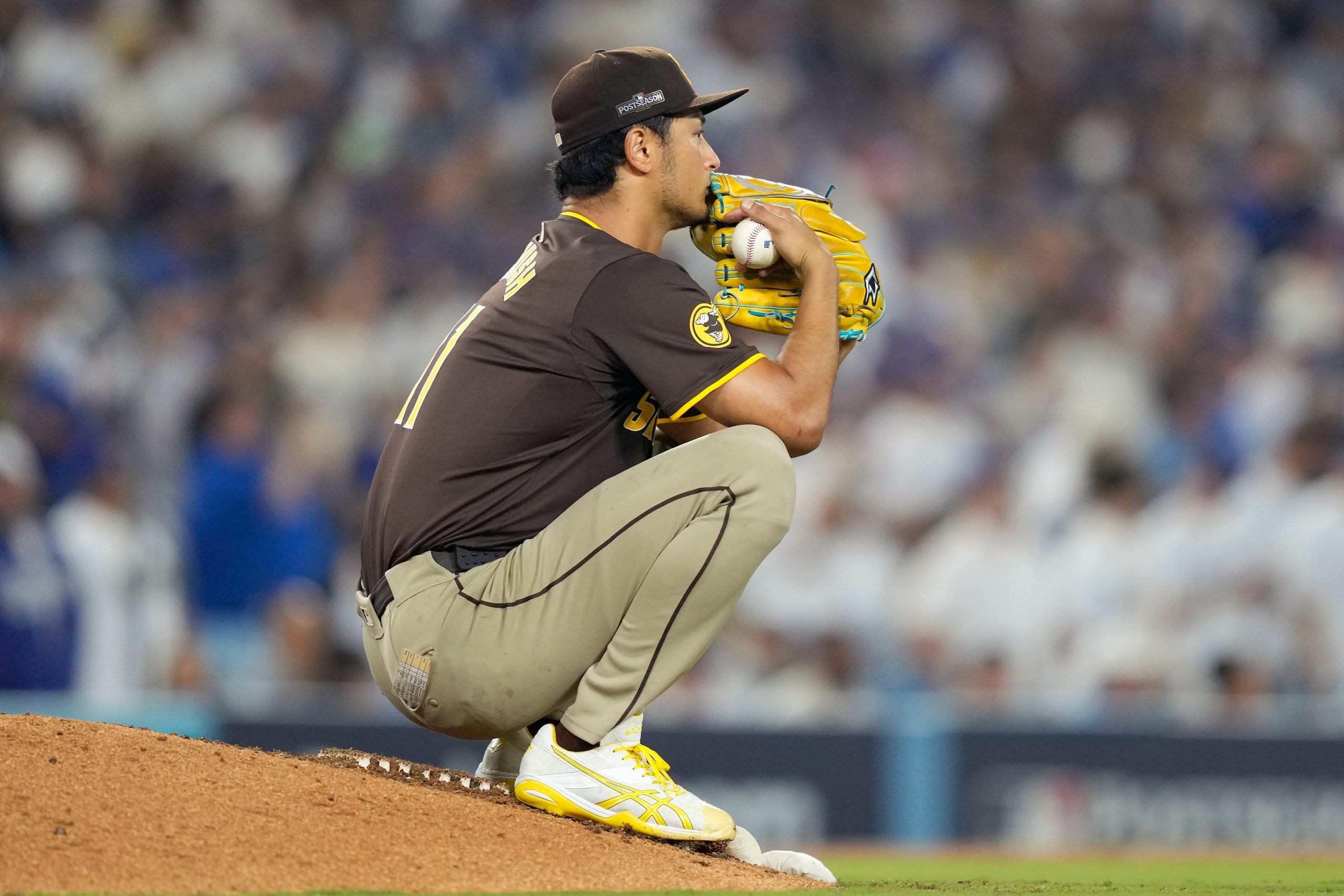
The Path of an Ace: Yu Darvish’s Pitching Excellence

During August of 2019, Yu Darvish approached his Chicago Cubs teammate Craig Kimbrel to learn the mechanics of a knuckle-curve. Just a week later, he used the pitch to record a strikeout. That wasn’t quite sufficient for a pitcher of his caliber, as Darvish has always been known for making constant adjustments.

“Working on different pitches is something I genuinely enjoy,” he remarked recently. Victor Caratini, the catcher who was included in the Padres’ trade package alongside Darvish in December, recalled how often he experimented. “He’ll be working on something new, throwing it repeatedly,” Caratini said. “Then he’ll tell me, ‘Hey, I’ve got a new pitch.’”

The art of pitching redefined as Darvish fine-tunes his wide-ranging repertoire (San Diego Padres)

Unhappy with the performance of his knuckle-curve, Darvish reached out last year to the person behind @PitchingNinja, a well-known Twitter account dedicated to pitching analysis, and requested footage of Shane Bieber’s version of the pitch.

Yu Darvish: Expanding His Arsenal

The knuckle-curve became part of his arsenal in 2020, responsible for 10 of his 97 strikeouts. The pitch, with its unpredictable movement, ranged from 77 to 84 mph. Another variation of his curveball, which moves more diagonally and is approximately 5 mph slower, also accounted for one of those strikeouts.

Additionally, Darvish has a “slow curve” in his repertoire, which fluctuates between 62 and 67 mph. Beyond those, his collection includes a four-seam fastball and a two-seam fastball.

He has also developed a pitch he calls The Supreme, a hybrid of a splitter and a two-seam fastball. This offering sits between his two-seamer (which averages 95 mph) and his split-finger fastball (which comes in around 90 mph), featuring changeup-like movement as it approaches the plate.

The split-finger fastball itself might undergo some refinements. This spring, Darvish has been consulting with Padres adviser Hideo Nomo to gain insights into how Nomo executed his signature pitch.

“There was a time when I attempted to learn his forkball or splitter, but I wasn’t able to pick it up then,” Darvish admitted. “Now that I have more experience, I might finally be able to figure it out.”

If he masters Nomo’s version, he could swap it in for his existing split-finger fastball or possibly create a new name for it, adding another pitch to his deep arsenal.

On top of everything else, he also has a slider, which resembles his cutter but with a more pronounced break. His cutter itself comes in two variations: one “hard” and another “soft.” And, of course, he has a changeup.

Across all his offerings, Darvish maintains remarkable consistency. His 11 different pitches can vary by over 30 mph in velocity yet follow similar paths before veering unpredictably toward the plate.

“His ability to do this is remarkable,” Padres pitching coach Larry Rothschild said. “This isn’t just some guy experimenting without results. He has a rare talent for manipulating the baseball in different ways. … It’s not just throwing for the sake of it. He knows exactly what he’s doing.”

A starting pitcher with four effective pitches is already considered to have an above-average arsenal. Padres outfielder Tommy Pham pointed out that only a small number of major leaguers can manage that level of diversity in their repertoires.

Three-time Cy Young winner Max Scherzer relies on five pitches. Joe Musgrove, a new addition to the Padres, has six that he deploys at least five percent of the time. “He’s got several more than I do,” Musgrove commented recently. “And I already thought I had a lot.”

No one in the league, however, approaches the sheer variety that Darvish brings to the mound. The 10 different pitches he has utilized in games over the past two seasons stand as the highest total since Statcast began tracking pitch data in 2008.

Yu Darvish’s Change in Approach Leads to Success

Not every offering is used frequently. His primary seven pitches in 2020 included:

His cutter, thrown 43.6 percent of the time, was his go-to option. Since Statcast doesn’t distinguish between different variations of the cutter, this figure encompasses speeds ranging from the low 80s to the mid-90s.

Other regularly used pitches included his slider (15.2 percent), four-seam fastball (14.7), sinker/two-seam fastball (9.5), knuckle-curve (8.1), split-finger fastball (4.9), and standard curveball (3.6).

One of Darvish’s greatest strengths is throwing strikes. Among pitchers who logged at least 50 innings in 2020, his 69 percent strike rate tied for the highest in the majors.

His ability to generate swings and misses is just as remarkable. His career strikeout rate of 29.9 percent ranks second all-time among pitchers with at least 1,000 innings, trailing only Chris Sale’s 30.7 percent. Since 2012, only five pitchers have posted a higher whiff rate than Darvish’s 29.3 percent.

The last time he took the mound against the Padres, back in September 2019, he dominated with 14 strikeouts over six scoreless innings. Wil Myers was among those who struggled, striking out three times.

A true pitching scientist, Darvish constantly reinvents his approach on the mound (San Diego Padres)

“Beyond just having electric stuff, his command of the strike zone is outstanding,” Myers recalled when discussing that game. “His pitches are top-tier, and he understands how to use them effectively. … I’m relieved he’s on my team now, so I don’t have to face him.”

Finding ways to hit against Darvish has become increasingly difficult. Yet for much of his career, he had been viewed as a very good pitcher rather than an elite one. Injuries and a difficult adjustment period in Chicago led to a stretch where his performance was unremarkable from early 2018 until midway through 2019.

From the start of his big-league tenure through his first 18 starts of 2019—a span covering 170 outings—Darvish ranked 39th in MLB with a 3.64 ERA and held a 3.58 FIP (Fielding Independent Pitching), which accounts for a pitcher’s effectiveness without factoring in defense.

A dramatic improvement began in his next 25 starts, beginning on July 12, 2019, all of which were caught by Caratini. Since then, he has posted a 2.40 ERA, ranking fifth in the majors, and a 2.54 FIP, which places him third in that span.

His opponents’ batting average dipped 15 points to .204, while his strikeouts per nine innings jumped from 10.9 to 12.4 over that stretch. Darvish has credited his resurgence to improved health and feeling more at ease in Chicago. Another key element, however, was a noticeable change in his pitch selection.

A greater emphasis was placed on his splitter, while usage of the four-seam fastball declined very well. His cutter became a primary weapon, and he incorporated more curveballs, though his approach fluctuated from game to game.

“The past year and a half, I’ve focused on refining my approach,” Darvish said. “So far, the results have been positive. Hopefully, I can maintain that progress.”

His new team certainly believes in his abilities. The Padres made a financial commitment of $59 million over the next three years to secure the services of the 34-year-old, who holds a career ERA of 3.43.

“All the film I’ve watched and conversations I’ve had indicate that he’s truly finding his stride,” Rothschild said. “Since the middle of 2019, things have started clicking for him. He reached a point where he was comfortable doing what worked best for him, and the Cubs gave him the space to do that.” Rothschild has no intention of interfering with that success.

“One mistake people have made with him before was trying to alter what he does best,” Rothschild explained. “His greatest strength is his ability to manipulate the baseball, to know which pitches to throw and when to use them. His fastball velocity reaches 98 mph, sometimes even higher.

But just because someone throws hard doesn’t mean fastballs should be the priority. His real edge comes from confidence in his craft, his command of spin, and understanding how to make all his pitches work together. … Trying to change that would be a huge misstep.”

Yu Darvish’s current team as of February 2025 is San Diego Padres.

Categories
NFL (American Football)

Patrick Mahomes Addresses Misconceptions About His Recruitment by Some Teams

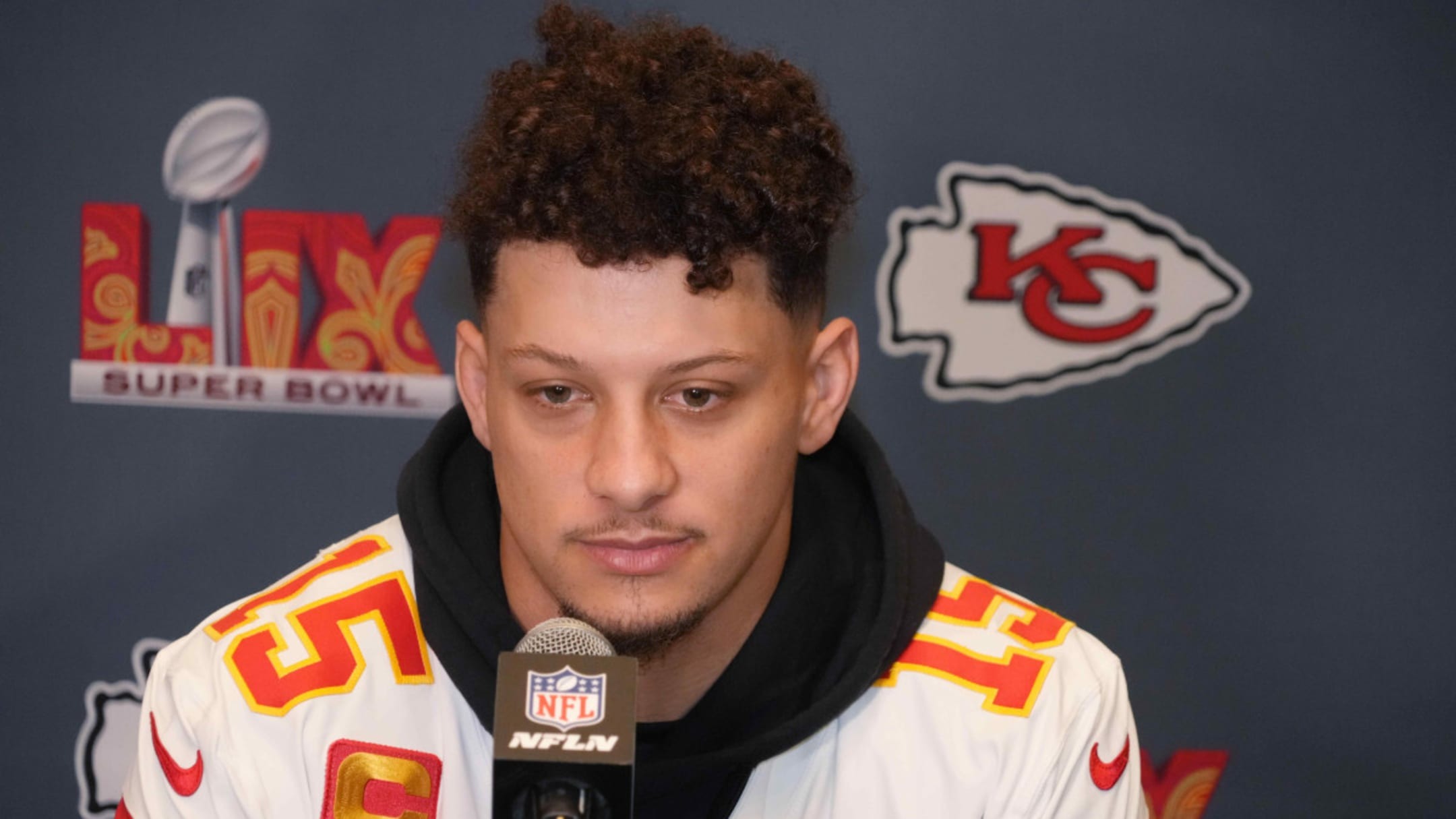
A claim about Kansas City Chiefs quarterback Patrick Mahomes and his recruitment sparked controversy ahead of Super Bowl 2025, leading some to question its accuracy.

During the Feb. 3 episode of her self-titled podcast, former Fox News host Megyn Kelly asked Sen. Tommy Tuberville, R-Ala., if he would be supporting the Kansas City Chiefs in their upcoming Feb. 9 matchup against the Philadelphia Eagles.

“So, does this mean, since you used to coach Patrick Mahomes, that you’re rooting for the Chiefs at the big game this Sunday?” Kelly inquired.

Senator Tuberville’s recruitment claim challenged by Chiefs quarterback (Kansas City Chiefs)

Tuberville, who transitioned from a 40-year career as a college football coach—including a tenure at Mahomes’ alma mater, Texas Tech University—to serving in the U.S. Senate, responded with a correction. Flashing a smile, Tuberville addressed Kelly’s assumption.

“Well, I never even coached him,” he clarified. “What happened is — I recruited him. And then I left and went to another school. But I’ve got to be very good friends with him. He’s a good — not just a good athlete. He’s a very good example for a lot of our young youth across this country.”

Mahomes Responds to Tuberville’s Statement

Tuberville’s explanation, however, was quickly challenged.

“He did not recruit me at the time,” Mahomes stated during a Feb. 6 press conference when asked about any connection to Tuberville. “I don’t — I don’t remember if I ever got to meet him or not.”

Attempts to reach Tuberville’s office for clarification went unanswered. From 2010 to 2012, Tuberville served as Texas Tech’s head football coach, leading the team for three full seasons before stepping down on Dec. 8, 2012.

Mahomes later joined Texas Tech, playing for the team from 2014 to 2016 before being drafted by the Kansas City Chiefs in 2017. Reports from various outlets have attributed Mahomes’ recruitment to Kliff Kingsbury, who succeeded Tuberville as Texas Tech’s head coach.

ESPN reported in 2022 that Kingsbury first became aware of Mahomes in 2012 while working as Texas A&M University’s offensive coordinator.

At that time, Mahomes was a standout student-athlete at Whitehouse High School in East Texas. Once Kingsbury assumed the head coaching role at Texas Tech, securing Mahomes became a priority, according to ESPN.

Kingsbury’s Role in Mahomes’ Recruitment

“We went after him hard and knew that we needed to get him,” Kingsbury stated in an interview with ESPN in 2022. Mahomes later credited Kingsbury for his development and for playing a key role in his football career, as noted by Arrowhead Pride, a publication dedicated to covering the Chiefs.

“(Texas Tech was) really the first and only,” Mahomes explained, as reported by Arrowhead Pride. “I didn’t get recruited by (many schools); I got a couple other offers from smaller schools in the Texas area …

I credit Kingsbury, because he was the one who came down and saw me, talked to me, talked to my family and believed in me. That’s the reason I’m in this position — because he gave me a chance.” Former President Donald Trump has also incorrectly stated that Tuberville coached Mahomes.

Our Ruling

Tuberville claimed that he “recruited” Mahomes during his tenure as Texas Tech’s head coach and that the two developed a friendship. Mahomes refuted that assertion, stating that Tuberville “did not recruit me” and adding that he wasn’t sure if they had ever met.

Since Tuberville departed Texas Tech before Mahomes joined the team, their timelines never overlapped. Reports consistently point to Kingsbury, Tuberville’s successor, as the coach responsible for recruiting Mahomes.

This claim is rated False.

Categories
MLB (Baseball)

Ex-Padres Reliever Joins New York Yankees on New Deal

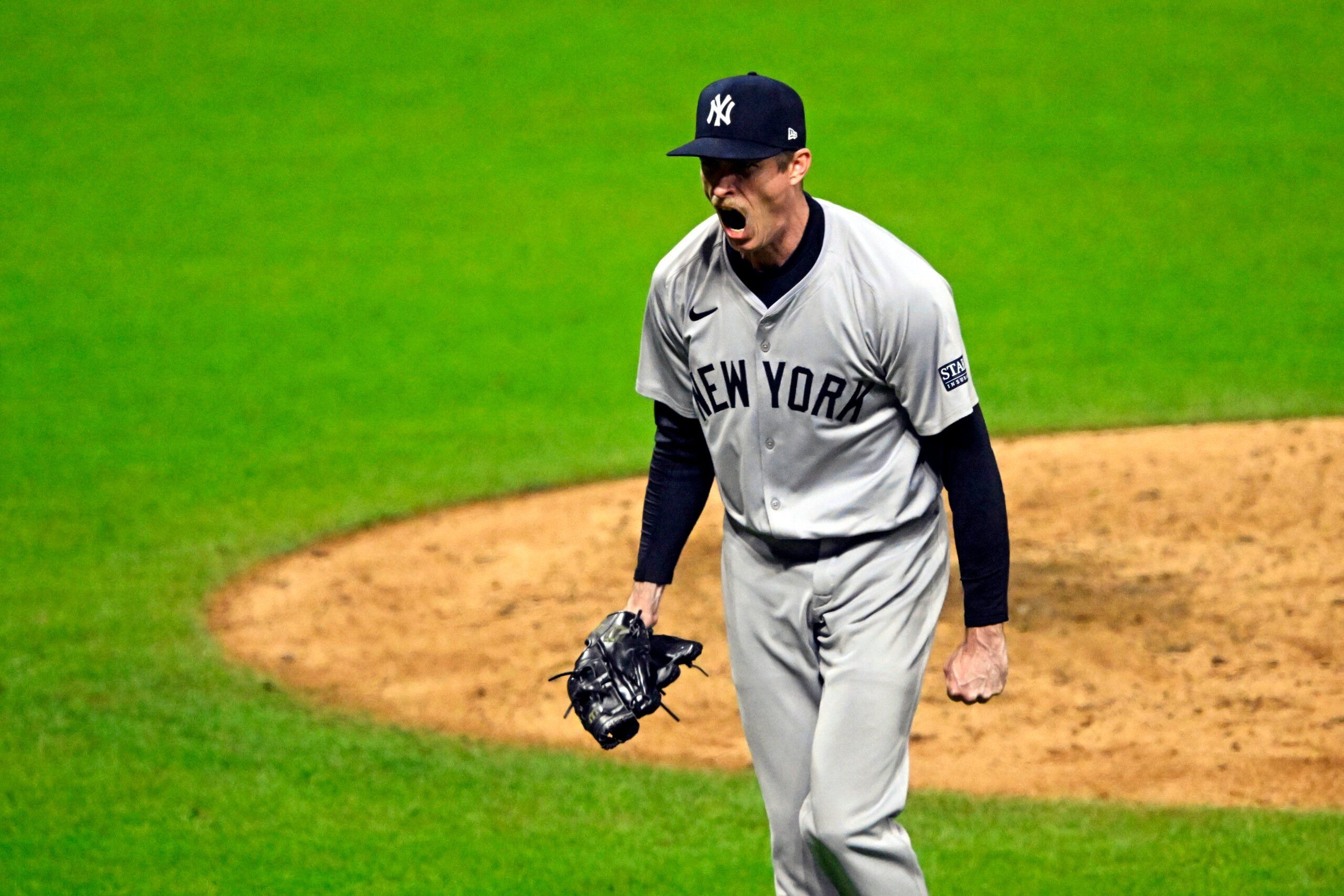
Tim Hill is returning to the New York Yankees after agreeing to a new contract, as multiple reports confirmed on Tuesday. His deal spans one year at $2.85 million, with a club option for the 2026 season valued at $3 million.

If the Yankees choose not to exercise that option, Hill will receive a $350,000 buyout, according to information shared by ESPN’s Jeff Passan. Prior to securing Hill, New York lacked a projected left-handed reliever in its bullpen, as there were no southpaws listed on the 40-man roster.

Tim Hill returns to the Yankees on a one-year deal with a 2026 option (New York Yankees)

Yankees Reshape their Bullpen

Hill will now be part of a reshaped group of relievers, featuring trade acquisition Devin Williams alongside Luke Weaver, Ian Hamilton, Fernando Cruz—another trade pickup—Mark Leiter Jr., and JT Brubaker.

Jonathan Loaisiga, who underwent a UCL procedure last April, is anticipated to return later in the season, though he may begin the year on the 60-day injured list. At 34 years old, Hill emerged as an unexpected key contributor to the Yankees’ bullpen in 2024.

The veteran left-hander, known for inducing ground balls, spent six seasons with the Kansas City Royals and San Diego Padres before starting last year with the struggling Chicago White Sox. His time in Chicago was short-lived, as he was designated for assignment and released in June following a 5.87 ERA over 27 outings.

Just a week later, Hill signed a one-year deal with New York and quickly established himself as one of the most dependable left-handed relievers in baseball. Across 35 regular-season appearances, he delivered a 2.05 ERA over 44 innings.

His impact carried into the postseason, where he took the mound in 10 of the Yankees’ 14 playoff games, surrendering only one earned run across 8.1 innings.

Hill’s Strengths and Limitations

Hill’s signature sidearm delivery and 89 mph fastball contributed to his effectiveness, allowing him to generate the highest ground ball rate (68.2 percent) among all major league relievers.

While his strikeout rate was the lowest (10.7 percent), he excelled at limiting hard contact, ranking second in MLB with a 1.4 percent barrel rate. Given his pitching style, which prioritizes weak contact over swings and misses, Hill allowed a considerable number of hits throughout the 2024 season.

Opponents hit .290 against him, averaging 10.3 hits per nine innings. Most of those hits, however, were singles. Over 291 batters faced, he surrendered just nine extra-base hits—seven doubles and two home runs.

Though slightly more effective against left-handed batters, he managed to neutralize hitters from both sides. Lefties posted a .273/.321/.322 slash line against him, while right-handed hitters put up a .303/.352/.352 line.

His ability to induce ground balls and limit free passes also played a role in forcing eight double plays—only 11 relievers recorded more, and five of them logged more innings.

Categories
MLB (Baseball)

Reports Indicate Boston Red Sox Shopped Slugger in at Least Two Trade Deals

The Boston Red Sox have been at the center of trade discussions throughout the offseason. While some speculation turned into actual transactions, including deals for Garrett Crochet and Walker Buehler, many other rumors never materialized. With Spring Training less than two weeks away, trade talk surrounding the team has not slowed down.

Earlier this winter, Triston Casas found himself mentioned in trade discussions more frequently than anticipated. At one stage, Boston and the Seattle Mariners were linked, and reports indicate that at least two separate trade proposals were declined, according to Adam Jude of the Seattle Times.

Alex Bregman and Nolan Arenado remain potential targets for Boston’s lineup (Boston Red Sox)

Mariners’ Trade Talks With Boston

During the MLB Winter Meetings in December, a source with direct knowledge of the discussions revealed that the Red Sox and Mariners explored a trade involving Luis Castillo heading to Boston.

In return, Seattle would have received Casas along with outfielder/designated hitter Masataka Yoshida. Talks finally broke down because the Mariners were unwilling to absorb the $56 million remaining on Yoshida’s contract through 2027.

Additionally, reports suggest that in November, Boston had proposed trading Casas for either Bryce Miller or Bryan Woo, two of Seattle’s young starting pitchers. However, the Mariners turned down the offer.

Given the frequency with which Casas’ name surfaced in trade rumors this offseason, hearing about these proposals is not unexpected. What does stand out is Seattle’s apparent reluctance to engage in a deal.

Patrick McAvoy has covered both local and national sports, specializing in baseball and basketball while working with the New England Sports Network. Beyond journalism, he is currently pursuing an MBA at Brandeis University.

His rapid rise as one of the top contributors at NESN led to opportunities with Baseball Essential, part of Sports Illustrated’s Media Group. For business or marketing inquiries regarding Inside The Cardinals, contact Scott Neville at [email protected].

Red Sox and Arenado Rumors

Speculation surrounding the Red Sox continues to gain momentum. Despite a clear need for a premier bat in the middle of their lineup, Boston has yet to make a major addition. The team has been frequently linked to Alex Bregman and Nolan Arenado throughout the offseason.

Bregman remains unsigned in free agency, while Arenado is still being floated as a trade candidate. Although acquiring either player would be a major move, discussions about Arenado have been particularly active in recent days. Reports indicate that the Red Sox and St. Louis Cardinals have engaged in trade talks regarding the future Hall of Famer.

MLB Network’s Matt Vasgersian recently addressed the possibility and expressed strong support for the idea. He suggested that a trade of this magnitude would be something Red Sox fans have long envisioned.

“Raffy Devers would likely move somewhere (like) first base,” Vasgersian said. “Triston Casas would move somewhere (like) DH. I think it would evolve from lineup to lineup, day-to-day, series to series. It would give Alex Cora a big new weapon, and it’s really something to dream on if you’re a Boston Red Sox fan.”

Arenado’s fit with Boston is easy to understand. While his power numbers have dipped in recent seasons, he remains one of the greatest defensive third basemen of all time.

His bat could be more effective at Fenway Park than it has been in St. Louis, and he is under contract for three more years. Meanwhile, acquiring Bregman would likely require a higher financial commitment. The bigger question is what the Red Sox would do with Devers and Casas if Arenado were brought into the mix.

Categories
MLB (Baseball)

New York Yankees Aim for a Blockbuster All-Star Trade Move

The New York Yankees are actively working on strengthening their infield as the offseason comes to play. After opting not to exercise Anthony Rizzo’s option, the team secured former National League MVP Paul Goldschmidt on a one-year deal to handle first base duties in 2025.

Even with this addition, a vacancy remains following the departure of second baseman Gleyber Torres, who signed with the Detroit Tigers in free agency. The Yankees had considered promoting prospect Caleb Durbin to take over Torres’ role, but he was traded as part of the deal that brought elite closer Devin Williams from the Milwaukee Brewers.

DJ LeMahieu’s return could be pivotal for the Yankees infield dynamics

Exploring Infield Options

Looking beyond free agency, the Yankees have several potential strategies to fill the infield gap. They could move Jazz Chisholm Jr. from third base to second, allowing Oswaldo Cabrera to handle third.

Another option is counting on DJ LeMahieu’s return to full health, as he’s capable of filling either the second or third base position. Reports suggest that the Yankees are considering adding a former All-Star to their roster to help address this need.

According to Jon Heyman of the New York Post, the Yankees are exploring the possibility of signing free-agent infielder Paul DeJong, who garnered national attention by finishing second in NL Rookie of the Year voting in 2017 and earning an All-Star spot in 2019 with the St. Louis Cardinals.

DeJong’s Potential Impact

Once a key part of the Cardinals’ future, DeJong enjoyed a stellar 2019 season, blasting 30 home runs and posting a 5.3 WAR. However, his performance declined sharply over the next few seasons, with OPS+ figures of 87, 85, 52, and 66 between 2020 and 2023.

The Cardinals traded him to the Toronto Blue Jays in 2023, but after just 13 games, he was released. He was subsequently picked up by the San Francisco Giants, only to be released again after 18 games.

A revival in 2024 saw DeJong hit 24 home runs in 139 games split between the Chicago White Sox and Kansas City Royals, though his .227/.276/.427 slash line and 97 OPS+ were less impressive.

DeJong could be a potential short-term solution for the Yankees, who may offer him a one-year contract to play third base and move Chisholm to second. Additionally, the team is reportedly eyeing Jorge Polanco and Brendan Rodgers as potential targets.