France reinforced its status as one of the strongest contenders at the 2026 FIFA World Cup with a commanding 4–1 victory over Norway in the final Group I match. The win completed a perfect group-stage campaign for Les Bleus, who finished with nine points and 10 goals from three matches, securing one of the most favorable positions in the knockout bracket.
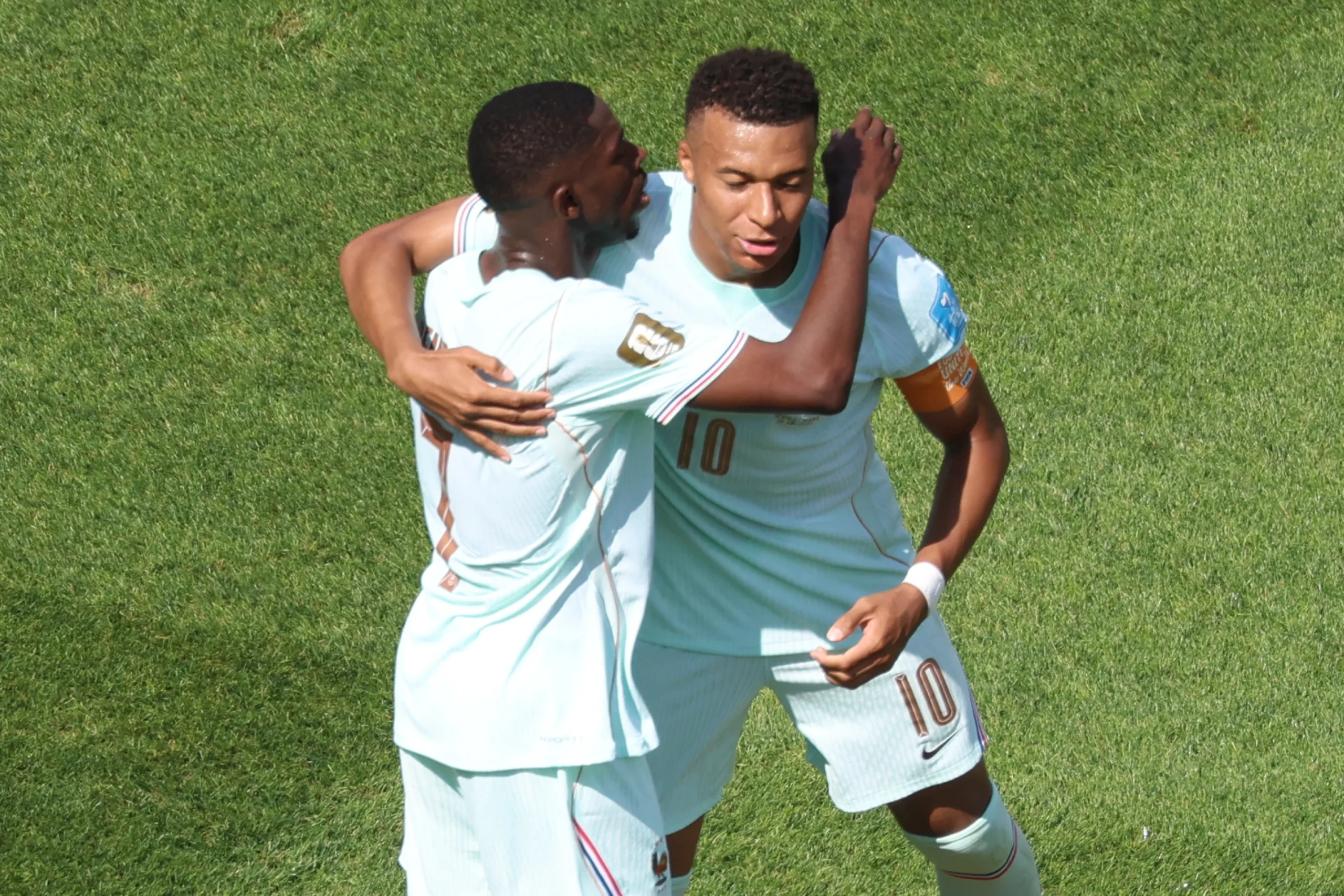
Although Kylian Mbappé entered the match as France’s biggest star, it was Ousmane Dembélé who stole the spotlight with a sensational first-half hat trick. Mbappé nearly opened the scoring less than 30 seconds after kickoff when his powerful strike flew over the crossbar, but he soon shifted into a creative role. He provided assists for Dembélé’s first two goals as the winger found the net in the seventh, 20th, and 32nd minutes.
The three goals made history. Dembélé became only the third French player to score a World Cup hat trick after Just Fontaine and Mbappé. It was also the fastest World Cup hat trick in more than seven decades, with only Austria’s Erich Probst scoring three goals earlier during a match in 1954. Dembélé’s achievement was also the tournament’s first first-half hat trick since Oleg Salenko famously scored five goals for the Soviet Union against Cameroon in 1994.
Mbappé Creates History While France Dominates Norway and Strengthens World Cup Title Credentials
Mbappé may not have scored, but he continued adding to his remarkable World Cup record. His two assists brought his combined total of goals and assists in World Cup competition to 20, placing him alongside Lionel Messi and Miroslav Klose among the tournament’s most productive players. His willingness to create opportunities instead of chasing personal statistics highlighted the depth and balance within the French attack.
Norway entered the match having already secured qualification for the Round of 32, leading manager Ståle Solbakken to rest several key players. The biggest absentee was Erling Haaland, whose absence disappointed fans hoping to witness one of the tournament’s most anticipated individual battles against Mbappé. Norway also left several regular starters, including goalkeeper Ørjan Nyland, on the bench in preparation for the knockout stage.
Without many of their first-choice players, Norway struggled to keep pace with France’s relentless attacking quality. Dembélé might have added a fourth goal before being substituted in the 65th minute after another outstanding performance. France comfortably managed the remainder of the match before adding one final goal in stoppage time. Bradley Barcola delivered an excellent cross that Désiré Doué converted with a well-placed header, capping a dominant performance from Didier Deschamps’ side.
Despite the defeat, Norway advanced to the knockout stage after finishing second in Group I with six points. Their return to the World Cup has already exceeded expectations, marking their first appearance in the tournament since 1998. Resting Haaland and other regular starters was viewed as a calculated decision aimed at keeping the squad fresh for their upcoming Round of 32 clash against the Ivory Coast.
The result also tightened the race for the tournament’s Golden Boot. Lionel Messi remained the leading scorer with five goals, while Mbappé, Dembélé, Haaland, and Brazil’s Vinícius Júnior all sat one goal behind with four. Haaland’s impressive international scoring streak remained intact despite not playing, leaving the competition for the award wide open entering the knockout rounds.
France’s Balanced Attack and Growing Momentum Make Them Serious World Cup Title Favorites
France’s group-stage performances have established them as perhaps the tournament’s most complete team. Across victories over Senegal, Iraq, and Norway, Les Bleus scored 10 goals while conceding only two. Their attacking depth has become one of their greatest strengths. On a day when Mbappé did not score, another world-class forward delivered a historic performance, demonstrating that opponents cannot focus on stopping just one player.
Observers have also noted a significant evolution in France’s playing style compared with previous World Cup campaigns. The teams that lifted the trophy in 2018 and finished runners-up in 2022 were known for their defensive organization and clinical counterattacks. This current squad plays with greater freedom, creativity, and attacking flair while maintaining the discipline that has long defined French football.
The chemistry among the squad’s attacking players has been particularly impressive. Dembélé’s powerful finishing, Mbappé’s vision, Barcola’s creativity, and Doué’s late contribution illustrated the wide range of threats France possesses. Their fluid movement and technical quality make them extremely difficult to defend, regardless of the opponent.
France now enters the knockout stage carrying considerable momentum and confidence. With a favorable path toward the later rounds, many analysts believe Les Bleus are among the leading favorites to lift the World Cup trophy. Their combination of elite talent, squad depth, and attacking versatility has separated them from much of the competition.
If their dominant group-stage form continues, France will be a difficult obstacle for every remaining team. Dembélé’s unforgettable hat trick against Norway served as another reminder that even when Mbappé is not the primary scorer, Les Bleus possess enough firepower to overwhelm virtually any opponent.