At Aronimink Golf Club, the defining challenge this week has not been distance, thick rough, or even wind, but the relentless difficulty of its Donald Ross-designed greens. Once players find the fairway, the real test begins, where approach shots and putting surfaces combine into a complex examination of distance control, touch, and decision-making.
Aronimink’s 11th Hole Demands Precision, Punishes Short Approaches Severely
The 11th hole offers a clear snapshot of what makes the course so demanding. A 425-yard par-4 that would be considered modest by modern standards plays far more difficult than its yardage suggests. The green is large but severely contoured, featuring a pronounced false front that punishes any shot landing even slightly short. From approach distances between 80 and 150 yards, players are forced into constant judgment calls. Many chose to aim safely beyond the hole, preferring a long putt over the risk of watching the ball feed back down the slope.
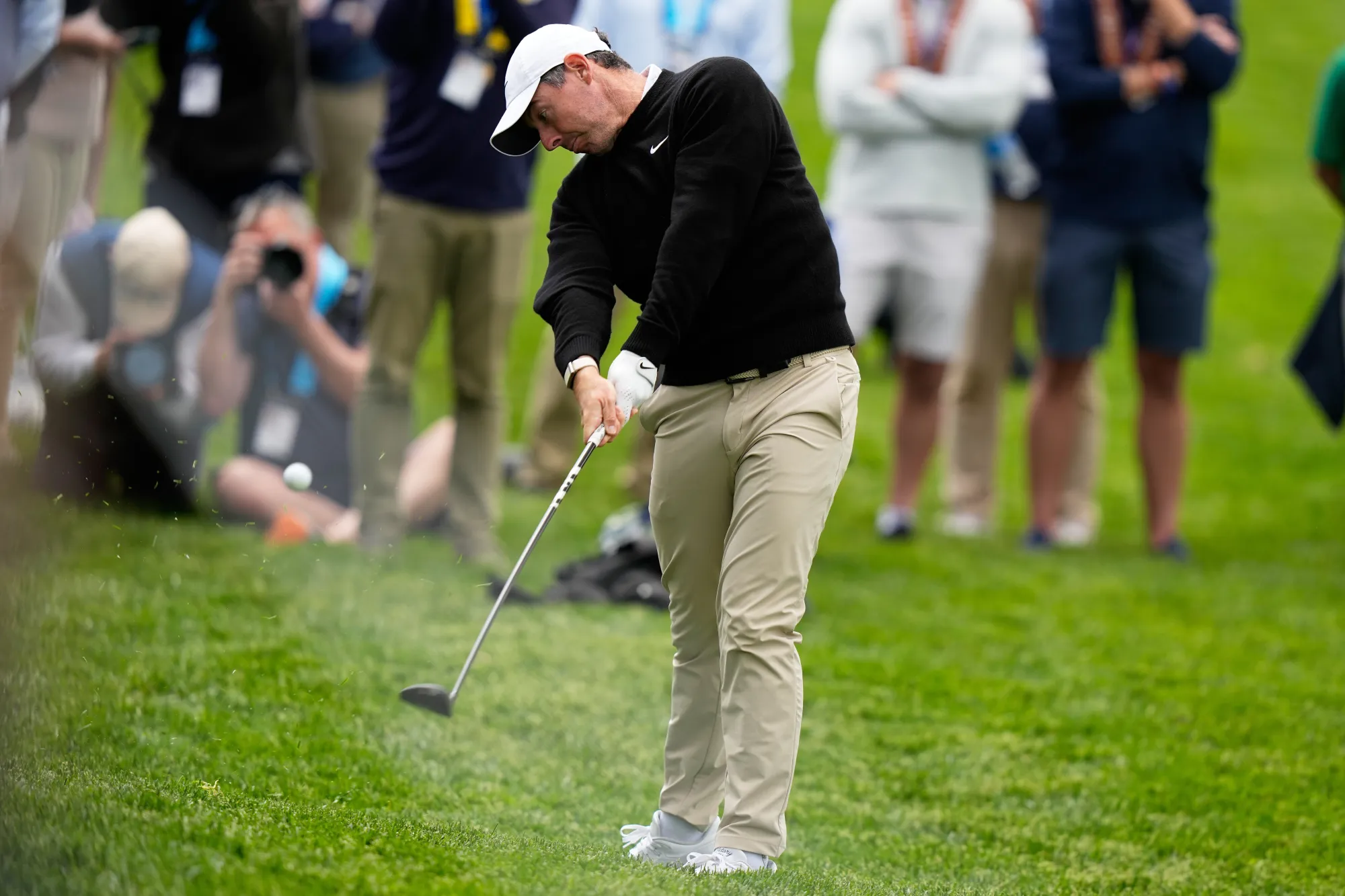
Those who miscalculated paid a heavy price. Short approaches are often rolled into collection areas or bunkers, creating awkward recovery shots that frequently lead to bogeys. Justin Thomas experienced this firsthand after coming up short and facing a difficult bunker escape. Others, including Sepp Straka, Garrick Higgo, and Travis Smyth, encountered similar frustrations. In contrast, Jordan Spieth produced one of the standout moments of the day with a delicate bump-and-run from 67 yards that finished closest to the pin.
Precision Over Safety Defines Aronimink as Brutal Pins Raise Championship Pressure
Thomas noted that while it is not especially difficult to leave the ball safely 20 feet past the hole, getting it close is an entirely different challenge. That distinction captures the essence of Aronimink’s test, where precision is rewarded far more than simply avoiding mistakes.
Beyond the architecture, much of the week’s discussion has centered on course setup. Early rounds were considered playable, but Friday’s pin positions significantly raised the difficulty. Scottie Scheffler described them as among the most severe he has ever faced, pointing to locations that appeared barely accessible on the green. Chris Gotterup added that some pins felt almost impractical in their placement.
These decisions have kept scoring low and pressure high, creating a demanding but compelling examination as the tournament moves into the weekend.