Aryna Sabalenka’s French Open campaign ended in disappointment after a surprising 3-6, 7-5, 6-0 quarter-final defeat to Russia’s Diana Shnaider, a result that many view as a missed opportunity for the world number one to capture her first Roland Garros title. Entering the latter stages of the tournament as the clear favorite, especially with no other Grand Slam champions remaining in the draw, Sabalenka appeared well-positioned to strengthen her legacy. Instead, she suffered another painful loss in a major event after surrendering a set and a double-break advantage.
Sabalenka’s Grand Slam Record Highlights Both Dominance and Missed Opportunities
For the past two years, Sabalenka has been the dominant figure in women’s tennis. She has collected 11 WTA titles and spent 93 weeks atop the world rankings, establishing herself as the sport’s most consistent performer. Despite that success, questions continue to arise about whether her four Grand Slam singles titles accurately reflect her level of dominance. While two Australian Open titles and two US Open crowns represent an impressive achievement, Sabalenka has also fallen short in numerous high-pressure moments, losing four major finals and six Grand Slam semi-finals.
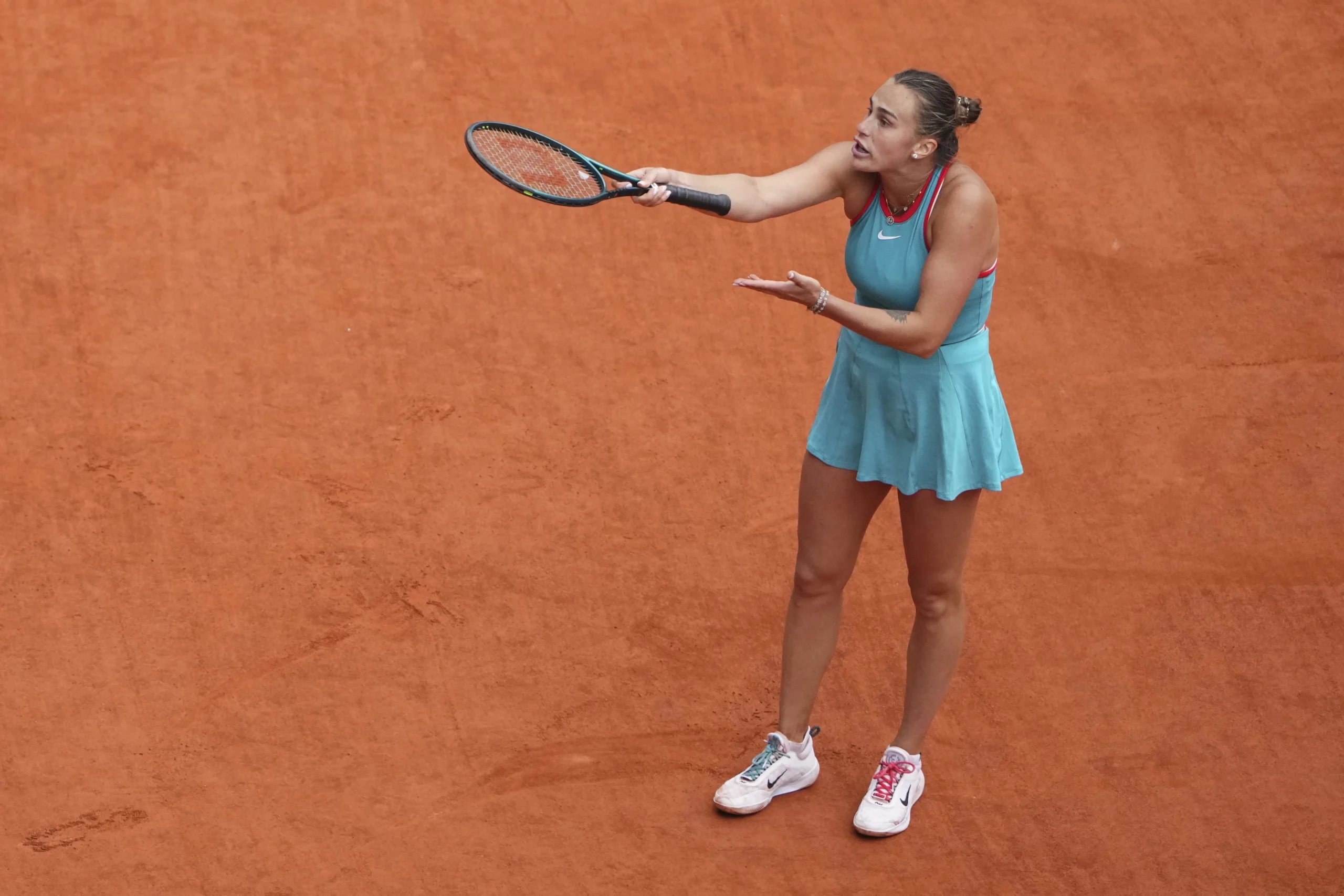
Her consistency at the majors remains remarkable. Since the beginning of the 2023 season, she has reached at least the quarter-finals of every Grand Slam she has entered. However, the deeper she progresses into tournaments, the more difficult she has sometimes found it to manage pressure-filled situations. This pattern has surfaced repeatedly in recent years. She entered the 2024 Australian Open final as the favorite but lost to Madison Keys, and a year later, she squandered a deciding-set lead against Elena Rybakina in Melbourne. At the 2025 French Open, she once again found herself in a commanding position before allowing the match to slip away.
Sabalenka Faces Emotional Hurdles After Another Painful Grand Slam Collapse
Sabalenka admitted after the loss that the pressure of pursuing her first French Open title may be affecting her mentally. She suggested that focusing too heavily on the achievement could be causing her to overthink critical moments and become overly emotional. Against Shnaider, she controlled the match early, leading 6-3, 4-1, before suffering a dramatic collapse and losing 12 of the final 13 games. Her 57 unforced errors outweighed her 46 winners, highlighting how quickly control escaped her.
The challenging, windy conditions on Court Philippe Chatrier also played a role. Similar circumstances troubled Sabalenka during her loss to Coco Gauff at last year’s tournament. Her aggressive, first-strike style depends on dictating rallies from the baseline, but the swirling winds disrupted her timing and court positioning. Rather than adapting with a more conservative approach, she continued to play high-risk tennis, which ultimately proved costly.
Despite the setback, Sabalenka remains one of the strongest contenders in women’s tennis. She now turns her attention to Wimbledon, where she has reached the semi-finals in each of her last three appearances. The biggest challenge ahead may not be technical or physical, but emotional. Sabalenka acknowledged that she is tired of losing important matches because she loses control of her emotions, and finding a solution to that issue could determine whether she adds more Grand Slam titles to her already impressive résumé.