Categories
MLB (Baseball)

Three key storylines to watch as the Chicago Cubs begin spring training in Arizona

The Chicago Cubs held their first full-squad workout on Friday, with position players gathering for the first time as they start an important season for the team. The Cubs haven’t made it to the postseason since 2020 and haven’t won a playoff game since 2017.

The team that won the World Series in 2016 is now a distant memory. In recent years, the Cubs have had some likable players, but the team has mostly been defined by average performances and disappointment.

The Cubs of 2025 are determined to change that. With an NL Central division that seems open, it’s time for Chicago to step up as a true contender, rather than just a team waiting to see how things go.

After a busy offseason that included a major addition in Kyle Tucker and an unsuccessful attempt to sign another star in Alex Bregman, the Cubs have been in the news since early November, right up until the start of camp this week. Some believe they’ve built a roster that positions them as serious contenders. Now, they must prove it on the field.

Alex Bregman is not a Cub — and that’s OK

With Friday being the first full day of spring activities for Cubs position players, nearly all the main hitters spoke with reporters about the offseason and shared their early expectations for the upcoming season.

But because of the timing of these first spring sessions, reporters kept asking about a player who wasn’t anywhere near the Cubs’ camp: Bregman. He recently chose a three-year deal with the Red Sox over offers from other teams, including Chicago.

“I think everyone figured he’d be a really good fit for this team,” shortstop Dansby Swanson said. “Obviously, it didn’t end up happening, but Jed’s done such a tremendous job in putting together what I feel like is probably our best roster yet, just in terms of the depth, in terms of filling needs that we may have had in previous years.”

Alex Bregman flips his bat after hitting a home run

Several of Swanson’s teammates shared this view, expressing strong belief that the Cubs improved significantly this winter, even without Bregman. They replaced Cody Bellinger with Kyle Tucker, strengthened the rotation with left-handed pitcher Matthew Boyd, and added four veteran relievers to improve the bullpen: Ryan Pressly, Ryan Brasier, Eli Morgan, and Caleb Thielbar.

“They’ve been really thoughtful and intentional about building this roster out to give us the best chance to succeed,” Swanson added.

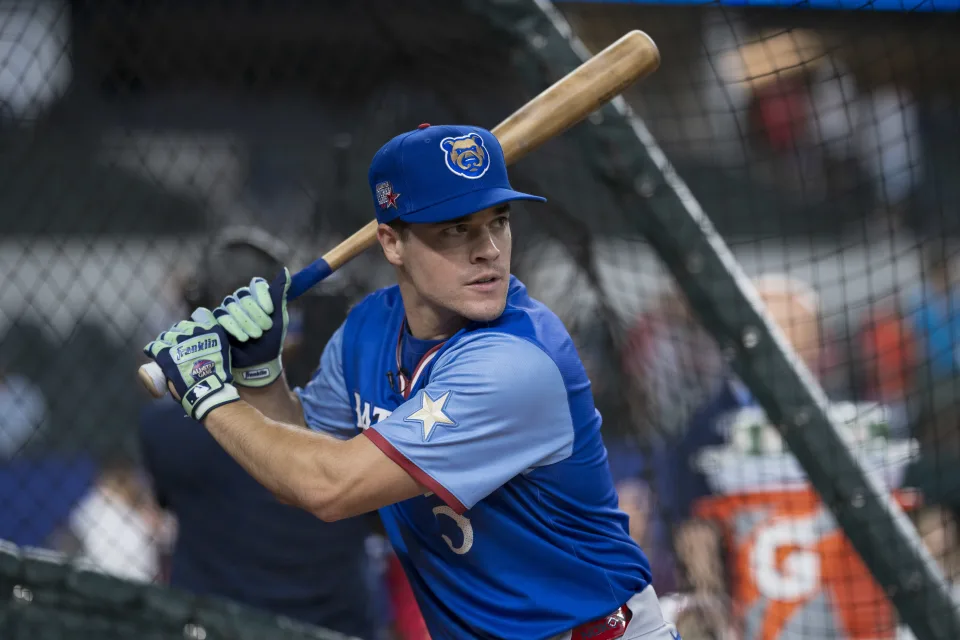
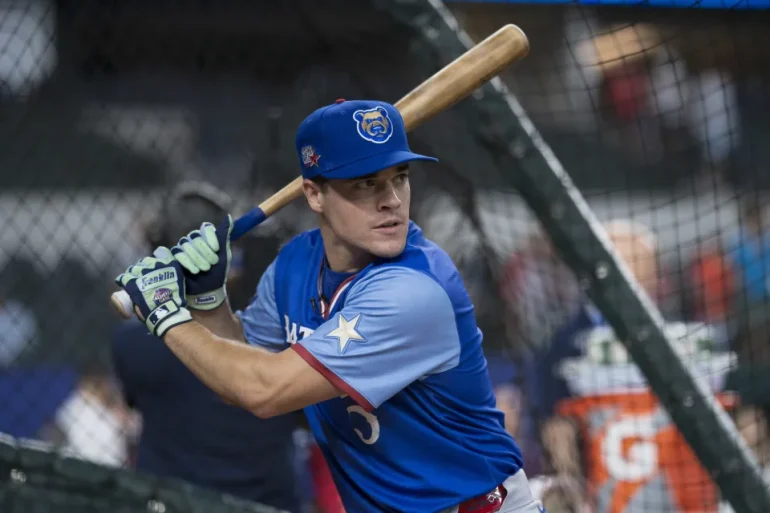
Matt Shaw is ready to step up

Even though the Cubs missed out on Bregman, there are still plenty of reasons to be excited about this roster, as Swanson pointed out. Losing out on Bregman would have been a bigger deal if the Cubs didn’t have one of baseball’s top infield prospects, 23-year-old Matt Shaw, who looks ready to take on the third base role in Chicago.

Shaw’s rise has been fast—he was drafted 13th from the University of Maryland just 20 months ago, and he performed well in 35 Triple-A games (.929 OPS) to end 2024. He now has a clear shot at winning the starting job in Chicago during spring training.

Shaw was aware of the chance that Bregman might come to Chicago and block his path to the majors, at least temporarily. Interestingly, Shaw, who is from Massachusetts, found out that Bregman chose the Red Sox when his friends, many of whom are Red Sox fans, texted him. With Bregman now officially heading elsewhere, Shaw isn’t taking his opportunity for granted:

“Obviously, that’s my goal for the spring,” he said about making the team out of camp. “Being able to do that would be amazing, be a dream come true, something I’ve been dreaming of for a long time.

“Having the front office, coaching staff, players believing in me and believing that I can help this team win a division and move forward with that would be amazing.”

Manager Craig Counsell mentioned on Friday that Shaw is currently day-to-day with a mild oblique injury from some recent swings in the cage, but the team doesn’t expect this to affect his spring training too much. Shaw will have a lot of attention on him once he’s fully involved in workouts and games, with support from his teammates.

“He’s such a gifted player, and he’s a natural-born baseball player,” Swanson said about the promising prospect, who could play alongside him on the left side of the Cubs’ infield for years to come.

“He knows that I’m available for him, whether it’s questions, advice or an ear that will listen. But I’m just going to kind of let him do his thing, and I think that experience will be the best teacher for him.”

Chicago Cubs players pumped up after winning

The Cubs missed on Bregman but landed a star in Kyle Tucker

After missing out on Bregman, the Cubs found some comfort knowing that a key player from the recent successful era of Astros baseball showed up at Cubs camp on Friday: Tucker, the 28-year-old All-Star right fielder, who is great at almost everything on the field. From his power and patience at the plate to his range in the outfield and speed on the bases, Tucker does it all.

“He’s a true superstar, an incredible player,” second baseman Nico Hoerner said about his new teammate. “He does absolutely every part of baseball well, which you don’t really see from many players. Even guys that are All-Stars every year, there’s not many guys that truly do all parts of the game at a high level. And he does that.”

Swanson added, “His body of work is impressive. If you look at what he’s been able to do over his career to this point, I think he’s a star in our game and somebody that’s going to make our team a lot better.”

Tucker will be a free agent at the end of this upcoming season, and there’s already talk about whether the Cubs could secure a contract extension before he hits the open market. However, Tucker was careful when asked if this year will feel any different because of his contract situation.

“You never know how the future is gonna play out,” he said. “Just trying to take it one day at a time, and whatever happens later happens.”

Because of his immense talent, Tucker’s future with the team will be a topic of interest throughout the season, no matter what. But what matters most right now for him and the Cubs is where he is today—and what he could bring to a team that has been waiting for a star like him.

“Right now,” Tucker said, looking down and pointing to the “CHICAGO” on his blue hoodie, “I’m a Chicago Cub. And I’m excited to be here and try to win games for the Cubbies.”

Categories
Baseball

Chicago Cubs: Spring Storylines, Roster Battles, and Playoff Hopes

The Chicago Cubs are making headlines once again as they prepare for the upcoming season. With roster changes, new acquisitions, and a strong determination to reach October baseball, the North Side team is setting high expectations.

From backup broadcasting roles to position battles and trade rumors, here’s everything you need to know about the Cubs’ latest developments.

Alex Cohen Steps Up as Backup to Boog

In the broadcasting booth, a familiar name has taken on a new role. As reported, Alex Cohen will serve as the official backup to Jon Sciambi, known as “Boog.”

While fans have mixed opinions on Sciambi, Cohen’s expertise is widely appreciated. His experience covering minor league baseball makes him a strong candidate to bring fresh energy and insight to Cubs broadcasts whenever needed.

Roster Moves and Free Agency Speculation

One of the biggest talking points surrounding the Cubs is their pursuit of new talent. Recent reports indicate that the Cubs extended a $3 million offer to Yoan Moncada before he ultimately signed with the Los Angeles Angels.

Meanwhile, speculation continues regarding Alex Bregman, though the likelihood of his arrival at Wrigley Field seems to be fading. With the offseason winding down, the team’s front office remains focused on potential acquisitions that could elevate the roster.

Aiming for October: Can the Cubs Make It?

The Cubs’ ambitions are clear: a return to postseason baseball. But do they have enough firepower to compete at the highest level?

Kyle Tucker’s arrival brings excitement, but will it be enough to lead the Cubs to October baseball?

The addition of Kyle Tucker has certainly bolstered their lineup, but questions remain about whether it’s enough to carry them deep into October. Fans eagerly await further roster adjustments that could strengthen the team’s playoff push.

Position Battles to Watch During Spring Training

As spring training approaches, competition is heating up within the Cubs’ roster. Several key position battles will determine the final lineup, adding intrigue to the preseason. With six weeks to go before the season officially begins, players will have limited time to prove themselves and secure their spots on the roster.

Cubs’ Pitching Outlook: Strength or Concern?

The Cubs’ bullpen remains a work in progress. While new pitcher Ryan Brasier brings valuable postseason experience, the overall structure of the bullpen remains a question mark.

Analysts have highlighted the challenges of balancing a crowded pitching roster and ensuring reliable arms for high-pressure situations. The team’s management will need to make strategic decisions to optimize the pitching staff before Opening Day.

Looking Ahead: The Future of the Cubs

Beyond this season, the Cubs have an exciting pipeline of young talent. According to prospect rankings, Matt Shaw and Kevin Alcántara lead the way as future stars.

As Chicago continues to develop its farm system, the organization hopes to sustain long-term success through a strong mix of veteran leadership and emerging talent.

The Chicago Cubs enter the new season with plenty of optimism and a few unanswered questions. With key acquisitions, evolving roster battles, and a firm goal of reaching the playoffs, the team is ready to prove itself.

As spring training unfolds, fans will be watching closely to see if the Cubs can assemble a winning formula for 2025.

Categories
MLB (Baseball)

The Path of an Ace: Yu Darvish’s Pitching Excellence

During August of 2019, Yu Darvish approached his Chicago Cubs teammate Craig Kimbrel to learn the mechanics of a knuckle-curve. Just a week later, he used the pitch to record a strikeout. That wasn’t quite sufficient for a pitcher of his caliber, as Darvish has always been known for making constant adjustments.

“Working on different pitches is something I genuinely enjoy,” he remarked recently. Victor Caratini, the catcher who was included in the Padres’ trade package alongside Darvish in December, recalled how often he experimented. “He’ll be working on something new, throwing it repeatedly,” Caratini said. “Then he’ll tell me, ‘Hey, I’ve got a new pitch.’”

The art of pitching redefined as Darvish fine-tunes his wide-ranging repertoire (San Diego Padres)

Unhappy with the performance of his knuckle-curve, Darvish reached out last year to the person behind @PitchingNinja, a well-known Twitter account dedicated to pitching analysis, and requested footage of Shane Bieber’s version of the pitch.

Yu Darvish: Expanding His Arsenal

The knuckle-curve became part of his arsenal in 2020, responsible for 10 of his 97 strikeouts. The pitch, with its unpredictable movement, ranged from 77 to 84 mph. Another variation of his curveball, which moves more diagonally and is approximately 5 mph slower, also accounted for one of those strikeouts.

Additionally, Darvish has a “slow curve” in his repertoire, which fluctuates between 62 and 67 mph. Beyond those, his collection includes a four-seam fastball and a two-seam fastball.

He has also developed a pitch he calls The Supreme, a hybrid of a splitter and a two-seam fastball. This offering sits between his two-seamer (which averages 95 mph) and his split-finger fastball (which comes in around 90 mph), featuring changeup-like movement as it approaches the plate.

The split-finger fastball itself might undergo some refinements. This spring, Darvish has been consulting with Padres adviser Hideo Nomo to gain insights into how Nomo executed his signature pitch.

“There was a time when I attempted to learn his forkball or splitter, but I wasn’t able to pick it up then,” Darvish admitted. “Now that I have more experience, I might finally be able to figure it out.”

If he masters Nomo’s version, he could swap it in for his existing split-finger fastball or possibly create a new name for it, adding another pitch to his deep arsenal.

On top of everything else, he also has a slider, which resembles his cutter but with a more pronounced break. His cutter itself comes in two variations: one “hard” and another “soft.” And, of course, he has a changeup.

Across all his offerings, Darvish maintains remarkable consistency. His 11 different pitches can vary by over 30 mph in velocity yet follow similar paths before veering unpredictably toward the plate.

“His ability to do this is remarkable,” Padres pitching coach Larry Rothschild said. “This isn’t just some guy experimenting without results. He has a rare talent for manipulating the baseball in different ways. … It’s not just throwing for the sake of it. He knows exactly what he’s doing.”

A starting pitcher with four effective pitches is already considered to have an above-average arsenal. Padres outfielder Tommy Pham pointed out that only a small number of major leaguers can manage that level of diversity in their repertoires.

Three-time Cy Young winner Max Scherzer relies on five pitches. Joe Musgrove, a new addition to the Padres, has six that he deploys at least five percent of the time. “He’s got several more than I do,” Musgrove commented recently. “And I already thought I had a lot.”

No one in the league, however, approaches the sheer variety that Darvish brings to the mound. The 10 different pitches he has utilized in games over the past two seasons stand as the highest total since Statcast began tracking pitch data in 2008.

Yu Darvish’s Change in Approach Leads to Success

Not every offering is used frequently. His primary seven pitches in 2020 included:

His cutter, thrown 43.6 percent of the time, was his go-to option. Since Statcast doesn’t distinguish between different variations of the cutter, this figure encompasses speeds ranging from the low 80s to the mid-90s.

Other regularly used pitches included his slider (15.2 percent), four-seam fastball (14.7), sinker/two-seam fastball (9.5), knuckle-curve (8.1), split-finger fastball (4.9), and standard curveball (3.6).

One of Darvish’s greatest strengths is throwing strikes. Among pitchers who logged at least 50 innings in 2020, his 69 percent strike rate tied for the highest in the majors.

His ability to generate swings and misses is just as remarkable. His career strikeout rate of 29.9 percent ranks second all-time among pitchers with at least 1,000 innings, trailing only Chris Sale’s 30.7 percent. Since 2012, only five pitchers have posted a higher whiff rate than Darvish’s 29.3 percent.

The last time he took the mound against the Padres, back in September 2019, he dominated with 14 strikeouts over six scoreless innings. Wil Myers was among those who struggled, striking out three times.

A true pitching scientist, Darvish constantly reinvents his approach on the mound (San Diego Padres)

“Beyond just having electric stuff, his command of the strike zone is outstanding,” Myers recalled when discussing that game. “His pitches are top-tier, and he understands how to use them effectively. … I’m relieved he’s on my team now, so I don’t have to face him.”

Finding ways to hit against Darvish has become increasingly difficult. Yet for much of his career, he had been viewed as a very good pitcher rather than an elite one. Injuries and a difficult adjustment period in Chicago led to a stretch where his performance was unremarkable from early 2018 until midway through 2019.

From the start of his big-league tenure through his first 18 starts of 2019—a span covering 170 outings—Darvish ranked 39th in MLB with a 3.64 ERA and held a 3.58 FIP (Fielding Independent Pitching), which accounts for a pitcher’s effectiveness without factoring in defense.

A dramatic improvement began in his next 25 starts, beginning on July 12, 2019, all of which were caught by Caratini. Since then, he has posted a 2.40 ERA, ranking fifth in the majors, and a 2.54 FIP, which places him third in that span.

His opponents’ batting average dipped 15 points to .204, while his strikeouts per nine innings jumped from 10.9 to 12.4 over that stretch. Darvish has credited his resurgence to improved health and feeling more at ease in Chicago. Another key element, however, was a noticeable change in his pitch selection.

A greater emphasis was placed on his splitter, while usage of the four-seam fastball declined very well. His cutter became a primary weapon, and he incorporated more curveballs, though his approach fluctuated from game to game.

“The past year and a half, I’ve focused on refining my approach,” Darvish said. “So far, the results have been positive. Hopefully, I can maintain that progress.”

His new team certainly believes in his abilities. The Padres made a financial commitment of $59 million over the next three years to secure the services of the 34-year-old, who holds a career ERA of 3.43.

“All the film I’ve watched and conversations I’ve had indicate that he’s truly finding his stride,” Rothschild said. “Since the middle of 2019, things have started clicking for him. He reached a point where he was comfortable doing what worked best for him, and the Cubs gave him the space to do that.” Rothschild has no intention of interfering with that success.

“One mistake people have made with him before was trying to alter what he does best,” Rothschild explained. “His greatest strength is his ability to manipulate the baseball, to know which pitches to throw and when to use them. His fastball velocity reaches 98 mph, sometimes even higher.

But just because someone throws hard doesn’t mean fastballs should be the priority. His real edge comes from confidence in his craft, his command of spin, and understanding how to make all his pitches work together. … Trying to change that would be a huge misstep.”

Yu Darvish’s current team as of February 2025 is San Diego Padres.

Categories
MLB (Baseball)

Chicago Cubs’ Farm System, Why It’s Still Failing to Deliver

For years, the Chicago Cubs have prided themselves on building a strong farm system, hoping to develop homegrown talent that could sustain the franchise for years to come.

However, despite investments in scouting, analytics, and player development, the Cubs’ minor league pipeline continues to fall short of expectations.

While there have been bright spots, the system has struggled to produce impact players at the major league level in recent years.

What are the key factors behind these shortcomings, and what can the organization do to reverse the trend?

A History of Development Struggles

After the Cubs ended their 108-year championship drought in 2016, much of the core that led them to victory was assembled through a mix of savvy trades and top draft picks.

However, since that historic run, the farm system has not replenished the roster with sufficient young talent to keep the team competitive.

The front office’s efforts to rebuild the system after trading away top prospects in win-now moves have not yielded the expected results.

While the Cubs have occasionally produced solid contributors, they have largely failed to develop star-caliber players. Prospects such as Nico Hoerner and Justin Steele have carved out roles, but the system has yet to deliver the next Kris Bryant, Javier Báez, or Anthony Rizzo.

This inability to generate top-tier talent has forced the Cubs to rely more on free agency and trades, putting additional financial and roster constraints on the organization.

Drafting and Scouting Woes

One of the biggest issues has been the Cubs’ inconsistent track record in the MLB Draft.

While every organization misses on picks, the Cubs have had a particularly difficult time identifying and developing high-upside players, especially in the first round.

Since selecting Bryant second overall in 2013, they have struggled to land a true impact player through the draft.

For example, in 2018, the Cubs used their first-round pick on Nico Hoerner, a solid player but not a franchise-altering talent.

Meanwhile, other teams have unearthed superstars in the same draft class. This pattern has repeated itself multiple times, leading to a lack of elite homegrown talent.

Additionally, international scouting has been an area of concern. While the Cubs found success with players like Willson Contreras in the past, their ability to land and develop international stars has lagged behind rival organizations.

Teams like the Dodgers and Braves have continuously excelled in this area, leaving the Cubs playing catch-up.

Player Development Woes

Even when the Cubs have drafted highly touted prospects, their development process has often failed to maximize their potential.

Pitching development, in particular, has been a glaring issue. The Cubs have not produced a legitimate ace from their system in over a decade, forcing them to rely on free-agent signings and trade acquisitions to fill their rotation.

From drafting misfires to player development woes, the Chicago Cubs’ farm system faces major hurdles in delivering the next generation of stars.

Young pitchers like Adbert Alzolay and Caleb Kilian have shown promise but have struggled with consistency. Meanwhile, other teams have routinely turned mid-round picks into frontline starters, highlighting the Cubs’ deficiencies in developing arms.

The organization’s reluctance to embrace modern pitching philosophies and biomechanics may be contributing to these struggles.

On the hitting side, the Cubs have also faced challenges. Many prospects show promise in the minors but fail to translate their success to the major leagues. A prime example is Brennan Davis, who was once viewed as a future star but has been plagued by injuries and inconsistency.

The Path Forward

To change course, the Cubs must revamp their approach to scouting and player development. This starts with overhauling their analytics department and ensuring they are at the forefront of player evaluation and training methodologies.

They should also prioritize hiring top-tier player development personnel who can better nurture young talent.

Investing more heavily in international scouting and player acquisition is another avenue for improvement.

Many of today’s top MLB superstars, such as Ronald Acuña Jr. and Juan Soto, came through international signings. If the Cubs can be more aggressive and strategic in this market, they may uncover hidden gems.

Lastly, the organization must show patience and a commitment to long-term success. The best farm systems do not improve overnight, but with the right changes, the Cubs can once again build a pipeline that consistently produces high-impact players.

The Cubs’ farm system still has potential, but significant changes are needed to ensure it becomes a true asset rather than a lingering weakness. The future of the franchise depends on it.

Categories
MLB (Baseball)

Cubs Prepare for Key Moves with Financial Constraints, Eyeing Ryan Pressly and Other Targets

The Chicago Cubs’ payroll is approaching $200 million, and owner Tom Ricketts has stated that the payroll will rise before the season to get close to the first tier of the luxury tax. However, the Cubs will aim to stay just below the threshold this year, having surpassed it last season. A consecutive year over the tax would result in a 30% penalty on all dollars spent over the limit.

Financial Constraints for Jed Hoyer and Front Office

Despite the Cubs being a major market team, financial constraints have shaped their offseason moves. Owner Tom Ricketts has set specific payroll parameters, meaning general manager Jed Hoyer and the front office must work within these limits. Fans may want the Cubs to act like a big-market team, but they must recognize these financial realities. Nonetheless, rumors suggest the Cubs will make a significant move before the offseason ends.

A trade for Ryan Pressly, the Houston Astros’ closer, is one of the most realistic moves for the Cubs. Reports indicate that the deal is in place, pending Pressly’s decision on waiving his no-trade clause. Moving to Chicago could offer Pressly an excellent opportunity to showcase his abilities in a contract year, as he would step into the Cubs’ closer role, increasing his free-agent value.

Ryan Pressly
Ryan Pressly (MLB)

Pressly’s Personal Situation Could Impact Trade

While the trade could benefit both parties, Pressly faces a personal dilemma. His family resides in Texas, and a move to Chicago would disrupt his home life. However, with his contract year approaching, relocating might be the best career move, especially if he seeks a new contract. Pressly is still far from retirement, so a change of scenery could help his future prospects.

If Pressly remains with the Astros, the Cubs may turn to David Robertson as a reliable backup option. Robertson, now 39, previously served as the Cubs’ closer in 2022, posting a 2.23 ERA. Though a bit older, Robertson has maintained consistent performance with a 2.82 ERA over the last three seasons. His familiarity with the Cubs and Wrigley Field makes him an ideal fallback if Pressly doesn’t join the team.

Jack Flaherty is another potential target for the Cubs, but he represents a risky move. Flaherty, who has battled injuries in recent years, showed flashes of his potential in 2024. However, given his injury history, the Cubs may only pursue Flaherty on a short-term, “prove-it” deal. The risk lies in his potential to underperform or get injured again, which could lead to financial complications, particularly with the looming possibility of signing Kyle Tucker.

The Cubs’ potential interest in Alex Bregman is complicated by financial factors. While Bregman is an accomplished third baseman, his salary demands could push the Cubs beyond their budget for other needs, like bullpen help. Even a short-term deal for Bregman would be financially challenging, and the Cubs would have to make significant roster changes to accommodate him. In the end, Bregman seems unlikely to join the Cubs, with teams like Boston or Detroit being more realistic landing spots.

Categories
MLB (Baseball)

Chicago Cubs’ World Series Struggle, Are They Making the Same Errors Again?

The Chicago Cubs are one of the most storied franchises in Major League Baseball history. The team’s fan base has witnessed highs and lows, but perhaps no event has marked the franchise more than the century-long drought between World Series championships.

After finally breaking the infamous 108-year curse in 2016, the Cubs gave their loyal fans a taste of what it feels like to see the ultimate triumph.

Yet as the years have passed since that magical moment, the Cubs have found themselves struggling to reclaim that level of success.

In fact, some might argue that they are repeating the same mistakes that contributed to the prolonged drought in the first place.

The 2016 Championship: A Flash in the Pan or Sustainable Success?

The Cubs’ 2016 World Series victory remains a beacon of hope for fans. The team’s dynamic roster, featuring the likes of Kris Bryant, Anthony Rizzo, and Jake Arrieta, brought a level of excitement not seen in decades.

Under manager Joe Maddon, the Cubs blended a strong blend of analytics with an emphasis on player development, leading to a perfect storm of success that culminated in the team’s first championship in 108 years.

However, the euphoria of 2016 has been tempered by a sense of disappointment in the years that followed.

The Cubs’ front office, led by president of baseball operations Theo Epstein, built the team on a foundation of solid scouting and player development. But as is often the case in baseball, success can be fleeting.

Since their 2016 triumph, the Cubs have struggled to replicate the same level of success, and many of the key players from that championship squad have seen their performance decline.

This leads to the question: Is the Cubs’ franchise repeating past mistakes, or is the nature of the sport simply a cruel reminder of how difficult it is to sustain success in Major League Baseball?

The Player Development Dilemma

One of the pillars of the Cubs’ 2016 championship was their emphasis on player development.

From the scouting of future stars like Bryant and Javier Báez to their focus on building an analytics-driven system, the Cubs built a model that was widely lauded for its forward-thinking approach.

However, in the years following the championship, the team failed to continuously develop young talent to replenish its roster.

The Cubs’ inability to adequately replace aging stars or develop the next wave of talent has been a significant issue.

While they have managed to remain competitive in some seasons, the lack of sustained player development has become glaring. The team has found itself in an awkward position, with an aging core and limited future impact players in the minor leagues.

Chicago Cubs vs. Cleveland Indians
Chicago Cubs vs. Cleveland Indians – 2016 World Series

As the Cubs’ championship-caliber stars began to decline or leave via free agency, the team was left without the necessary pipeline of talent to maintain a high level of performance.

This brings to mind the Cubs’ past mistakes, particularly during the decades leading up to their 2016 victory. For much of their history, the franchise struggled with poor drafts and inconsistent player development.

While the front office has attempted to improve in this area, the Cubs are once again facing questions about their ability to sustain success by developing homegrown talent.

Relying Too Heavily on Expensive Veterans

In addition to its struggles with player development, the Cubs’ roster construction has raised concerns.

One of the key issues has been their reliance on expensive veterans, often at the cost of investing in younger, more cost-effective players.

In an era of baseball where financial flexibility is more important than ever, the Cubs have frequently handed out big contracts to aging stars, hoping that their experience and leadership will guide the team to victory.

This reliance on veteran players has placed the Cubs in a precarious position. While veterans like Rizzo, Báez, and Bryant once represented the core of a championship-caliber team, they have increasingly struggled to produce at a high level.

In contrast, other MLB teams have focused on cultivating young, cost-controlled talent and improving their farm systems, giving them an edge in roster construction.

Moreover, the Cubs’ willingness to commit significant financial resources to players who may no longer be at their peak raises the question of whether the organization is repeating the mistakes of its past.

In earlier decades, the Cubs often failed to recognize when it was time to rebuild or part ways with aging players, which delayed their chances of success.

If the Cubs are not careful, they could be repeating the same errors of over-committing to veterans past their prime.

The Future: A Crossroads for the Cubs

As of 2025, the Cubs find themselves at a crossroads. The team has a strong fan base that expects more than just occasional playoff appearances.

The franchise must go through a competitive landscape that includes not only established powerhouses but also emerging teams that have adopted a more aggressive approach to team building.

While the Cubs’ front office has made some notable moves in recent years, they are facing a significant challenge: balancing the need to stay competitive while simultaneously rebuilding the core of the team.

The Cubs have a choice to make. They can continue to pour resources into their aging roster and hope that a few more stars can lift them to championship contention, or they can look toward the future, investing in youth, analytics, and player development to build a sustainable championship contender for years to come.

Ultimately, the Chicago Cubs are at risk of repeating the same mistakes that plagued them in their lengthy World Series drought if they do not adjust their approach.

To avoid falling back into mediocrity, they must learn from their past and focus on long-term success over short-term fixes. Whether or not they can capitalize on the lessons of their past remains to be seen, but for the Cubs, the future is now.

Categories
MLB (Baseball)

The Chicago Cubs’ main target, Japanese star Roki Sasaki, revealed he will be joining the Los Angeles Dodgers

Roki Sasaki, the new star signing for the Los Angeles Dodgers, addressed the major topic everyone was thinking about during his official introduction on Wednesday.

Sasaki’s Background and Move to MLB

Sasaki, a 23-year-old right-handed pitcher from Japan, entered MLB as an international free agent. This means his first contract with the Dodgers will last for six years, and he will earn a rookie salary in 2025. Since he was an international free agent, all MLB teams had the chance to sign him, but Sasaki chose the defending World Series champions.

Why Sasaki Chose the Dodgers

Sasaki was asked about why he decided to pick the Dodgers over other teams, especially when many fans and analysts were upset about Los Angeles adding another star to its roster. Many teams had been quiet during free agency, while the Dodgers kept adding top talent.

Sasaki explained, “I think the No. 1 thing that stood out was the stability of the front office,” he said through a translator. “I had the opportunity to speak with a lot of teams, and they had a lot of appealing features. But when I looked at the general consensus, I thought that the Dodgers were at the top.”

The Teams That Reached Out to Sasaki

Around 20 MLB teams contacted Sasaki in December, hoping to convince him to join their team. Sasaki met with representatives from at least eight teams in Los Angeles: the Dodgers, San Diego Padres, Toronto Blue Jays, New York Yankees, New York Mets, Chicago Cubs, Texas Rangers, and San Francisco Giants.

Chicago Cubs players pose for a photo after the win

After considering all his options, Sasaki narrowed it down to three finalists: the Dodgers, Padres, and Blue Jays. He chose the Dodgers, following in the footsteps of other stars like Blake Snell, Teoscar Hernandez, Michael Conforto, and Hyeseong Kim, who also picked the Dodgers this offseason.

Sasaki’s Thoughts on His Decision

Sasaki expressed his gratitude, saying, “As I transition to the major leagues, I am deeply honored that many teams reached out to me with such enthusiasm, especially considering I haven’t achieved much in Japan. I’m truly grateful to all the team officials who took the time to meet with me through this process.”

He added, “Every organization helped me in its own way, and it was an incredibly difficult decision to choose just one. … I am fully aware that there are many different opinions out there, but now that I have decided to come [to Los Angeles], I want to move forward with the belief that the decision I made is the best one.”

Sasaki Joins a Strong Dodgers Pitching Rotation

Now that Sasaki has joined the Dodgers, he will be part of a strong pitching rotation, which includes fellow Japanese players Yoshinobu Yamamoto and Shohei Ohtani, along with Blake Snell, Tyler Glasnow, Tony Gonsolin, and Dustin May.

Sasaki explained, “It wasn’t a priority to me if there was or was not a Japanese player on a team as I was looking at all the teams. Being able to play with Ohtani and Yamamoto—both exceptional players—I’m really looking forward to playing with them, and not just them, but the rest of the team that is incredible as well.”

Categories
MLB (Baseball)

Chicago Cubs debut new jersey honoring the city’s blues heritage at Cubs Convention

Chicago is known for many things worldwide, from day games at Wrigley Field to its rich blues music scene and its contribution to the evolution of music. This summer, the Cubs are blending their history with a tribute to the blues by introducing a new alternate uniform.

The uniform, which was revealed on Thursday night ahead of the Cubs Convention, features a baby blue jersey, marking its return to the team’s rotation for the first time since 1981.

The Cubs were the first Major League team to wear a baby blue jersey in 1941. The color made a comeback at times in the 1970s but disappeared after 1981. It returned briefly in 2014 as part of Wrigley Field’s 100th anniversary celebration, and now, it’s back for good.

This new uniform will be worn for the first time on April 5 against the Padres, in the second home game of the season. After that, it will become a regular feature for Friday day games throughout the summer. This will replace the “Wrigleyville” alternate uniform that the team has worn in recent seasons.

The design of the new uniform is filled with meaning. The Cubs’ logo on the left chest of the jersey and hat—a red “C” with a star at its center and blue lettering to complete the team name—pays homage to the club’s logos from the early 1900s. The designers also took inspiration from the electric guitar brands, amplifiers, and microphones from the same era.

Chicago Cubs players pose for a photo after the win

This new uniform is also a tribute to the Chicago blues movement, which became prominent in the early 20th century. The sleeve patch on the jersey features the name “Chicago” inside the shape of a guitar pick, with an electric bolt to symbolize the electrification of blues music.

The team also took input from the players on the design of the uniform. The on-field socks feature the phrase “Sweet Home Chicago,” along with a stripe resembling a six-string guitar. The hat is designed with a blue brim and back, with a white front and a red button on top. The players’ names and numbers are styled with a blues-era typography to reflect the music and baseball culture of the past.

The Cubs plan to officially introduce these new uniforms at the Cubs Convention, which takes place this weekend, starting on Friday and running through Sunday at the Sheraton Grand Chicago downtown. The new jerseys will be available for purchase at the event and at the team’s store at Gallagher Way outside Wrigley Field.

Categories
MLB (Baseball)

Sammy Sosa Inducted into Chicago Cubs’ Hall of Fame Following Apology for Past ‘Mistakes’ in Career

Sammy Sosa has been elected to the Chicago Cubs’ Hall of Fame, alongside former first baseman Derrek Lee, just weeks after Sosa apologized for “mistakes” made during his baseball career. The announcement came on January 17, 2025, at the Cubs’ annual fan convention in Chicago, where Cubs chairman Thomas Ricketts revealed that both Sosa and Lee would be inducted in 2025.

Sosa, who is ninth on the MLB’s all-time home run list, shared his excitement about the honor, saying, “It was like I was running to right field. Fantastic. The fans deserved it. I put on a show today. Everyone was happy. I saw a lot of smiles. I think that today was a perfect day.” He added, “People, they say you grow up. That’s what happened to me.

I believe that me making the first step to get that statement out, I think it was the right time for me. And the response right away was incredible. Pretty much, that’s all I needed. And now the door is open.”

Sosa had made headlines in December with a public apology, acknowledging his mistakes during his time in the league. In the statement, he mentioned, “I understand why some players in my era don’t always get the recognition our stats deserve.”

He also explained that, “There were times I did whatever I could to recover from injuries in an effort to keep my strength up to perform over 162 games. I never broke any laws, but in hindsight, I made mistakes and I apologize.”

Sosa, who hit a remarkable 66 home runs in 1998, had faced long-standing accusations of using steroids. He had previously denied using performance-enhancing drugs (PEDs) and was distant from the Cubs after his retirement in 2007.

Chicago Cubs (MLB)

However, after his apology, Cubs chairman Ricketts issued a statement praising Sosa’s honesty and passion for the game, welcoming him back into the Cubs family. “No one played harder or wanted to win more. Nobody’s perfect, but we never doubted his passion for the game and the Cubs,” Ricketts said.

Sosa, when asked about his statement during the fan convention, responded, “The statement is the statement,” and declined to revisit it. He explained further, “I’m referring to … look, 21 years out [of the game]. I have fans that love me very much. I have to apologize to them because normally they see me play so many years that I was here.”

Both Sosa and Lee will be celebrated by the Cubs at a game this summer, marking Sosa’s first official appearance at Wrigley Field since 2004. Lee played for the Cubs from 2004 to 2010, while Sosa was with the team from 1992 to 2004.

Ricketts praised both players in a news release, calling them “two of the greatest hitters ever to play for the Chicago Cubs,” and expressed the franchise’s “privilege” to have Sosa back at the convention. Sosa expressed his gratitude, saying, “I’m honored to be in the Cubs Hall of Fame” and looked forward to returning for the ceremony later in the year.

Categories
MLB (Baseball)

Sammy Sosa receives a warm welcome in Chicago for his reunion with the Cubs

Sammy Sosa jogged onto the stage holding an American flag, and the crowd erupted in applause.

It felt like the old days — except this time, Sosa was dressed in a suit, and the event took place in a downtown hotel ballroom instead of at Wrigley Field.

Sosa and the Chicago Cubs are back together after the slugger made an appearance at the team’s annual fan convention on Friday. The Cubs also announced that Sosa will be inducted into the franchise’s Hall of Fame this year, alongside former first baseman Derrek Lee.

The reunion began when Sosa released a statement last month apologizing for unspecified mistakes. While Sosa has faced questions about using performance-enhancing drugs, he clarified that the apology wasn’t related to that issue.

“No. I’m referring, for example, look, 21 years out,” said Sosa, who played his final season with the Cubs in 2004. “I had the fans that loved me very much. I had to apologize to them because I mean normally they see me play so many years.”

Although Sosa, 56, didn’t go into details about his apology, it didn’t seem to matter to Cubs fans, who had been hoping for a reunion for years, or to the organization, which gave him a warm welcome after years of ignoring the seven-time All-Star.

When Sosa was announced as part of the Cubs’ Hall of Fame class, the crowd gave him a standing ovation. The cheers grew louder when he appeared on stage holding the flag, bringing back memories of when he ran out to right field in the Cubs’ first home game after the September 11 attacks in 2001.

Another round of applause followed when Sosa returned to the stage later in the ceremony, wearing his old No. 21 Cubs jersey. “I think that today was a perfect day,” Sosa said.

Chicago Cubs players pose for a photo after the win

Sosa became a star with the Cubs after being traded from the crosstown White Sox in March 1992 for George Bell. Known as Slammin’ Sammy, he hit a team-record 545 home runs and drove in 1,414 RBIs during his 13 years with the Cubs.

Sosa gained national attention in 1998 when he had an unforgettable home run race with Mark McGwire. Sosa hit 66 home runs that season and won the NL MVP award, while McGwire finished with 70 homers, setting the MLB single-season record at the time.

However, Sosa’s relationship with the Cubs became strained due to accusations of using performance-enhancing drugs and questions about his behavior. He was traded to Baltimore after a controversial incident in 2004, when he showed up late for the season finale at Wrigley Field and left early.

Sosa denied using performance-enhancing drugs during his 2005 testimony before Congress.

“I got a chance to play with Sammy my first year here, and he was always good to me,” Lee said. “You know, he taught me a lot about hitting. One of the hardest workers you’ll ever see. Came to play every day. He admitted mistakes, apologized for them, moved on. We’ve all made mistakes, and we all want forgiveness. So, time to move on. It’s been a long time.”

Sosa finished his MLB career with a .273 batting average, 609 home runs (currently ninth on the all-time list), 1,667 RBIs, and 234 stolen bases in 18 seasons from 1989 to 2007.

He fell short of Hall of Fame election in 2022, during his 10th and final appearance on the Baseball Writers’ Association of America ballot. His next chance for induction would come if he is placed on the ballot for the contemporary player committee, which meets next December.

“I think Sammy was a part of some magical summers here, some important summers here,” said Cubs manager Craig Counsell, who faced Sosa as a player. “He entertained people like very few did in a Chicago Cubs uniform. So it’s good that he’s back. It’s great that he’s here.”

Categories
MLB (Baseball)

Hoyer states the Cubs are concentrating on strengthening their bullpen and bench in Chicago

The Chicago Cubs are focusing on improving their bullpen and bench as the offseason continues, according to Jed Hoyer, the team’s president of baseball operations.

Speaking on the first day of the Cubs’ annual fan convention, Hoyer also mentioned that the team’s opening day third baseman is likely already within the organization. He reiterated that the front office plans to reinvest the money saved from the Cody Bellinger trade into the team’s roster. Hoyer also provided an update on infielder Nico Hoerner, saying he is recovering well from flexor tendon surgery.

The Cubs finished second in the NL Central for the past two seasons, with an 83-79 record both years. The team hasn’t made the playoffs since 2020.

One of the biggest struggles for the Cubs in 2024 was their bullpen. The relievers had 35 losses, the fourth-most in the majors, along with 26 blown saves and a 3.81 ERA.

“Just in general, we’re involved in a lot of different relievers,” Hoyer said on Friday. “I think we have tons of lines in the water, I guess I would say, and it’s a little bit of a staring contest at times with all these guys. But there’s a lot of talent out there, and we’ll just look to upgrade the roster however we can.”

Colin Rea pitches in the 1st inning

The Cubs made moves to improve their roster by trading for outfielder Kyle Tucker from Houston on December 13. They’ve also added Matthew Boyd, Eli Morgan, and Colin Rea to their pitching staff since the end of the season.

In the trade for Tucker, the Cubs gave up Isaac Paredes, and top prospect Matt Shaw is one of the team’s top candidates to take over at third base.

Hoyer is in the final year of his contract with the Cubs, and he chose not to discuss any talks with team chairman Tom Ricketts about his future with the organization.

“I get it, it’s a topic, but it’s not something I’m concerned about,” Hoyer said. “I’m excited about this season.”

Tucker and the Cubs agreed to a $16.5 million, one-year contract ahead of the convention, avoiding a potentially tough arbitration hearing.

Tucker turned 28 on Friday, and the convention crowd sang happy birthday to him. Tucker is eligible for free agency after the 2025 season.

When asked about any discussions on a longer contract during the negotiation of his one-year deal, Tucker said, “No, not yet.”

“We’ll see where that leads to a little later,” he added. “But right now, just kind of got through the arbitration process and we’ll see what happens after that.”

Categories
MLB (Baseball)

Tom Ricketts Discusses Budget Challenges Facing Cubs

The Cubs created a buzz this winter by orchestrating a high-profile trade for Kyle Tucker while also bringing in players like Matthew Boyd, Colin Rea, Eli Morgan, Carson Kelly, and Caleb Thielbar.

Speaking recently, President of Baseball Operations Jed Hoyer shared that the team is still exploring additions to its bench and bullpen, with reports hinting at a potential major signing in reliever Tanner Scott.

Jed Hoyer hints at further additions to bolster the Cubs’ bench and bullpen (Chicago Cubs)

A good aspect of Chicago’s offseason strategy revolves around its budget. Chairman Tom Ricketts addressed this topic in an interview with The Athletic’s Patrick Mooney, revealing the club’s intention to stay near the $241 million luxury tax threshold.

With an estimated tax number of $198.3 million, the Cubs have notable room for additional spending, according to RosterResource.

Despite this financial flexibility, Ricketts suggested that some funds might be reserved for trade deadline moves.

He emphasized that the team is prepared to increase payroll midseason if needed, stating, “If there’s a piece we need to keep winning, there’s always that option.”

He also acknowledged that the timing of player signings can be unpredictable, requiring teams to remain adaptable and ready to seize opportunities as they arise.

Adding a higher-cost player like Scott would utilize a substantial portion of the available budget but would still leave room for flexibility.

Rumors have linked the Cubs to both Alex Bregman and Jack Flaherty, although Hoyer has indicated that the team is prioritizing less expensive moves.

Bregman reportedly prefers a long-term deal without opt-outs, while Flaherty appears open to shorter-term contracts, potentially making him a more realistic target for Chicago.

The Cubs have gradually increased their payroll after several years of scaling back. This offseason marks the first time since 2020 that the team’s Opening Day payroll ranks among the top 10 in the league.

However, financial restrictions remain evident, as seen in the trade that sent Cody Bellinger to the Yankees. This move cleared salary space and created room for Tucker in the outfield.

Some fans have criticized the organization for not spending more aggressively, especially given Chicago’s status as a major market team.

Ricketts addressed concerns regarding the influence of Arctos, a private equity firm with investments in multiple MLB teams.

He clarified that Arctos has no role in payroll decisions or player evaluations, describing them as passive, long-term investors focused on the overall value of sports assets.

The luxury tax is calculated using average annual values and additional player benefits rather than straightforward payroll figures.

For example, the Cubs’ $227.7 million payroll in 2024 translated to a $239.9 million tax number, putting them just over the $237 million threshold.

This consideration makes signing a qualified free agent like Bregman more expensive, as it would cost the team two draft picks. As a result, non-qualified free agents such as Scott or Flaherty may be more attractive options.

Chicago’s cautious spending coincided with a challenging period for the team. Following their 2020 postseason appearance, the Cubs endured losing seasons in 2021 and 2022 and fell short with 83-79 records over the last two years.

This stretch of near-misses has fueled speculation about added pressure on Hoyer, who is entering the final year of his contract as President of Baseball Operations.

Pressure Mounts on Hoyer as Contract Year Approaches

Ricketts dismissed the idea of 2025 being a make-or-break season, emphasizing that the goal is always to reach the playoffs.

While he stopped short of providing Hoyer a firm endorsement, he commended his all in all approach to building the roster.

The Cubs’ farm system has drawn increasing praise from analysts, with its depth playing a key role in the Tucker trade. Isaac Paredes and top prospect Cam Smith were sent to Houston, reflecting the team’s confidence in Matt Shaw’s readiness to take over third base duties.

Ricketts acknowledged the inherent risks of such trades, commenting, “In a few years, people might say we should have traded someone else, but that’s part of the balance.”

He expressed optimism about Tucker’s future with the Cubs, adding, “Hopefully, he’ll enjoy his time here and stay for the long term.”

Tucker is set to become a free agent after the season, and re-signing him would likely require a deal far exceeding Jason Heyward’s $184 million contract, the largest in franchise history.