


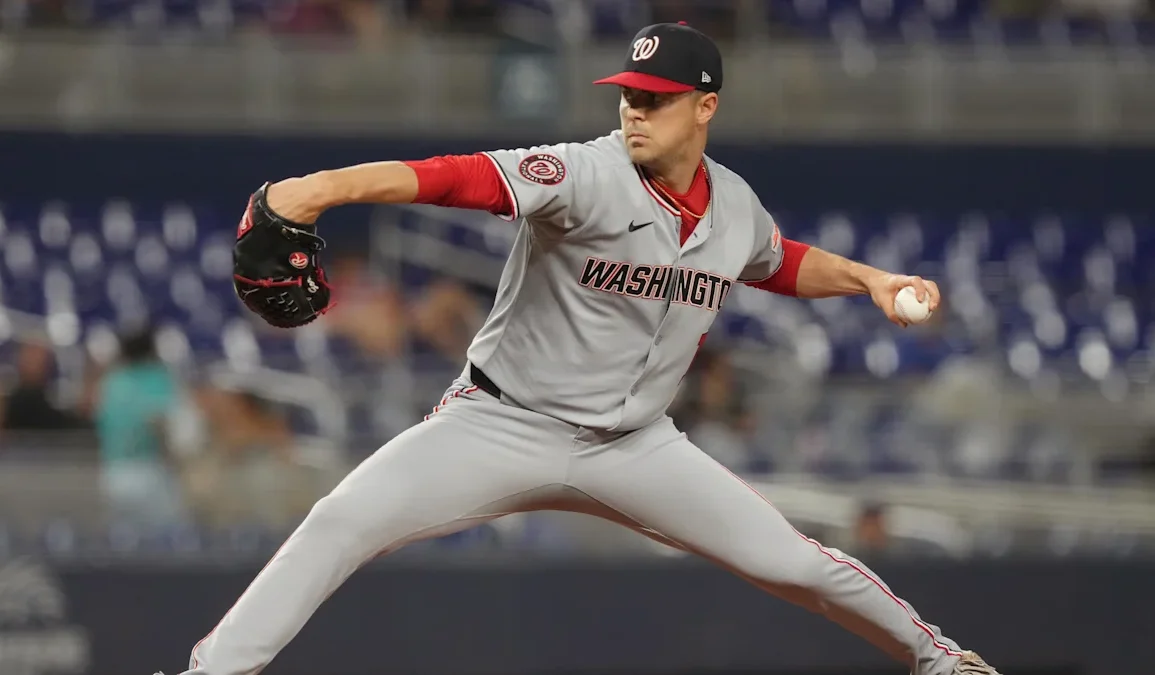
The Texas Rangers and Washington Nationals pulled off a significant six-player trade on Thursday, sending left-handed starter MacKenzie Gore from Washington to Arlington. In exchange, the Nationals received five prospects, including shortstop Gavin Fien, who was the 12th overall pick in last summer’s draft. The move represents a major shakeup for both clubs, with Texas aiming to improve its rotation while Washington focuses on building for the future.
The Rangers’ acquisition of Gore comes as a surprise after a relatively quiet offseason. Following a .500 campaign last season, Texas non-tendered outfielder Adolis García and catcher Jonah Heim, traded Marcus Semien for Brandon Nimmo, and added only a handful of free agents, including catcher Danny Jansen and relievers Alexis Díaz, Jakob Junis, and Tyler Alexander. Despite this modest activity, Texas emerged as the winning bidder for Gore, signaling its commitment to bolstering its starting rotation.
The addition of Gore gives the Rangers a formidable top three of Jacob deGrom, Nathan Eovaldi, and Gore, one of the strongest rotations in the American League. Offensively, Texas ranked near the bottom of the league in runs scored and wRC+ last season, but the lineup has potential to improve.
Contributions from DH Joc Pederson, first baseman Jake Burger, and highly regarded prospects such as infielder Sebastian Walcott could provide a lift, giving the Rangers a better chance to contend. While questions remain about the depth of the rotation and the effectiveness of the bullpen, any team capable of 80-plus wins in the three wild-card era has a legitimate shot at October. The trade, though costly to the farm system, strengthens Texas’ immediate competitiveness and improves its odds over the next two seasons.
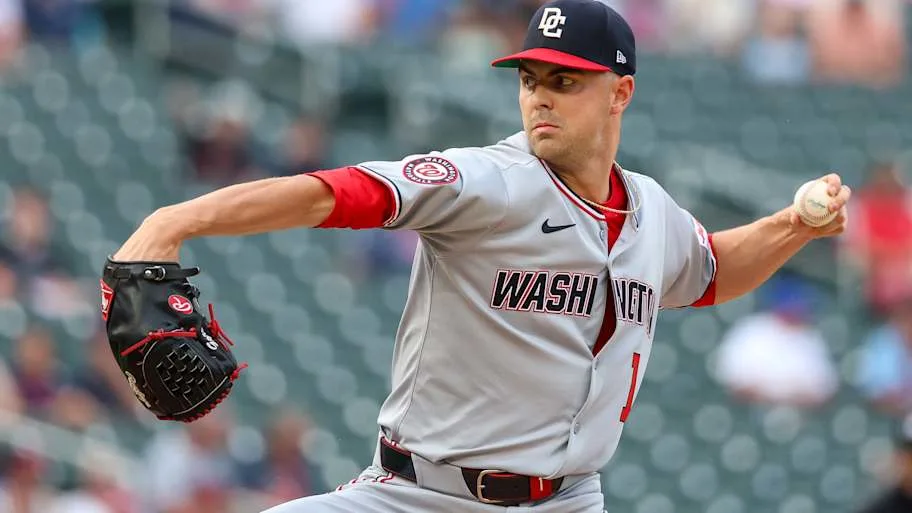 MacKenzie Gore (MLB)
Gore Shows Elite Arsenal Despite Inconsistency, Offering Potential As Top Rotation Starter
Gore, who turns 27 in February, has experienced both highs and lows in his career. Selected third overall in the 2017 Draft, he drew early comparisons to Clayton Kershaw due to his left-handed delivery and feel for breaking balls. However, his career was nearly derailed by a bout with the yips. Since then, he has compiled a 4.19 ERA and a 2.64 strikeout-to-walk ratio over 105 major-league starts, making his first All-Star Game appearance last season. Despite this recognition, Gore struggled down the stretch, finishing with a 6.75 second-half ERA and walking more than five batters per nine innings.
Gore’s value, however, extends beyond surface-level statistics. Modern analytics and training allow teams to project performance based on underlying skill sets rather than past results. Gore throws five pitches: a mid-90s fastball, three breaking balls, a curve, a slider, a hard cutter, and a changeup. His fastball, particularly impressive for a 5-foot-7 lefty, induces above-average vertical movement, while each of his secondary pitches has generated whiff rates exceeding 35 percent. These tools suggest that, if optimized, Gore could be a top-of-the-rotation starter.
Rangers Hope Gore’s Development Unlocks Rotation Potential While Balancing Risk And Reward
Gore’s career has been hindered by command issues, as he has averaged nearly four walks per nine innings. He rarely locates his cutter or changeup within the strike zone and overuses his fastball against right-handed hitters. The Rangers have the opportunity to refine his pitch selection and approach, potentially unlocking his full potential. Should Gore improve, he not only enhances the team’s rotation but also becomes a valuable asset that could be traded in the future to recoup some of the prospects surrendered in the deal.
This trade demonstrates the Rangers’ intent to compete in the near term. By adding Gore to a rotation anchored by deGrom and Eovaldi, Texas significantly improves its starting pitching depth. While offensive production and bullpen reliability remain areas of concern, the potential benefits of Gore outweigh the immediate cost to the farm system. If Gore reaches his ceiling, the Rangers stand to gain a highly impactful starter, immediate wins, and the flexibility to leverage him as a trade asset down the line.
The Texas Rangers’ acquisition of MacKenzie Gore is a calculated move to strengthen their rotation and position themselves as serious contenders. Despite some command issues and concerns about depth, Gore’s underlying skill set makes him a potentially transformative addition. For the Nationals, the trade bolsters their farm system with five top prospects, setting the stage for long-term growth. In balancing immediate competitiveness and future flexibility, the Rangers’ trade earns a B-grade, reflecting both the opportunity and the risk involved. If Gore reaches his potential, the payoff could be substantial for Texas over the next several seasons.