

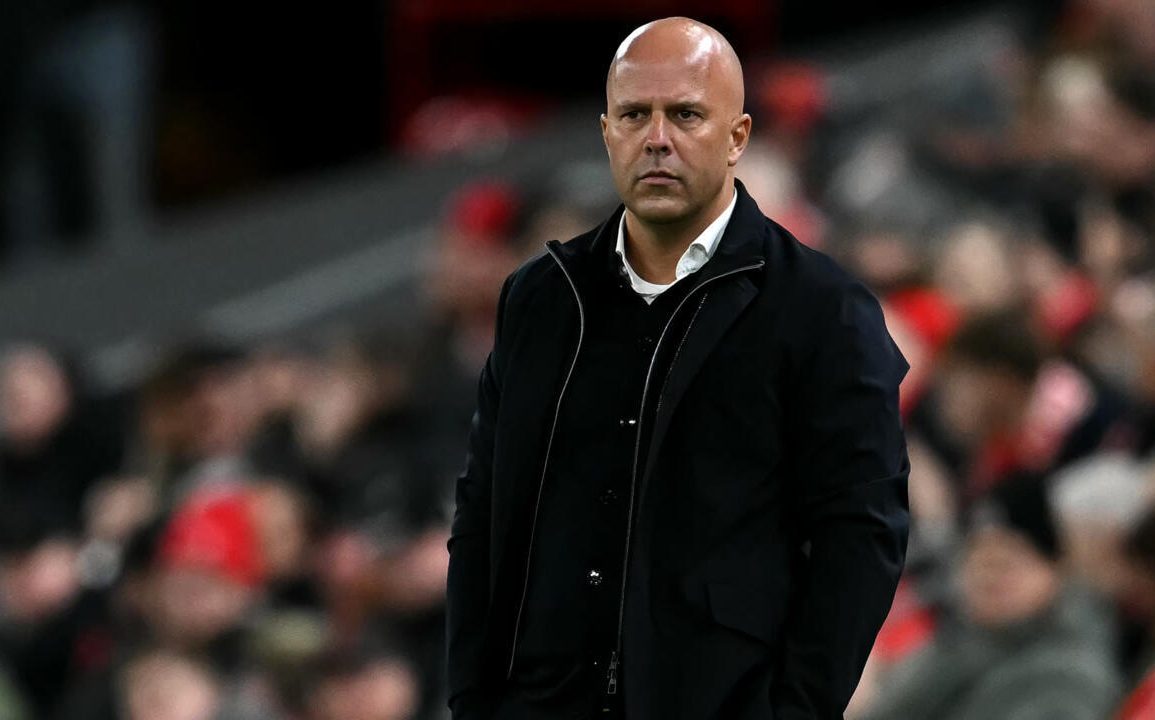
Liverpool’s 13-game unbeaten run disguised the problems brewing under the surface, but Amine Adli’s 95th-minute winner for Bournemouth revealed the cracks. The reigning champions are now winless in their last five Premier League matches, with four draws and a defeat. Aside from a stalemate against Arsenal, Liverpool’s recent fixtures against Leeds, Burnley, Fulham, and Bournemouth highlighted a side struggling to impose itself, both defensively and offensively.
Once feared across the league, Liverpool no longer carries the aura of their title-winning season. Defensive errors were costly, and attacking play lacked inventiveness. Former striker and pundit Alan Shearer remarked, “Liverpool just don’t look right in all areas. They’re making too many errors and are weak defensively, as we saw with the winning goal. While they scored two goals from set-pieces, they didn’t create anywhere near enough from open play.”
Liverpool’s Defensive Errors and Poor Game Management Cost Them Against Bournemouth
Bournemouth, weakened by injuries and missing key striker Antoine Semenyo, entered the match with just one win in 14 games, yet ruthlessly exposed Liverpool’s flaws. Virgil van Dijk’s miscue allowed Evanilson to score the opening goal, a mistake that, while partly influenced by wind conditions according to Bournemouth’s Arne Slot, was entirely avoidable. Liverpool compounded their problems after Joe Gomez’s injury.
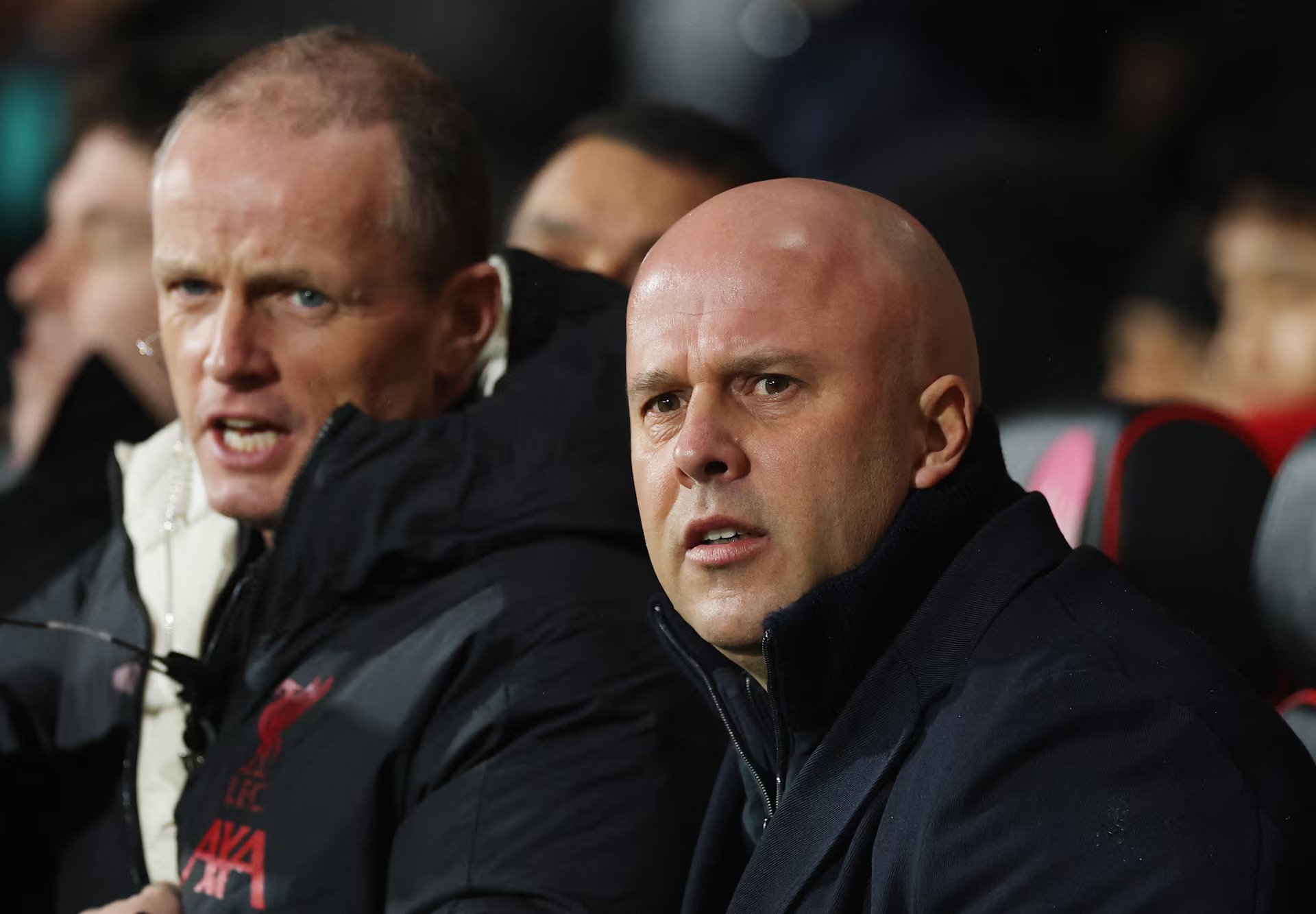 Liverpool’s Title Defence in Crisis After Bournemouth Expose Defensive Frailties and Fatigue
Rather than putting the ball out of play to allow a substitution, Liverpool lost possession, leading to Bournemouth’s second goal by Alex Jimenez. Slot reflected, “Maybe that sums up our season. It’s every time something else, it’s every time something special how we concede. But we concede and the only ones to blame are ourselves.”
The match exposed Liverpool’s inability to manage game situations, with late-game defensive lapses allowing Bournemouth to secure a stoppage-time winner. This was the third instance this season Liverpool conceded a 90th-minute winning goal, contributing to five points dropped in stoppage time. Additionally, Bournemouth’s second goal highlighted Liverpool’s vulnerability to throw-in situations, marking the fifth goal they’ve conceded from such a set-piece this season, the most of any Premier League team.
Liverpool’s Fatigue and Injuries Expose Team Weaknesses Against Lower-Ranked Opponents
Liverpool’s struggles were partly exacerbated by fixture congestion. Slot pointed out the toll of midweek European fixtures, including an away game in Marseille just two days earlier. By the hour mark, injuries forced Joe Gomez, Milos Kerkez, and Jeremie Frimpong off the pitch. While Liverpool still called upon senior players like Endo, Andy Robertson, Curtis Jones, and Hugo Ekitike from the bench, fatigue and limited squad depth were evident. Slot acknowledged that several players “ran out of energy” and praised them for giving their all despite exhaustion.
Despite these mitigating factors, Bournemouth’s win was a product of determination and opportunism. They chased the game relentlessly, losing a two-goal lead before eventually scoring in the 95th minute to clinch victory. Slot noted that Bournemouth could have made it 3-2 earlier, but their persistence was rewarded, reflecting Liverpool’s ongoing inability to close out matches against lower-ranked teams.
The loss to Bournemouth underscores the harsh reality of Liverpool’s Premier League campaign. If Arsenal secures a victory against Manchester United, Liverpool will sit closer to the relegation zone than the top of the table, emphasizing the collapse of their title defence. Shearer noted, “Their aim has to be salvaging the season by qualifying for the Champions League with a top-four or perhaps top-five finish – but that’s a big drop-off from what we saw last season.”
Liverpool’s current squad possesses the quality to challenge for the title next season, but the team has lost its identity and psychological edge this season. Defensive frailties, poor game management, and an inability to handle high-pressure situations have transformed a once-dominant team into one that is no longer feared. The Bournemouth result serves as a stark reminder that Liverpool must rebuild consistency, address squad depth, and restore confidence if they hope to return to championship contention.
This 5-0 collapse exposes not only tactical errors but also the physical and mental strain on players, signaling that Liverpool’s priority now should be regrouping, managing injuries, and preparing for a more competitive campaign next season.