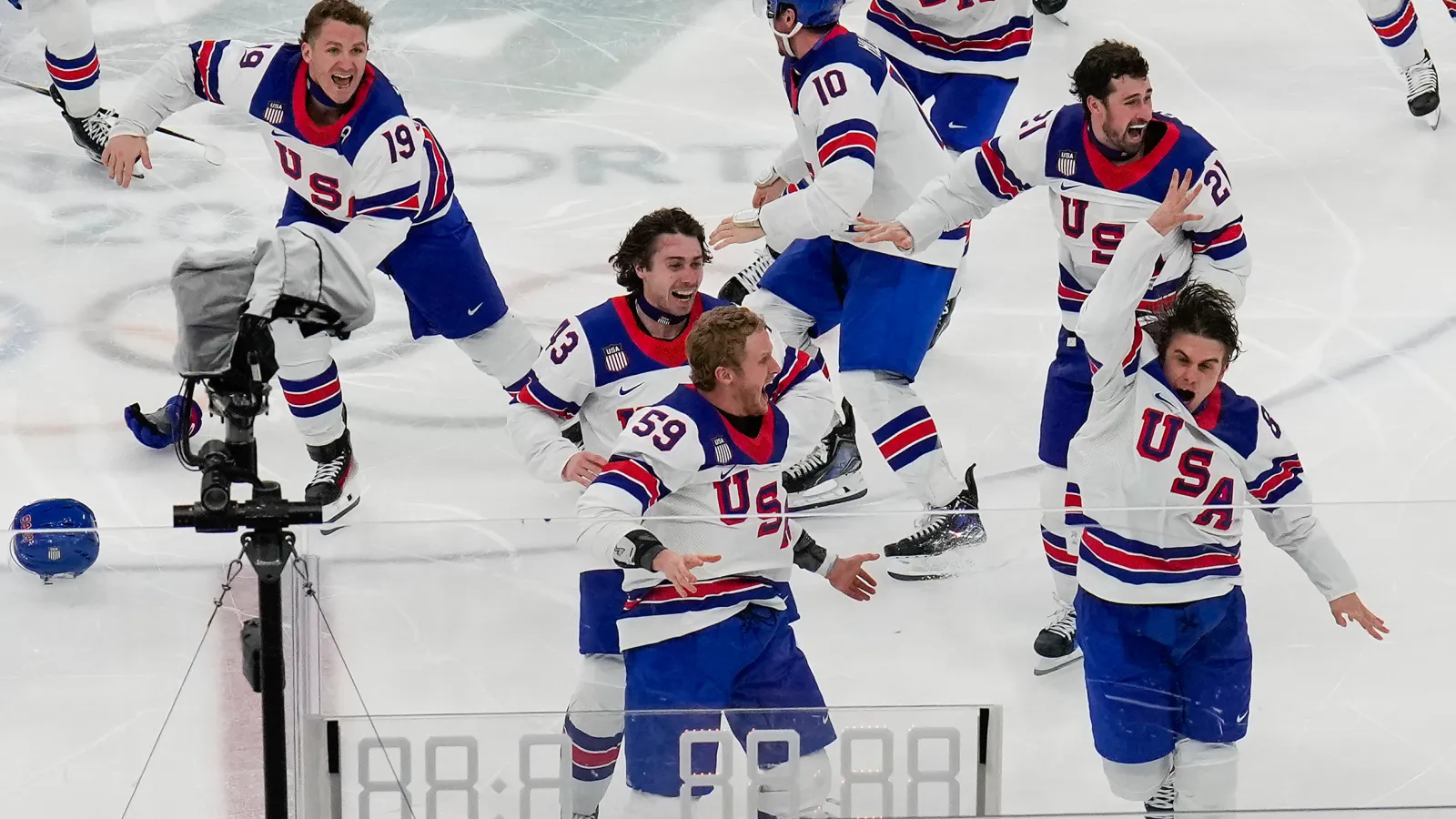
The United States men’s hockey team reached the pinnacle of international competition by defeating Canada 2-1 in overtime to win gold at the Milan Cortina Olympics. Jack Hughes scored just 1:41 into the three-on-three overtime period, cementing a victory that marked the first men’s Olympic title for the U.S. since the legendary “Miracle on Ice” in 1980. Unlike the college squad of Lake Placid, this team was built on NHL talent and meticulous planning, going unbeaten throughout the tournament.
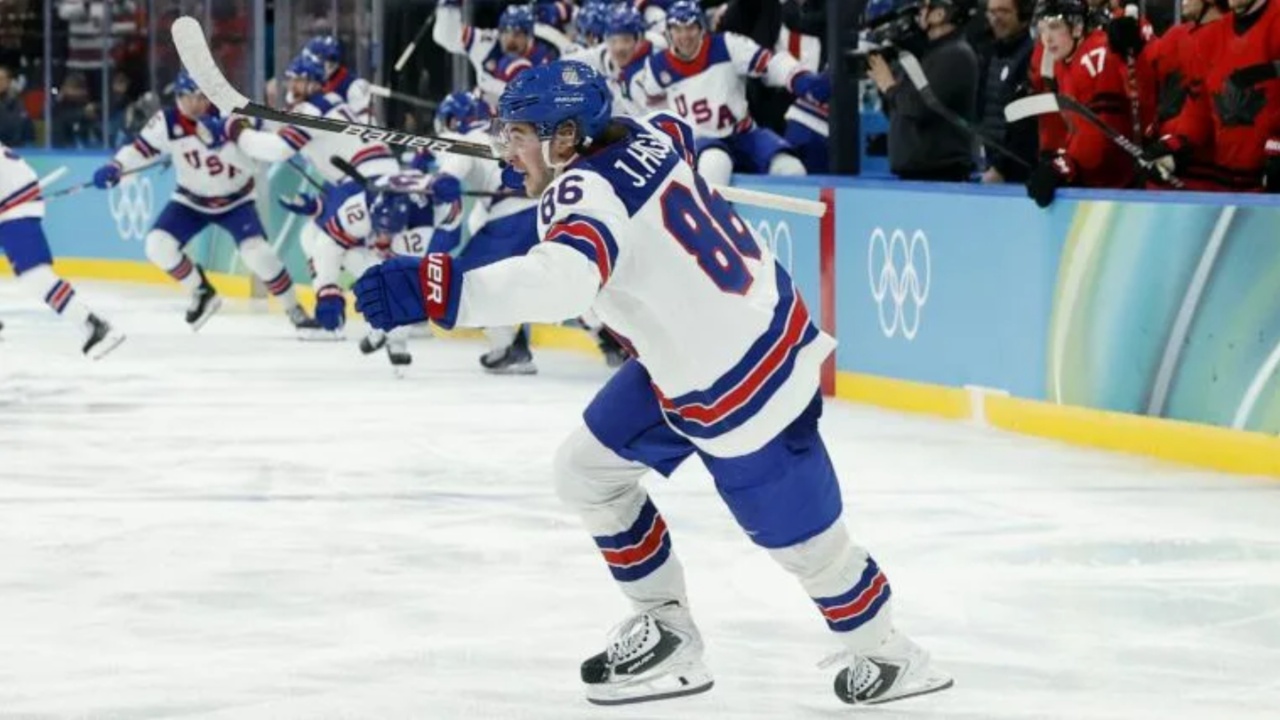
The final was a showcase of speed, skill, and resilience. Zach Werenski initiated the decisive play by stealing the puck from Canada’s Nathan MacKinnon and passing to Hughes, who raced down the ice and fired past Jordan Binnington. The bench erupted as the Americans celebrated, while the Canadians watched from the sidelines. Auston Matthews, team captain, described Hughes’ goal as the moment that defined his Olympic debut.
Amid the celebrations, a poignant tribute honored the late Johnny Gaudreau. Werenski and Matthew Tkachuk carried a Gaudreau No. 13 jersey across the ice to pay respect to the player who died alongside his brother in 2024. Gaudreau’s family, including widow Meredith and children, joined the team on the ice, creating an emotional moment that highlighted the tight-knit nature of the hockey community. Brady Tkachuk emphasized that the tribute was a way to recognize a teammate who meant so much to the group.
Goaltender Connor Hellebuyck was instrumental to the U.S. triumph. Facing 42 shots from a relentless Canadian offense, he made critical stops, including a key deflection on a Devon Toews attempt and a breakaway save against Nathan MacKinnon. Hellebuyck’s dominance extended through the tournament, with 131 saves on 137 shots, earning praise from teammates who credited him as the backbone of the team. Winger Matt Boldy called him the team’s MVP, noting his composure under pressure and ability to perform in high-stakes moments.
Relentless Final, Elite Development, And Team Chemistry Powered U.S. Gold Medal Triumph
The gold medal game was intense from start to finish, featuring big hits, fast-paced transitions, and post-whistle confrontations. Matt Boldy scored the opening goal six minutes into the game, giving the Americans an early lead. Canada responded late in the second period with a Cale Makar goal, tying the game. Hellebuyck’s performance and the perfect penalty kill, which successfully defended 17 opportunities during the Olympics, kept the team competitive. Jack Hughes endured a high stick to the face, losing teeth, yet returned to celebrate the victory, demonstrating the team’s grit and determination.
This U.S. squad reflects decades of talent cultivation through USA Hockey’s National Team Development Program. All but two of the 25 players participated in the program, including Matthews, the Tkachuk brothers, Jack and Quinn Hughes, and Jack Eichel. Many had played together in youth leagues, under-18 tournaments, and World Junior Championships, fostering chemistry that proved decisive in high-pressure moments. The strategic roster selection by General Manager Bill Guerin, emphasizing team balance and role specialization over individual scoring prowess, received validation with the gold medal.
Coach Mike Sullivan praised the team’s construction, describing it as a blend of versatile, high-character players capable of thriving in all situations. He emphasized that the roster combined experience with youth, creating a team capable of adapting to challenges while maintaining cohesion. Players themselves highlighted the strength of the “USA Hockey brotherhood,” with camaraderie and trust shaping both on-ice performance and off-ice support.
The victory also marked a turning point in U.S.-Canada hockey rivalry. Canada, reigning champions in 2010 and 2014 and dominant in most international competitions, entered the final without injured captain Sidney Crosby. The two-time gold medalist left the quarterfinal against Czechia and the semifinal against Finland, allowing Connor McDavid to lead the team as captain. Despite the absence of Crosby, the Canadians presented a formidable challenge, but the Americans’ preparation, discipline, and teamwork proved decisive.
The U.S. win highlights the success of long-term development efforts. Generations of players trained through structured programs, youth leagues, and national competitions provided the foundation for this team. Familiarity among teammates translated into precise passing, tactical positioning, and shared understanding on the ice. Every player understood their role, from scoring forwards to defensive specialists, resulting in a harmonious system that delivered when it mattered most.
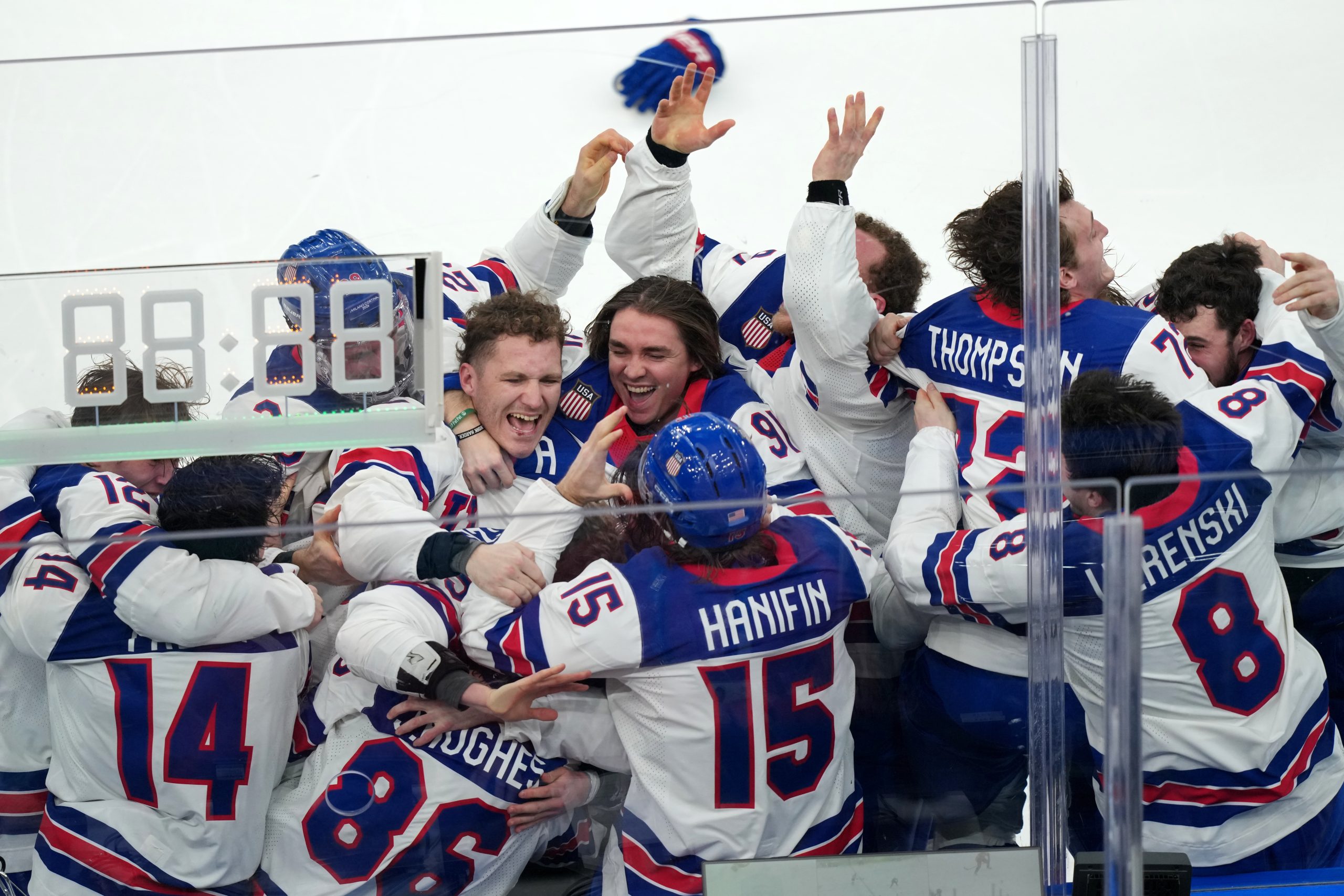
Resilience, Teamwork, And Leadership Propelled The U.S. Hockey Team To Historic Victory
Beyond technical skill, the team demonstrated resilience and character. Hughes endured a painful injury yet continued to compete, reflecting the toughness instilled in the group. Hellebuyck’s calm under relentless pressure allowed the team to withstand Canadian assaults. The tribute to Gaudreau highlighted the team’s emotional depth, showing that they could balance competitive intensity with compassion and respect for teammates.
The Americans’ success is a testament to careful planning, talent cultivation, and unshakable team spirit. Their journey through the Milan Cortina Olympics combined offensive creativity, defensive discipline, and goaltending brilliance. The final against Canada, a team with multiple recent international titles, tested every aspect of their preparation and resolve, making the victory even more remarkable.
Jack Hughes’ overtime goal will be remembered as a historic moment, signaling the emergence of a new generation of U.S. hockey stars capable of competing with the world’s best. Hellebuyck’s heroics, Matthews’ leadership, and the seamless integration of experienced NHL players and national program alumni created a cohesive, adaptable, and resilient team. With this gold medal, the United States reclaims its position atop the hockey world, ending a 46-year wait and paying homage to the legacy of 1980 while establishing a modern dynasty.
The U.S. men’s hockey team’s Olympic triumph demonstrates that preparation, talent development, and teamwork can overcome historical odds and formidable opponents. It is a celebration of the strength of American hockey, the effectiveness of national development programs, and the power of unity and shared purpose on and off the ice. This victory sets a high standard for future teams and reaffirms the United States’ role as a dominant force in international hockey.