

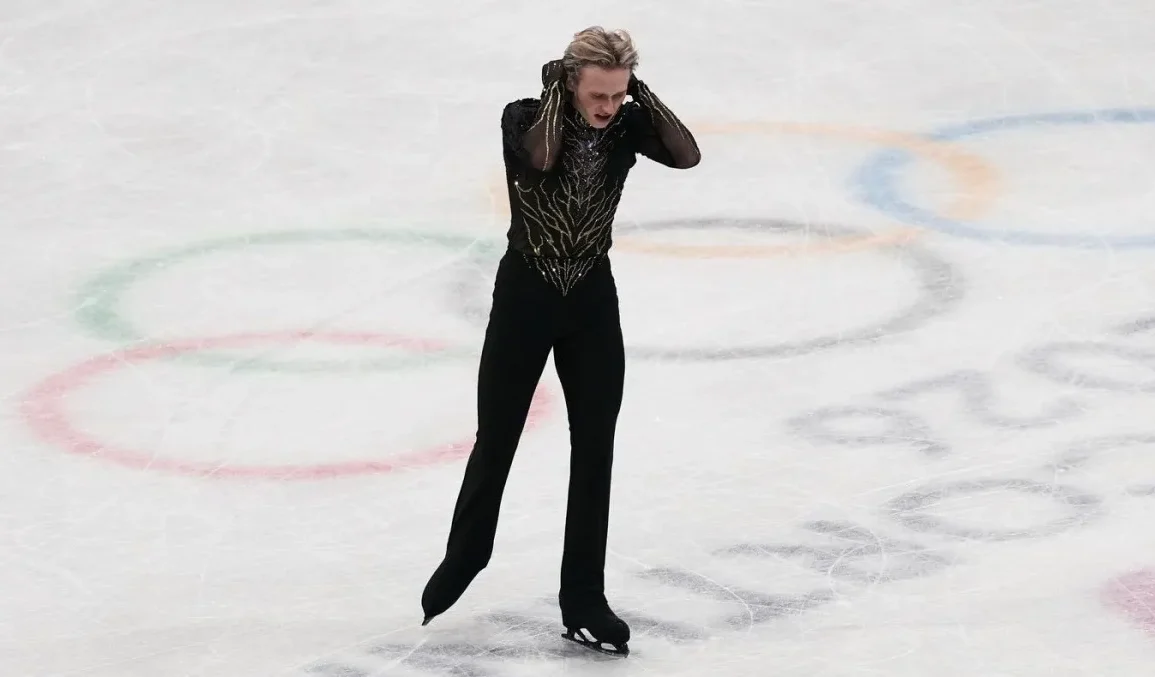
On Friday night at the Milano Ice Skating Arena, Ilia Malinin, widely known as the “Quad God,” experienced one of the most stunning upsets in recent Olympic history. The 21-year-old American, expected to dominate the men’s figure skating competition, fell twice and made several critical mistakes during his individual free skate, ultimately finishing eighth. The audience, which included Olympic champions and Hollywood celebrities, watched in stunned silence as Malinin’s flawless streak came to an unexpected end.
Afterward, Malinin spoke from the arena tunnels, struggling to make sense of his performance. “Honestly, I still haven’t been able to process what just happened,” he said. Despite feeling confident throughout the day and believing he was fully prepared, Malinin admitted that the intensity of the Olympics overwhelmed him. “It’s not like any other competition. People don’t realize the pressure and the nerves that actually happen from the inside. I just felt like I had no control.”
Shaidorov Seizes Historic Olympic Gold While Malinin Falters Under Unprecedented Winter Games Pressure
While Malinin faltered, Kazakhstan’s Mikhail Shaidorov delivered the performance of his life, claiming the nation’s first gold medal of the Winter Games. Shaidorov, also 21, had been a relative underdog, sitting sixth after the short program. Known for his high-flying jumps but inconsistent performances, he executed a technically flawless free skate, landing five quads and achieving a personal best score of 291.58 points.
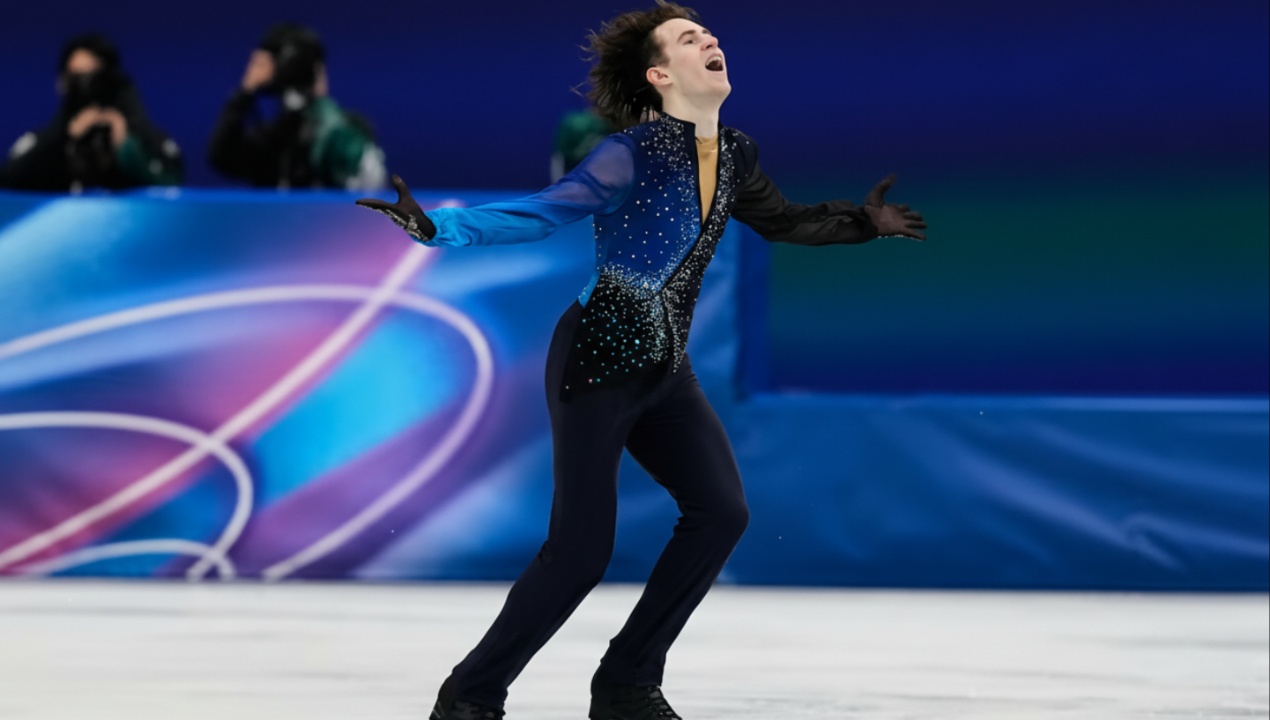 Ilia Malinin Stumbles While Mikhail Shaidorov Claims Historic Olympic Victory
“It was my goal,” Shaidorov said simply. “It’s why I wake up and go to training. That’s it.” His triumph not only marked a milestone in his career but also provided a historic moment for Kazakhstan, as he rose to the top of the podium amid a star-studded audience.
Malinin’s Olympic campaign had already been marked by unexpected challenges. During the team event, he was defeated by Japan’s Yuma Kagiyama in the short program, signaling the growing pressure of Olympic competition. Although he recovered with a head-to-head win over teammate Shun Sato in the team free skate, helping the U.S. secure its second consecutive gold, he was not yet fully dominant.
By the individual short program, however, Malinin appeared to regain his confidence. He led Kagiyama and France’s Adam Siao Him Fa by five points, suggesting that gold was within reach. The expectation was that Malinin’s unmatched technical skill would carry him through the free skate.
Malinin’s free skate began promisingly with a quad flip, followed by a recovered quad lutz after an aborted quad axel attempt. However, his momentum quickly faltered. He doubled a planned quad loop, disrupting his timing, fell on a quad lutz, and was unable to complete a critical combination jump. His final pass, intended to feature a quad salchow-triple axel combination, resulted in a double salchow with another fall.
The result was devastating: Malinin finished with 264.49 points, his lowest total in nearly four years, ending a two-year unbeaten streak that had spanned 14 competitions. “Honestly, yeah, I was not expecting that,” he said. “I think maybe I was too confident it was going to go well.” Even fellow competitors were surprised. Italy’s Daniel Grassl remarked, “He never messes up, so obviously we’re all a little surprised by how it went.”
Olympic Pressures Expose Malinin’s Struggles While Shaidorov Seizes Historic Victory Under Scrutiny
The audience, which included Nathan Chen, seven-time Olympic gymnast Simone Biles, and actors Jeff and Emilie Goldblum, witnessed a rare vulnerability from Malinin. Despite his calm during warmups and flawless practice jumps, he struggled to recover once the mistakes began. “I knew that I could not necessarily have a perfect program and still manage to have a good skate,” he said. “But something felt off, and I don’t know what it was specifically. I’m still trying to understand what that was.”
Malinin’s experience illustrates how even the most prepared athletes can be affected by the unique pressures of the Olympic stage, where nerves and expectation weigh more heavily than at any other competition.
In contrast, Shaidorov thrived under pressure. His technically perfect performance, landing five quads without error, allowed him to leap from an underdog position to the top of the podium. Kagiyama claimed silver for the second consecutive Olympics, while Sato earned bronze.
Shaidorov’s victory demonstrates the unpredictable nature of Olympic competition. While favorites can falter under the intense scrutiny, athletes able to combine skill with composure can seize the moment and create history. His performance marked both a personal breakthrough and a historic achievement for his country.
Malinin’s dramatic collapse and Shaidorov’s triumph highlight the razor-thin margin between success and disappointment at the Olympics. Elite athletes, even those with long winning streaks, are vulnerable to the pressure and mental demands of the Games. Confidence, timing, and mental resilience are as critical as physical skill.
For Malinin, the experience will likely serve as a challenging but important chapter in a career already marked by groundbreaking achievements. For Shaidorov, it represents a defining moment that could shape the future of his skating career. Together, their performances underscore the unpredictability, intensity, and emotional drama that make Olympic competition unlike any other sporting stage.