

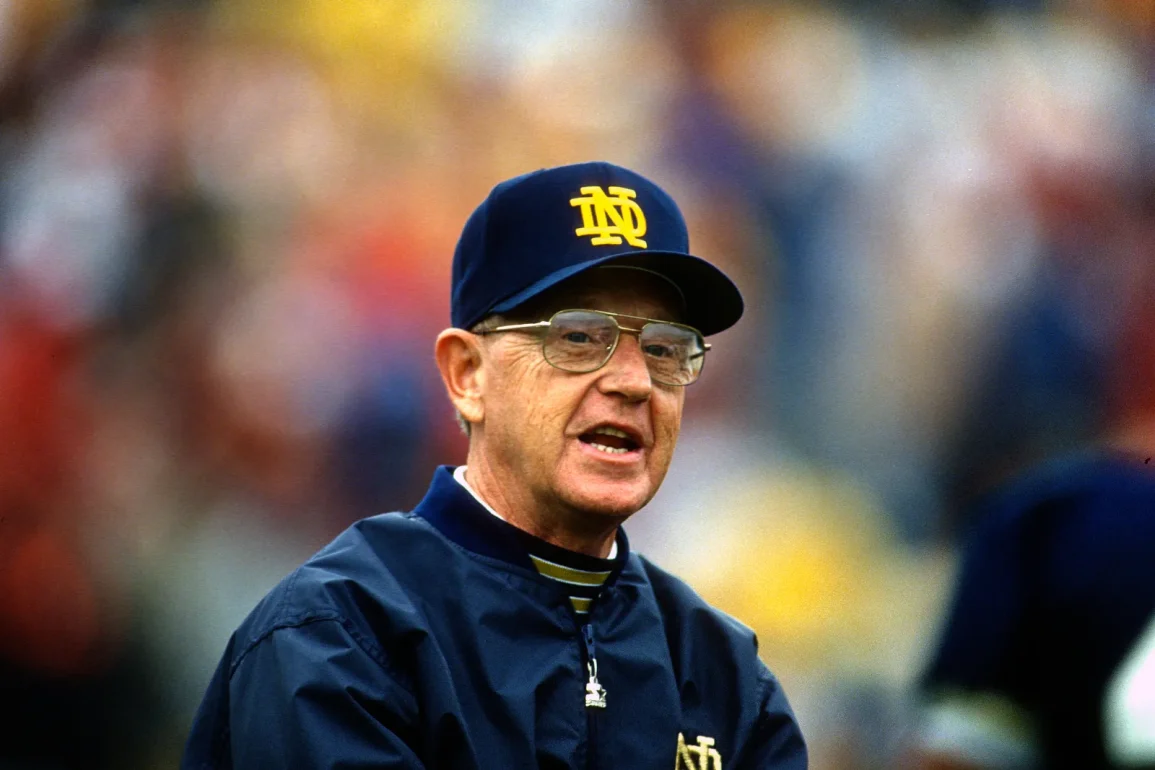
Legendary college football coach Lou Holtz, one of the most recognizable figures in the sport’s history, died Wednesday at the age of 89. His family confirmed that he passed away at his home in Orlando, Florida, surrounded by loved ones. Over a career that spanned more than five decades, Holtz built a reputation as a transformational leader, guiding multiple college football programs to success and leaving a lasting legacy both on and off the field.
Holtz was born on January 6, 1937, in Follansbee, West Virginia. Raised in a modest environment, he developed a strong work ethic that would later define his coaching philosophy. Before becoming a coach, Holtz played college football at Kent State University. His coaching career began in 1960 as an assistant at his alma mater, launching a journey that eventually made him one of the most respected figures in college athletics.
Throughout his career, Holtz served as head coach at several major programs, including the College of William & Mary, North Carolina State University, the University of Arkansas, the University of Minnesota, the University of Notre Dame, and the University of South Carolina. At each stop, he developed a reputation for revitalizing struggling programs and building competitive teams. Holtz remains the first coach in NCAA history to lead six different programs to bowl game appearances, a testament to his ability to quickly turn teams into contenders.
Notre Dame Championship Run Cemented Lou Holtz Legacy as One of College Football’s Most Influential Coaches
Holtz achieved his greatest success with the Notre Dame Fighting Irish. He served as head coach from 1986 through 1996 and compiled an impressive record of 110–20–2 during that period. His most memorable season came in 1988, when Notre Dame finished with a perfect 12–0 record and won the national championship. The Fighting Irish secured the title by defeating the West Virginia Mountaineers 34–21 in the Fiesta Bowl. That championship remains Notre Dame’s most recent national title in football.
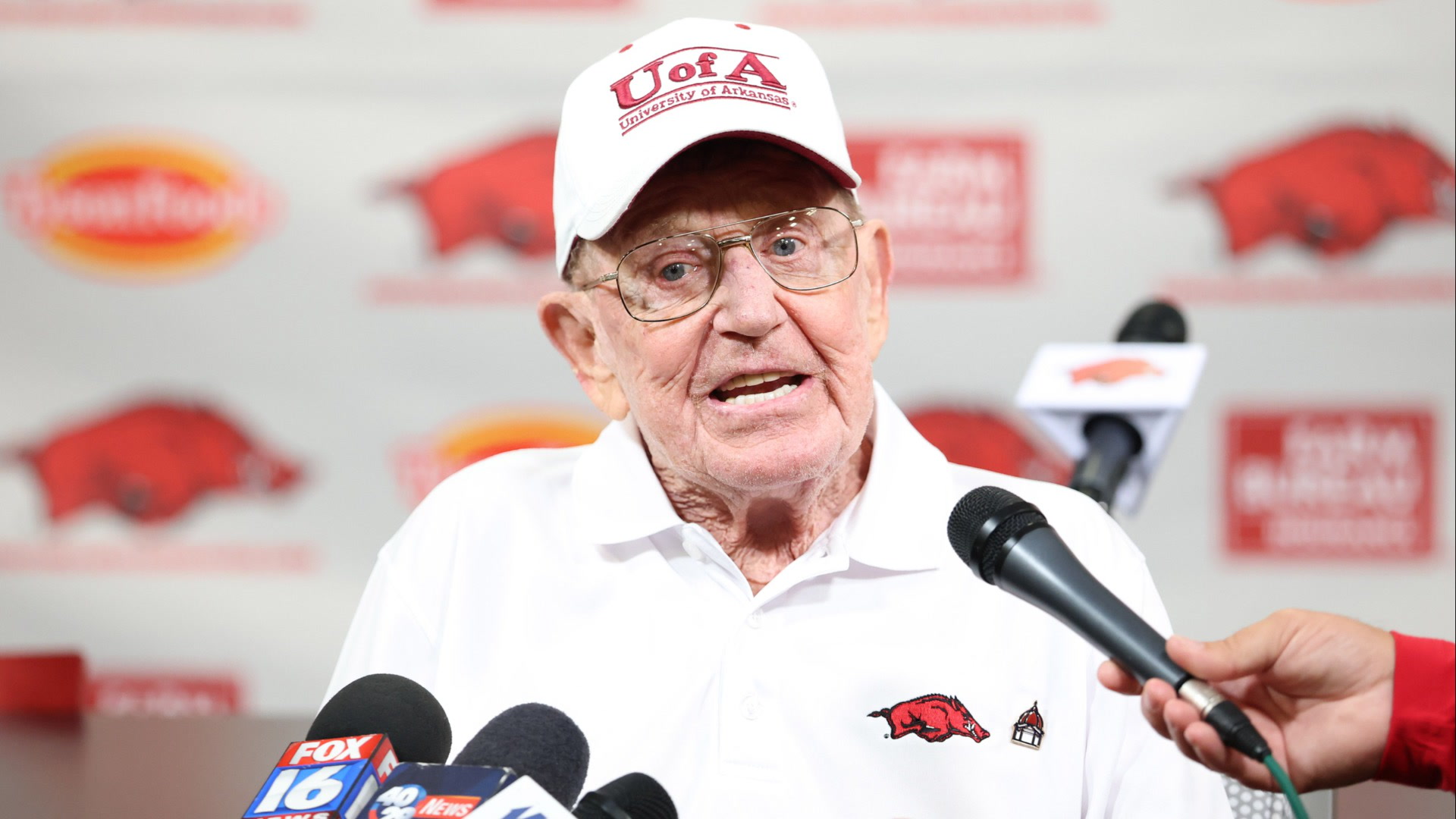 Legendary College Football Coach Lou Holtz Dies at 89, Leaving Lasting Legacy at Notre Dame and Beyond
By the time he retired from coaching, Holtz had accumulated a career record of 249–132–7 across 388 games. His accomplishments were recognized in 2008 when he was inducted into the College Football Hall of Fame. His influence extended beyond wins and losses, as many former players often credited him with shaping their lives through his focus on discipline, character, and leadership.
After stepping away from coaching, Holtz remained closely connected to the sport as a television analyst. He became a familiar voice on ESPN, where he provided commentary and insight on college football for many years. Holtz also authored several books, including the bestselling autobiography Wins, Losses, and Lessons, in which he reflected on the principles that guided his career and personal life.
Beyond football, Holtz became known as a motivational speaker and advocate for leadership and personal development. His family described him as someone who believed strongly in faith, family, and service. Through the Holtz Charitable Foundation, he supported numerous charitable efforts and educational initiatives. His influence reached far beyond the football field, impacting players, students, and communities across the country.
Lou Holtz Honored With Presidential Medal of Freedom and Remembered for Lasting Legacy
In later years, Holtz also became involved in public life and politics. He openly supported Donald Trump and spoke at the 2020 Republican National Convention. In December 2020, Trump awarded Holtz the Presidential Medal of Freedom, the highest civilian honor in the United States. During the ceremony at the White House, Trump praised Holtz for his leadership and the impact he had on generations of players and fans.
Holtz often said that his work extended beyond coaching football. One of his most famous remarks was that he did not simply coach the sport but instead “coached life,” a philosophy reflected in the loyalty and admiration expressed by many of his former players.
He is survived by his four children, nine grandchildren, and two great-grandchildren. His wife, Beth Holtz, who was married to him for more than 50 years, preceded him in death.
Lou Holtz leaves behind a legacy defined by competitive excellence, strong values, and an enduring influence on college football. His leadership shaped numerous programs and inspired generations of athletes, ensuring that his impact will continue to be felt throughout the sport for years to come.