

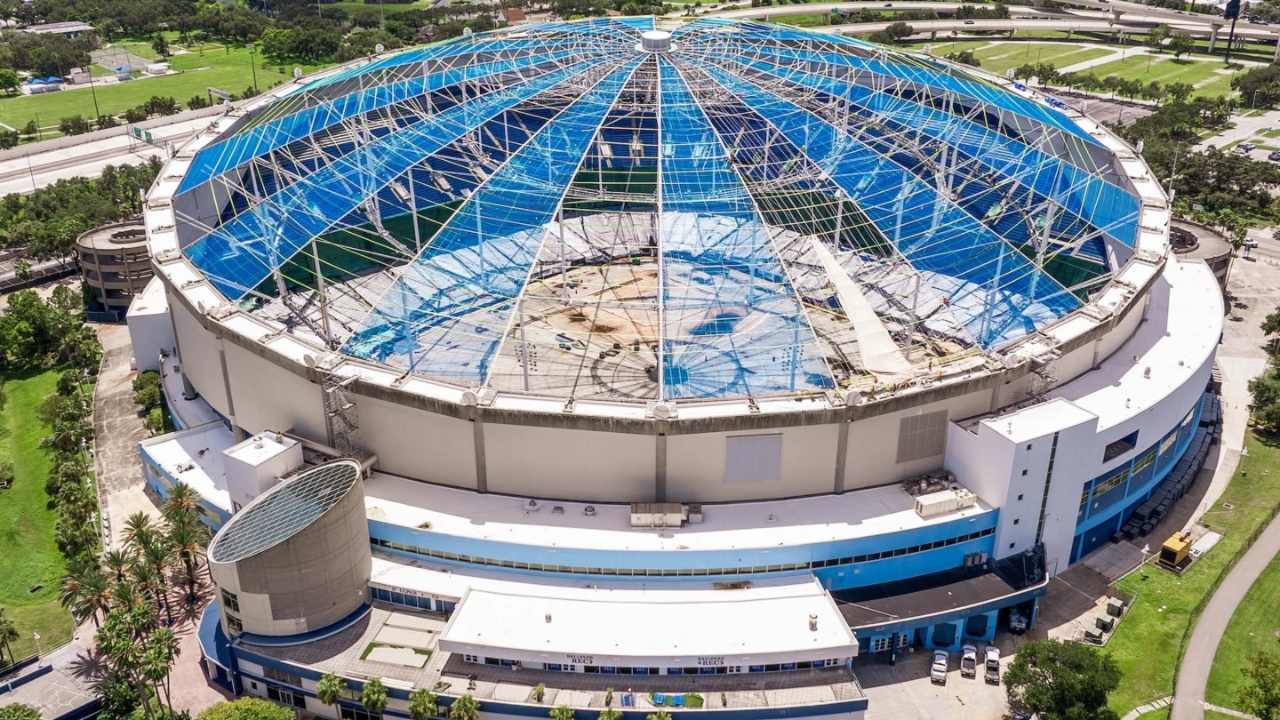
After 18 months of displacement, the Tampa Bay Rays are finally returning to Tropicana Field, marking the first proper home game since Hurricane Milton devastated the stadium in September 2024. The hurricane not only tore off the stadium’s roof but also caused extensive interior damage, leaving the Rays to play the 2025 season in temporary quarters at George M. Steinbrenner Field, the Yankees’ spring training facility.
The team faced unusual challenges, from makeshift clubhouses to playing in a stadium with another team’s logos on the seats. This period coincided with the collapse of a $1.3 billion stadium deal and a change in ownership, making the Rays’ future one of the most uncertain in franchise history.
Monday’s home opener is therefore a milestone, but largely symbolic. The city of St. Petersburg invested nearly $60 million to refurbish Tropicana Field, replacing the roof, turf, and lights, while modernizing training, recovery, and player amenities.
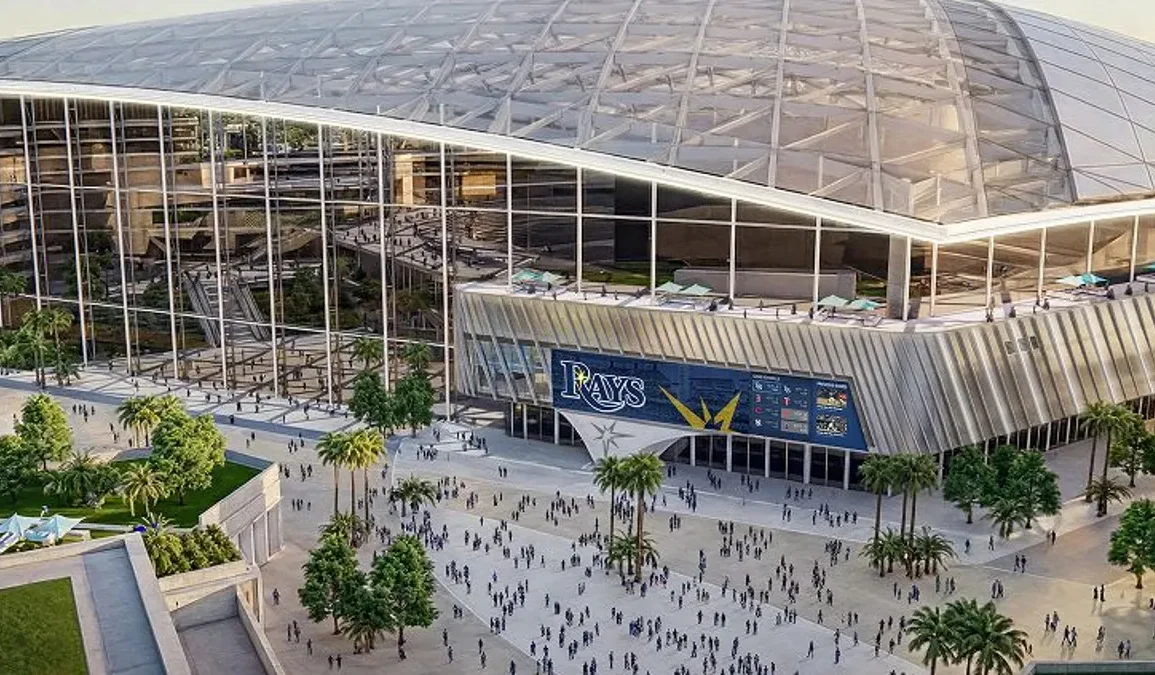
Suites were upgraded, and fan-focused areas such as the fourth-floor Baldwin Group Club and a new home plate club with a craft candy shop were added. Rays CEO Ken Babby emphasized that while the renovations are welcome, Tropicana Field is not a long-term solution. The team remains committed to a permanent stadium in Tampa, envisioning a modern facility integrated into a 130-acre mixed-use development near Dale Mabry Highway.
The proposed $2.3 billion stadium project would be partially funded by the public, $1.15 billion, with the Rays covering the remaining cost and any overages. The plan includes retail, housing, entertainment, and enhancements to Hillsborough Community College’s campus, which would temporarily relocate some operations during construction.
Babby has described the project as the Rays’ “forever home,” comparing it to Baltimore’s Camden Yards, which revitalized the Orioles’ franchise and downtown Baltimore in the 1990s. Renderings of the stadium show a modern glass-heavy design, aiming to create a year-round sports and entertainment district for Tampa Bay.
Public Concerns And Historic Challenges Highlight Rays’ Urgent Stadium Pursuit
Despite the excitement, public reaction has been mixed. Residents have voiced concerns over traffic, disruption to college life, and the use of taxpayer funds. Some questioned why alternative locations, such as historic Ybor City, were not considered.
Babby and the Rays argue that the site’s scale and accessibility make it ideal and that the project will generate economic benefits for the region, even as studies suggest stadium subsidies rarely fully pay for themselves. The Tampa Sports Authority has approved additional funding to study the stadium’s roof, but requested further details before fully endorsing the project. City and county council votes on the memorandum of understanding could occur in mid-April, a critical step toward making the stadium a reality.
 Rays Return to Tropicana Field Highlights Urgency for Permanent “Forever Home” Stadium
The Rays’ current lease at Tropicana Field runs through 2028, with the team aiming to break ground soon and have the stadium operational by Opening Day 2029. Meanwhile, the temporary return to Tropicana Field offers both fans and players a sense of normalcy. The internal renovations, modernized equipment, expanded fitness and recovery areas, and updated suites make the Trop feel revitalized. For players, the return represents stability and an improved environment; for fans, it’s a chance to reconnect with the home team after a long absence.
The history of Tropicana Field underscores the Rays’ urgency for a new stadium. Originally built in 1990 as the Florida Suncoast Dome, the facility predated the Rays’ 1998 inaugural season and quickly became outdated. Its indoor design, lack of neighborhood development, and low attendance plagued the team for decades, even as the Rays achieved competitive success in the American League East with a modest payroll.
Former owner Stuart Sternberg spent 20 years attempting to secure a new stadium, with his last proposal collapsing in the aftermath of Hurricane Milton. The current ownership, led by Patrick Zalupski, purchased the team for $1.7 billion and has prioritized a modern, permanent home to secure the franchise’s future in Tampa Bay.
Rays’ Forever Home Plan Combines Ballpark, Mixed-Use Development, And Community Integration
Zalupski’s proposal at the Hillsborough Community College site is ambitious, integrating a ballpark with a larger mixed-use development similar to Atlanta’s The Battery, but nearly twice as large. The plan incorporates housing, retail, entertainment, and education while leveraging private investment to minimize public risk. The development aims to create a destination for year-round sports and entertainment, making the Rays a central part of the Tampa Bay community and economy.
While Tropicana Field’s renovations are significant, they also serve as a reminder of the stadium’s limitations. The return is a moment of celebration, but highlights the need for a long-term solution. Babby describes the Trop’s restoration as an example of the team’s dedication and vision, yet the ultimate goal remains the construction of the “forever home” that will define the Rays’ presence in Tampa Bay for decades.
As the Rays take the field against the Chicago Cubs for their home opener, fans and players alike can appreciate the improvements, but the shadow of uncertainty persists. Tropicana Field, once a symbol of temporary compromise, now stands renewed yet temporary as a bridge to the Rays’ envisioned future in Tampa. Baseball is back at Tropicana Field, at least for now, while the franchise continues its pursuit of a stadium that could transform the team and the region.