

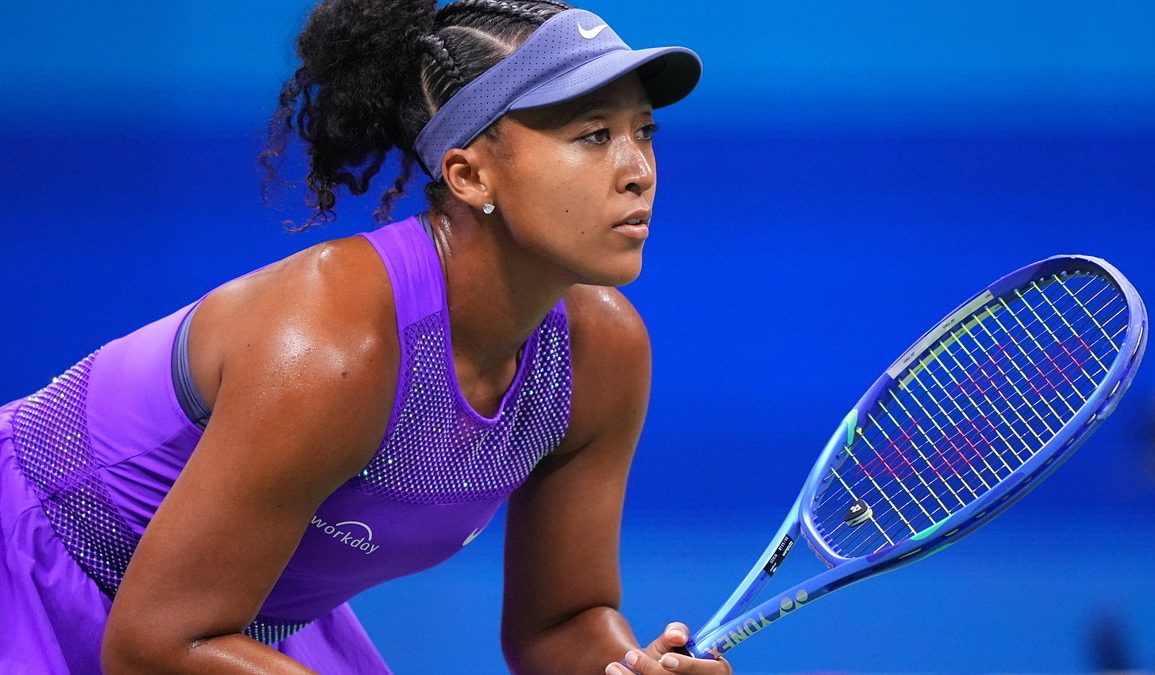
The courtside photographer pit at Margaret Court Arena was already packed 10 minutes before call time on Thursday night. With every camera focused on the players’ entrance, it was clear why everyone was there.
A day earlier, Naomi Osaka had delivered one of the most enduring images of the 2026 Australian Open, walking onto Rod Laver Arena in an outfit inspired by a jellyfish. This time, before her gritty, contentious 6-3, 4-6, 6-2 second-round win over Sorana Cirstea, she left the hat and veil in the locker room.
Osaka’s sartorial statements continue to provoke fascination. Alongside viral social media posts and debates about her fashion sense, some of tennis’s old guard have been vocal. Boris Becker, for instance, called her outfit “iconic,” but added a caveat:
“There is also a contradiction: on the one hand, she doesn’t want to be under so much pressure, she doesn’t want to be in the public eye and in the media so much, and then she comes on to centre court in an outfit like that,” he said.
This reaction has followed Osaka for years, recalling her 2021 French Open decision to skip post-match press conferences. She later revealed she had been struggling with depression.
That single incident, however, tells little about the player she has become. In the 125 matches she has played since, she has participated in media briefings after nearly every one. Five years is a long time, and Osaka, now 28, has evolved considerably.
Five years is also a long gap between major titles. Osaka, whose last grand slam win was at the 2021 Australian Open, is now attempting to compete again at the sport’s highest level.
After reaching the semifinals of the US Open last year and the final of the WTA 1000 event in Canada, she returned to the top 20, rekindling hopes of a fifth major title.
Yet her win over Cirstea, a savvy 35-year-old nearing retirement, offered mixed signals for her Melbourne campaign. Osaka struggled with erratic baseline play and an apparent abdominal issue, taking an off-court medical timeout as her serve speeds dipped.
There were moments, though, that reminded everyone of her exceptional talent. In the decisive third set, her destructive, precise shotmaking allowed her to close out the victory.
While the ultra-offensive nature of her game has been exposed at times in recent years, Osaka remains a ball striker of rare quality, few players can match her shotmaking ability.
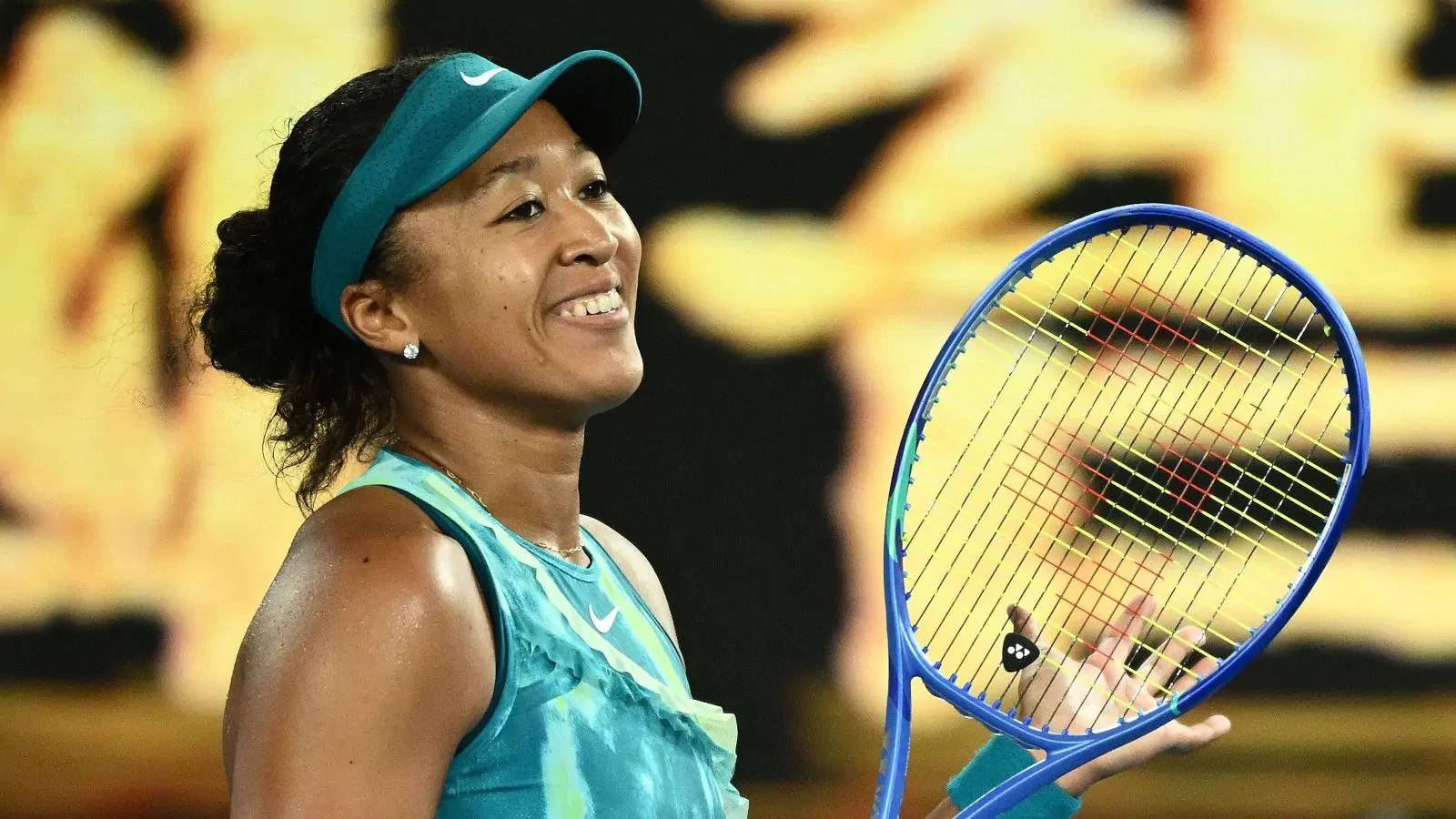 Naomi Osaka
Osaka’s fashion choices reflect a deeper tension in her personality. Off the court, she is introverted and reserved, yet she expresses herself through competition and style.
“I feel like when I step on the court, I’m not the me that you’re talking to right now,” she said after her win over Cirstea. “I would never yell: ‘C’mon’ that loud in a normal setting. I almost feel like I’m a Barbie that dresses up and goes on the court and does something. When I come back in the locker room is when I’m like my true quiet Naomi.”
On Margaret Court Arena, her competitive spirit dominated. At 4-2, 30-30 in the final set, a loud “C’mon” from Osaka after a missed Cirstea serve prompted the Romanian to complain to umpire Kelly Rask, arguing that Osaka’s call was disruptive. Rask clarified that Osaka had broken no rules.
Osaka then won the next two points to secure a second service break, punctuating both with sharp, pointed screams across the net. A frosty handshake followed, with Cirstea adding at the net:
“You have been playing on the tour for so long, you have no idea what fair play is.”
During her on-court interview, an exasperated Osaka dismissed the controversy:
“Apparently, a lot of ‘C’mons’ that she was angry about, but whatever.”
Later, she offered a more measured reflection, admitting Cirstea’s complaint fueled her determination:
“I’m not a person that reacts well to being casually disrespected,” she said.
She also expressed a conciliatory tone:
“I’ve never been involved in something like this before, so I don’t know if we’re supposed to leave it on the court and be like: ‘Hey, how are you doing?’ I’m a little confused. I guess that emotions were very high for her.
I also want to apologise. I think the first couple of things that I said on the court were disrespectful. I don’t like disrespecting people. That’s not what I do. If she wants to talk about it, then yeah. But when I’m pumping myself up, in my head I’m not like: ‘OK, now I’m going to distract the other person.’ It’s purely for me, so …”
In round three, Osaka will face Maddison Inglis, the last Australian woman remaining in the draw, with a partisan crowd hoping for her exit. A potential fourth-round clash with second seed Iga Swiatek could loom on the horizon.