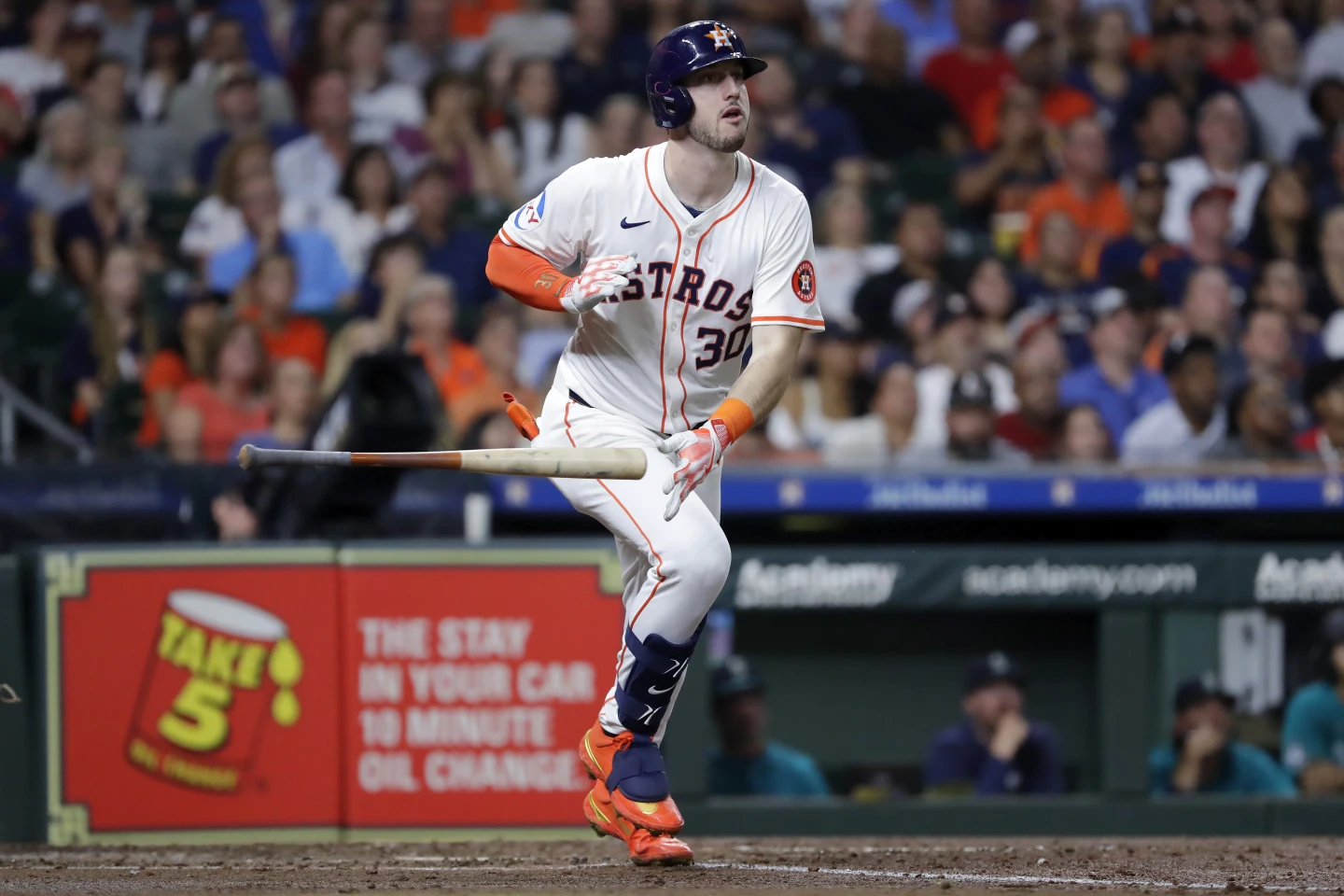
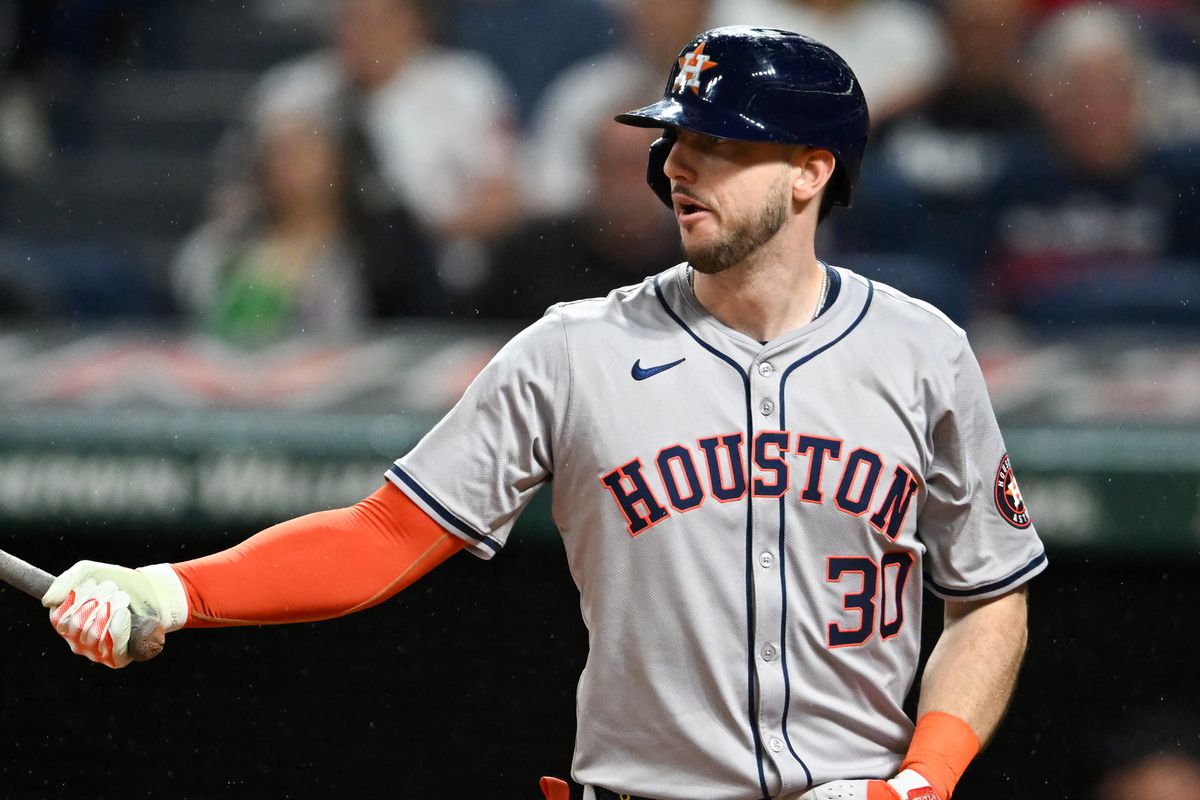
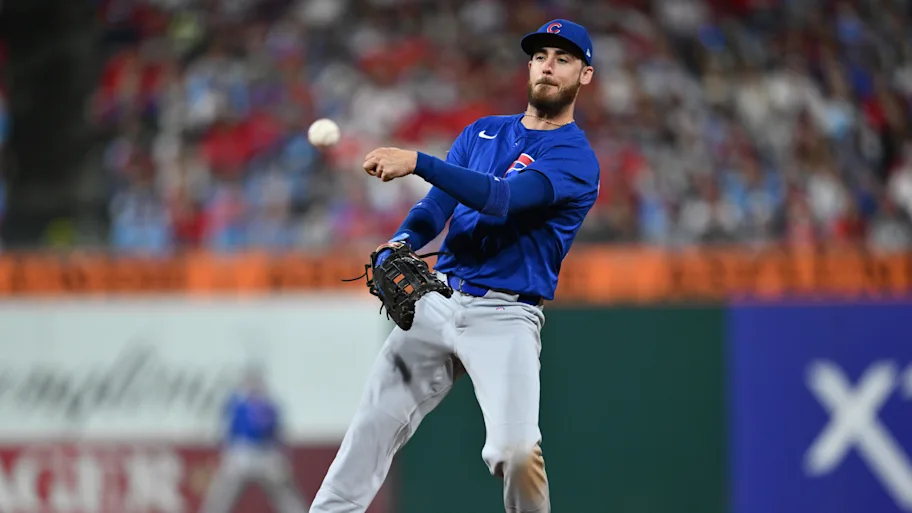
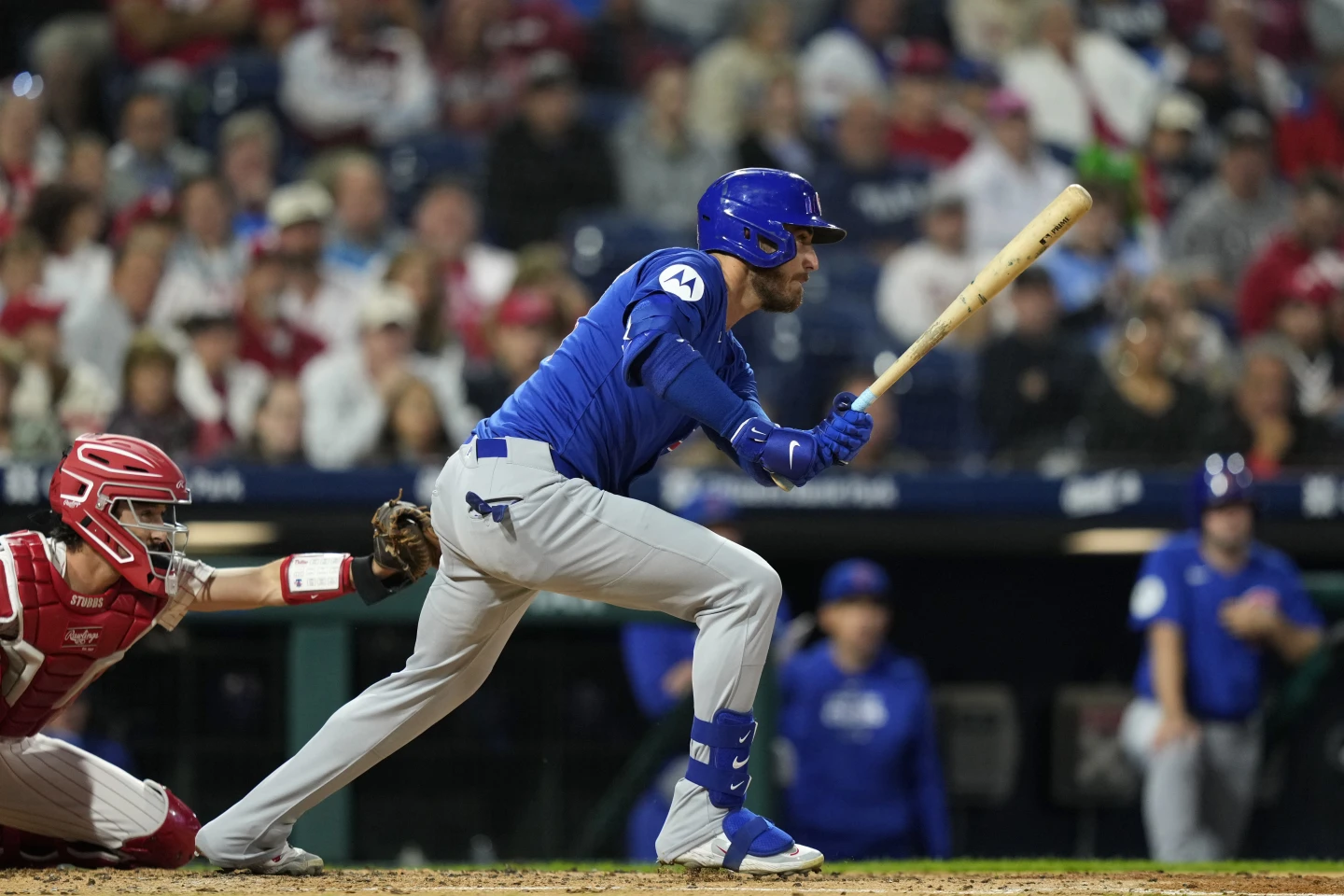
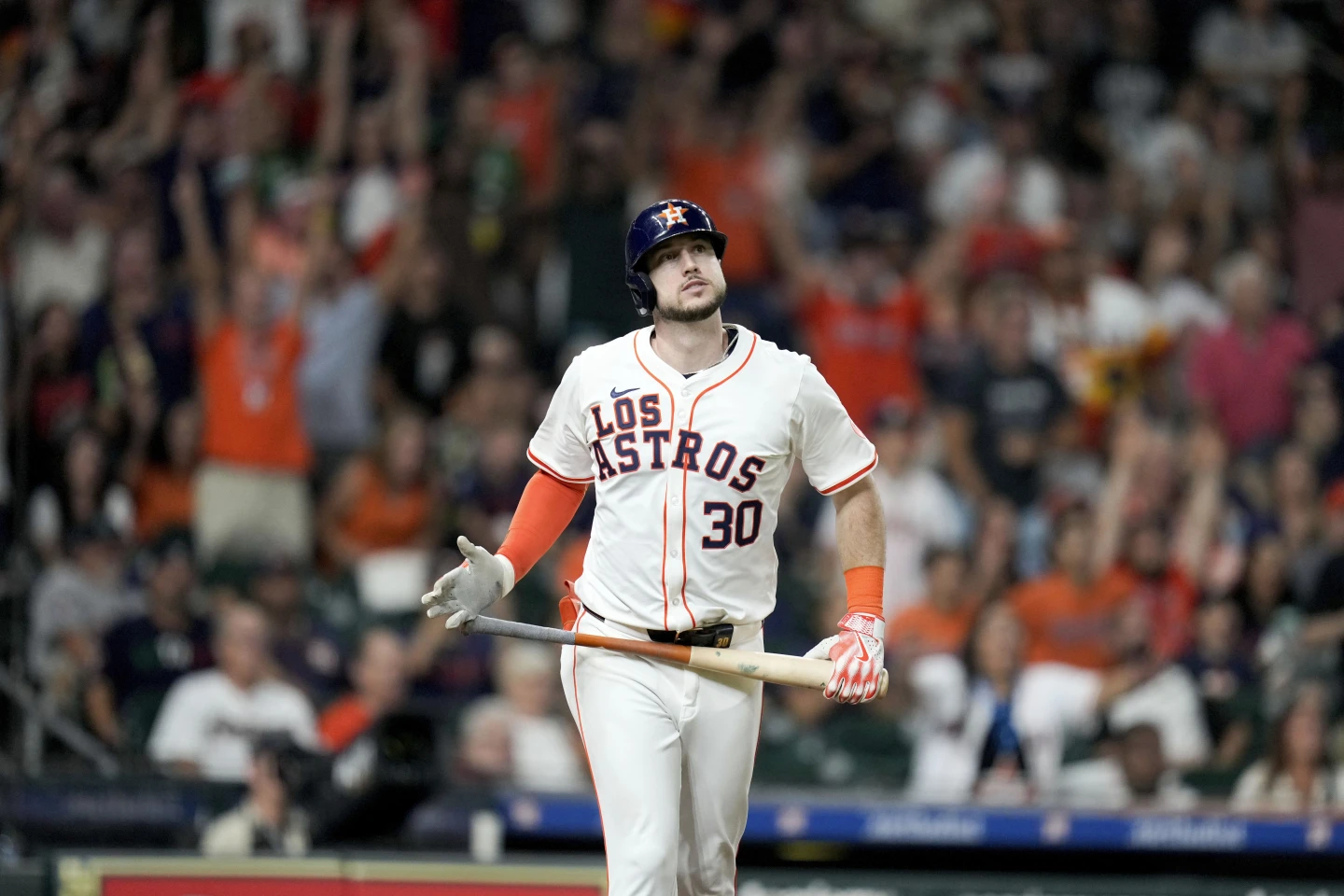
Kyle Tucker and the Chicago Cubs have reached an agreement on the largest of 17 salary arbitration cases. The two sides settled on a one-year contract worth $16.5 million, according to a person familiar with the talks. The deal, which was first reported by ESPN, has not been officially announced.
Chicago had initially proposed a $15 million salary, while the All-Star outfielder had requested $17.5 million. Without a settlement, a hearing before a three-person panel would have taken place between January 27 and February 14.
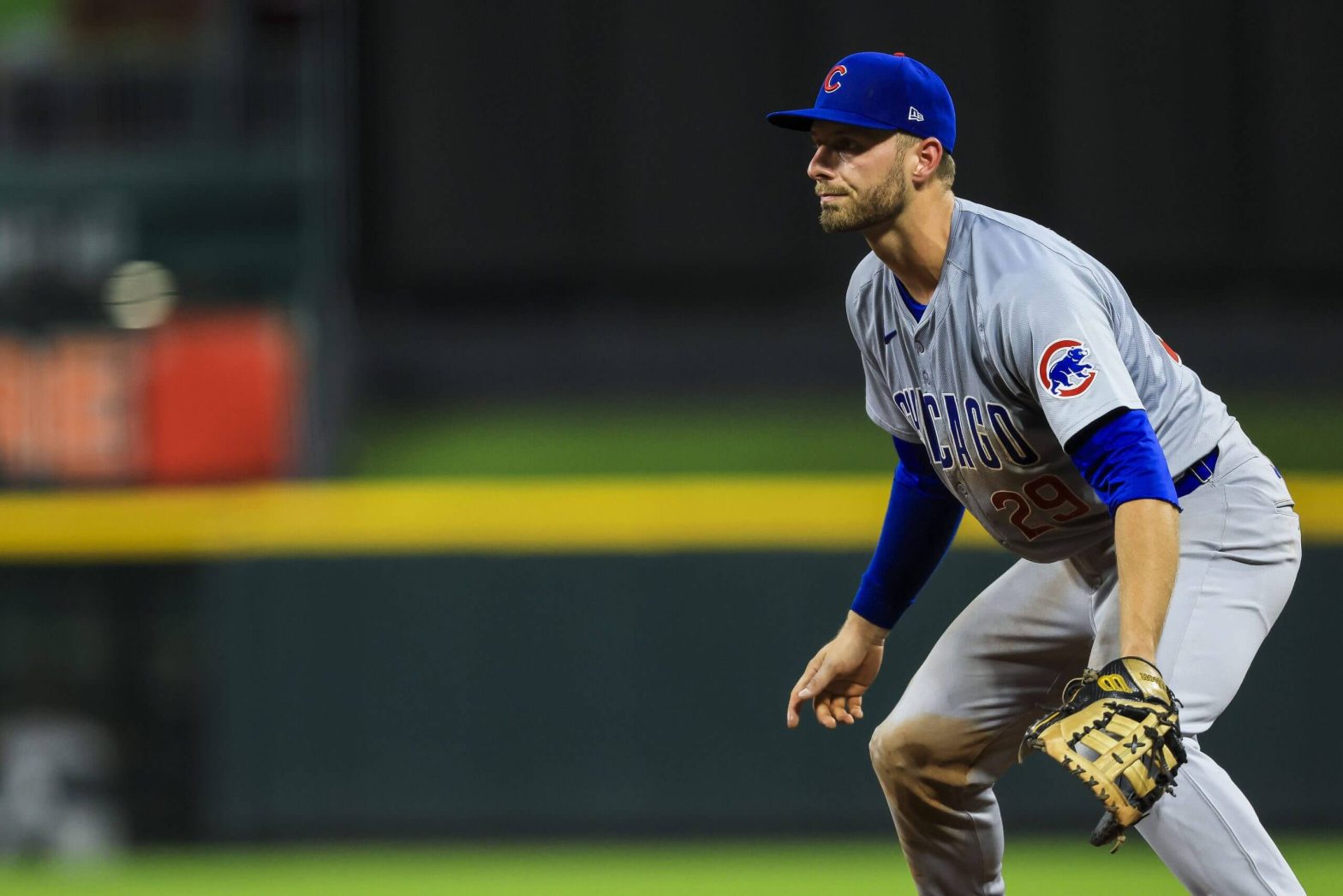
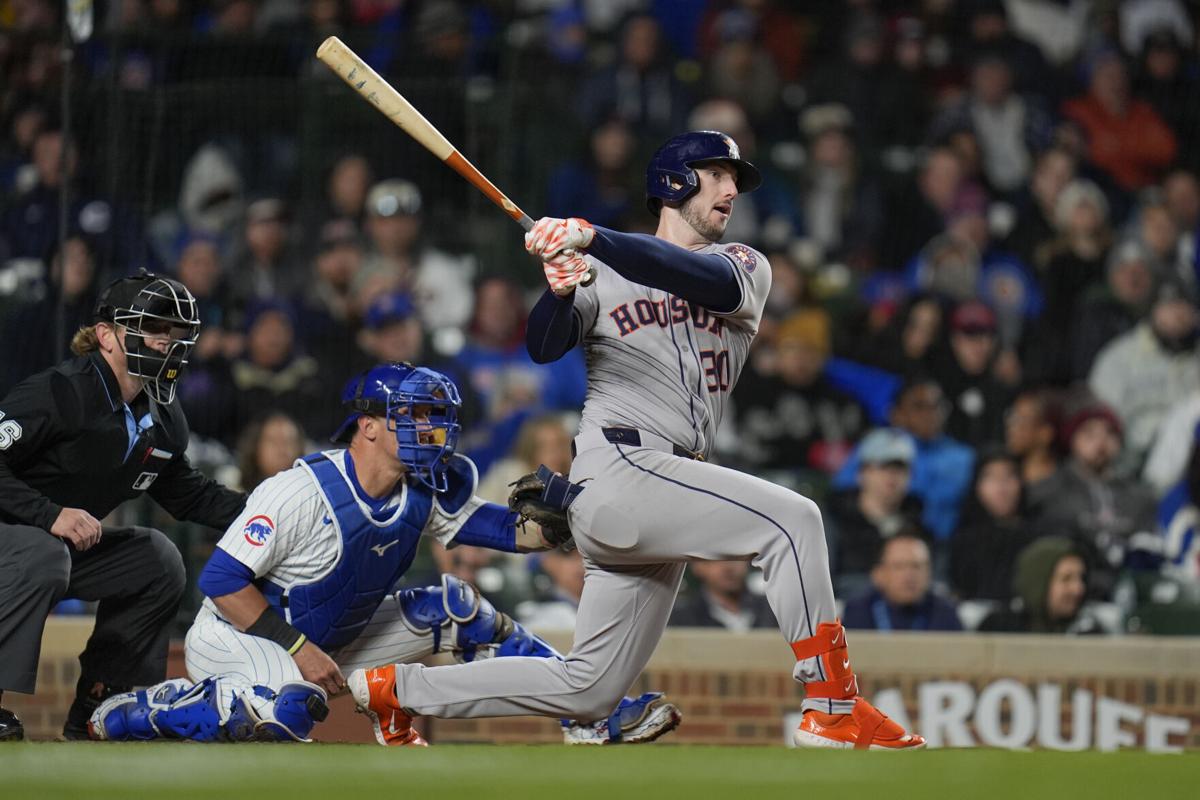
Kyle Tucker (MLB)
Tucker, who will become a free agent after this year’s World Series, was traded to the Cubs last month from the Houston Astros in exchange for third baseman Isaac Paredes, right-handed pitcher Hayden Wesneski, and top infield prospect Cam Smith.
Tucker, who turns 28 on Friday, earned $12 million last year. He played in only 78 games due to a fractured right shin but managed to hit .289 with 23 home runs and 49 RBIs for the AL West champion Astros.
In 2023, he batted .284 with 29 home runs, 112 RBIs—leading the American League—and 30 steals for Houston.
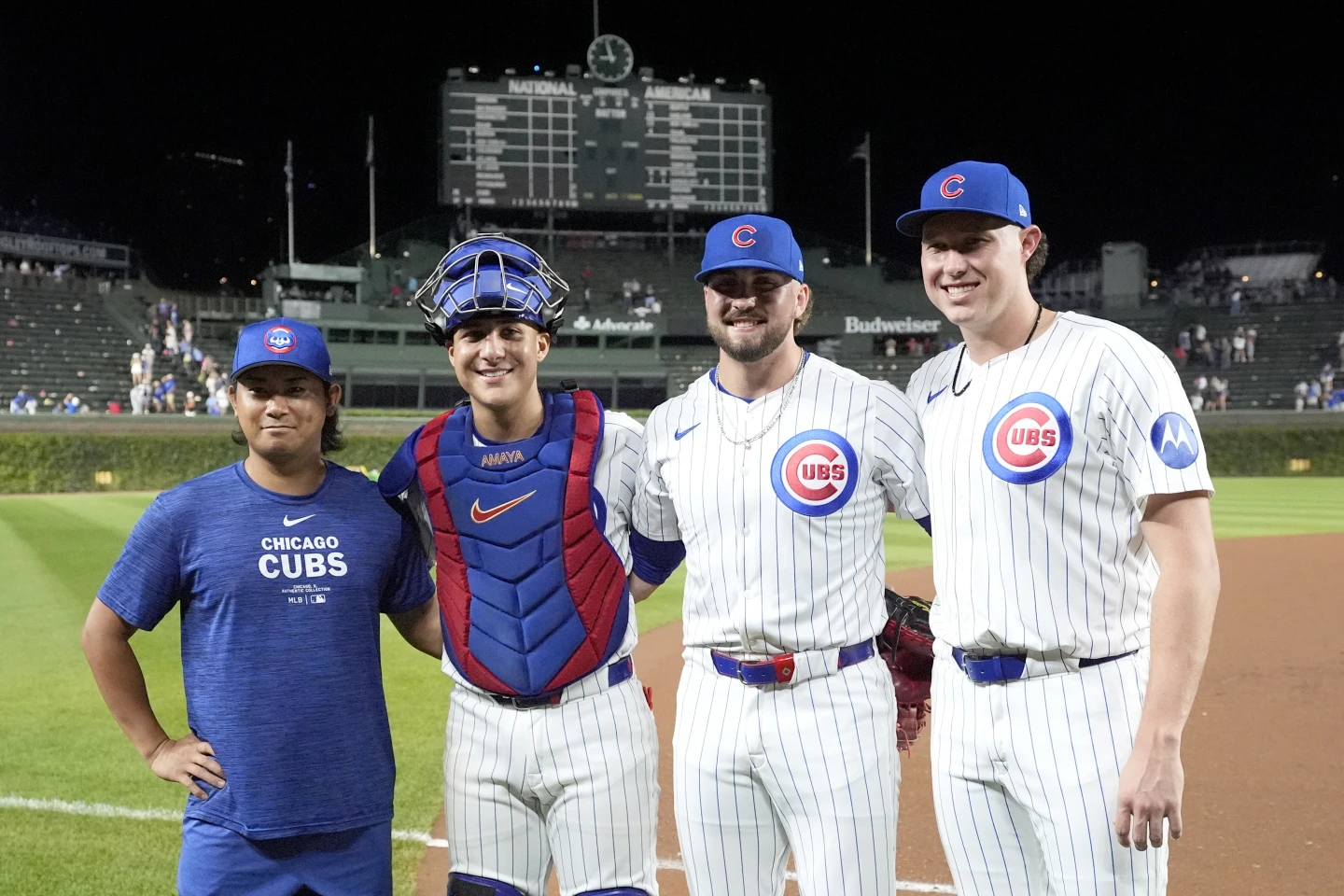
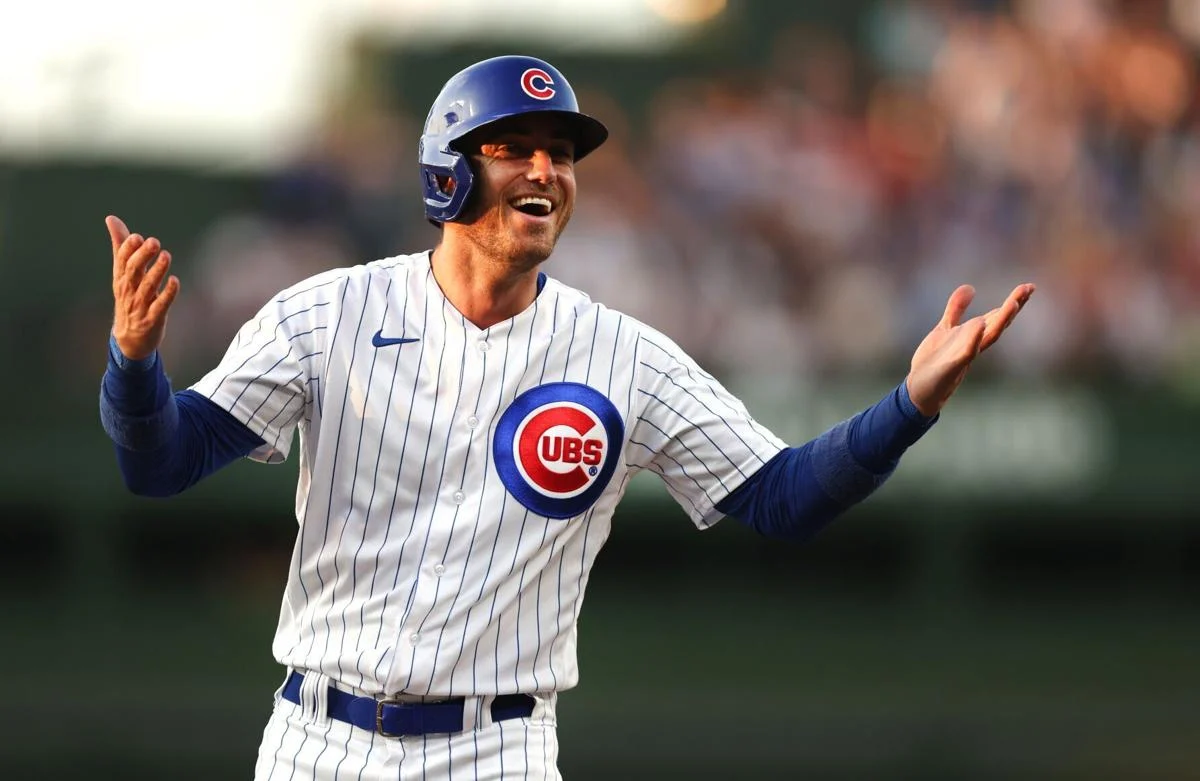
Chicago Cubs players pose for a photo after the win
For the second straight offseason, the Chicago Cubs have sent mixed signals to both their fans and the broader baseball community.
Last winter, they shocked the sport by firing David Ross and bringing in Craig Counsell from Milwaukee, making him the highest-paid manager ever. After this bold move, it seemed like the Cubs might go on a spending spree.
However, their offseason strategy turned out to be more cautious than expected. Although the Cubs made some smart moves—signing pitcher Shota Imanaga, acquiring first baseman Michael Busch from the Los Angeles Dodgers, and bringing back Cody Bellinger—they did not make the major roster addition many fans anticipated.
The 2024 season played out similarly to their conservative offseason approach. Despite a solid performance of 83 wins under Ross in 2023, the Cubs again finished with an 83-win season under their new $40 million manager, Counsell.
As this offseason began, the Cubs started off boldly with a major trade for Houston Astros right fielder Kyle Tucker. But just as fans were celebrating the addition of Tucker, the Cubs traded away Bellinger, along with most of his $52.5 million contract, to the New York Yankees.
Tucker is expected to earn around $16 million to $18 million in 2025 through arbitration, while Bellinger’s salary for next season was $27.5 million. “This is the Cubs’ version of going all-in,” one agent said sarcastically.
This all comes amid the Cubs’ failure to make the playoffs in a full season since 2018, and with the club exceeding the luxury tax threshold for the 2024 season. Additionally, president of baseball operations Jed Hoyer is entering the final year of his contract.
Here’s a look at how the Cubs find themselves stuck in the middle. Hoyer was asked about the idea of being all-in. “I always think that all-in is sort of a narrative,” he said. “You’re always doing moves for now and the future and trying to balance those.”
When Chicago acquired Tucker, it showed the team’s urgency to win in 2025. The Cubs traded three years of team control for third baseman Isaac Paredes, five years for pitcher Hayden Wesneski, and six years for prospect Cam Smith, all for just one guaranteed season of Tucker, who could become a free agent after 2025.
Chicago Cubs Face Major Payroll Cuts and Challenges in Competing for 2025 Postseason
It was a bold move for the Cubs, one Hoyer admitted he wouldn’t have made during the team’s rebuilding years of 2021 and 2022. “To acquire a player like that, it comes at a real price. But it’s a price we’re willing to pay given the fact that’s something we felt all summer we lacked and wanted to bring to this team,” Hoyer said.
The trade gave the Cubs a strong lineup, featuring left-handed power from Tucker, Happ, Bellinger, Busch, and Pete Crow-Armstrong. However, the quick departure of Bellinger meant the team would need to rely on other players.
Despite the confusion over these moves, the front office has been clear about their strategy.
“Marginal value of a win,” general manager Carter Hawkins explained. “If you’re going from 85 to 87 wins, [it’s] really important. That might be the difference between making the playoffs and not making the playoffs. Going from 75 to 77, not that important. You’re unlikely to make the playoffs.”
After a disappointing first season under Counsell, the Cubs have replaced Bellinger with a better player in Tucker, added Matthew Boyd to the rotation to replace Kyle Hendricks, and are hopeful that these small upgrades will help them reach the playoffs in 2025.
A significant reason for the Cubs’ offseason focus on trades rather than big free agent signings is their reluctance to dive deep into the top end of the free agent market. They notably did not pursue top free agent Juan Soto.
“We organizationally decided not to pursue that one,” Hoyer said. “That doesn’t mean in the future we won’t. But that was one we didn’t.”
The Cubs also stayed away from pursuing top pitchers like Corbin Burnes and Max Fried, who signed with the Yankees.
Though the Cubs have some flexibility with their budget, it’s clear that they won’t be increasing their payroll significantly. Instead, they are likely to reallocate the savings from the Bellinger-Tucker swap to other areas of the team.
Some sources suggest they might even reduce their payroll in 2025, but ownership is always open to proposals from the front office, whether during the winter or summer trading periods. The Cubs believe they spend enough to win but also understand that their payroll isn’t enough to guarantee 90-win seasons.
“We have to beat projections,” Hoyer said at the start of the offseason. “We have to have players outperform … that’s how you have the season that we want to have.”
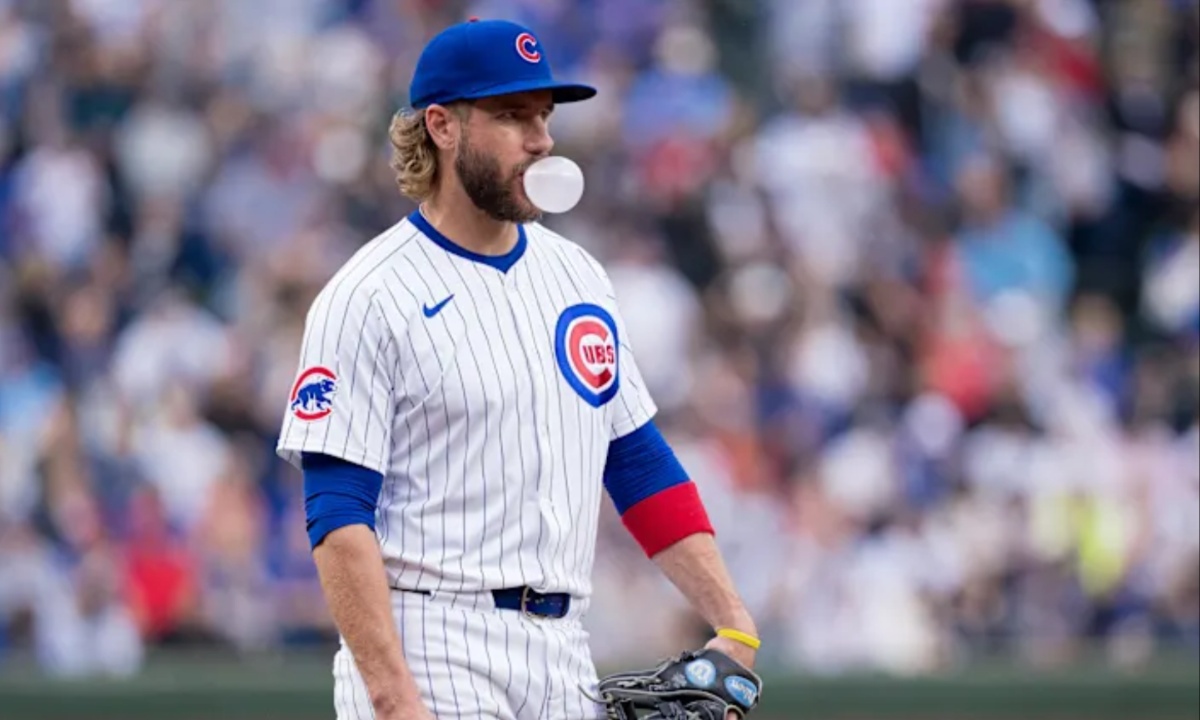
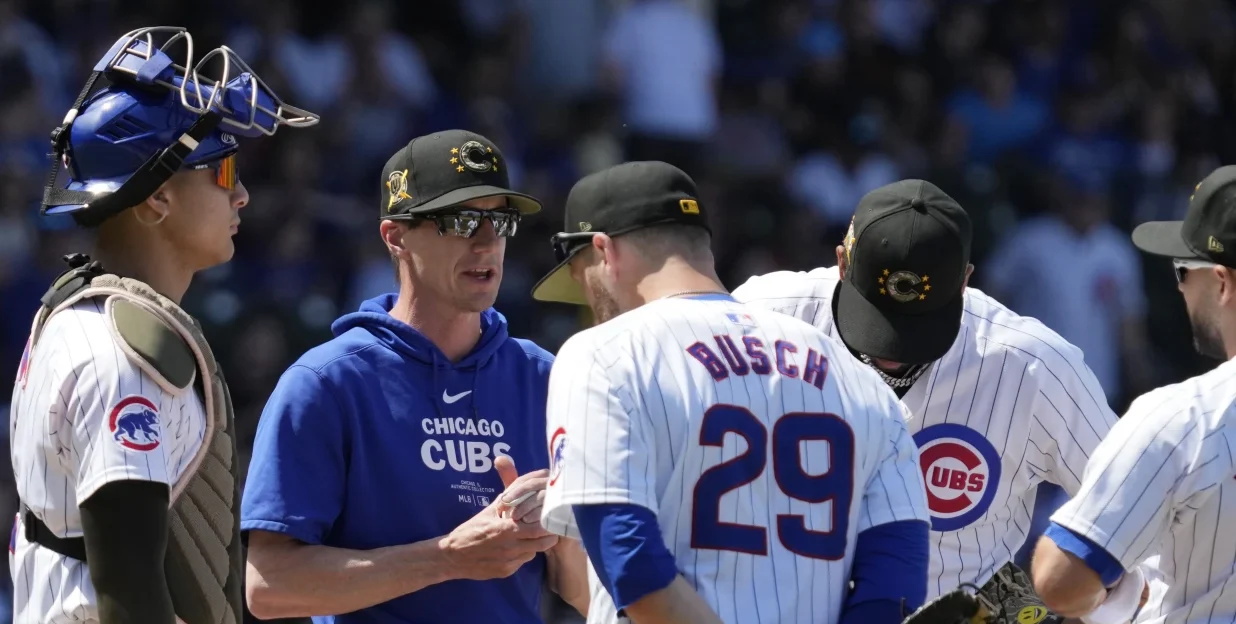
Chicago Cubs players having a discussion
Despite being over the luxury tax threshold, the Cubs were one of three teams that missed the playoffs last season. In the past few years, Chicago hasn’t kept up with other big-market teams that routinely exceed the luxury tax limit.
Whether ownership will allow the front office to go over the threshold again in 2025, with stiffer penalties for a second consecutive offense, remains to be seen.
The addition of a new television network in 2020 hasn’t been as lucrative as the Cubs had hoped, and private equity investment has led to more stakeholders being involved. As a result, the financial bottom line is now under more scrutiny, with some observers predicting that the Cubs may not sign any megadeals for players before the next labor agreement is reached after the 2026 season.
This means that Tucker’s time at Wrigley Field may be short. After Soto’s $765 million deal set the market for star players, Tucker may be priced out of Chicago, and the chances of him re-signing before free agency seem slim.
“There is no point in speculating on that today as we sit here in December,” Hoyer said.
Tucker had a similar response when asked about his future with the Cubs. “I’m always open to talks and see where it leads. You never know what the future is going to hold. We’ll see how things progress.”
Making the playoffs in 2025 could help the Cubs keep Tucker on board, especially if he’s willing to accept a discount. If the Cubs fail to make the postseason, the organization might focus more on keeping Hoyer’s tenure under scrutiny.
Hoyer, however, isn’t concerned about his own job. “I don’t look at it that way,” he said. “I’ve been in the game for a long time. I’m confident in my abilities and my résumé. My job always is to be the best steward of the organization.”
“I try to make good decisions for the Ricketts family. Try to make sure I’m setting us up for a good future but I’m also setting us up for an exciting present.”
Cubs Reshape Roster With Bellinger Trade, Tucker Addition, and Strategic Offseason Moves
The Chicago Cubs recently traded Cody Bellinger, offloading a good but not great player along with most of his remaining contract. This move saves the Cubs significant money, as Bellinger’s deal was set to pay him over $50 million in the next two years, assuming he didn’t opt out after 2025. While his contract wasn’t egregiously bad, it posed challenges for the Cubs’ future spending. In return, Chicago acquired Kyle Tucker, a potential MVP-caliber player with a five-tool skillset, although he is only under contract for one more season. Tucker’s addition bolsters the Cubs’ lineup, making it a formidable force in the NL Central.
Looking ahead, the Cubs must address their pitching needs in both the starting rotation and bullpen. They have been linked to trade options such as Luis Castillo and Jesus Luzardo, which could involve tough decisions about parting with key players or top prospects. One notable name in trade discussions is Owen Caissie, the Cubs’ No. 2 prospect. Caissie’s strong performance in Triple-A last season makes him an appealing trade piece, especially for teams seeking outfield talent. While trading him could secure pitching upgrades, the Cubs must weigh this carefully, given their outfield needs beyond 2025.
Cubs Reshape Roster With Bellinger Trade, Tucker Addition, and Strategic Offseason Moves
Seiya Suzuki’s future also looms as a complex situation for the Cubs. While Bellinger’s trade resolved one outfield question, Suzuki’s preference to remain in the field rather than transition to designated hitter complicates matters. Despite his defensive struggles last season, Suzuki is reluctant to give up his role in the outfield, which might lead to friction. His -4 Outs Above Average statistic highlights the challenges of keeping him as a primary defender. This delicate balance may force the Cubs to make further roster adjustments or risk dealing with another disgruntled player.
Another development for the Cubs is their decision to part ways with Nick Madrigal. Once a promising infielder was acquired in the Craig Kimbrel trade, Madrigal’s performance has significantly declined. In just 51 games in 2024, he posted a dismal -0.7 WAR, and his offensive contributions have been lackluster. Madrigal’s limited power, declining defense, and reduced baserunning effectiveness made him expendable. While another team may offer him a chance as a bench player, the Cubs have clearly moved on from him in their rebuilding efforts.
The Cubs’ offseason moves reflect a balance of immediate upgrades and long-term planning. Trading Bellinger cleared salary space and brought in Kyle Tucker, a dynamic player with significant upside. Addressing pitching needs remains a top priority, with Owen Caissie as a potential trade asset. Meanwhile, managing Suzuki’s role and moving on from underperforming players like Madrigal signal the Cubs’ commitment to reshaping their roster for sustained success. As the MLB offseason progresses, the Cubs’ strategy will likely involve more tough decisions and creative solutions.
Chicago Cubs Trade Cody Bellinger to Yankees in Cost-Saving Deal, Strengthening New York’s Lineup
The Chicago Cubs have traded former MVP Cody Bellinger to the New York Yankees in a cost-saving move, with the Yankees covering most of his salary for the 2025 season and part of his 2026 or a potential buyout. The Cubs will only pay $5 million of Bellinger’s contract, making this deal financially advantageous for them. The Yankees, who recently missed out on Juan Soto in free agency, see Bellinger as a replacement for some of that lost production. They have also added Max Fried and Devin Williams to their roster, further strengthening their lineup.
Cody Bellinger, who won the 2019 MVP award, has had a rollercoaster career. After struggling in 2021, with a -1.7 WAR, due to injuries and a decline in performance, he signed a one-year deal with the Cubs for the 2023 season. In 130 games, Bellinger had a strong rebound, hitting .307/.356/.525 with 26 home runs, 97 RBI, 20 steals, and a 4.4 WAR. He exercised his $27.5 million player option for the 2024 season, continuing his resurgence after an inconsistent period in Los Angeles.
Chicago Cubs Trade Cody Bellinger to Yankees in Cost-Saving Deal, Strengthening New York’s Lineup
In addition to Bellinger’s offensive prowess, his versatility is valuable to the Yankees. He can play both first base and the outfield, providing the team with flexibility as they fill out their roster. The Yankees are still in the process of refining their lineup, with potential gaps at first base and in the outfield, especially with Ben Rice likely to play first. Bellinger could also take over center field, allowing the Yankees to use other players in alternative positions.
For the Cubs, this trade allows them to save money after their recent acquisition of superstar Kyle Tucker. The Cubs’ outfield and designated hitter positions are now filled with Ian Happ, Pete Crow-Armstrong, Tucker, and Seiya Suzuki. With a potential trade involving second baseman Nico Hoerner, the Cubs might further shake up their roster, using the financial flexibility from this trade to improve their pitching staff.
Ultimately, this deal benefits both teams, assuming they continue to pursue aggressive roster moves. The Yankees gain a player with proven offensive ability and versatility, while the Cubs save on salary and position themselves for further adjustments. Both teams are likely to continue making moves as they refine their rosters for the upcoming season.
Outfielder Cody Bellinger was traded to the New York Yankees from the Chicago Cubs on Tuesday in exchange for right-handed pitcher Cody Poteet.
As part of the trade, the Cubs will send $5 million to the Yankees.
Bellinger, 29, whose father, Clay, helped the Yankees win World Series titles in 1999 and 2000, might play center field next season, with Aaron Judge returning to right field after Juan Soto’s move to the Mets. Bellinger can also play first base, which became available when Anthony Rizzo became a free agent.
Bellinger is set to make $27.5 million in 2025 as part of his $80 million, three-year contract, with two player options. He also has a $25 million player option for 2026 with a $5 million buyout that will be paid in two equal installments on January 15, 2026, and January 15, 2027.
This year, Bellinger batted .266 with 18 homers and 78 RBIs in 130 games. He spent some time on the injured list from April 24 to May 7 due to a broken right rib.
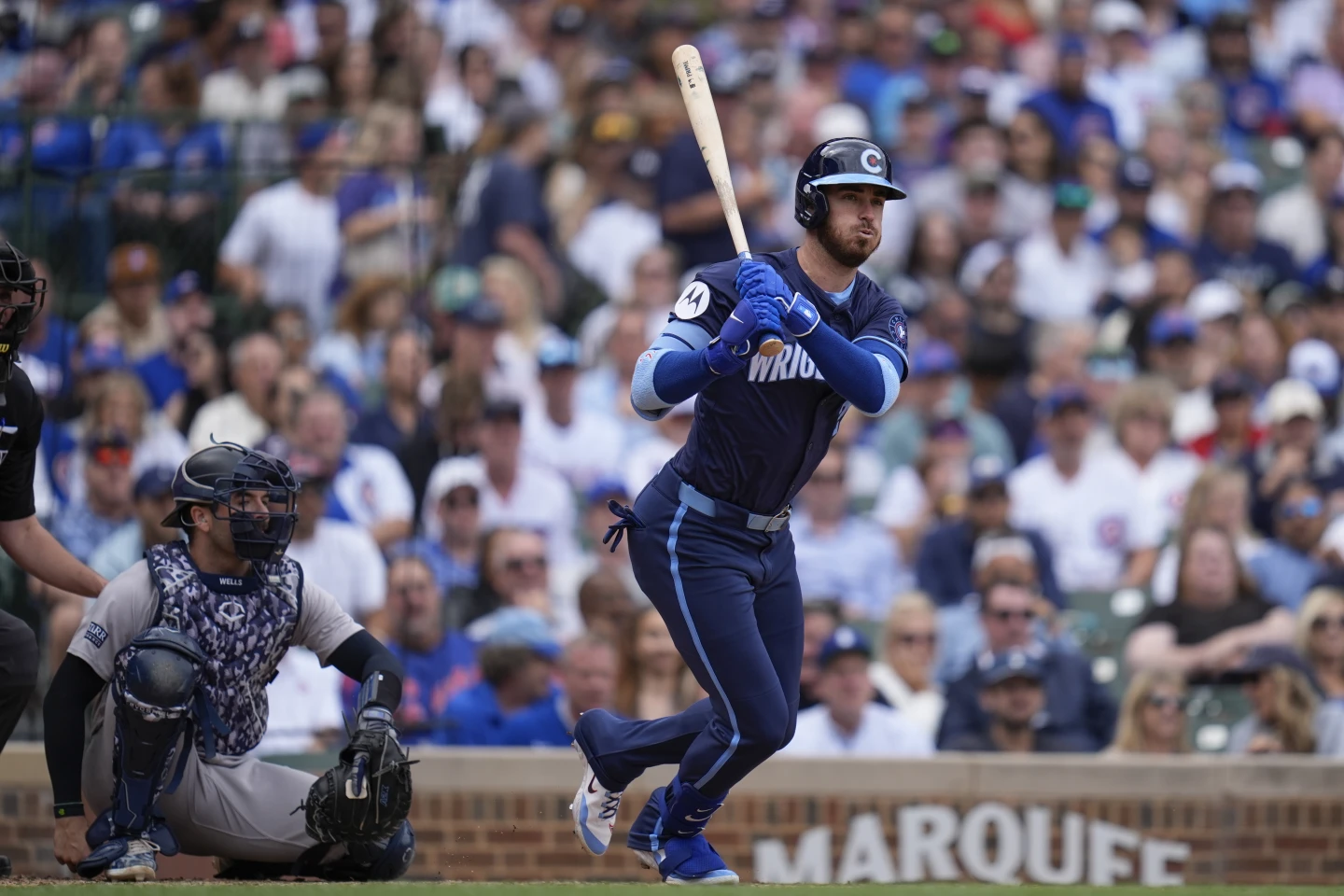
Cody Bellinger hits a double in the 4th inning
In the final 39 games of the season, he drove in 33 runs, but Chicago finished with an 83-79 record.
Bellinger made his MLB debut in 2017 and played for the Los Angeles Dodgers for his first six seasons. He was named the NL MVP in 2019, hitting .305 with 47 homers and 115 RBIs in 156 games. He also helped the Dodgers win the 2020 World Series.
The Dodgers released him in November 2022, and he signed a one-year, $17.5 million contract with the Cubs in December. He had a great season with Chicago, hitting a career-best .307 with 26 homers, 97 RBIs, and 20 steals in 130 games last year.
Bellinger has a career batting average of .259 with 196 homers and 597 RBIs over 1,005 games. He will turn 30 in July.
Poteet, 30, made his MLB debut with Miami in 2021, underwent Tommy John surgery on August 17, 2022, and returned to the mound with Kansas City’s Triple-A Omaha team on September 23, 2023.
After being released by the Royals, he signed with the Yankees in January. This season, he went 3-0 with a 2.22 ERA in four starts and one relief appearance, despite being sidelined from June 12 to September 25 due to a strained right triceps.
The Chicago Cubs made a big move on Friday by acquiring All-Star outfielder Kyle Tucker in a trade with the Houston Astros. To get Tucker, the Cubs gave up third baseman Isaac Paredes, right-hander Hayden Wesneski, and one of their top infield prospects, Cam Smith.
Tucker, who is eligible for free agency after the 2025 season, had a strong performance in 2023, hitting .284 with 29 home runs, 112 RBIs (the most in the AL), and 30 steals. However, his 2024 season was cut short due to a fractured right shin, limiting him to just 78 games.
Tucker joins a crowded outfield in Chicago, but reports suggest the Cubs may trade Cody Bellinger, who can also play first base. The Cubs are also discussing Seiya Suzuki’s no-trade clause. The Cubs have finished second in the NL Central in the past two seasons, and there is pressure on team president Jed Hoyer to lead the team back to the playoffs for the first time since 2020.
In addition to Tucker, the Cubs also signed catcher Carson Kelly to a two-year, $11.5 million contract. Kelly, a Chicago native, played for Detroit and Texas this season, hitting .238 with 9 home runs and 37 RBIs.
Before the trade was finalized, the New York Yankees had also shown interest in Tucker. Yankees general manager Brian Cashman expressed his relief that Tucker would not be joining the AL East.
Paredes, who is now with the Astros, could fill in at third base if Alex Bregman leaves in free agency. The 25-year-old had a solid season, hitting .238 with 19 home runs and 80 RBIs. Paredes is excited about playing at Minute Maid Park, where the stadium benefits his hitting style. Astros general manager Dana Brown left the door open for a possible reunion with Bregman.
Wesneski, a native of Houston, will compete for a spot in the Astros’ rotation. He had a 3-6 record with a 3.86 ERA in 2024, with 21 relief appearances and 7 starts.
Chicago Cubs players pose for a photo after the win
The Astros are hopeful that the additions of Paredes and Wesneski will help continue their winning ways. Houston has made the playoffs for eight consecutive years, including World Series titles in 2017 and 2022. Despite being swept by Detroit in the wild-card round this year, Brown remains confident about the team’s future.
Smith, who was drafted 14th overall by the Cubs this year, is considered an important part of the trade. The 21-year-old played well in the minors, hitting .313 with 7 home runs and 24 RBIs in 32 games.
Tucker, a first-round pick in 2015, has had a successful career with the Astros. He is a .274 hitter with 125 home runs, 417 RBIs, and an .869 OPS in 633 games. He also has extensive postseason experience with 64 games, batting .229 with 8 home runs and 28 RBIs.
As for Kelly, his two-year deal with the Cubs includes $5 million for each season, with a $7.5 million mutual option for 2027 and a $1.5 million buyout. He can earn performance bonuses each year based on the number of games he starts. The Cubs are looking to improve their depth behind the plate, joining Miguel Amaya and Matt Thaiss, who was acquired in a trade with the Angels.
Matthew Boyd is excited about his new opportunity with the Chicago Cubs and hopes to contribute to the team’s playoff push as an important part of the starting rotation.
The fact that his late grandfather, John Boyd, was a huge Cubs fan makes the signing even more special for him.
“My grandfather grew up in downtown Chicago and was a diehard Cubs fan,” Boyd said on Monday. “I think he was more excited about the Cubs’ scores than my own performance some of the times. It would be like, ‘Hey, the Cubs lost today, but you did pitch well.’”
Boyd also shared that the day the Cubs won the World Series in 2016 “was one of the happiest days of his life,” adding, “so I know he’s smiling somewhere.”
Boyd finalized a $29 million, two-year contract with the Cubs last weekend after successfully recovering from Tommy John surgery.
Tommy John (MLB)
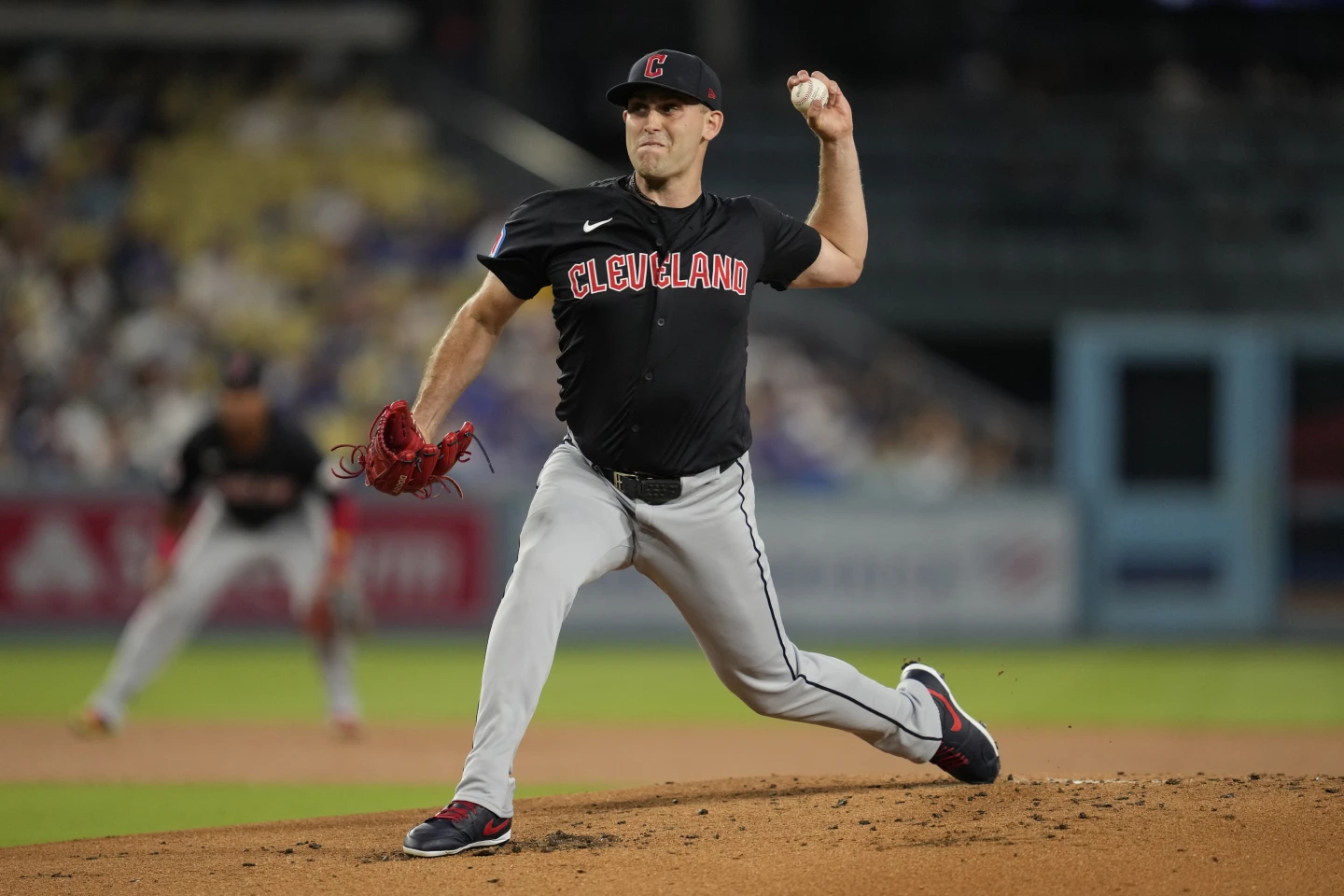
The left-handed pitcher signed with the Cleveland Guardians in June and made his season debut against the Cubs on August 13, pitching 5 1/3 innings and allowing just one run.
Boyd went 2-2 with a 2.72 ERA in eight starts with Cleveland. He also pitched three times in the postseason for the AL Central champions, allowing only one run and striking out 14 in 11 2/3 innings. The Seattle-area native now joins the Cubs’ rotation alongside Justin Steele, Shota Imanaga, and Jameson Taillon.
“I think Matthew’s in a good place kind of post some injuries where we feel like this could be a really good season for him or a couple seasons for him,” Cubs manager Craig Counsell said at the winter meetings. “Then like I said, it’s just a place where you can’t get caught without depth, quality. You have to have it, and we thought that was a good place to go.”
Boyd, who turns 34 in February, is hoping to help the Cubs reach the playoffs for the first time since 2020. The Cubs have finished second in the NL Central with an 83-79 record in each of the last two years.
Boyd sees a strong potential for a postseason run with a solid rotation and a lineup that includes Ian Happ, Cody Bellinger, Seiya Suzuki, Dansby Swanson, and Pete Crow-Armstrong, one of the team’s top prospects.
“I think a year of growth from some of the young players,” Boyd said. “Seeing what they did down the stretch last year was really, really exciting. The lineup is strong. … The weapons that are there, the speed that’s in the offense, the ability to hit for power and whatnot — there’s a lot of tools in the lineup.”
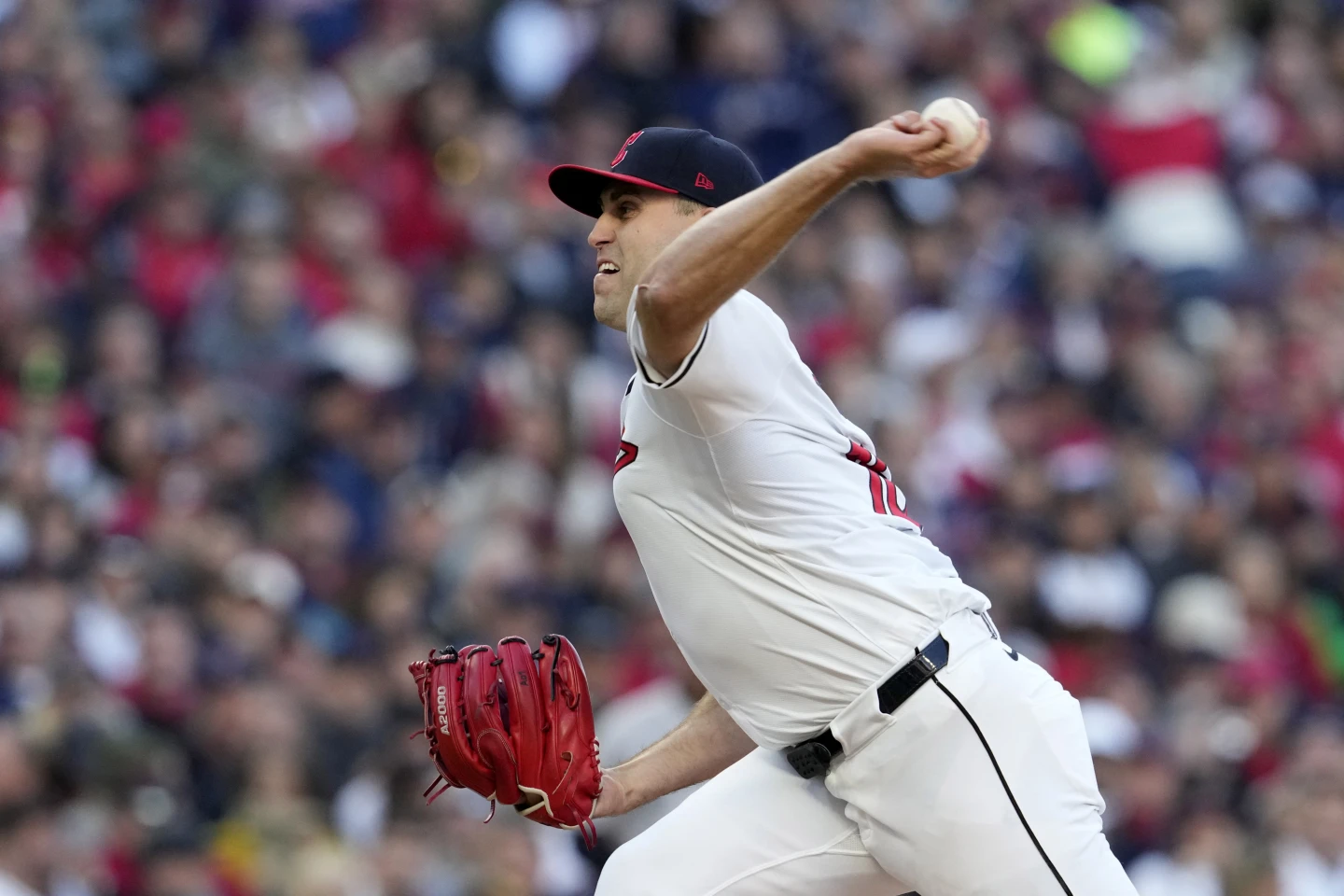
Matthew Boyd pitches in the 2nd inning
Boyd’s deal includes a $5 million signing bonus and salaries of $7.5 million next year and $14.5 million in 2026. It also includes a $15 million mutual option with a $2 million buyout. He can earn $500,000 annually in performance bonuses based on innings pitched: $100,000 for 80, 90, 100, 110, and 120 innings. He also gets a hotel suite on road trips.
The Cubs also announced their coaching staff for next season on Monday, with several new additions: first base coach Jose Javier, third base coach Quentin Berry, assistant pitching coach Casey Jacobson, and staff assistant A.J. Lewis.
Mark Strittmatter will move to bullpen coach after spending last season as the major league field coordinator. The Cubs also named Kevin Poppe head strength and conditioning coach and Mark Weisman assistant strength and conditioning coach.
The other nine coaches on Counsell’s staff, including pitching coach Tommy Hottovy and hitting coach Dustin Kelly, will return from last season.
Cubs Strengthen Pitching Staff but Leave Catcher Position Unresolved for 2024 Season
Jed Hoyer, the president of baseball operations for the Chicago Cubs, has made moves early in the offseason, a welcome change after a season of measured patience. The Cubs have added depth to their pitching staff, signing left-handed pitcher Matthew Boyd and making a significant bullpen upgrade by trading for Eli Morgan. These additions are sensible, especially since pitching depth is always critical, and Morgan, in particular, addresses a major area of need for the team.
Despite these improvements to the pitching staff, Hoyer has left other critical areas unaddressed. One of the Cubs’ most pressing needs is at the catcher position, where they struggled mightily last season. While Hoyer has made some moves to fill other gaps, the catcher position remains a glaring weakness, especially after missing out on high-profile free agents like Danny Jansen and Gary Sanchez. With those options off the table, the Cubs are left with limited alternatives, and Hoyer’s inability to address this need is concerning.
Cubs Strengthen Pitching Staff but Leave Catcher Position Unresolved for 2024 Season
The Cubs’ catchers last season were among the worst in all of baseball. They ranked 26th in the majors with a 69 WRC+ and were tied for 28th with a -0.1 fWAR, surpassing only the Chicago White Sox in the latter category. While young Miguel Amaya showed some promise late in the season, his overall performance was underwhelming, with a .644 OPS as the primary catcher. Christian Bethancourt also had a brief stint with the Cubs and performed decently, but his history suggests his success may not be sustainable.
To address this, the Cubs traded for Matt Thaiss, a player who was once a first-round pick but has posted a modest .655 OPS over six MLB seasons. Thaiss is out of minor league options, which raises doubts about his ability to contribute significantly at the MLB level. With Amaya and Thaiss both lacking proven track records, and neither being particularly reliable, the Cubs are left with a catching situation that remains a major concern heading into 2024.
Looking at the Cubs’ options, Moises Ballesteros, a promising prospect in the upper minors, might be counted on more than expected, though it remains uncertain whether he’s ready to take on a major role. With limited free-agent options left, including Carson Kelly, the Cubs may have no choice but to rely on Ballesteros, which could be a risky move for a team aiming to contend. Essentially, the Cubs are opting to return with a catching group that was among the league’s worst last season, a decision that raises questions about their commitment to improving key weaknesses.