Categories
College Football

College Football Playoff Drops Bye Perk for Conference Champs, Shifts to Pure Ranking-Based Seeding

The College Football Playoff (CFP) will move to a simplified, rank-based seeding system starting next season, eliminating the controversial practice of giving byes to top-ranked conference champions regardless of overall national rankings. This change was unanimously agreed upon by ten conference commissioners and Notre Dame’s athletic director.

Under the new system, the four highest-ranked teams overall, not just conference champions, will receive first-round byes, addressing issues raised in the inaugural 12-team playoff season, where inconsistencies between rankings and seedings led to early heavyweight matchups.

Confusing Bye Rules Hurt Fairness, But Financial Commitments Remain Intact

Last year’s format created confusion and imbalance by granting opening-round byes to lower-ranked conference champions like Arizona State (ranked 12th) and Boise State (ranked 9th), which pushed more deserving teams into tougher early matchups.

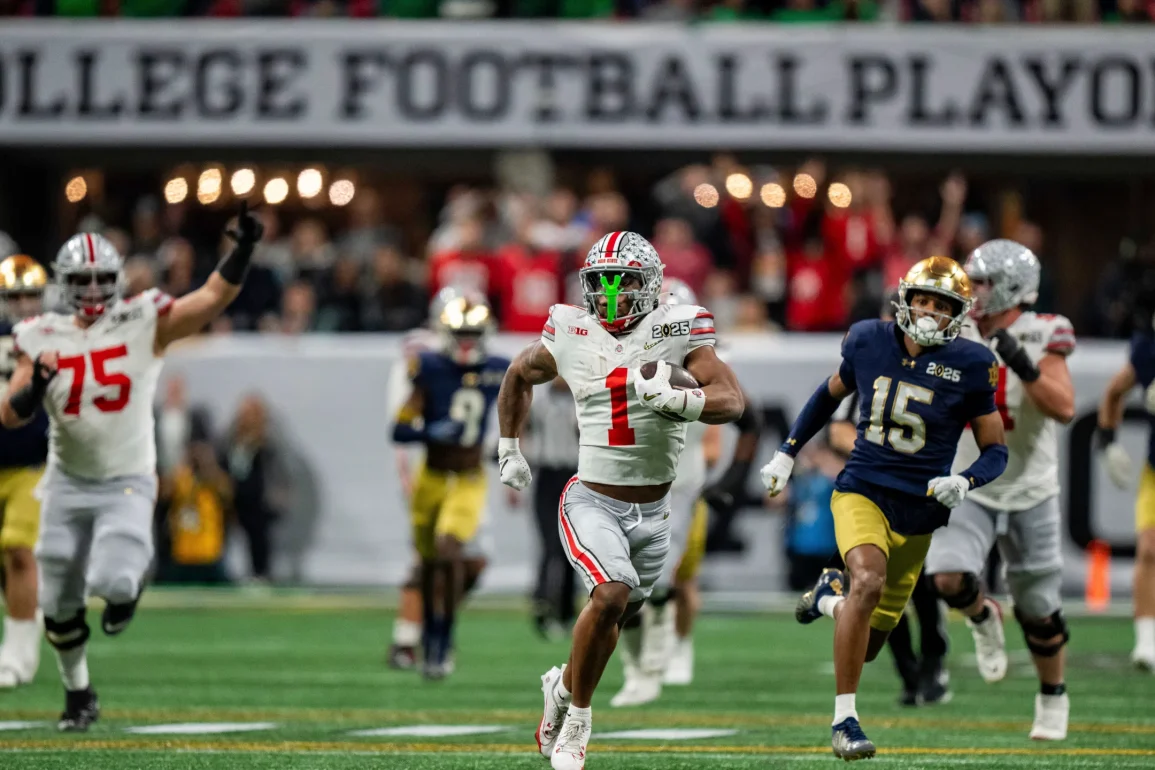
This approach effectively decoupled the rankings from the bracket, undermining the intent of fair competition. A notable example was top-ranked Oregon facing eventual national champion Ohio State in the quarterfinals, a clash many felt came too early due to the distorted seeding system.
College Football Playoff Drops Bye Perk for Conference Champs, Shifts to Pure Ranking-Based Seeding

Financial compensation remains unchanged for top conference champions under the new format. The four highest-ranked champions will still earn $8 million for their leagues—$4 million for reaching the playoffs and another $4 million for advancing to the quarterfinals.

This arrangement was part of the commissioners’ effort to uphold prior financial commitments despite the structural change. While the Southeastern Conference (SEC) pushed for the revision, commissioners from smaller conferences agreed in part because it preserved financial parity, at least for this season, ahead of more substantial negotiations likely to follow.

Playoff System Evolves Again Amid Expansion Talks and Calls for Greater Fairness

This adjustment marks the third different playoff structure in as many years, reflecting the evolving nature of college football’s postseason. From a four-team playoff to last year’s 12-team model and now the revised seeding approach, the CFP continues to evolve.

Future changes are already being discussed, including a potential 14-team expansion and further guaranteed spots for select conferences. The SEC and Big Ten are expected to play leading roles in shaping these decisions, signaling an ongoing power shift in college football governance.

Had the new system been in place last year, several first-round matchups would have looked very different. Clemson, ranked 16th by the committee, still would have made the playoff due to their conference title, but would have faced a much tougher opponent in No. 5 Notre Dame.

Arizona State, instead of receiving a bye, would have battled No. 6 Ohio State. Boise State and SMU also would have had more challenging paths. The top four teams—Oregon, Georgia, Texas, and Penn State—would have received byes based purely on ranking, possibly altering the playoff trajectory significantly. This retrospective emphasizes the importance of aligning seeding with performance to ensure a more balanced and competitive playoff system.
Categories
College Football

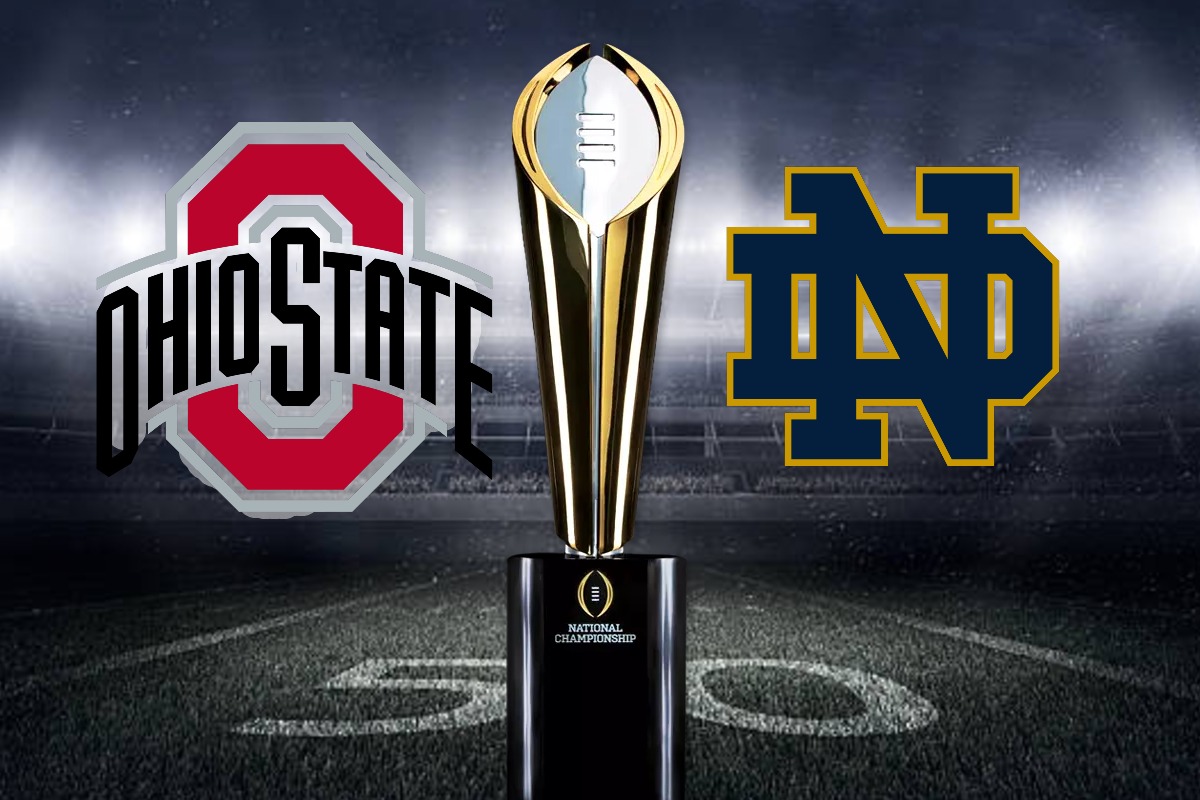
Ohio State and Notre Dame Ready for CFP National Championship Title Clash

The College Football Playoff National Championship game between Ohio State and Notre Dame initially listed the Buckeyes as 10-point favorites.

However, the spread has tightened by two points, indicating a potentially more competitive showdown in Atlanta this Monday. The outcome could hinge on several key matchups, with three standing out as particularly impactful.

Ohio State and Notre Dame set for a closer clash in the National Championship (Ohio State/Notre Dame)

Ohio State’s Receivers Against Notre Dame’s Secondary

Buckeyes wide receiver Carnell Tate offered some insight into Ohio State’s approach for the game, pointing to Notre Dame’s tendency to rely heavily on man-to-man coverage.

“We’re going to assume they do the same in this game,” Tate explained, referencing the Fighting Irish’s consistent use of one-high safety man coverage throughout the season. Notre Dame, which ranks ninth nationally in total defense by allowing just 298.3 yards per game, has seen success with this approach under coordinator Al Golden.

Despite this, few teams attempt man coverage against Ohio State’s formidable receiving corps, which features Tate, Jeremiah Smith, and Emeka Egbuka. However, Notre Dame’s defense remains undeterred.

Freshman cornerback Leonard Moore emphasized their commitment to the strategy: “We’re going to play man coverage like we do every week. We’re going to go out there and challenge their receivers.”

Cody Simon Tasked with Containing Riley Leonard

Ohio State’s defense has faced mobile quarterbacks before, including Dillon Gabriel of Oregon and Tennessee’s Nico Iamaleava.

However, Notre Dame’s Riley Leonard presents a unique challenge with his dual-threat capabilities, combining designed runs with his ability to extend passing plays.

Leonard’s 158 carries this season place him sixth nationally among non-running backs, highlighting his integral role in Notre Dame’s offense.

Linebacker Sonny Styles acknowledged Leonard’s impact in critical moments: “He’s a huge part of that will to just get it done… They give him the ball on fourth-and-short or third-and-medium situations.

He’s their guy.” To counter Leonard’s mobility, linebacker Cody Simon will likely take on the responsibility of shadowing the quarterback throughout the game.

Mike Denbrock’s Offense vs. Jim Knowles’ Defense

Notre Dame’s offensive identity is rooted in its ground game, ranking 14th nationally with an average of 210.8 rushing yards per game.

Running backs Jeremiyah Love and Jadarian Price have spearheaded this effort, combining for nearly 2,000 yards on the ground this season.

Ohio State defensive coordinator Jim Knowles recognizes this, expecting a run-heavy approach from the Fighting Irish on Monday.

While it’s unlikely Notre Dame will switch Leonard into a pure pocket-passing role, offensive coordinator Mike Denbrock may look to incorporate trick plays to capitalize on Ohio State’s focus on stopping the run.

A well-timed play-action or misdirection could prove pivotal in testing the Buckeyes’ defensive discipline.