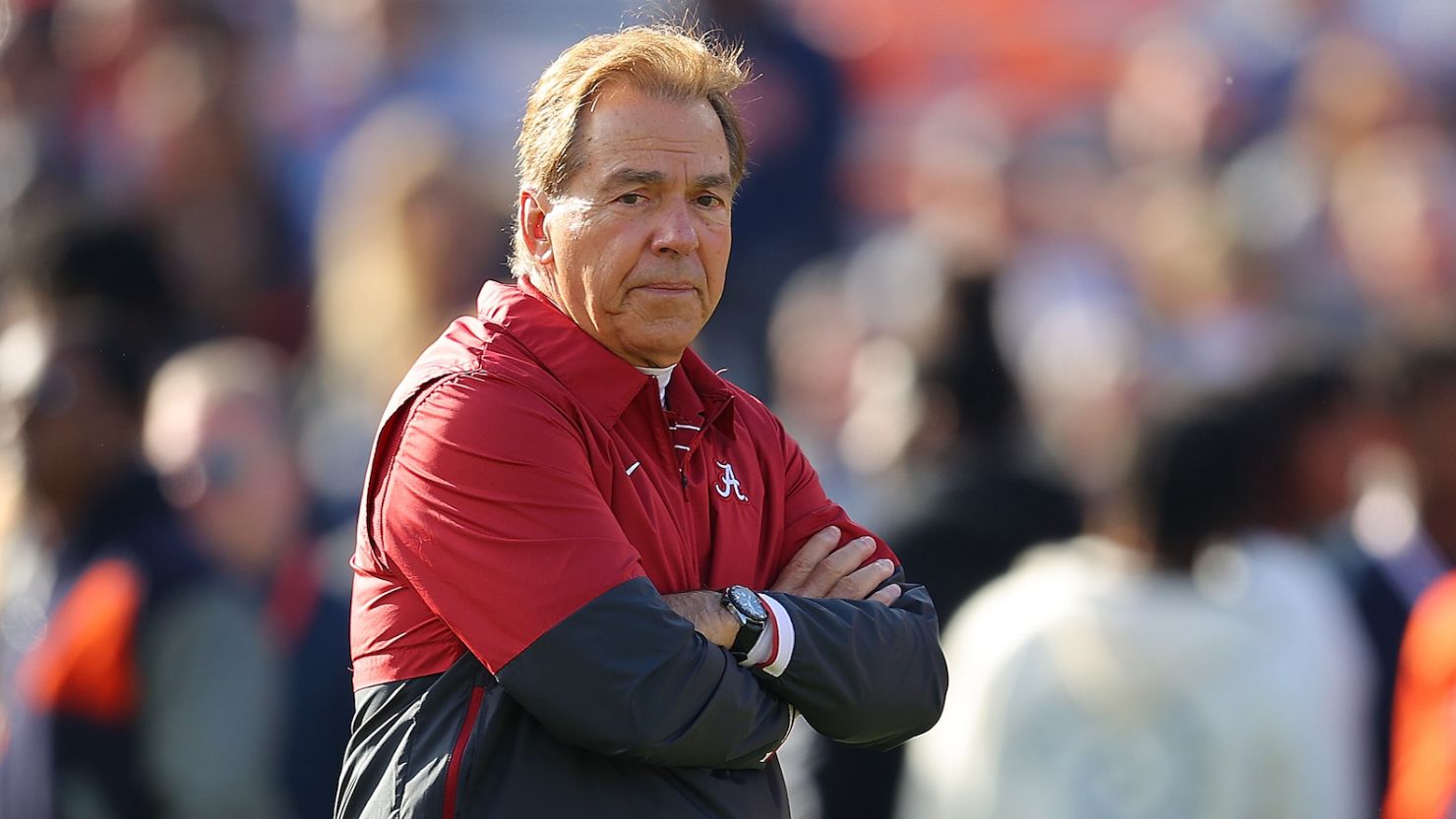
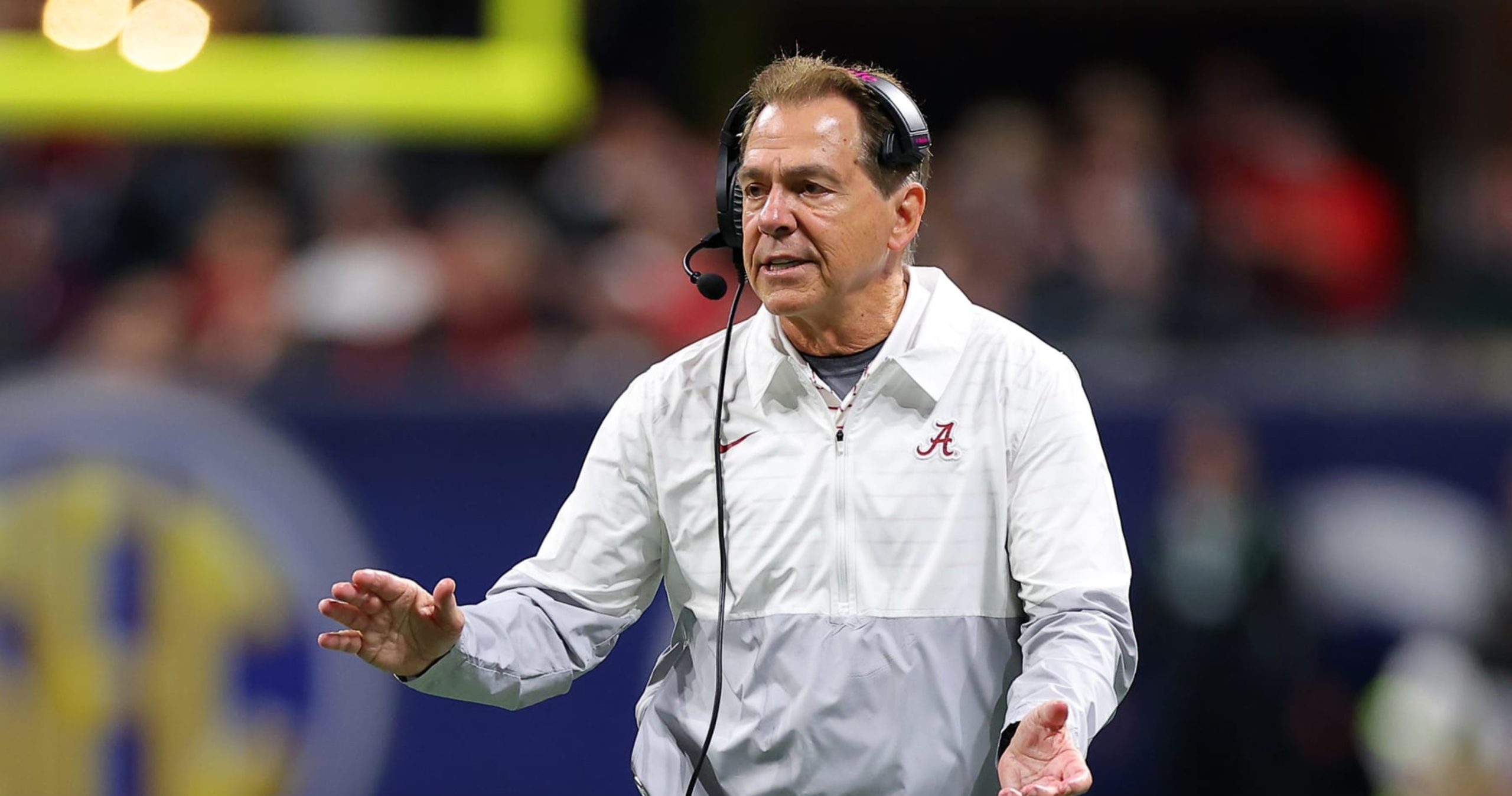
Nick Saban, one of the most successful coaches in college football history, announced his retirement on Wednesday after 17 seasons as the head coach at the University of Alabama in Tuscaloosa. Saban, 72, has won seven national championships in his career, six of which came at Alabama.
He stated that his time at Alabama was special to him and his wife, Terry, as they enjoyed being part of the Tuscaloosa community. He emphasized that the focus was not just on wins and losses but on creating a lasting legacy, building players’ futures, and helping them succeed in life. Saban expressed that Alabama would always be their home.
Saban completed his 17th season at Alabama, which ended with a loss to national champion Michigan in the Rose Bowl. He won 201 games at Alabama, tied for the second-most wins at a single school in SEC history, behind only Bear Bryant’s 232 wins. Saban helped return Alabama to greatness, winning six national titles and nine SEC championships, following in the footsteps of Bryant, who won 13 SEC titles and six national championships.
Greg Byrne, Alabama’s athletic director, praised Saban as one of the greatest coaches of all time and emphasized the long-lasting impact he has had on the program. Saban made the announcement to his players first before it went public, and sources revealed that he had been interviewing potential assistant coaches just an hour before making the decision.
He explained to his players that his decision was carefully thought out, and that changes in college football, such as the introduction of the transfer portal and NIL, had influenced his choice to retire.
Saban’s coaching career spanned 28 years, including stops at Toledo, Michigan State, LSU, the Miami Dolphins, and Alabama. He never had a losing season and led LSU to a national title in 2003. At Alabama, he won 201 games in 17 seasons, which is more than the 171 games Alabama won between Bryant’s retirement and Saban’s hiring.
Nick Saban (NFL)
His record at Alabama includes winning 11 SEC championships and appearing in the College Football Playoff eight times in 10 seasons.
Saban is ranked sixth in all-time wins for FBS college football coaches, with a 292-71-1 record. He had a strong career at Alabama, where he guided the Crimson Tide to multiple national titles, including undefeated seasons in 2009 and 2020. His ability to recruit was unmatched, securing a record 49 first-round NFL draft picks, including 44 from Alabama.
Saban coached four Heisman Trophy winners during his time at Alabama, and his recruiting classes consistently ranked among the best in the country. Alabama’s success on the field also matched their success in the classroom, with hundreds of degrees earned by players during his tenure.
Saban’s influence extended beyond football, as he and his wife Terry were deeply involved in community efforts through the Nick’s Kids Foundation, which has donated millions to various causes.
Although Saban’s time at Alabama has ended, his legacy will continue to impact the program. His coaching tree includes many successful head coaches, such as Kirby Smart, Steve Sarkisian, and Lane Kiffin. Saban’s teams were consistently at the top of the rankings, and his retirement marks the end of an era for Alabama football.
Alabama’s athletic director, Greg Byrne, mentioned that the search for a new coach will be thorough and efficient, with the focus on recruiting, player development, and leadership.
After the news of Saban’s retirement, Alabama’s odds to win next season’s national championship shifted, moving from 6-1 to 8-1. The program now looks ahead to finding a new coach to continue the success Saban built during his 17 years at Alabama.
Let’s look at the future of the teams that didn’t make it past the first round of the NFL Playoffs.
Green Bay Packers: Addressing the Offensive Limits
Packers tight end Tucker Kraft shared his thoughts during the team’s locker room cleanout, saying, “You could feel what was brewing for us,” referring to the Packers’ early playoff exit. He went on to say the team needs to “wake up” and “walk the walk” in meeting the high expectations they set for themselves in 2024.
Kraft’s comments were spot on. The Packers’ offense wasn’t bad, but it struggled against strong teams toward the end of the season.
While the Packers weren’t a bad offense, they ranked 8th in EPA per play and 11th in success rate in games started by Jordan Love. The issue was that this was a drop from 2023, when they were 5th in EPA per play and 8th in success rate. While the difference may seem small, and Love’s injuries during the year might make it hard to draw clear conclusions, it’s hard to deny that the offense, particularly in the passing game, didn’t improve in Love’s second full season as a starter.
This is especially clear with the wide receiver group. The Packers had a mix of second- and third-year players, all of whom showed potential, but none of them stood out as a true number-one receiver.
In 2024, the Packers had a group of good players but lacked a clear leader at the top. Dontayvion Wicks led the team in targets (76), Jayden Reed had the most catches and yards (55 for 857), Romeo Doubs had the most route participation when healthy (76.7%), and Christian Watson had the highest yards per reception (21.4). Tight end Tucker Kraft was the team leader with seven receiving touchdowns. However, all of them struggled with drops.
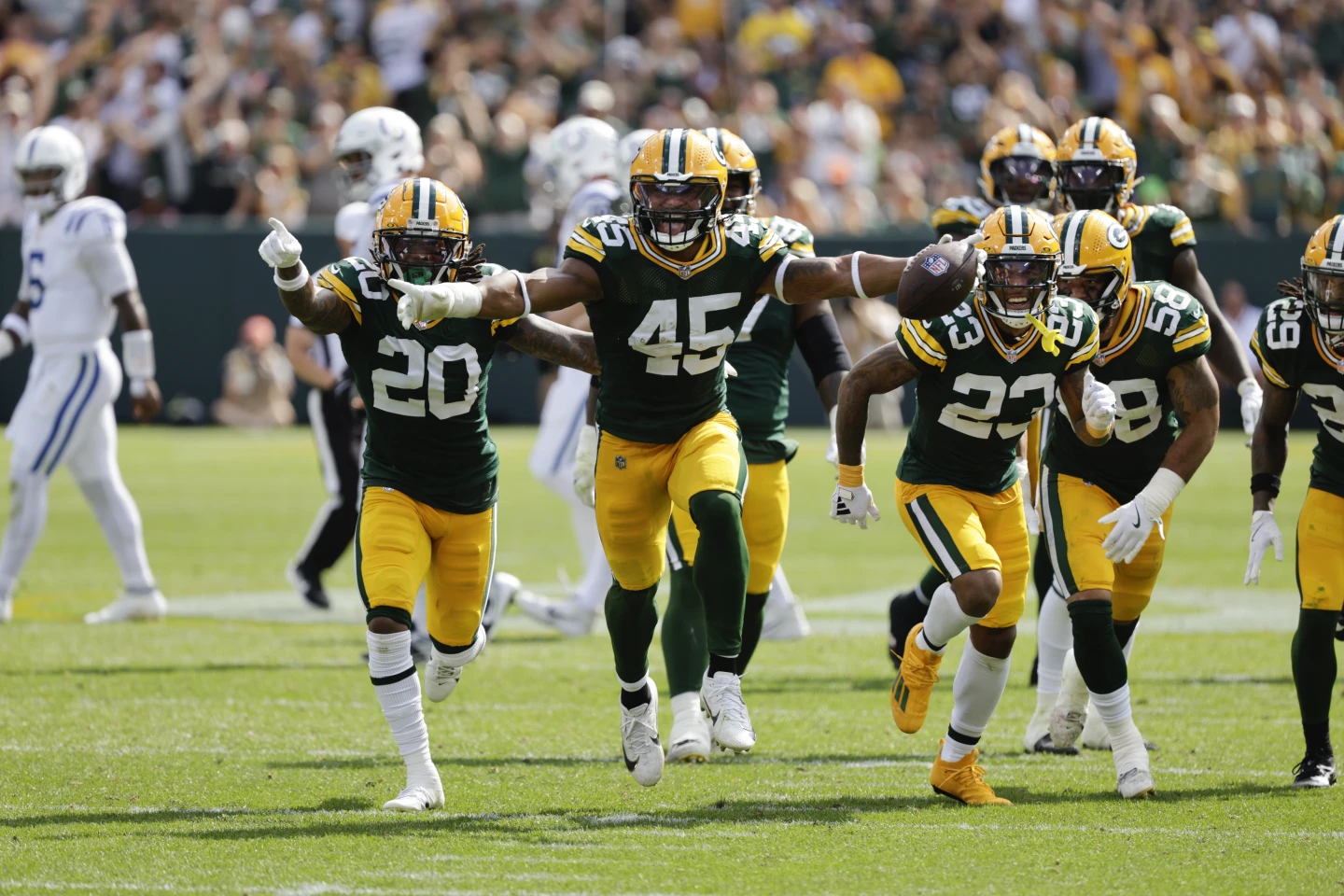
Green Bay Packers players celebrate after a first down in the 1st half
Each player did their part, but none of them became the standout player that could change how defenses played the Packers. This became a problem against stronger teams. Defenses like the Lions and Vikings ignored the Packers’ passing game with man coverage and pressure in Weeks 14 and 17. The issue was present again in the playoffs, where Love completed only 27% of throws over 10 yards, gaining 58 yards and throwing all three of his interceptions in Philadelphia.
The lack of a top receiver doesn’t excuse Jordan Love’s mistakes, which became more obvious in key moments. His first interception in the game was his first turnover since Week 12, but even when his mistakes didn’t show up on the stat sheet, his accuracy was inconsistent, and he often drifted in the pocket, throwing off his back foot.
This led to some great plays, but it also killed drives and missed opportunities for open receivers.
These issues tie back to the coaching staff. Matt LaFleur is known for being a strong play-caller and offensive designer, but Love’s mechanical issues and the rotation of receivers limited the team’s offensive potential. Both of these problems can be traced back to coaching.
LaFleur planned to use a receiver-by-committee approach from the start. However, one might wonder if the focus on rotation hurt the development of some players. Reed is a receiver who excels against man coverage and has the skills to be a leading receiver, but he was underused in key games as the season went on. Love needs an easy option in the passing game, and the Packers offense worked best when Reed was the primary target at the end of 2023.
The Packers don’t often go after veteran pass-catchers since top receivers are rarely available. While they might draft a wide receiver in the first round, that rookie would likely just become part of the group of “good but not great” players.
Green Bay is still a developing team on offense. Their best approach may be to continue to build around Reed and hope that players like Wicks improve. If they don’t, they’ll probably face the same issues that limited their offense this season.
The absence of a true No. 1 receiver doesn’t excuse Jordan Love’s mistakes, which have been a problem in crucial moments. His first interception was his first turnover since Week 12, but the issues were still there, even when they didn’t show up in the stats. Love’s accuracy has been inconsistent this season, and he often missed opportunities because he drifted in the pocket and threw off his back foot.
This can result in big plays, but it can also kill drives and leave open receivers without a chance to catch the ball.
This all ties back to the coaching staff. Matt LaFleur is one of the best play-callers and offensive designers, but Love’s mechanical issues and the constant rotation of receivers have limited the team’s offensive potential. Both of these issues go back to coaching.
LaFleur wanted to use a receiver-by-committee approach from the start. However, it’s worth wondering if this focus on rotation hindered the development of some players. Reed is a receiver who excels against man coverage and has the skills to be the top receiver, but he wasn’t used as much in important games as the season went on.
Love clearly needs an easier target in this passing game, and the Packers offense was at its best when Reed was prioritized as the go-to target near the end of 2023.
The Packers don’t often go after veteran pass-catchers since top receivers are rarely available. They might draft a wide receiver in the first round, but that rookie would likely just become another part of the group of “good but not great” players. Green Bay is still a young team developing on offense. The best plan is to keep focusing on Reed and hope players like Wicks improve. If not, they will likely face the same issues that held them back this season.
For the Tampa Bay Buccaneers, the 2024 season ended just like it played out: a strong offense held back by its defense and the head coach’s game management.
Yes, there were some key moments late in the game where offensive mistakes allowed Washington to take advantage. For example, if rookie center Graham Barton, who had been excellent all season, hadn’t messed up the snap count and hiked the ball too early to Baker Mayfield late in the fourth quarter, the Buccaneers might have scored and the outcome could have been very different. But for the most part, Tampa Bay’s offense was strong enough to win the game.
The issue is that the Buccaneers wasted valuable time against a Washington team that the Bucs’ defense couldn’t stop. The Commanders controlled the ball for 35 minutes and 26 seconds, while Tampa Bay had it for only 24 minutes and 34 seconds. This time difference is mainly due to the Bucs’ inability to stop Jayden Daniels on critical plays.
Tampa Bay did manage to get Daniels to throw a few incompletions when they blitzed, but they couldn’t force him into any major mistakes. His 0.44 expected points added per dropback on blitzes was the fourth-best among quarterbacks in the games that weekend.
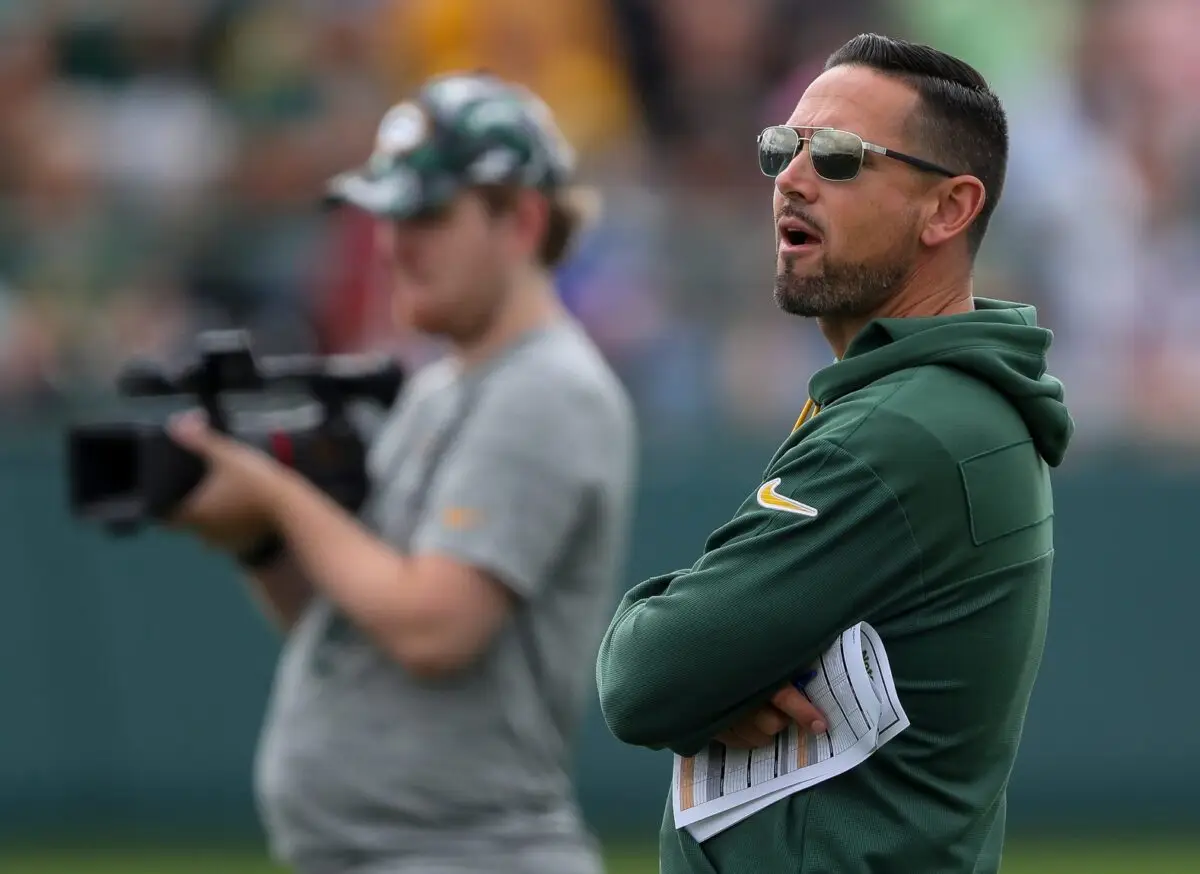
Matt LaFleur (NFL)
Daniels was especially effective on crucial third and fourth downs, completing 9 out of 15 passes for 108 yards and two touchdowns. According to Next Gen Stats, 80% of his throws on those plays were past the first-down marker. The rookie quarterback felt confident and was not intimidated by the Bucs’ pass coverage.
The defense’s lack of pushback, especially considering Bowles oversees it, makes his decision-making with timeouts and his cautious approach on fourth downs even more frustrating.
It’s easy for an outsider to suggest that the Bucs should move on from Bowles and promote Liam Coen to head coach. I don’t know if Coen has the skills to lead the team, nor do we have any idea about his ability to manage the game.
However, there are two things I know for sure. First, it is highly unlikely that the Bucs will find a third game-changing offensive coordinator in as many seasons. Most teams struggle after losing their play-caller. Tampa Bay, on the other hand, improved by replacing Dave Canales with Coen.
It’s unlikely they’ll get that lucky again, as the pool of candidates isn’t that deep. Second, the second-fastest way to build a contending team, besides having a great quarterback, is by having an outstanding play-caller. The Bucs’ success in the last two seasons with Mayfield at quarterback shows this is true.
Maybe Bowles doesn’t need to go, and perhaps Coen won’t even be offered a head coaching job this season. But if it comes down to it, the Bucs can’t afford to let Coen leave. If it takes a promotion or a big pay raise, they should do whatever it takes to keep him.
Tampa Bay Buccaneers
Tampa Bay is an offense-focused team with many young players that we should be excited about for the future. Losing Coen would put all of that in jeopardy.
It’s surprising to think that just a little over two weeks ago, Vikings players were celebrating a big win over their division rivals, the Packers, with Sam Darnold being lifted up by his teammates. Since that victory, everything for the Vikings has gone downhill quickly. Both the Lions and Rams beat them badly in back-to-back weeks after that win.
It almost feels like the Vikings’ season ended in Week 17 after the locker room celebration with Darnold. Sadly, the actual end to their 2024 campaign turned out to be much more disappointing.
The first reaction to this loss will probably be to blame Darnold completely. Some might say that Kevin O’Connell got out-coached for the second week in a row. Neither Darnold nor O’Connell performed well in this loss, and since this is about eliminated teams, we should acknowledge their mistakes at the most important time.
But we shouldn’t ignore how well the Rams played. This might have been their best win of the season, given the quality of their opponent and the tough circumstances around them. The wildfires in Los Angeles forced them to play in Arizona, yet they dominated the Vikings.
With the cheapest defense in the league and a first-year defensive coordinator, Chris Shula, the Rams’ defense shut down a top Vikings offense. This wasn’t a fluke either, as the Rams had been limiting teams to low point totals since Week 15.
Once again, the Rams showed why they are so successful in roster management and coaching. Sean McVay, Les Snead, and their team deserve a lot of credit for this.
The Vikings still have potential but didn’t perform well in this game. Neither O’Connell nor Brian Flores looked great, but it’s important to remember that they got a team with many weaknesses to the playoffs.
In the postseason, those weaknesses were exposed at the worst time. Thankfully, because of the good work done by the front office, especially GM Kwesi Adofo-Mensah, the Vikings will have the financial ability to fill in some of those gaps this offseason.
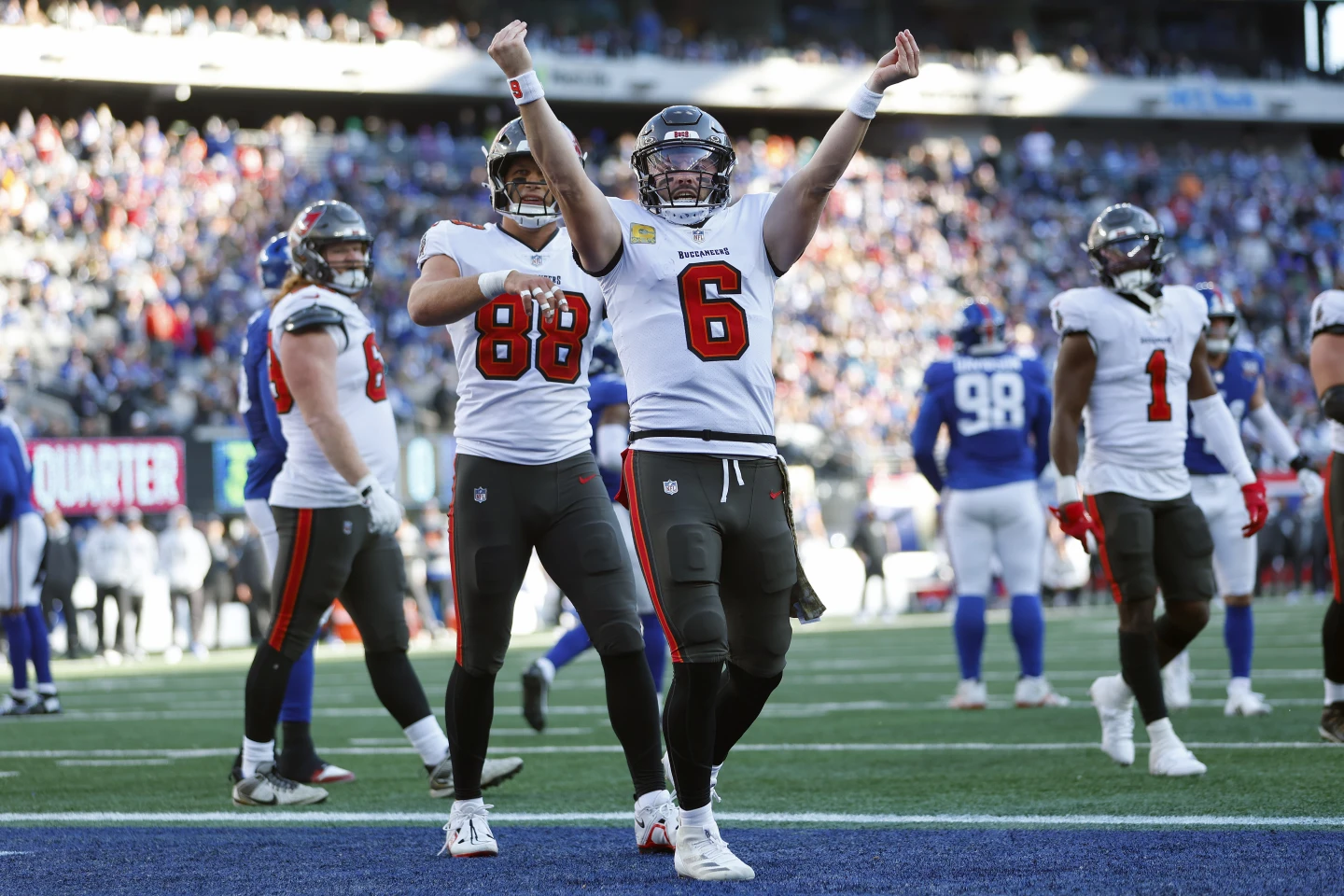
Tampa Bay Buccaneers celebrates his touchdown in the 1st half
It’s likely that they will move forward without Sam Darnold. After the game, O’Connell’s comments made it sound like he was already preparing to part ways with his quarterback, not as if he was planning to keep things the same for next season.
Did Darnold play himself out of the Vikings’ future plans on Monday night? I’m not so sure about that.
The results were as bad as they could be for a quarterback, to the point where I felt uncomfortable watching the game. Darnold was taking sacks like it was nothing, heading towards a historic performance, but not in a good way.
Most of his nine sacks happened on plays that lasted longer than 3 seconds. Two of them lasted over 5 seconds, according to TruMedia. As a quarterback, you can’t let that happen. This wasn’t like the game we saw with Justin Herbert on Saturday, where quick pressure made it impossible for the quarterback to run an offense. At some point, a quarterback just has to throw the ball away and try again on the next play.
At the same time, the offensive line was missing its star left tackle and had to use a midseason trade to fill in that spot. The interior line has been a problem all season and needs to be fixed during the offseason. Protection was inconsistent between the guards, and the run game struggled behind the weak interior all year.
The Rams knew they could take advantage of the Vikings’ weak front five, especially since they were vulnerable to defensive back blitzes because of their tight formations. The Vikings also kept trying deep downfield plays instead of using quicker, simpler game plans. O’Connell didn’t make enough adjustments against a young, fast defense that knew how to stop his offense.
Darnold had a tough game, as he couldn’t handle the pressure and broke down under the bad circumstances. But that’s who he is. He didn’t suddenly change in the last 15 days.
We knew he wasn’t as good as his previous stats suggested, but he’s not as bad as the player we saw in the past two weeks. He’s somewhere in between and can play better in the right situation or struggle in the wrong one.
Looking at the league, another team will probably be willing to pay for what Darnold brings — the middle ground of his abilities. Some teams went into this season with quarterbacks like Aidan O’Connell and Gardner Minshew.
Minnesota Vikings
The Vikings, however, will likely not want to pay for Darnold, especially when they need cap space to fix the interior line and figure out what to do with their cornerbacks, who will be free agents. They almost certainly won’t want to carry the cost of keeping Darnold when they just spent resources on getting J.J. McCarthy last year.
Darnold didn’t play himself out of the Vikings’ future plans on Monday night. However, he didn’t do anything to change the plans that were already in motion before and during his time with the 2024 Vikings.
The focus for the 2025 Vikings will be on getting McCarthy up to speed to give them at least 85% of what Darnold provided — which should be possible if the team stays healthy and McCarthy recovers from his knee injury. Meanwhile, Darnold will likely look for a team willing to offer him a multi-year contract and an environment similar to what he had in Minnesota.
There’s a chance it can work out for both sides, even if their time together is coming to an end.