Categories
College Football

Texas Longhorns Deny $40M NIL Claim as College Football Spending Hits New Heights

The University of Texas at Austin’s athletic department is renowned for its substantial financial resources, particularly within its flagship Texas Longhorns football program. Often cited as having among the best amenities in the country, the Longhorns are seen as a symbol of financial strength in collegiate athletics.

This reputation has become even more prominent with the rise of name, image, and likeness (NIL) opportunities, which have led to increased investments in football and other high-profile sports across the nation.

NIL Spending Soars as Texas Denies Reported $40 Million Football Roster Cost

Programs nationwide, such as Ohio State, have significantly increased their financial commitments in the NIL era, with reports indicating the Buckeyes spent over $20 million to assemble a championship-caliber roster. In this fiercely competitive environment, Texas was rumored to have matched or even surpassed that amount. However, the accuracy of claims suggesting a $40 million expenditure by the Longhorns was quickly called into question.

Texas Longhorns Deny $40M NIL Claim as College Football Spending Hits New Heights

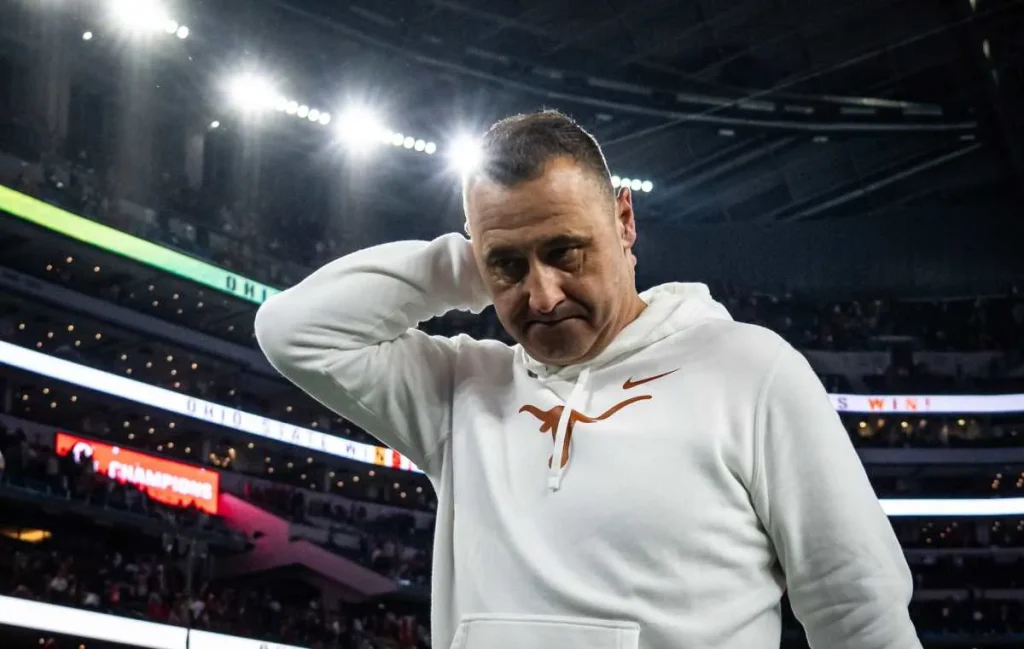
Texas head coach Steve Sarkisian denied the widely circulated claim that the Longhorns’ roster cost $40 million. Referring to a Houston Chronicle report, Sarkisian pointed out that the team’s expenses—including NIL collective payouts and revenue-sharing funds—were closer to $25 million. He criticized the $40 million figure as a product of “irresponsible reporting” and emphasized that only one anonymous source had made that claim.

High Spending Becomes the Norm as Texas Competes in a Financially Driven Era

Sarkisian acknowledged the current financial state of college football, noting that major programs across the country are pouring significant resources into acquiring top players. He recognized that high spending has become a standard practice in the sport and described it as an unavoidable part of today’s game. His comments showed an understanding of both Texas’ role and the overall competitive nature of college football.

Despite the speculation about its spending, Texas has backed its financial investments with strong performances on the field. The Longhorns reached the College Football Playoff in the past two seasons, advancing past Clemson and Arizona State before falling to Ohio State in the semifinals of the latest campaign. Sarkisian joked that an extra $15 million might have helped them go further, underscoring both the competitiveness of elite programs and the growing importance of financial resources in college football success.

Categories
College Football

Nick Saban and Donald Trump Criticized for Pushing NIL Crackdown Amid College Athlete Pay Debate

Former Alabama football coach Nick Saban has found himself at the center of controversy following a Wall Street Journal report that he encouraged former President Donald Trump to intervene in college athletes’ Name, Image, and Likeness (NIL) compensation policies. While Saban has denied that NIL issues influenced his retirement, he has remained vocal in his opposition to the current system.

Since leaving coaching, Saban has been actively working with Republican lawmakers to push for stricter regulations on NIL, aligning himself with those seeking to curb the growing autonomy and earning power of student-athletes.

Saban and Trump Face Scrutiny Over Controversial NIL Reform Involvement and Motives

Saban’s participation in a Senate hearing as a guest of Sen. Ted Cruz in 2023 underscored his stance. He claimed NIL policies diminished players’ resilience and cited concerns from NFL coaches and his wife about players’ attitudes.

However, many viewed his statements as hypocritical, considering his status as the highest-paid college football coach at the time of his retirement. Critics argue that his complaints reflect a desire to maintain control over athletes rather than promote fairness or development.

Nick Saban and Donald Trump Criticized for Pushing NIL Crackdown Amid College Athlete Pay Debate

The notion of involving Donald Trump in such a complex and evolving issue has raised eyebrows. Sports analyst Spencer Hall and commentator Bomani Jones expressed skepticism about Trump’s ability to meaningfully contribute to NIL reform, especially given his past failures in professional football, such as his role in the downfall of the USFL. While acknowledging that NIL rules might benefit from refinement, critics doubt Trump’s qualifications to spearhead such efforts.

Critics Slam Political Interference Threatening Progress in College Athletes’ NIL Freedoms

Jemele Hill, another prominent sports commentator, took to social media to mock the situation, warning college athletes about political interference in their newfound financial independence.

She highlighted the NCAA’s lobbying efforts and emphasized how out-of-touch such political maneuvers might be with the needs and interests of modern athletes. Hill’s message implied that efforts to curtail NIL freedoms are rooted in preserving outdated power dynamics.

Legal experts, such as those at Hagens Berman law firm, which previously secured a major antitrust settlement against the NCAA, criticized Saban’s involvement. They pointed out the contradiction in his push for athlete pay restrictions while having personally profited immensely from the old system.

According to the firm, Saban and Trump’s attempts at last-minute policy changes are unnecessary and detrimental. They argue that college athletes are now leading transformative changes and that interference from former power brokers only threatens to stall progress.

Categories
College Football

Understanding NCAA Name, Image, and Likeness (NIL) Rules: A Guide for High School Athletes

In June 2021, the NCAA introduced an interim policy allowing student-athletes to profit from their name, image, and likeness (NIL). This policy brought about a major shift in college athletics, offering athletes the chance to earn money from their personal brand. However, NIL laws vary from state to state, and the regulations can differ depending on whether the athlete is in high school or college. This guide aims to explain the rules for high school athletes and provide valuable insights for parents and students as they explore NIL opportunities.

NIL stands for name, image, and likeness. It refers to the right of an individual to control how their name, image, or likeness is used commercially. For example, if an athlete’s picture is used to promote a product, the athlete can profit from that use under the right of publicity.

The right of publicity protects individuals from unauthorized commercial use of their identity. This has long been a subject of discussion in the context of the NCAA, as critics have argued that student-athletes should be allowed to benefit from their own name, image, and likeness. The introduction of the NIL policy aims to address these concerns.

Understanding NCAA Name, Image, and Likeness (NIL) Rules A Guide for High School Athletes

NCAA’s NIL Rule Overview

The NCAA’s interim policy, implemented in June 2021, allows athletes to engage in NIL activities. There are three main components of the policy:

Compliance with State Laws: Athletes must adhere to the NIL regulations in the state where their school is located.

No State Laws: In states without NIL laws, athletes are still allowed to engage in NIL activities, following NCAA rules.

Professional Services: Athletes can seek professional services (like agents) to manage their NIL deals.

Additionally, athletes must report their NIL activities to their school in accordance with state laws or school policies.

Examples of NIL Activities for Athletes

Student-athletes can engage in a wide variety of activities to monetize their NIL, including:

  • Autographs and memorabilia sales
  • Hosting camps and clinics
  • Personal appearances
  • Merchandise sales
  • Affiliate marketing and ambassador roles
  • Creating and selling NFTs
  • Blogging and podcasting
  • Public speaking
  • Music, art, and other creative works

While NIL presents exciting opportunities for both high school and college athletes, high school student-athletes must face additional complexities. Here are some key points for high school athletes to consider:

State NIL Rules: Each state has its own regulations regarding NIL. What is permitted in one state may not be allowed in another.

High School NIL Rules: Many high school sports associations set their own rules regarding NIL, so it’s essential to understand these rules to avoid violations.

College and Conference NIL Rules: College programs may have specific NIL policies that differ from state laws, and these must also be considered.

Risk Awareness: Ignoring NIL rules may jeopardize an athlete’s eligibility to play college sports. Always make sure to follow the correct procedures.

Focus on School and Sports: Academic performance and athletic skills should remain a priority, as these influence college recruitment and future NIL opportunities.

Seek Guidance: It’s helpful to talk to current college athletes, financial advisors, and NIL professionals to ensure smart decision-making.

Build an Online Presence: Even if NIL activities aren’t allowed in high school, starting to build a personal brand through social media can open doors for future opportunities.

Stay Updated: As NIL laws are continuously evolving, staying informed about changes is crucial.

Understanding NCAA Name, Image, and Likeness (NIL) Rules A Guide for High School Athletes

Sources to Check for NIL Information

To understand your NIL rights, high school athletes should regularly check the following sources:

State Laws: Each state has specific NIL regulations.

State High School Associations: Your state’s high school sports association will have its own guidelines.

National and Sport Governing Bodies: Certain sports have additional NIL guidelines.

Colleges and Conferences: Each school or conference may have its own rules.

State-by-State Overview of NIL Laws

The status of NIL laws varies across the United States. Some states have fully implemented NIL laws, while others are still in the process of considering or amending their regulations. Below is a table summarizing the current status of NIL laws in different states for college athletes:

State NIL Law Status
Alabama Repealed / Suspended
Arizona Signed into law
California Signed into law
Florida Signed into law
Georgia Signed into law
Illinois Signed into law
Michigan Signed into law
New Jersey Signed into law
Texas Signed into law; Amended June 2023
Utah Signed into law
Virginia Signed into law
Washington Legislation proposed
Wisconsin None

In states with active NIL laws, athletes can earn money while adhering to both state and school rules. In states without NIL laws, colleges create their own NIL guidelines.

Understanding NCAA Name, Image, and Likeness (NIL) Rules A Guide for High School Athletes

High School Associations and NIL Rules

High school athletes face more restrictive rules regarding NIL opportunities. Each state has its own policies, and many high school sports associations limit or prohibit NIL activities. The table below shows the NIL status for high school athletes in various states:

State NIL Status for High School High School Association
Alabama Prohibited Alabama High School Athletic Association (AHSAA)
Alaska Permitted Alaska School Activities Association (ASAA)
Arizona Permitted Arizona Interscholastic Association
California Permitted California Interscholastic Federation
Florida Permitted Florida High School Athletic Association
Georgia Permitted Georgia High School Association (GHSA)
Hawaii Prohibited Hawaii High School Athletic Association (HHSAA)
Michigan Prohibited Michigan High School Athletic Association (MHSAA)
Ohio Prohibited Ohio High School Athletic Association (OHSAA)
Texas Permitted (18&up) Texas University Interscholastic League (UIL)

In some states, NIL activities for high school athletes are under consideration or may be prohibited entirely. Athletes should consult their high school association for guidance on what is permissible in their region.

Colleges and universities can establish their own NIL rules. Some schools have partnered with third-party platforms to manage NIL contracts and ensure compliance. These platforms help review and approve NIL deals, providing structure and transparency.

Additionally, national governing bodies for specific sports may set guidelines for athletes to maintain amateur status. For example, the United States Golf Association (USGA) has developed its own NIL guidelines for amateur golfers.

Talking to College Coaches About NIL

High school athletes should inquire about NIL rules when engaging with college coaches. Here are some essential questions to ask:

  • What are the NIL rules enforced by your school and conference?
  • How can NIL opportunities benefit me if I attend your institution?
  • What platforms are currently being used to manage NIL contracts?
  • How are other student-athletes at your school monetizing their NIL?

Helping Athletes Monetize Their NIL

There are various companies and platforms available to help student-athletes secure NIL deals. These platforms connect athletes with brands, manage contracts, and offer resources to help athletes make informed decisions. Athletes should explore these resources to maximize their NIL potential.

The NIL rules are changing quickly, particularly for high school athletes. It’s essential for students and their families to understand the regulations in their state and high school sports association, as well as the broader college and NCAA guidelines. By staying informed, building an online presence, and seeking proper guidance, high school athletes can position themselves for future NIL opportunities while ensuring they remain eligible for college sports.