Categories
FEATURED

Lance Armstrong Admits Doping, Loses Tour Titles and Olympic Medal in Cycling Scandal

Lance Armstrong, the former cycling champion, publicly admitted to using performance-enhancing drugs in an interview with Oprah Winfrey. He acknowledged using EPO, testosterone, cortisone, and human growth hormone, and participating in blood doping and illegal blood transfusions. His confession followed the U.S. Anti-Doping Agency’s (USADA) release of extensive evidence in October that implicated him and his teammates in systematic doping practices. As a result, Armstrong was stripped of his seven Tour de France titles, and the International Olympic Committee demanded the return of his 2000 bronze medal.

The doping allegations against Armstrong are indicative of a broader issue in professional cycling. According to the USADA report, 80% of Tour de France medalists from 1996 to 2010 were implicated in doping scandals. Notable examples include Floyd Landis, who was stripped of his 2006 Tour de France title for failing a drug test. These revelations underscore the widespread use of banned substances in the sport, raising questions about the integrity of its competition during this era.

Lance Armstrong
Lance Armstrong

Performance-enhancing drugs like EPO and blood transfusions have been central to doping schemes in cycling. EPO boosts red blood cell production, enhancing oxygen delivery and endurance, while blood transfusions achieve similar effects by reinfusing stored blood. Despite being banned, both methods remain difficult to detect and pose significant health risks, including cardiovascular complications due to thicker blood caused by elevated hemoglobin levels.

Other substances, such as corticosteroids and testosterone, were also part of Armstrong’s doping regimen. Corticosteroids are used to reduce inflammation but can lead to severe side effects such as weight gain and high blood pressure when misused. Testosterone, commonly abused by athletes to increase strength and stamina, carries risks like mood swings, liver dysfunction, and suppressed natural hormone production. These drugs further illustrate the physical toll doping can take on athletes.

Armstrong’s confession has sparked calls for reform in cycling and greater efforts to combat doping. USADA CEO Travis Tygart expressed hope that this scandal would lead to a cleaner future for the sport, emphasizing the need to protect athletes from the “doping or don’t compete” dilemma. The scandal underscores the importance of maintaining integrity in competition to safeguard the health and dreams of current and future athletes.

Categories
FEATURED

How Olympic Boycotts Have Advanced Social Justice and Transformed Global Political Dynamics

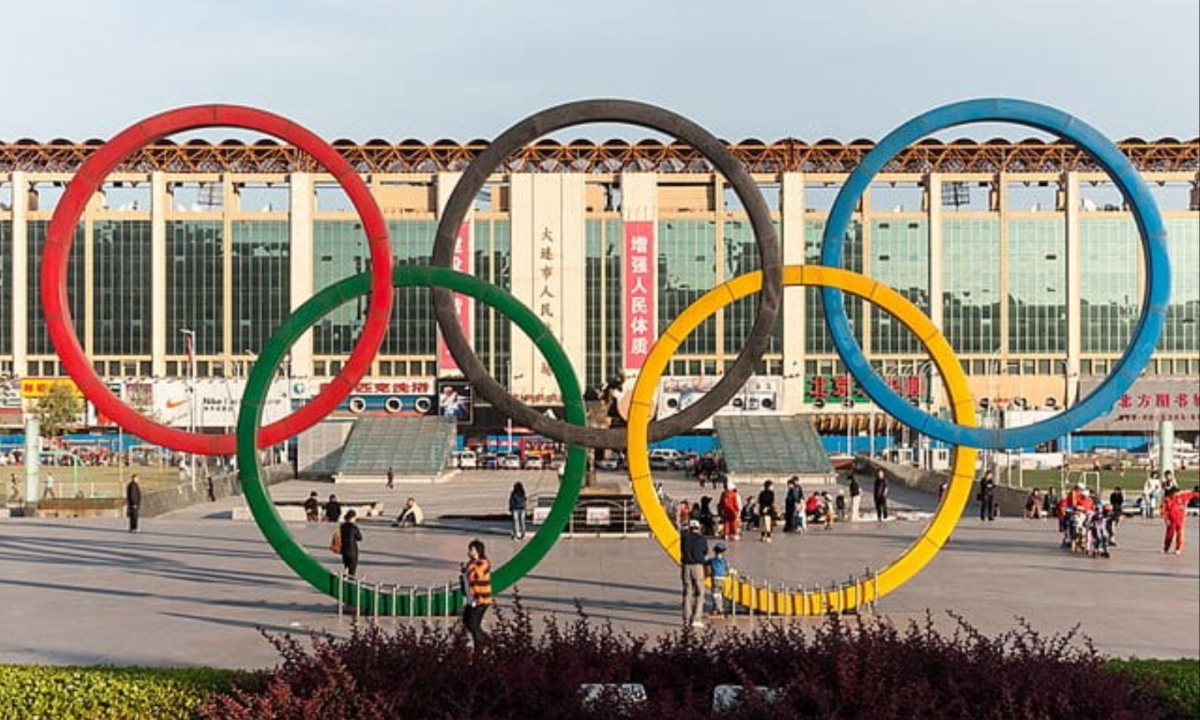
The Olympic ban on South Africa due to its apartheid policies was a pivotal moment in demonstrating the power of international boycotts in advancing social justice. It helped isolate South Africa on the global stage, signaling widespread condemnation of racial segregation and human rights abuses. This move, part of broader economic and cultural sanctions, highlighted how sports can transcend mere competition and influence global politics. The event “Boycotts and the Olympics,” hosted by Vanderbilt University, will examine such examples, including the unsuccessful U.S. movement to boycott the 1936 Olympics in Nazi Germany, exploring their impact on society and policy.

Andrew Maraniss, a visiting author at Vanderbilt and an accomplished writer, will lead the discussion on how boycotts have shaped cultural and political landscapes. Maraniss, best known for his book Strong Inside about Perry Wallace, the first African American varsity basketball player in the Southeastern Conference, has a deep understanding of the intersection of sports, race, and society. His work, which has earned critical acclaim and national media attention, underscores the broader implications of sports as a platform for societal change.

How Olympic Boycotts Have Advanced Social Justice and Transformed Global Political Dynamics

The event, scheduled for Feb. 28 at Vanderbilt’s McGugin Center, invites the public to engage in a critical discussion on the role of boycotts in Olympic history and their significance in driving social and political reform. By delving into past movements like the Olympic ban on South Africa and the 1936 Berlin boycott attempt, attendees can better understand how collective action in sports has shaped global perceptions of justice and equality.

Free and open to the public, the program emphasizes accessibility and community engagement. The venue will offer light refreshments and convenient parking, encouraging widespread participation in a meaningful dialogue about the intersection of sports, society, and politics. The event reflects Vanderbilt’s commitment to exploring pressing societal issues through a multidisciplinary lens.

Launched in 2018 by David Williams II, Vanderbilt’s Sports and Society Initiative continues his legacy by fostering discussions on the broader societal implications of sports. Williams’ vision for addressing social justice through athletic platforms remains influential, with events like this exemplifying the university’s dedication to examining sports as a catalyst for change.

Categories
FEATURED

Olympic athletes lose medals due to doping scandals

Jordan Chiles isn’t the first athlete to have an Olympic medal taken away.

The American gymnast had a strong performance at the 2024 Paris Games, winning a team all-around gold with the U.S. gymnastics team on July 30, and a bronze in the individual floor exercise on August 5.

However, Chiles lost her bronze medal five days later after a judge from the Court of Arbitration for Sport (CAS) ruled in favor of two Romanian gymnasts, Ana Barbosu and Sabrina Maneca-Voinea, who finished in fourth and fifth place.

The decision to revoke Chiles’ medal followed a protest from the Romanian Olympic committee. They claimed that the difficulty score inquiry submitted by Chiles’ coach was past the one-minute deadline. (Chiles had originally finished fifth before the inquiry raised her score to medal.)

While removing an athlete’s Olympic medal isn’t common, it’s not a new occurrence. Many athletes from past Summer Games have lost their medals, with failed drug tests or use of banned substances being the main reasons.

In Chiles’ case, though, the decision to revoke her medal could be changed. The U.S. Olympic & Paralympic Committee (USOPC) announced they would appeal the ruling after the International Olympic Committee (IOC) told Chiles to return her bronze.

Here’s a list of American athletes who’ve had their Olympic medals taken away, along with the reasons they were revoked.

Jim Thorpe, 1912 Stockholm Olympics
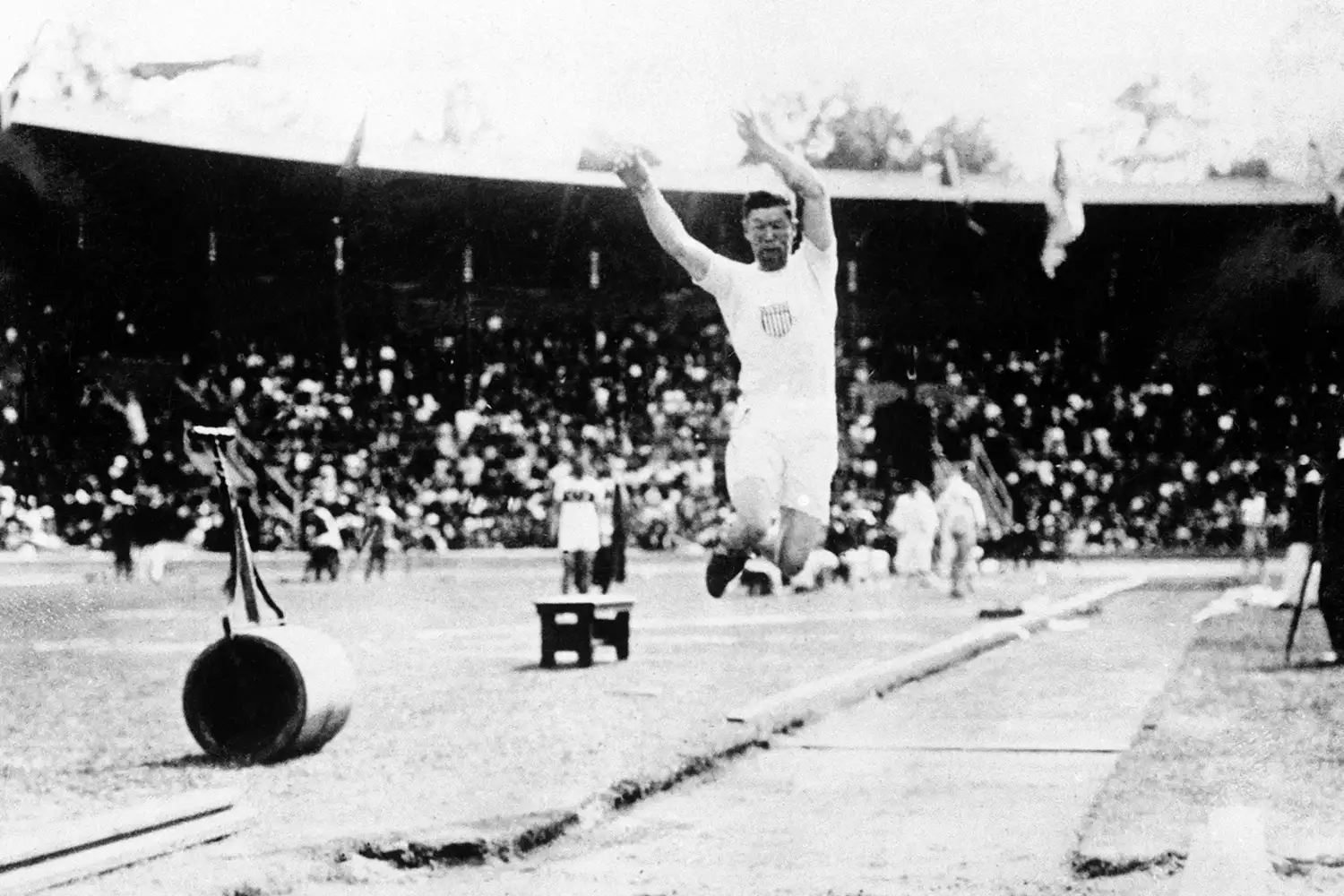
Jim Thorpe, considered one of the greatest athletes of his time, was the first Native American to win an Olympic gold medal for the U.S. at the 1912 Stockholm Olympics, where he won the pentathlon and decathlon.

A year later, the International Olympic Committee took away his medals and erased his records because he had played two seasons of semi-pro baseball during the summer. This was against the amateurism rules at the time.

Jim Thorpe 1912 Stockholm Olympics

In 1982, more than 70 years after the Olympics and decades after Thorpe’s death, his medals were restored, and his family attended a ceremony in his honor.

Rick DeMont, 1972 Munich Olympics
Rick DeMont, a former swimmer with several world records, won a gold medal in the 1972 Munich Olympics in the men’s 400-meter freestyle.
Afterward, the IOC revoked his gold medal after he tested positive for a banned substance in his post-race test. DeMont, who had asthma, took Marax (an ephedrine derivative) to help with his condition, but the U.S. medical team failed to check if it contained any banned substances.
DeMont didn’t hide his use of Marax, but despite his efforts to get his medal back, it was never restored.

Lance Armstrong, 2000 Sydney Olympics
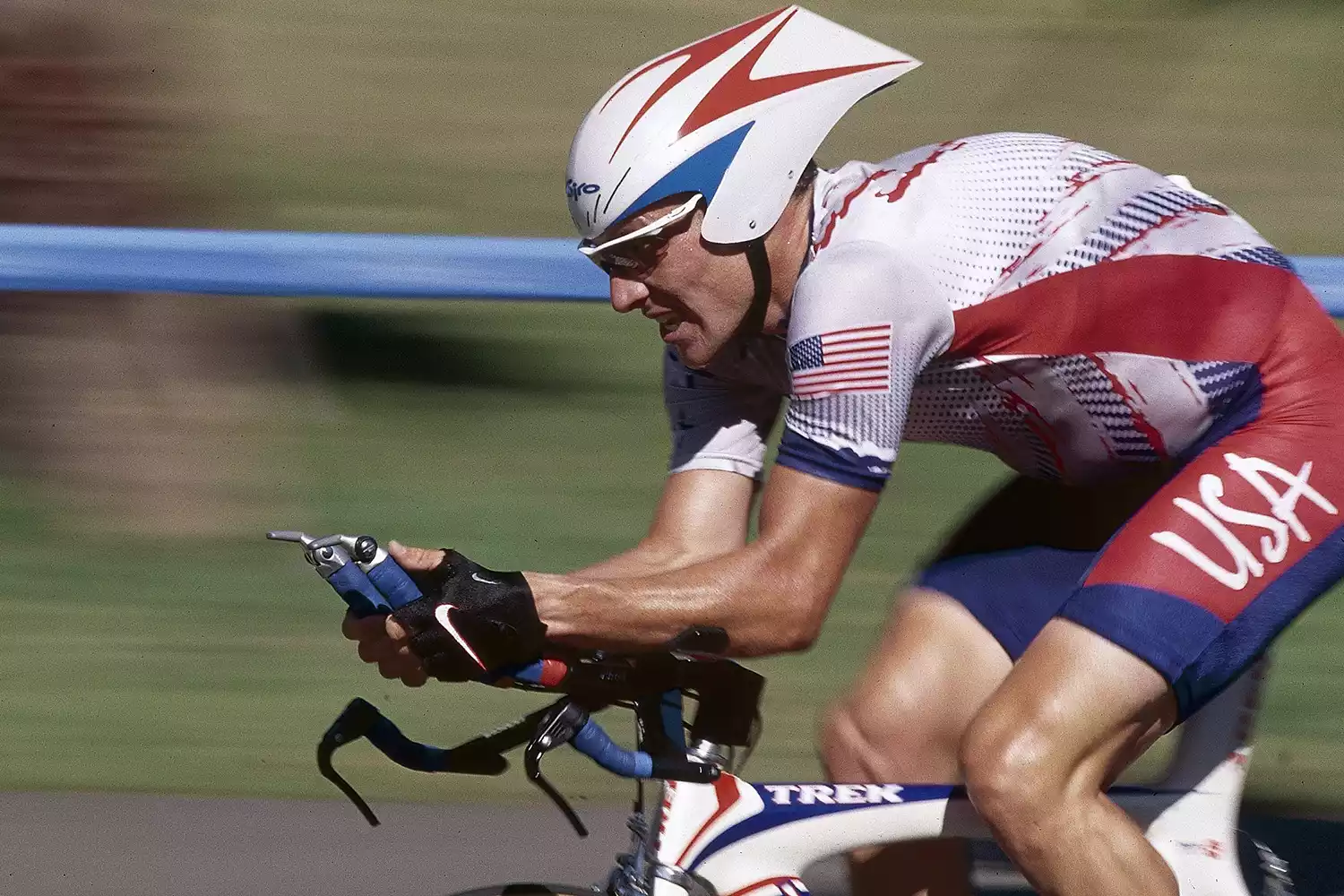
Lance Armstrong, a former professional cyclist, lost his bronze medal from the 2000 Sydney Olympics, 13 years after finishing third in the men’s individual road cycling time trial. The IOC requested the return of his medal after Armstrong admitted to using performance-enhancing drugs throughout his career.

Lance Armstrong 2000 Sydney Olympics

This case was highly publicized, and Armstrong was also banned from Olympic sports for life. He lost his Tour de France titles and other cycling awards from 1998 onward.

Marion Jones, 2000 Sydney Olympics
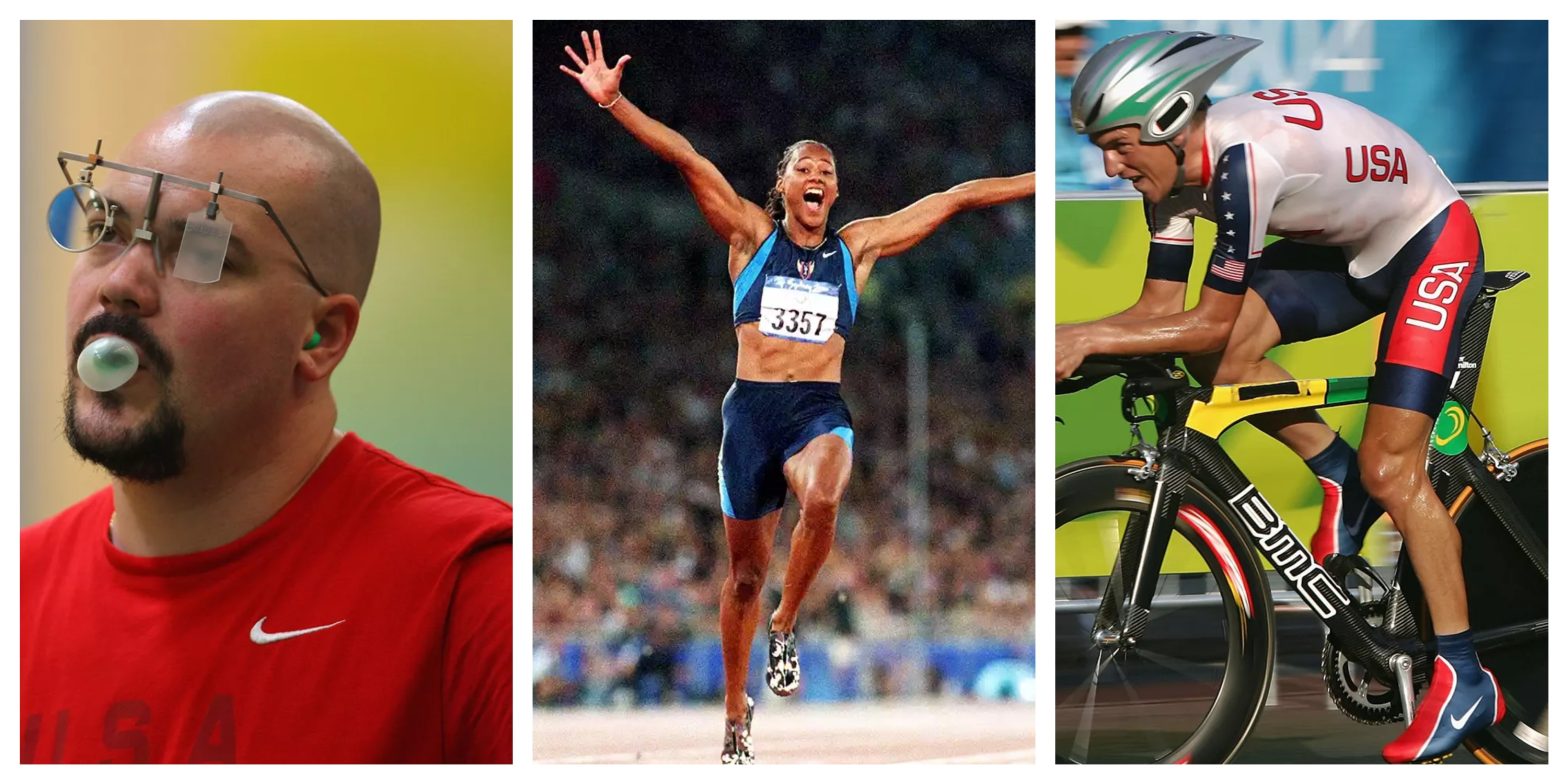
Marion Jones, a former track-and-field athlete, won three gold medals and two bronze medals at the 2000 Sydney Olympics.
In 2007, Jones admitted to lying about taking performance-enhancing drugs. As a result, the IOC stripped her of her medals and records in December 2007, and she was sentenced to six months in prison.

Tyler Hamilton, 2004 Athens Olympics
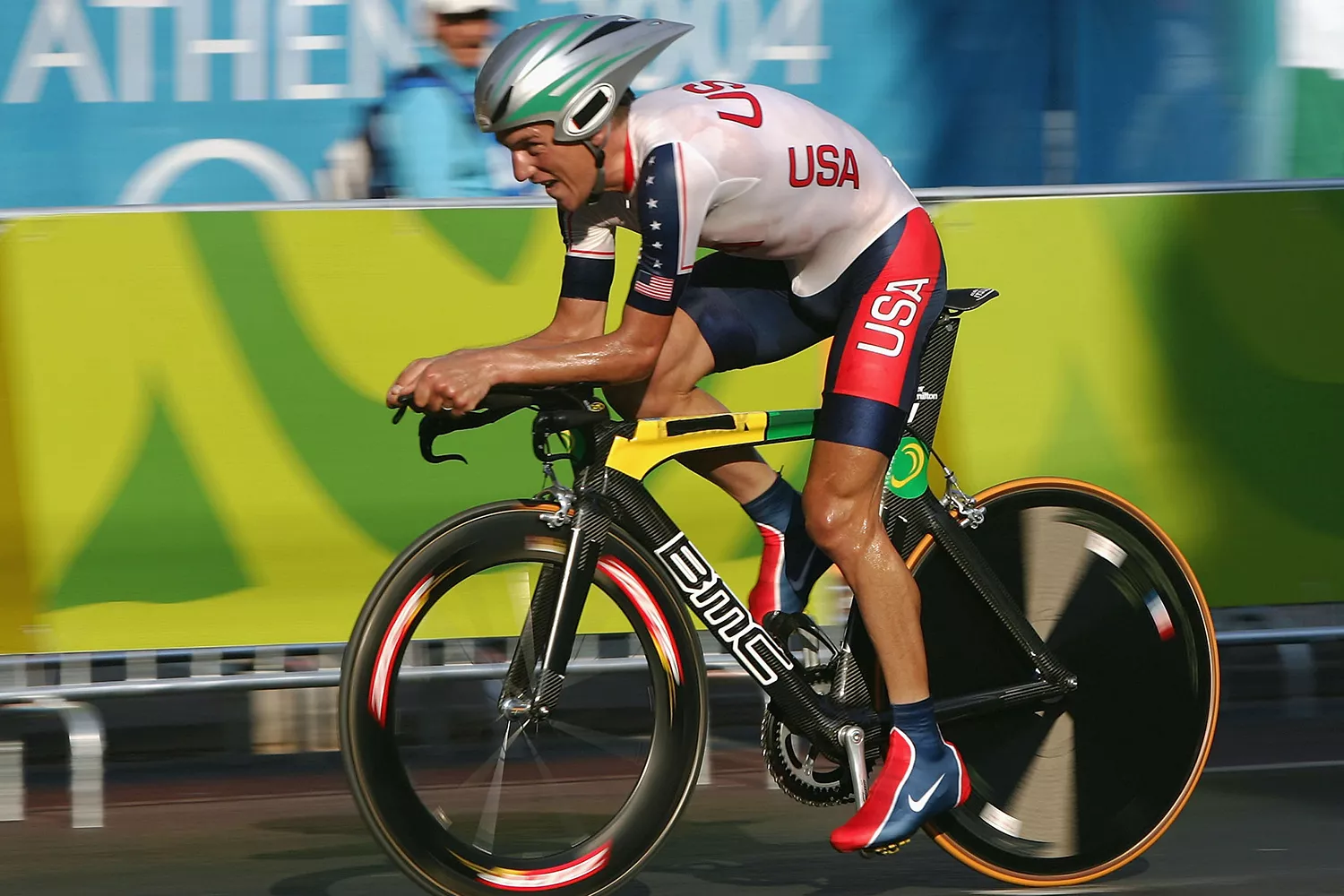
Tyler Hamilton, considered one of the best American cyclists, won a gold medal in the individual time trial at the 2004 Olympics.
However, his victory was overshadowed by a positive A sample in a doping test. His B sample was frozen and couldn’t be tested, so he wasn’t penalized and kept his gold medal.

Tyler Hamilton 2004 Athens Olympics.

Carl Lewis, 1988 Seoul Olympics
Carl Lewis is one of only four athletes to win nine Olympic gold medals. His medal situation at the 1988 Seoul Games was unique because he was awarded the gold after his competitor, Ben Johnson from Canada, was disqualified for failing a drug test.
Johnson had originally won gold in the 100-meter final, but after his disqualification, Lewis took the top spot, trading his silver for the gold medal.

Jason Turner, 2008 Beijing Olympics
Jason Turner’s case at the 2008 Beijing Olympics was similar to Carl Lewis’s. Turner originally placed fourth in the 10-meter air pistol competition but ended up with the gold medal after his competitor, Kim Jong-su from North Korea, was disqualified for testing positive for a banned substance.
Jong-su had to give up his bronze medal to Turner, who then took his place on the podium.

Categories
FEATURED

Team USA Shines at 2024 Paris Olympics with 10 Medals in Gymnastics, Biles Leads the Way

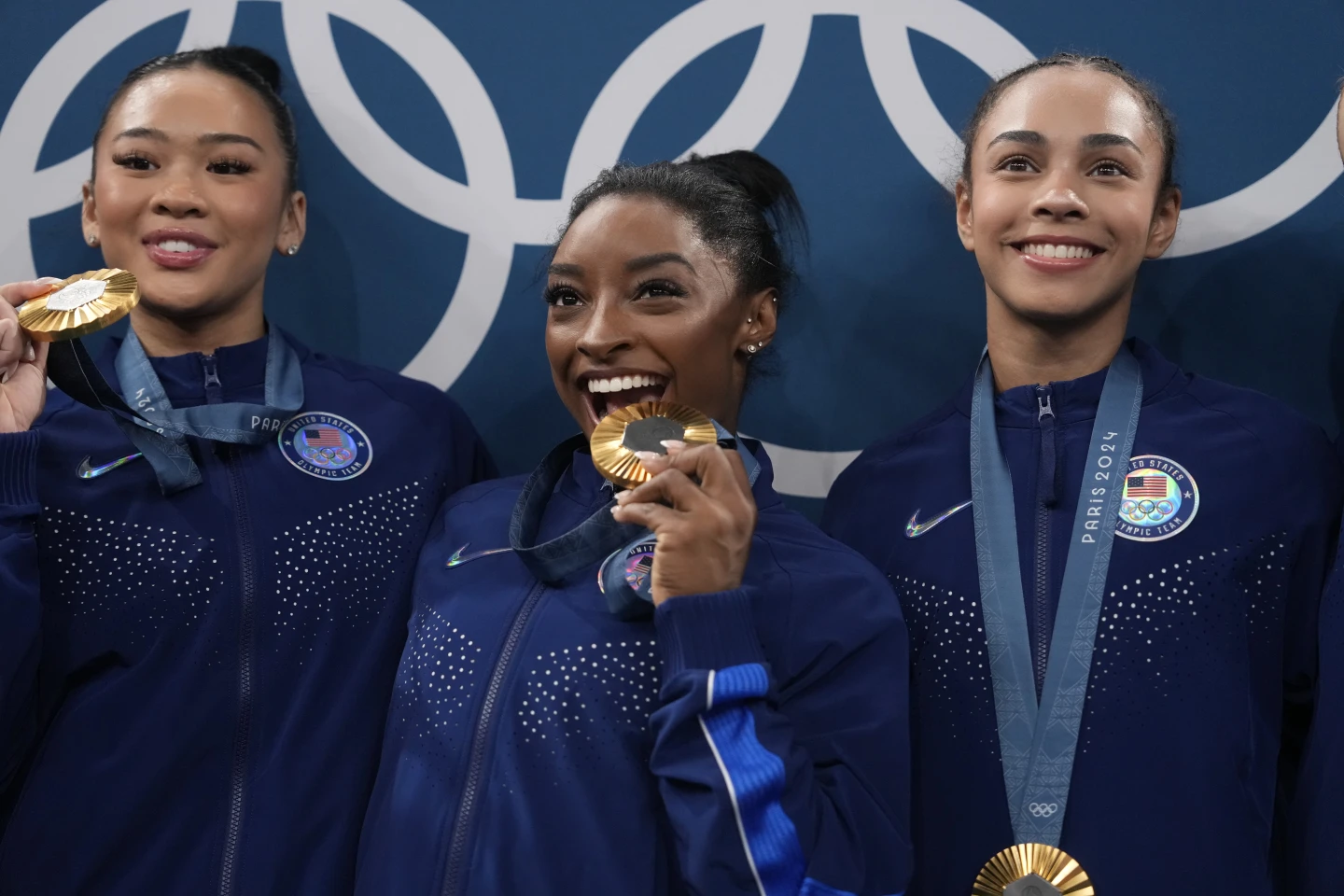
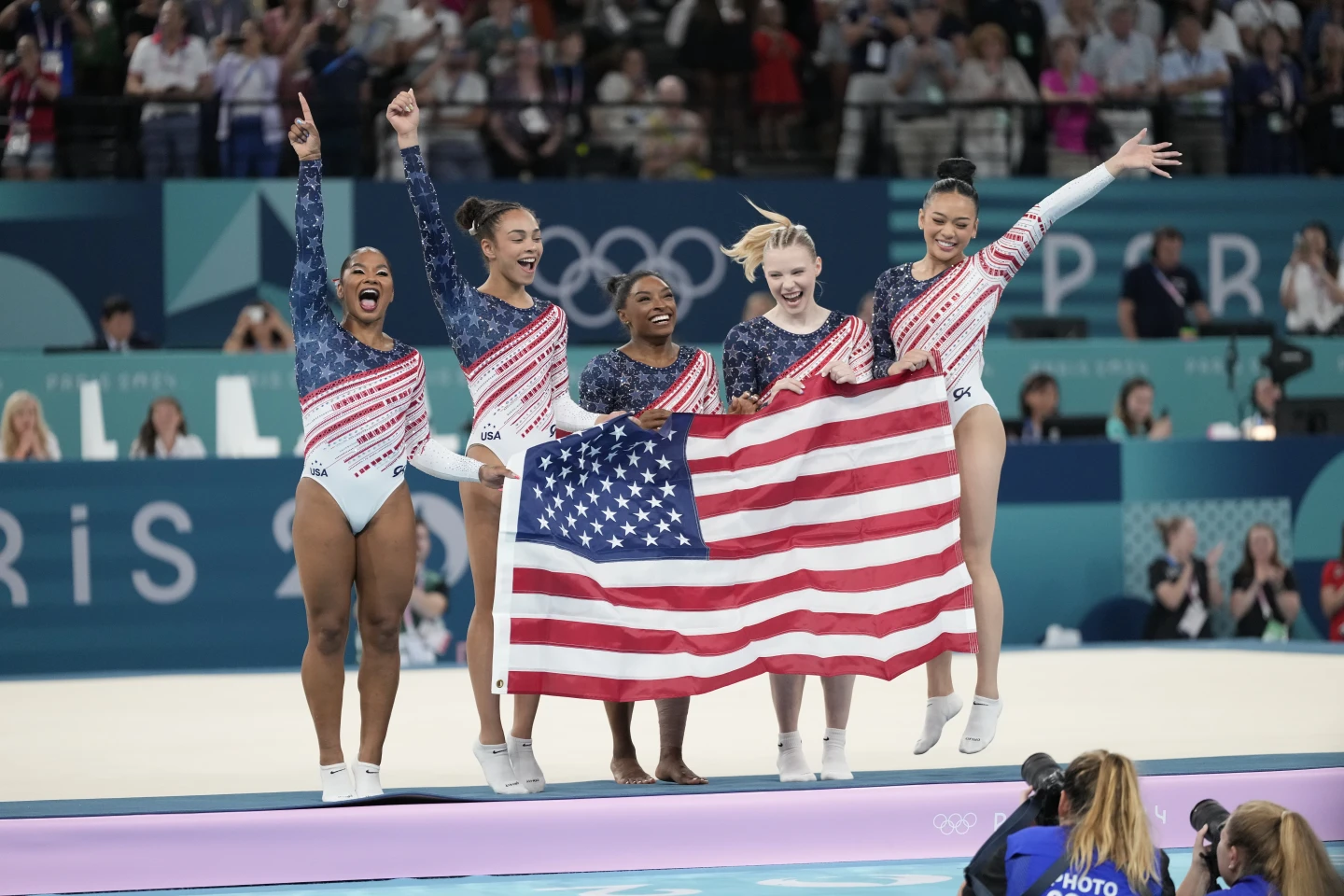
Team USA made a strong impression at the 2024 Paris Olympics, wrapping up the gymnastics competition with a total of 10 medals, including three golds. Simone Biles and Jordan Chiles played pivotal roles in the U.S. success, but the performances of other athletes like Suni Lee, Stephen Nedoroscik, and Frederick Richard were also key to the team’s achievements. The final gymnastics event of the competition saw the Americans earning two more medals, solidifying their dominance in the sport.

Simone Biles had a standout performance in Paris, cementing her status as the most decorated U.S. gymnast of all time. After a disappointing Tokyo Olympics, Biles returned stronger than ever, winning three gold medals (team, all-around, and vault) and a silver (floor exercise). Her achievements in Paris included breaking several records, including becoming the most decorated U.S. gymnast with 11 total medals, surpassing the previous record of seven. Additionally, Biles became the first woman to win the individual all-around in non-consecutive Olympics and the oldest woman in 72 years to win the all-around gold.

The U.S. men’s gymnastics team also made history in Paris, winning their first team all-around medal since 2008. The bronze medal marked only the sixth time in Olympic history that the U.S. men earned a team medal. Stephen Nedoroscik played a crucial role in securing the medal, delivering a strong performance on the pommel horse. Teammates like Frederick Richard, Brody Malone, Asher Hong, and Paul Juda contributed with impressive performances in their respective apparatuses. Nedoroscik later added an individual bronze in the pommel horse event, further solidifying his breakout success.

Team USA Shines at 2024 Paris Olympics with 10 Medals in Gymnastics, Biles Leads the Way

Suni Lee made a remarkable comeback after a challenging few years. Diagnosed with two kidney diseases in 2023, Lee had to take a six-month break from gymnastics to recover. Despite these setbacks, the Minnesota native returned to the sport in top form, winning three medals in Paris, including a gold in the team event and two bronze medals in the individual all-around and uneven bars. Lee now has six Olympic medals to her name, placing her among the all-time greats, and at just 21 years old, her career is far from over.

Jordan Chiles had a breakthrough moment in Paris, earning her first individual medal in a thrilling floor routine performance. Chiles, who had already helped Team USA win gold in the team event, delivered a strong performance in the floor exercise, which initially placed her fifth. A subsequent scoring inquiry elevated her to third place, securing a bronze medal. Chiles’ emotional celebration with Simone Biles after the result marked one of the most memorable moments of the Games.

While Team USA had impressive results, China ultimately led in overall gymnastics medals, winning 11 medals, including two golds. The Chinese team excelled across various disciplines, claiming gold in men’s rings and men’s parallel bars, while also earning multiple silver and bronze medals. Despite China’s dominance, the U.S. and other nations, such as Brazil and Japan, provided strong competition. Brazilian gymnast Rebeca Andrade stood out with four medals, including gold in floor exercise, while Japan’s Shinnosuke Oka made a spectacular Olympic debut, winning three golds and one bronze, establishing himself as a rising star in the sport.