Categories
MLB (Baseball)

How Scott Servais Has Shaped the Seattle Mariners’ Success

Over that 53-game stretch, the Seattle Mariners struggled to a 20-33 mark, a slump that ranks as the second worst in the league, with only the Chicago White Sox faring worse. The downturn was especially frustrating for a team that had built a reputation on pitching depth and timely hitting, only to see those strengths evaporate when they needed them most.

Despite the disastrous changes that led to his exit, Scott Servais leaves his position with one of the most accomplished managerial résumés in franchise history. During his nine years at the helm, Servais amassed a win-loss record of 680-642.

Those 680 victories are the second-most in team history, as is his .514 winning percentage. He also oversaw the development of young talent and helped guide the team through several different roster makeovers.
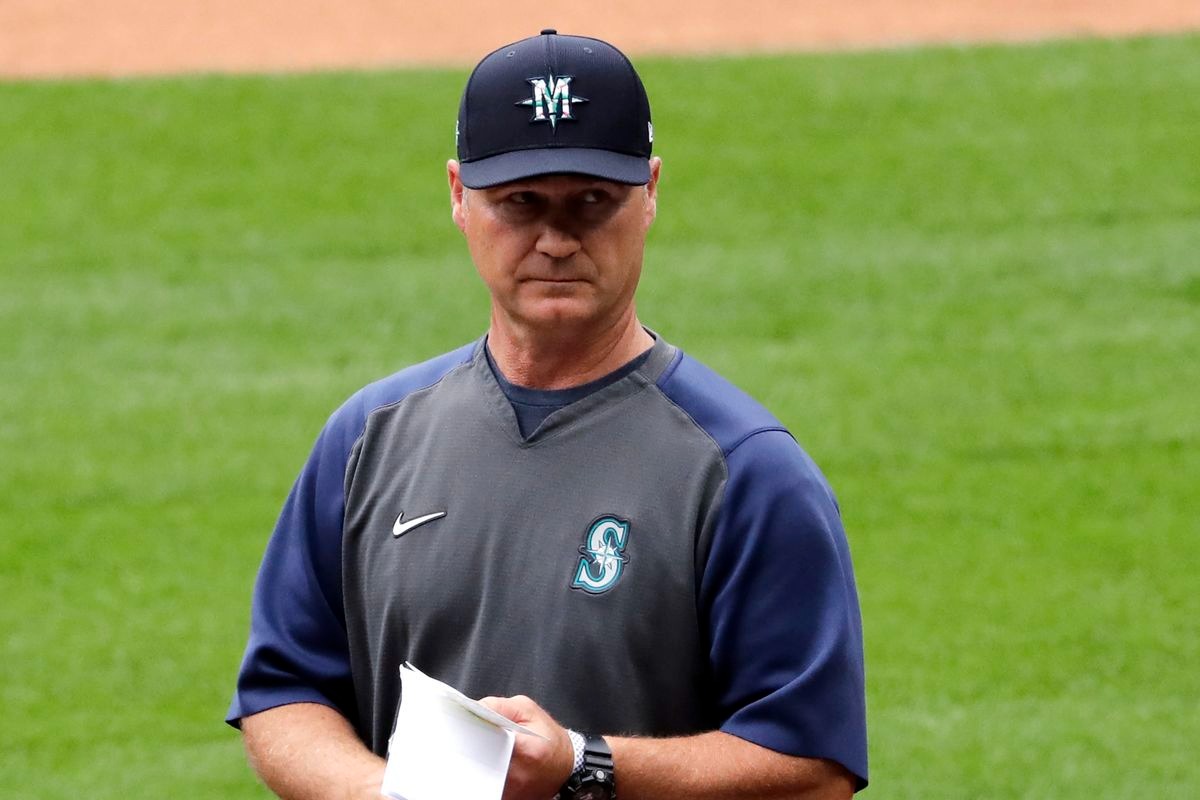
Nine years, 680 wins, and a legacy of development for Scott Servais (Seattle Mariners)

Lou Piniella remains the franchise’s most successful manager, with 840 wins against 711 losses and a .541 winning percentage. However, while Piniella managed a team loaded with All-Stars in the late 1990s and early 2000s, Servais had to go through a different challenge—rebuilding the Mariners into a contender after years of disappointment.

Both Piniella and Servais guided the Mariners to the playoffs, with Piniella leading postseason runs in 1995, 1997, 2000, and 2001. Servais, meanwhile, was responsible for managing the 2022 team that finally ended Seattle’s 21-year postseason drought. That playoff appearance, which included an emotional Wild Card series victory over the Toronto Blue Jays, was viewed as a turning point for the franchise.

A Lasting Impact on the Franchise

When Scott Servais took charge, the franchise had already endured over a decade without playoff baseball. Under his leadership, the club navigated a rebuild that ushered in a new core, including franchise centerpiece Julio Rodríguez, catcher Cal Raleigh, and one of the strongest starting rotations in the league today.

He helped mold Rodríguez into one of the game’s brightest stars, guiding him through his Rookie of the Year campaign in 2022. Servais also played a crucial role in helping Seattle establish a winning culture, even if the final stretch of his tenure didn’t reflect that success. He developed strong relationships with his players, earning their respect through his steady leadership and emphasis on accountability.

While his departure from Seattle was abrupt and disappointing, the contributions he made to the organization over the years remain undeniable. The Mariners now face the challenge of finding a new leader to build on the foundation Servais helped establish.
Categories
MLB (Baseball)

Mariners’ Strong Pitching Rotation Faces Offensive Uncertainty and Third Base Void Heading into 2025

The Seattle Mariners enter 2025 with the most impressive young, cost-controlled pitching rotation in Major League Baseball. Logan Gilbert, George Kirby, Bryce Miller, and Bryan Woo combined for over 700 innings and a solid 3.18 ERA in 2024. With Gilbert being the oldest at 28, this quartet has 17 years of team control remaining, cementing their status as a core strength for the team moving forward.

Offensive Struggles: Key Players But Uncertainty Surrounding the Lineup

While the Mariners’ pitching staff shines, their offense remains a major concern. Cal Raleigh is one of the best offensive catchers in the league, but the rest of the lineup lacks certainty. Julio Rodriguez has superstar potential but struggled early in 2024. Randy Arozarena, although capable of getting on base, posted a low power output after his midseason trade to Seattle, leaving the Mariners’ offense in question for 2025.

Mariners' Strong Pitching Rotation Faces Offensive Uncertainty and Third Base Void Heading into 2025
Mariners’ Strong Pitching Rotation Faces Offensive Uncertainty and Third Base Void Heading into 2025

The Mariners’ offensive depth is thin beyond their core players. Victor Robles had a career year after joining Seattle, but his performance was driven by unsustainable luck. Dylan Moore and Luke Raley provide solid numbers but are more suitable for part-time roles. Other regulars like J.P. Crawford, Mitch Haniger, and Mitch Garver underperformed in 2024, further highlighting the team’s offensive struggles as they head into 2025.

Third Base Hole: No Clear Solution for Mariners’ Biggest Lineup Need

Despite making some additions, the Mariners have glaring holes in their lineup, particularly at third base. After non-tendering Josh Rojas and declining Jorge Polanco’s club option, they face challenges in improving this position. Their current free-agent options and trade possibilities remain uninspiring, leaving Seattle with a significant gap to fill before the 2025 season.

The Mariners’ strong pitching rotation could open trade possibilities to improve their offense. Teams seeking starting pitchers may be willing to offer top prospects in exchange for pitchers like Logan Gilbert or George Kirby. Though the Mariners have resisted trading their young arms, offers like Triston Casas or Jordan Westburg could be enticing, presenting an opportunity for Seattle to address their lineup concerns, though trading one of their top pitchers carries inherent risks.

Categories
MLB (Baseball)

Why the Seattle Mariners Are Failing to Capitalize on Their Young Talent

The Seattle Mariners entered the 2025 MLB season with optimism fueled by a roster rich in young, promising players. Names like Julio Rodríguez, George Kirby, and Jarred Kelenic headline a group that represents the future of the franchise.

Yet, despite the potential, the Mariners have struggled to translate this talent into consistent success. Several factors contribute to their inability to capitalize on their youth, ranging from organizational mismanagement to on-field execution issues.

Inconsistent Player Development

One of the most glaring issues facing the Mariners is inconsistent player development. While prospects like Rodríguez have blossomed into stars, others have stagnated or regressed. Kelenic, for instance, has shown flashes of brilliance but has struggled to maintain consistency at the plate.

The organization’s track record with nurturing top-tier talent has been mixed at best, leaving many to question whether the Mariners have the right infrastructure in place to maximize the potential of their young players.

A strong player development system is critical for sustaining success in Major League Baseball, especially for a team like Seattle, which cannot rely solely on free-agent acquisitions. The lack of a cohesive plan to transition players from promising prospects to reliable major leaguers is a recurring problem that continues to hinder the team’s progress.

Questionable Roster Construction

Another significant factor is the team’s roster construction. The Mariners have struggled to surround their young stars with complementary veterans who can provide stability and leadership.

While the front office has made efforts to bring in experienced players, the acquisitions have often been mismatched or insufficient to address glaring weaknesses.

For instance, the Mariners’ lineup remains overly reliant on Rodríguez to drive offensive production. The lack of depth and consistency in the batting order puts undue pressure on young players to perform beyond their years.

Additionally, gaps in the pitching staff—particularly in the bullpen—have cost the team valuable games, undermining the contributions of rising stars like Kirby.

Managerial Challenges

The role of the manager cannot be overlooked when analyzing the Mariners’ struggles. Scott Servais, while experienced, has faced criticism for his in-game decision-making and handling of the bullpen.

Young players often thrive under managers who can instill confidence and provide clear roles. However, inconsistent lineups and questionable strategic decisions have left some players uncertain about their responsibilities, impacting their performance.

Servais’ management style may not be the best fit for a team built around developing talent. A more adaptable approach that emphasizes player growth and situational awareness could help the Mariners better utilize their roster.

Competitive AL West

The American League West is one of the toughest divisions in baseball, featuring perennial powerhouses like the Houston Astros and the Texas Rangers.

Promising prospects, persistent problems by exploring the Mariners’ challenges in unlocking their potential.

Competing against these well-rounded teams exacerbates the Mariners’ weaknesses. While their young talent has shown promise, it often pales in comparison to the depth and experience of their rivals.

This competitive environment highlights the importance of a balanced roster and effective resource allocation. Without these, the Mariners risk falling further behind in a division where even minor lapses can have significant consequences.

Unrealized Potential and Fan Frustration

The Mariners’ inability to capitalize on their young talent has led to mounting frustration among fans. After years of rebuilding, supporters expected the team to take the next step and contend for playoff spots. Instead, the organization’s shortcomings have dampened enthusiasm and raised concerns about its long-term direction.

The disappointment is compounded by the potential of players like Rodríguez, who could be the centerpiece of a championship-caliber team if properly supported. The failure to build around such talents risks squandering a rare opportunity to transform the franchise’s fortunes.

The Path Forward

For the Mariners to turn their fortunes around, several changes are necessary. First, the organization must invest in a more robust player development system to ensure that promising prospects reach their full potential. This includes hiring top-tier coaches, refining training programs, and fostering a culture that prioritizes growth.

Second, the front office needs to adopt a more strategic approach to roster construction. This involves acquiring complementary pieces to bolster both the lineup and pitching staff, as well as identifying veterans who can mentor younger players.

Finally, a fresh perspective on leadership could provide the spark needed to unite the team and maximize its talent. Whether through managerial changes or shifts in organizational philosophy, the Mariners must embrace a vision that aligns with their youthful core.

The Seattle Mariners possess an enviable array of young talent, but their struggles to harness this potential underscore deeper organizational flaws.

Inconsistent development, poor roster management, and a competitive division have all played a role in their underperformance. By addressing these issues, the Mariners can give their young stars the support they need to succeed and finally deliver on the promise of a brighter future.

Categories
MLB (Baseball)

Seattle Mariners Struggle with Roster Moves as Offseason Activity Falls Short of Fan Expectations

Seattle Mariners fans are frustrated by the team’s lack of significant activity during the offseason. With a self-imposed budget of just $15 million, the Mariners have made minimal moves, acquiring Donovan Solano and a few minor-league players. This quiet offseason comes after the Mariners had strong 90-win seasons in both 2021 and 2022, building hope around a mix of youth and veteran players. However, despite General Manager Jerry Dipoto’s reputation for frequent trades, the team has not been able to break through to the next level of competitiveness.

Despite ongoing struggles with their offense, the Mariners possess one of the most formidable pitching rotations in baseball, with multiple players under team control for several years. This makes them a strong contender for the future. However, the lack of significant improvement to their offense has left fans concerned. The front office has done little to address this glaring weakness, making it unclear how the Mariners plan to enhance their lineup moving forward.

As the offseason comes to a close, the Mariners find themselves in a situation where their lineup is unlikely to change much from the previous year. With many potential targets signing elsewhere, the Mariners are left with a lineup that underperformed in 2024. Their inability to make a major trade or sign an impactful bat has led to questions about how the team will improve offensively, especially given the unchanged roster.

Julio Rodriguez
Julio Rodriguez (MLB)

Julio Rodriguez: The Key to Success

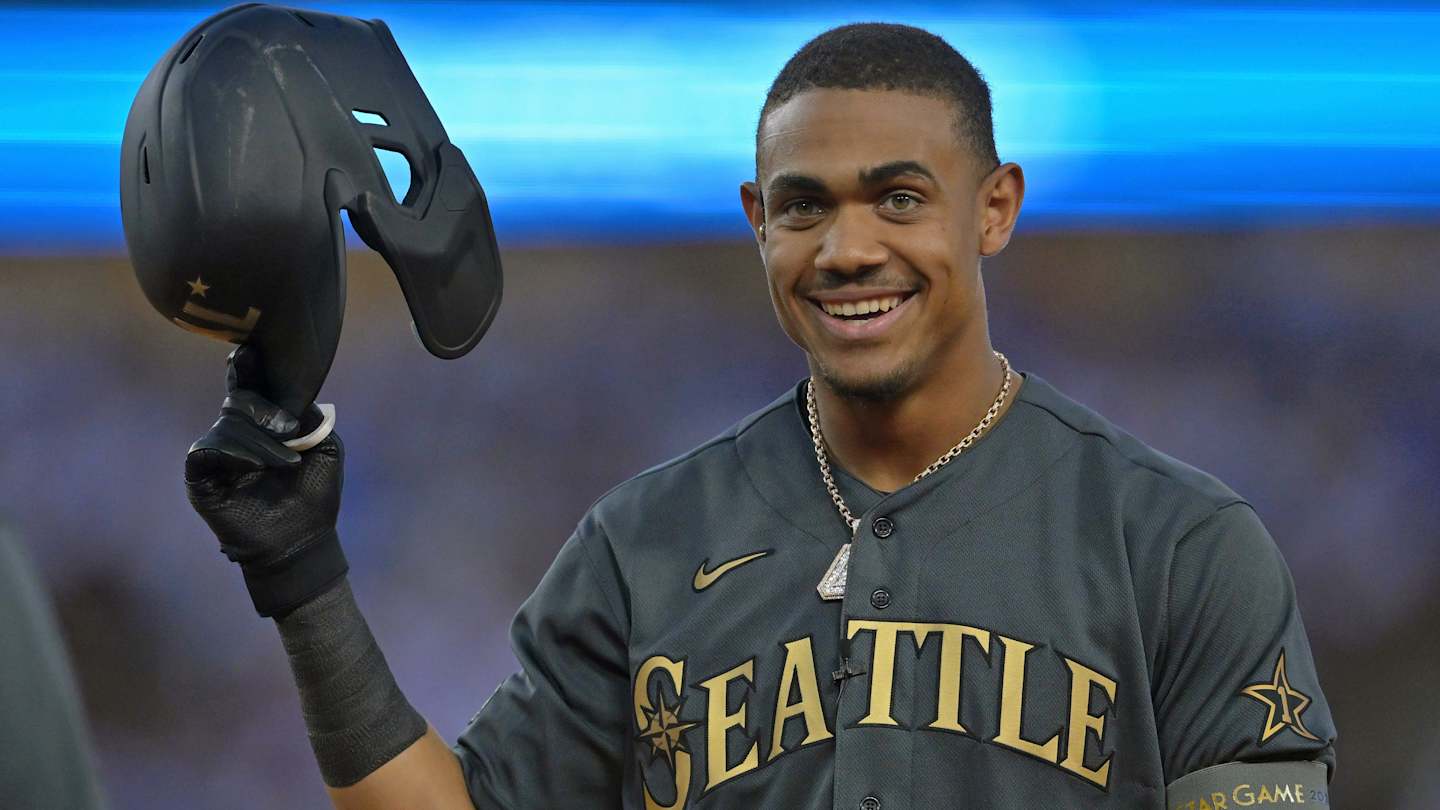
Julio Rodriguez remains the centerpiece of the Mariners’ future, but the team will need him to perform at a superstar level for them to reach their goals. While his 2024 season was solid with a 3.8 fWAR and 20 home runs, it didn’t fully reflect his potential. Rodriguez has the tools to be one of the best in the game, with elite speed, Gold Glove defense, and impressive power. For him to reach his full potential, he must improve his contact rate and reduce his strikeouts, particularly by avoiding chasing pitches outside the strike zone.

Mitch Haniger’s return to Seattle after a rough year in San Francisco failed to bring the offensive boost the Mariners hoped for. His performance in 2024 was disappointing, with a career-low .620 OPS and struggles with injuries. At 34 years old, questions are arising about whether his best years are behind him. Haniger is scheduled to earn $17.5 million in 2025, but his value will be determined by his ability to stay healthy and rediscover his power, especially against left-handed pitchers.

Julio Rodriguez
Julio Rodriguez (MLB)

Veterans Who Need to Perform

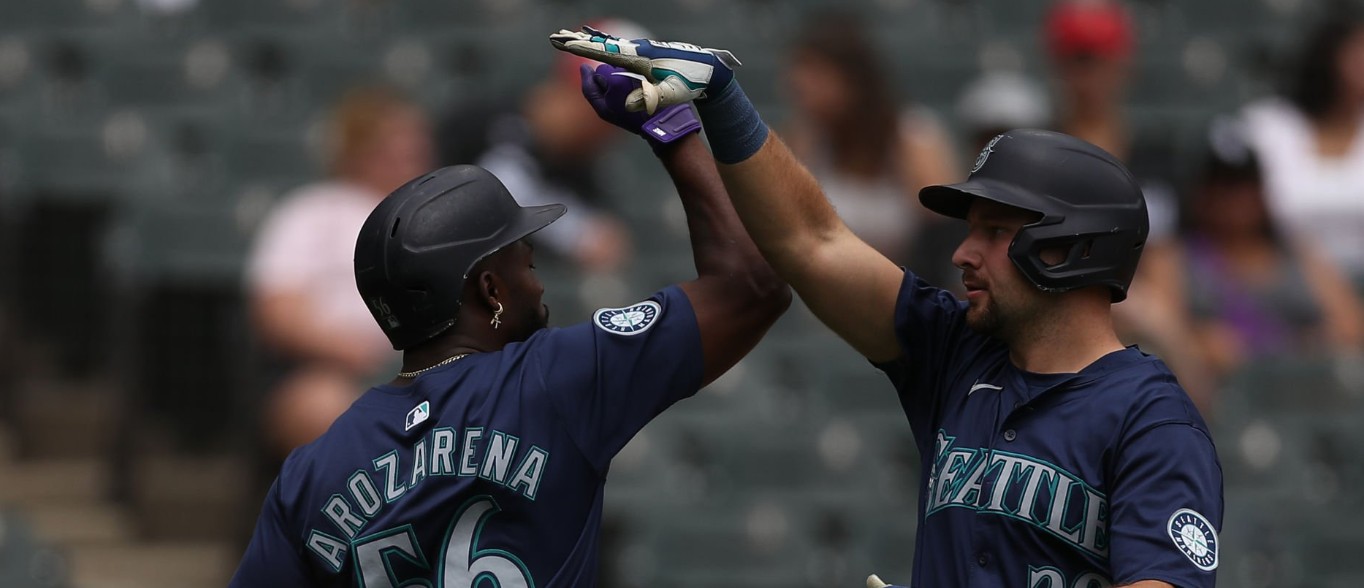
The Mariners will need key veteran players to step up in 2025, especially those who underperformed in 2024. J.P. Crawford, who had a standout 2023 season, saw his production drop last year due to injuries. While it’s unlikely he will replicate his career-best season, a return to a solid, league-average level would help stabilize the lineup. Similarly, Randy Arozarena, who was acquired midseason, needs to do more offensively, particularly in terms of power and base-stealing. The Mariners’ reliance on veterans to perform is even more critical given their lack of major moves this offseason.

While the Mariners are far from a bad team, their chances of becoming a true contender depend on the performance of both established players and newcomers. The pitching staff is among the league’s best, but without a significant boost in offensive production, the Mariners will struggle to reach the upper echelon of the league. Their path to success seems increasingly reliant on internal improvements rather than external acquisitions, making it a risky proposition. Even if the Mariners can field a league-average offense, they will need standout performances to make a deep playoff run and compete for a championship.

Categories
MLB (Baseball)

Seattle Mariners Are MLB’s Top Underperformers Right Now

The Seattle Mariners have long been a franchise full of promise, yet consistently failing to meet expectations.

Year after year, the team seems poised to break through to a playoff spot, but a combination of inconsistent performances, missed opportunities, and lack of timely success keeps them from achieving their potential.

The Mariners are one of the most storied franchises in Major League Baseball (MLB) without ever tasting the sweet success of a World Series championship.

Historically, the Mariners have been plagued by a frustrating pattern. Despite making notable strides in terms of player development and talent acquisition, their postseason appearances have been few and far between.

In fact, Seattle holds the infamous record for the longest playoff drought in the four major professional sports in North America.

The Mariners have not reached the postseason since 2001, a year in which they tied the MLB record for wins in a single season with 116. Since that magical run, the team has failed to consistently build on that success, much to the frustration of its loyal fanbase.

One key reason for Seattle’s underperformance can be traced to their inability to consistently assemble a competitive roster.

Throughout the years, the Mariners have cycled through numerous managers, general managers, and players, often without finding the right combination of talent and leadership.

While the team has had bright spots, such as the stellar play of players like Ichiro Suzuki, Felix Hernandez, and Kyle Seager, these individual performances have not been enough to carry the team to greater heights.

A combination of injuries, poor free-agent signings, and underwhelming performances from key players has left the Mariners stuck in a cycle of mediocrity.

The front office has been trying to shake things up in recent years, with a focus on building a more sustainable and youthful roster.

The Mariners have made some bold moves, including trading for key players and pursuing high-potential prospects. For instance, the trade that brought in top prospect Julio Rodríguez has been a game-changer.

Rodríguez, a dynamic outfielder, has quickly established himself as one of the team’s most exciting players. His performances in 2022 helped spark some hope for the Mariners’ future, and many believed this young talent could lead the team back into playoff contention.

However, despite the hope surrounding Rodríguez and the team’s recent acquisitions, the Mariners have continued to stumble. The 2023 season, for example, saw the Mariners once again fail to meet the high expectations that had been set for them.

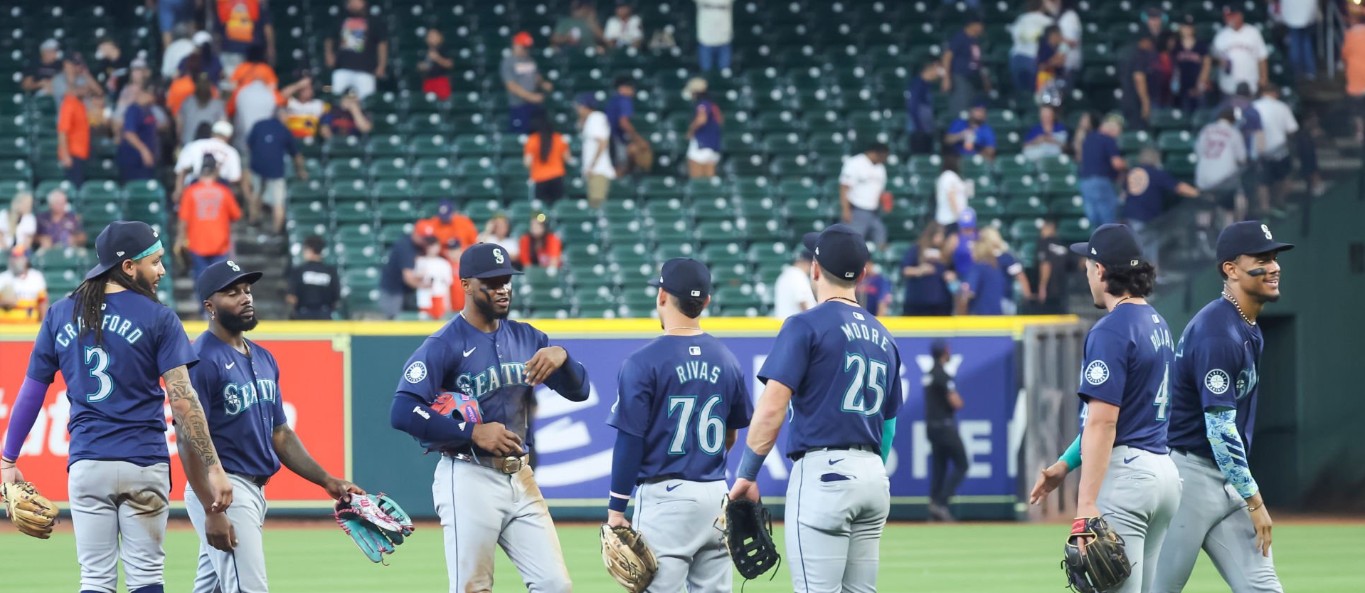
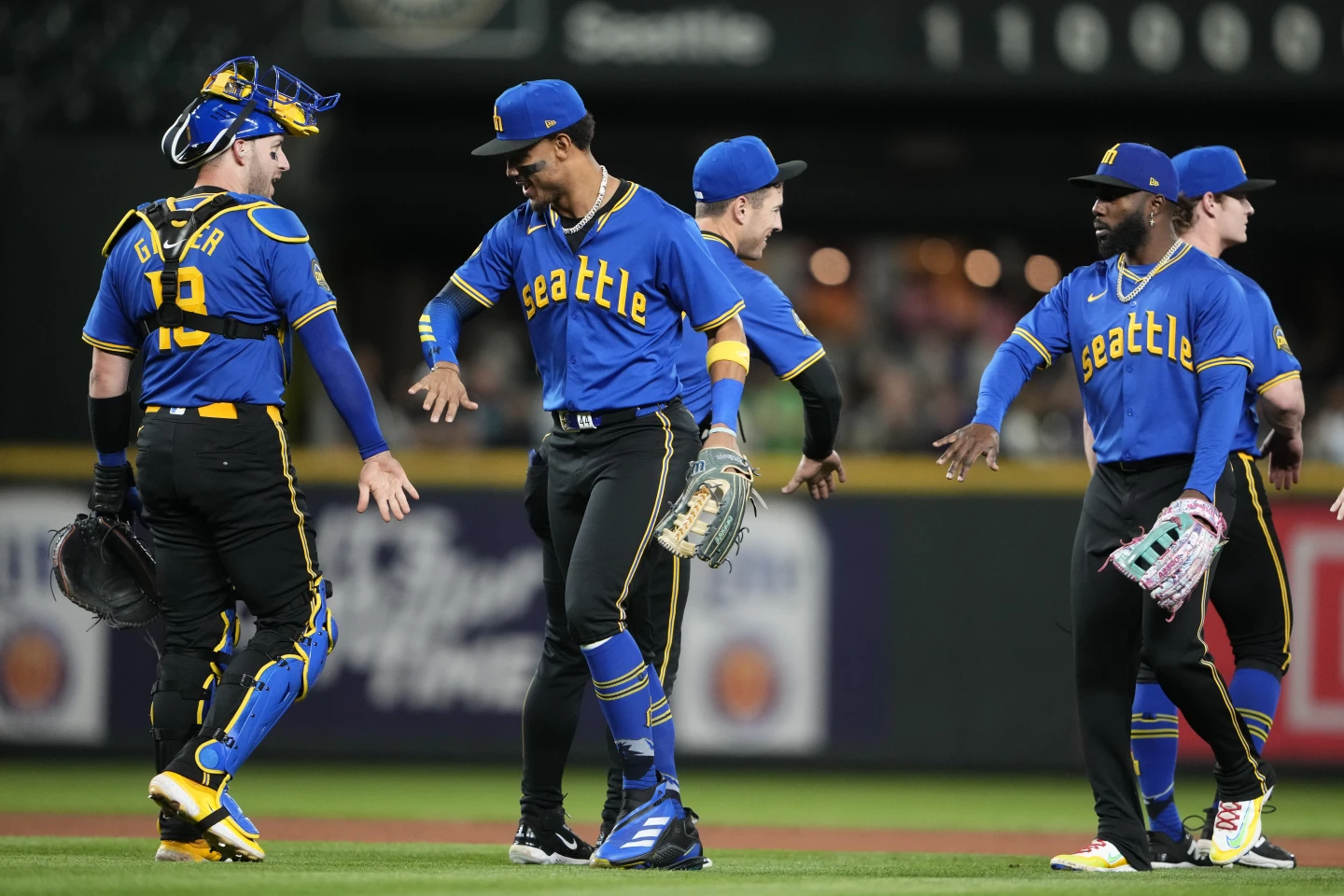
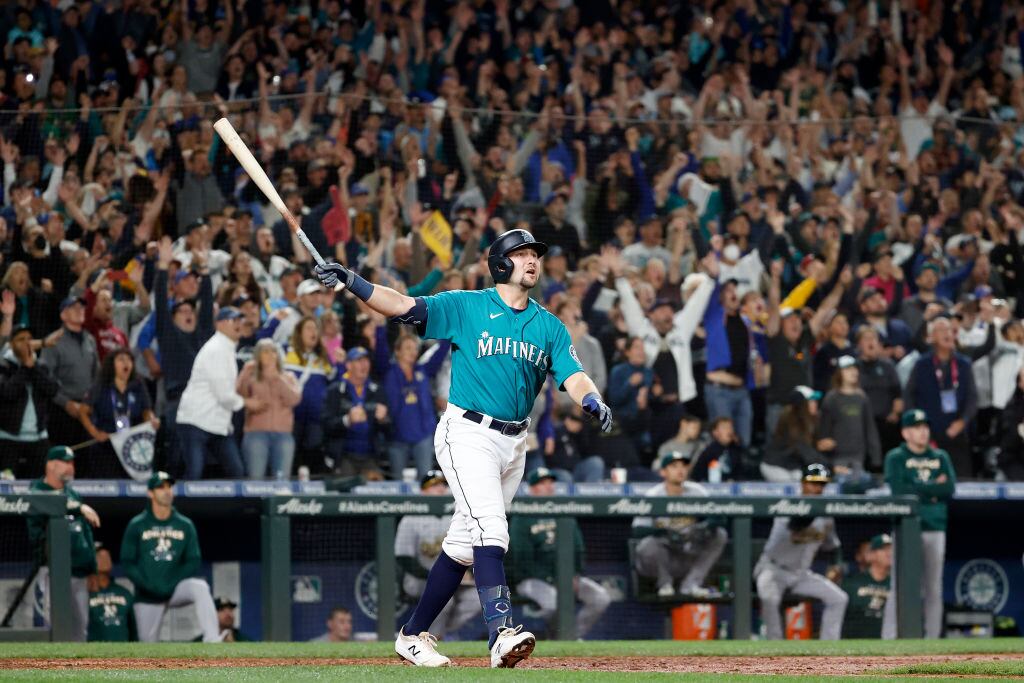
Seattle Mariners players celebrate after the win

The offense was inconsistent all along

While they showed flashes of brilliance, such as strong pitching performances from the likes of Luis Castillo and Logan Gilbert, their offense continued to be inconsistent.

The lack of consistent run production has held them back, with the Mariners often struggling to score runs in key moments and put away games.

Another factor contributing to the Mariners’ status as underachievers is their failure to address certain roster gaps. Despite improvements in pitching, their lineup has struggled to find the right balance. The team’s lack of a true middle-of-the-order slugger has been a recurring issue.

While the Mariners have a solid collection of role players and some talented hitters, the absence of a player capable of carrying the offense has made it difficult for them to truly compete with the top teams in the American League.

Seattle’s underachievement has also been exacerbated by the fierce competition in the American League West.

Teams like the Houston Astros and the Texas Rangers have dominated the division in recent years, leaving the Mariners in their wake. The Mariners have often found themselves just on the outside looking in, falling short in tight divisional races and wild-card battles.

This has made it even harder for the Mariners to break their postseason drought and reach the level of success that they’ve long sought.

As the Mariners continue to rebuild and attempt to position themselves for success, there’s hope that the pieces are finally starting to fall into place.

Julio Rodríguez remains a cornerstone of their future, and the team has a strong group of young players that could help lead the charge.

However, the Mariners will need to address their offensive struggles and find consistency in key areas if they want to avoid being known as one of the biggest underachievers in MLB history.

In conclusion, the Seattle Mariners’ inability to reach the playoffs year after year, despite having promising talent and a passionate fanbase, continues to be a major disappointment for the team and its supporters.

While the future may hold hope with the emergence of young stars and continued roster improvements, the Mariners’ quest to end their playoff drought remains elusive.

For now, they will continue to be regarded as one of the most intriguing yet underachieving teams in all of baseball.

Categories
MLB (Baseball)

Mariners’ Offseason Moves Signal Strong Push for Playoffs in Seattle

Seattle Mariners Face Major Offseason Challenges

The Seattle Mariners are facing a tough situation this offseason, struggling with several setbacks that have left fans waiting for key roster improvements. The latest blow came when Korean infielder Hye-seong Kim chose the Los Angeles Dodgers over the Mariners.

The team still has unfilled needs at second, third, and first base, all while working with a tight budget. With limited resources, the Mariners’ management must find a way to build a competitive team for the upcoming season.

Limited Funds and Lack of Activity

The Mariners have been slow in the free-agent market, which has raised concerns among fans and experts. With a budget of around $15 million, the team has struggled to make big moves. This financial constraint has forced president of baseball operations Jerry Dipoto and general manager Justin Hollander to adjust their approach. What was once the goal of strengthening all three positions now seems unlikely, and they will likely focus on improving at least one key area.

Missed Opportunities and Limited Options

Although there was early talk of the Mariners pursuing veteran first baseman Justin Turner and former White Sox third baseman Yoan Moncada, no major signings have been made. Trade talks have also not led to any completed deals, leaving the Mariners uncertain about their next steps.

Seattle Mariners (MLB)

The pressure is on, especially after the Mariners missed the playoffs by just one game last season. With the American League West looking competitive, the Mariners must act quickly to become strong contenders.

Urgency to Improve and Reach the Playoffs

As the offseason continues, the Mariners’ playoff hopes are at risk. The pressure is mounting for the team to make key moves that will boost their chances of competing for a postseason spot. The Mariners have had only a few playoff appearances in recent years and have not made a deep playoff run in quite some time. This offseason could be a crucial turning point in their efforts to become a true contender.

Categories
MLB (Baseball)

Seattle Mariners Face Tough Decisions to Rebuild After Playoff Hopes Fade in Final Stretch

The Seattle Mariners began the 2024 season with high hopes of securing a playoff berth and their first American League West title in 23 years. At one point in June, they led the division by as many as 10 games, but since then, their momentum has faltered. Heading into the final month of the season, the Mariners are 5.5 games behind Houston for first place in the AL West and trailing in the wild card race. With only 22 games remaining, their playoff chances appear slim, prompting the team to consider offseason changes to strengthen their roster for the future.

Jon Morosi, an MLB Network insider, recently shared his thoughts on the Mariners’ situation, emphasizing that the team’s path to improvement may require tough decisions. Morosi suggested that the Mariners might need to trade young pitchers like Bryce Miller, Bryan Woo, or Logan Gilbert, or significantly increase spending in free agency to improve their chances. He noted that there are few other options to make the team competitive enough to challenge Houston next season. This offseason will likely be crucial for Seattle to make moves that push them closer to their playoff aspirations.

A major factor contributing to the Mariners’ struggles this season has been their ineffective offense. The team’s revamped offense, which was expected to focus on contact hitting, has instead performed worse than anticipated. The Mariners rank last in the league for batting average (.217) and strikeout rate (27.4%), as well as near the bottom in slugging percentage (.365). Despite efforts to address the issues at the trade deadline by acquiring outfielder Randy Arozarena and first baseman Justin Turner, the Mariners’ offensive woes persisted, leading to the firing of manager Scott Servais and hitting coach Jarret DeHart.

Seattle Mariners Face Tough Decisions to Rebuild After Playoff Hopes Fade in Final Stretch

Morosi pointed out that the Mariners’ offensive philosophy isn’t unique in baseball but may not be executed effectively throughout the organization. He stressed that while other teams have struggled offensively, few have the same level of pitching talent as the Mariners, making it especially frustrating to waste such excellent pitching performances. He suggested that a detailed offseason review is necessary to assess which players can contribute to the solution and which ones should be moved.

T-Mobile Park, the Mariners’ home stadium, has also been a factor in the team’s offensive struggles. Known for its pitcher-friendly dimensions, the park makes it challenging for hitters to perform at their best, which poses a disadvantage in attracting free-agent bats. Morosi pointed out that Seattle’s location and the park’s conditions make it difficult to sign prime offensive players without overpaying. He cited the example of Baltimore’s Anthony Santander, who could be a free-agent target but would likely require a significantly larger contract to come to Seattle due to these challenges.

Despite the difficulties posed by T-Mobile Park, Morosi acknowledged that the Mariners’ pitching staff is one of the best in the league, which has helped mitigate the effects of the stadium’s design. However, he also suggested that the Mariners might need to address issues like the batter’s eye or other aspects of the ballpark in the offseason. Morosi noted that teams like Houston had made similar changes in the past, leading to improved offensive production. Ultimately, he emphasized that if the Mariners can’t make significant changes to the stadium, they will need to retool their roster with different types of offensive players to build a more balanced team.