Categories
Football (Premier League)

Zlatan Ibrahimović’s Rise From Street Football to Global Icon and Cultural Force
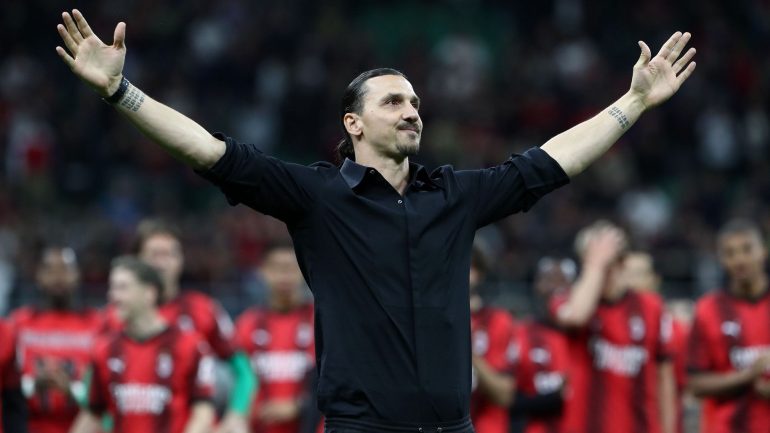
Zlatan Ibrahimovic is often portrayed in the media as a self-assured, dominant figure with a sharp tongue and an unrelenting will to win. His persona as an emperor of football, always proving doubters wrong, has overshadowed the complexities of his character. While his brashness is sometimes seen as arrogance, it is fueled by an all-consuming drive to succeed.

However, the mainstream portrayal of Zlatan often overlooks the deeper factors that shaped his journey, including his immigrant background and Sweden’s socio-political climate during his formative years.

The media’s tendency to focus on Zlatan’s charisma and larger-than-life persona ignores the nuanced experiences that made him who he is. Growing up in a broken home with divorced parents of different religious backgrounds—his mother, a Catholic Croatian, and his father, a Muslim Bosnian—he faced significant adversity.

His early years in Rosengård, a predominantly immigrant neighborhood, exposed him to hardship and instability. These experiences played a crucial role in shaping his resilience, work ethic, and defiant attitude toward challenges both on and off the pitch.

Zlatan’s childhood was far from idyllic. He moved between homes due to family troubles, at times living with his mother, who disciplined him harshly, and later with his father, who struggled with alcoholism as a result of the trauma from the Yugoslav Wars.

Growing up in an environment where kindness was rare, Zlatan resorted to aggressive behavior and petty crimes, such as stealing bicycles. His experiences reflect the struggles of many immigrant families in Sweden, where economic hardships and cultural differences created barriers to social integration.

Sweden experienced two significant waves of immigration from Eastern Europe, with Zlatan’s parents arriving before the Yugoslav Wars. Immigrants from the first wave found it harder to integrate than those from the second wave. Zlatan’s struggles with acceptance and integration in Sweden’s footballing system were a direct result of this.

He often felt different from his Swedish peers, not just in terms of his economic background but also due to his footballing style, which was influenced by street football rather than structured academy training.

Zlatan Ibrahimović
Zlatan Ibrahimović (AC Milan)

Zlatan Ibrahimović’s Journey From Street Football to Global Stardom Through Resilience

For Zlatan, street football was more than just a pastime—it was a survival mechanism. Street football, which has produced legends like Johan Cruyff, Pelé, and Eusebio, is known for its technical rigor and improvisational nature. Players develop exceptional ball control and spatial awareness because they learn to avoid falling on rough surfaces.

However, urbanization has significantly reduced spaces for street football, making it an increasingly rare breeding ground for top-tier talent. Zlatan’s upbringing in a working-class, immigrant-heavy neighborhood meant that he honed his skills in a setting where the game was played not just for fun, but as an escape from harsh realities.

As Zlatan transitioned from street football to organized clubs, he struggled with acceptance. At Malmo, where he played for an immigrant-based club before moving to the senior team, Swedish parents conspired against him, viewing his individuality and playing style as disruptive. He was frequently labeled as a troublemaker, reinforcing his outsider status. The discrimination and resistance he faced only strengthened his antagonistic approach to the game and his unwavering self-confidence.

One of Zlatan’s biggest inspirations was the Brazilian Ronaldo (R9), a player known for his technical brilliance and creativity. Like Ronaldo, Zlatan developed a playing style that combined physical dominance with exceptional technical skills, a rare trait for a player of his stature.

Unlike traditional target men, Zlatan adapted his game to fit different tactical systems across various leagues, evolving from a dribbler to a creative playmaker. His versatility became one of his defining traits, enabling him to succeed in leagues with contrasting styles, from the defensive rigidity of Serie A to the fast-paced nature of the Premier League.

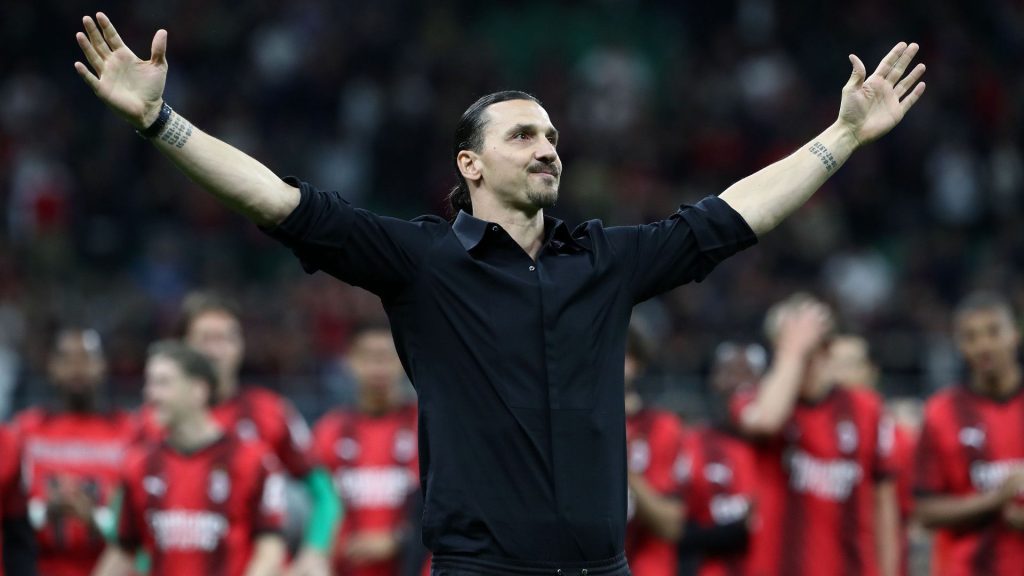
Zlatan Ibrahimović
Zlatan Ibrahimović (AC Milan)

Zlatan Ibrahimović a Footballing Maverick in an Era of Tactical Evolution

During Zlatan’s rise, football was undergoing a tactical transformation. The early 2000s saw pragmatic managers like Jose Mourinho and Rafael Benitez emphasize defensive solidity and counter-attacking play. Strikers like Didier Drogba and Thierry Henry thrived in this era due to their adaptability and ability to exploit space.

In Serie A, where tactical discipline was paramount, Zlatan had to adjust his playing style under coaches like Fabio Capello, who emphasized balance and efficiency over flamboyance. Despite these changes, Zlatan maintained his individuality, proving that a player could be both an entertainer and a team player.

Today, football values strikers who can do more than just score goals. Players like Harry Kane, Karim Benzema, and Victor Osimhen have all incorporated elements of Zlatan’s playing style—dropping deep, linking play, and pressing aggressively. Zlatan was ahead of his time in this regard, seamlessly blending physicality with technical finesse. Despite his age and injuries, he remains influential on the pitch, demonstrating that football is not just about athleticism but also about intelligence and adaptability.

Beyond his footballing ability, Zlatan represents a socio-cultural shift in Sweden and the broader footballing world. His journey from an immigrant-heavy suburb to global superstardom mirrors the challenges faced by many working-class and immigrant children who use football as a pathway to success.

His story is a reminder of how football can reflect larger societal changes, and his legacy will always serve as a symbol of resilience, individuality, and unyielding determination. As football continues to evolve, Zlatan’s influence—both as a player and as a cultural icon—will remain a lasting testament to his extraordinary journey.

Categories
Football (Premier League)

Roberto De Zerbi – Brighton’s head Coach’s Footballing Philosophy

Roberto De Zerbi produced his thesis on Footballing ideas at Italy’s national coaching academy in Florence.

He stayed true to his philosophies that were once his thoughts from attacking-midfielder to coaching.

Former Liverpool and England midfielder Adam Lallana comments on De Zerbi’s resignation that the 44-year-old had “just made football (make) so much more sense to me since he’s been here.”

Skipper Lewis Dunk told the reporters, “I see football in a completely different way since the new manager has come in. The idea of what I did before, I thought it made sense. But when you learn something completely different, you believe in it, and this makes sense. You think: Why didn’t I know this?”

Roberto De Zerbi
Roberto De Zerbi (Credits: Alex Broadway/Getty Images)

De Zerbi’s methods have remained intact even as the stakes increase. “The idea of the coaches is in progress every day, every week, every month,”

“You can change something, you can do something different, you change depending on the players, but the DNA is still the same.

The DNA of the play is me, my character, my history, my family, and what I was like as a player. I keep myself inside of my work.

I have the idea clear in my head. We are able, everyone, to speak about football, but speaking in detail in different situations, the changes, the solution, is different.”

AC Milan
AC Milan( Credits: Matteo Gribaudi)

Early stages of Roberto De Zerbi

De Zerbi grew up watching his local team- Brescia, with his dad, Alfredo. Brescia was one of the clubs that he played for, starting his career at AC Milan Academy and peaking at Napoli.

He only appeared in three Serie A leagues, but his experiences, good and bad, helped him to grow as a coach.

“I want to enjoy,” he says. “I’m living a dream, and to live a dream, you have to enjoy. The second is to keep the mentality when I was a player. I wanted to be a protagonist on the pitch. To be a protagonist, you have to keep the ball, to have the ball.”

Roberto De Zerbi on field with Brighton FC
Roberto De Zerbi hugs Tariq Lamptey after Brighton’s 4-1 win over Chelsea last Saturday (Credits: Kirsty Wigglesworth/AP)

De Zerbi’s way of footballing

De Zerbi’s style revolves around attracting opponents who press high or low and, at that right moment with the right movement, choosing to pass.

“The fans pay for their season tickets, and when we play with the shirt, we are playing for them, for the club, for the people who work inside. They don’t play on the pitch, but they work for the club and the fans…we can change teams, but the fans stay forever.

We have to know the importance of the fans and to respect the club.” he says during an interview.

De Zerbi constantly thinks about his ideas through his love for the game. Tony Bloom, Brighton’s owner-chairman, describes De Zerbi as being “addicted to football,” which is, in fact, an accurate statement.

“Sincerely, if I love working in football, if I love watching the game on TV, if I love speaking with my staff or other people about football…it’s not work, it’s not a job, it’s a passion.”

“There’s not a right time to show your passion — passion is 24 hours a day. It’s not a problem. If I want to enjoy it, I speak about football. If I want to work, I speak about football.”

De Zerbi’s version of Brighton has been defying expectations. It is an addiction that is reaping rich dividends for Brighton.

Also Read: Jadon Sancho Banished from Manchester United: Outburst on Social Media Against Erik Ten Hag.

Categories
Gaming

Barcelona Is Back In The Transfers: Making It Count

Barcelona has gone through some turbulent times in the recent past, financially, and not performing to its usual level. The previous president of the club and the management led to the downfall of the club’s financial prospects. This is one of the reasons Lionel Messi had to leave Barcelona: the club was not in a state to renew Messi’s contract. Lionel Messi then went to PSG on a massive fee, helping Barcelona to cash in some funds. The following season, especially the first half, started terribly for Barcelona. They did not have enough players to maintain a decent standing in the league. They were regularly losing, and the manager was sacked as well. Some critical injuries forced them to play their B-Team players. That situation was hard for every Barcelona fan to see.

Ever since the arrival of Xavi as a manager in Barcelona, things have turned around for good. They were able to bring in some players on loan in the second half of the season. The likes of Aubameyang and Traore brought in some luck for the club. They outperformed most of the clubs in the second half and finished second in the league, behind their eternal rivals Real Madrid. Though it was a painful defeat, it was still a positive end to their destructive campaign. With the transfer season going on, it looks like Barcelona has made some breakthroughs.

Also Read: Football Transfers July 2022: Latest On Players

Barcelona: Welcome, Frank Kessie And Christensen

Barcelona has officially made signings now. Frank Kessie has agreed to join Barcelona on a free transfer. His contract expired with AC Milan at the end of the season, and he became a free agent. Barcelona enquired about him, and soon enough, he landed at Camp Nou. The club has made a release clause of €500 million to tackle their cash crunch situation. In a statement by the club, Kessie states, “It’s a great opportunity. “I want to begin and do my best for this team. When a great coach like Xavi [Hernandez] calls you, who has been a great player, you see that all your efforts have been worth it. I can’t wait to start working with him and my teammates.”

Barcelona Brings In Kessie

Kessie as a free transfer is a significant value addition. He was instrumental in Milan lifting the Serie A trophy a couple of months ago. With his experience playing in Europe, he can guide many young players trying to make their mark in Barcelona.

Christensen Joins On A Long-Term Deal

Christensen joins Barcelona

Christensen has followed Kessie and joined Barcelona on a four-year deal. The 26 -year-old is also joining Barca on a free transfer and has the same release clause of €500 million as Kessie. The wonderful thing about both deals is that Kessie and Christensen have a lot of experience playing in the top league for many years. But the good thing is they are still very young. Kessie is only 25 while Christensen is 26, and they have more to give to the club than just experience.

In the kind of situation Barcelona is, financially, it seems they have a jackpot with these free transfers.

Categories
Football (Premier League)

Top 10 Biggest Rivalries in Football

What defines a rivalry? Is it the football? Is it the hatred amongst fans? Or is it the brawls? We think a mixture of it all makes a rivalry perfect. Often the most interesting and widely revered rivalries are the ones which involve the most hatred. People love to see the drama. And, of course, a great advert for football as well. Derbies often have red cards just flying around. Tackles all over the place, moments of magic followed by pure chaos, and all of it is magical. And that’s what makes this sport so special. Now, here’s a list of the Top 10 Rivalries in Football.

North West Derby

(Liverpool vs. Manchester United)

Record:

Liverpool- 69 Wins

Manchester United- 81 Wins

Draws: 58

The rivalry between the two biggest and the most successful clubs in England. And two of the biggest clubs in the World. Rivalry fueled by the hatred amongst fans of the belonging regions. Their historic and economic rivalry. And fueled by the desire to win. Both of the teams have seen a period of dominance over the land of England. And the matches are as heated as they can get. And they put out a great showcase of football. With star players all over the pitch. Liverpool vs. Manchester United is box office entertainment, and the world of football is glued to their screens whenever these two teams play each other. And they rank 10th on this list of Top 10 Biggest Rivalries in Football.

They are going to face each other on the 20th you can watch it on Hotstar.

Liverpool vs Manchester United
Liverpool vs. Manchester United

Cairo Derby

(Al Ahly Sc vs Zamalek)

Record:

Al Ahly- 105 Wins.

Zamalek- 58 Wins

Draws: 79

A derby between arguably the two biggest clubs in Africa and the biggest in Egypt. It tends to get very heated and violent. The fans of both clubs are very passionate about their teams and act in anger and hatred towards the other. Such as, a match in the 1971-72 season with a case of violence caused the match and ultimately the whole season to be called off. Numerous fights, injuries, and deaths have been reported before matters became more controlled due to Egypt’s authoritarian regime.

Al Ahly Sc vs Zamalek

Yet many fights and riots still occur after derby matches between both sets of fans, leading the government to post even higher numbers of Central Security Forces troops in the stadium during the derby. The number of fights has increased with the increasing popularity of the “ultras” movement. The team that wins during their meeting more often than not wins the Egypt Cup, and the one with the higher aggregate score wins the Egyptian Premier League. The teams facing off is a mouth-watering prospect, and they rank 9th on this list of Top 10 Biggest Rivalries in Football.

Fla Flu

(Flamengo vs Fluminense)

Flamengo- 159 Wins

Fluminense- 138 Wins

Draws: 141

The most iconic rivalry in Brazil. It is played between the city rivals Flamengo and Fluminense. This match is played at the iconic Macarena stadium. It is one of the oldest rivalries in football. This rivalry consists of everything: red cards, brawls, and a whole lot of history. A fixture that recorded the highest attendance in a football match ever with a mind-blowing 194,603, a record which will never ever be broken. This ranks 8th on this list of Top 10 Biggest Rivalries in Football.

Flamengo vs Fluminense

Also Read: Top 10 Most Expensive Football Trophies in the World

Revierderby

( Dortmund vs. Schalke)

Schalke- 60 Wins

Dortmund- 55 Wins.

Draws: 43

The fiercest one in German football. Schalke and Dortmund are neighbor clubs and are fierce rivals. The fanbases loathe each other. It is the most looked forward to derby in German Football. Schalke used to be the top dog in this derby. But they have fallen off and did get relegated last season. Dortmund has had the upper hand over the last few seasons. Schalke fans will be hoping it changes soon.

Dortmund vs Schalke
Dortmund vs. Schalke

Derby della Madonnina

(AC Milan vs. Inter Milan)

Inter Wins- 84

Milan Wins- 78

Draws- 69

A legendary fixture of two teams that share a stadium. Two of the biggest teams in Italy. Clubs that have great history and pedigree. And have been so legendary. A fixture that is a hallmark in Italian Football. Furthermore, it is a worldwide anticipated fixture. A fixture where both teams give it they’re all for bragging rights. Fights, riots, and whatnot, this legendary match has seen it all. Legends wherever you look. A truly great advert of the beautiful game.

AC Milan vs Inter Milan

Derby of The Eternal Enemies

(Panathinaikos vs Olampiacos)

Panathinaikos wins: 52

Olympiacos Wins: 86

Draws: 72

The biggest, fiercest rivalry in Greece. It is one of the most revered games in football worldwide. And this rivalry goes way beyond football. This rivalry stems from the cultural and political differences of the people in the areas. Red cards and tackles were flying all around. It makes up for a great spectacle.

Panathinaikos vs Olampiacos

De Klassieker

Ajax vs Feyenoord

Ajax wins: 92

Feyenoord wins: 59

Draws: 48

This rivalry goes way beyond just football. It is as fierce as it can get. It transcends into the rivalry between the cities Amsterdam and Rotterdam. Since the 70s, there have been many clashes between the supporters of both clubs, of which Beverwijk in 1997 was infamous. One Ajax fan, Carlo Picornie, was beaten to death by rival supporters, triggering more strict policies from the Dutch football association KNVB to tackle hooliganism. As a result of the incident, the two Klassiekers in 1997/98 were played without away fans. And there have been many more incidents since. It tends to get very ugly.


El Clasico

Real Madrid vs Barcelona

Real Madrid wins: 100.

Barcelona wins: 97

Draws: 52

As big a game as it can get. Legends everywhere. The biggest advert of football. Although it isn’t as legendary as it was, but it’s still one of the biggest fixtures in football. Not many fixtures are bigger than this. A rivalry like no other. It has everything: red cards, tackles, fights, charisma, and some spectacular goals.

Ajax vs Feyenoord
Ajax vs. Feyenoord

Old Firm derby

Celtic vs. Rangers

Another one from the UK. The fiercest rivalry in the area. Scotland’s two most successful clubs. It gets very intense whenever they meet. And as good as it can get. An important date in the football calendar. Both sets of supporters are very, very passionate about their clubs. It makes the fixture special. A great watch.

Celtic vs Rangers
Celtic vs. Rangers

Superclasico

River Plate vs. Boca Juniors.

The greatest rivalry in all of football. The both teams hate each other. It is the biggest one in Argentina. It gets ugly whenever they meet. Boca vs. River Plate is the biggest rivalry in the world due to the history and football involved.

River Plate vs Boca Juniors
River Plate vs. Boca Juniors

Also Read: Top 10 Cheapest Football Transfers of All Time