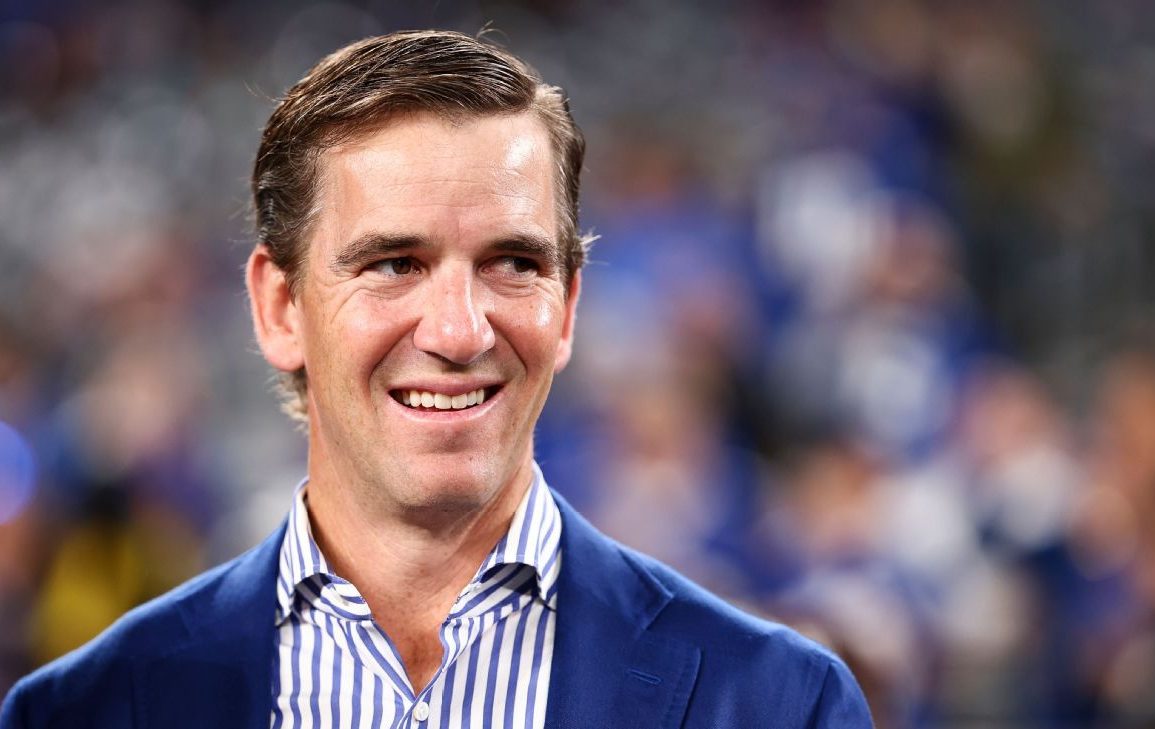
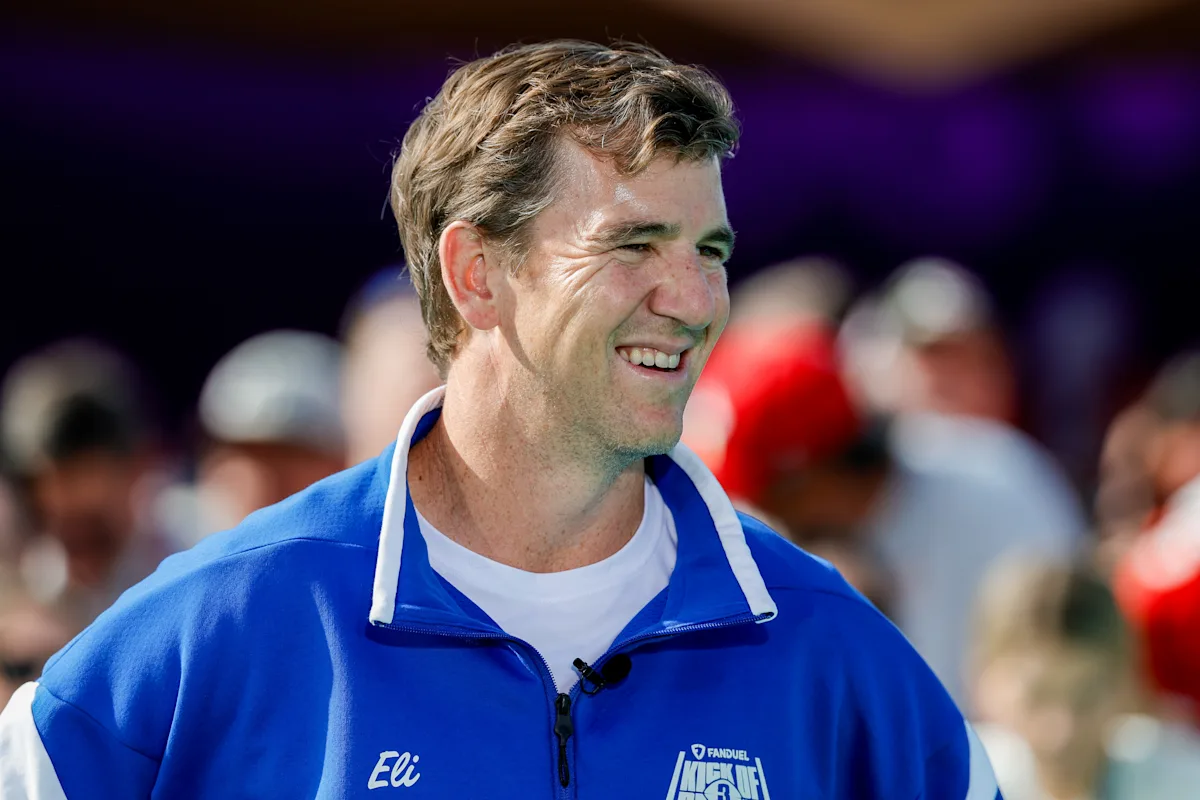
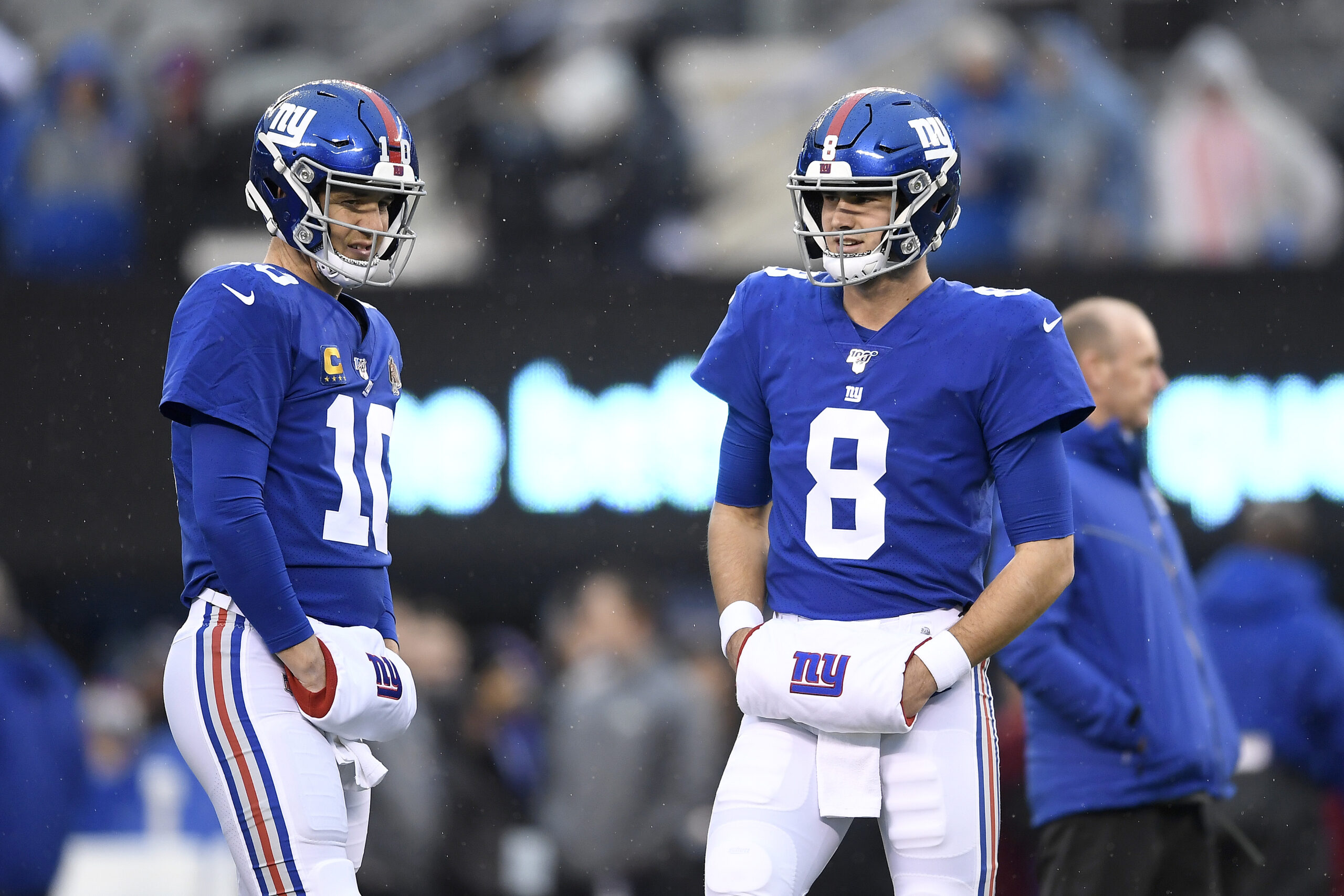
Former New York Giants quarterback Eli Manning has decided not to pursue a stake in the team, citing the steep cost involved. Although initially interested, Manning revealed in an interview with CNBC that the financial commitment was ultimately too high for him.
He expressed admiration for the Giants’ current valuation but admitted that a stake, even as small as 1%, represents a significant financial burden given the multibillion-dollar price tag attached to the franchise.
High Valuation and Role Conflicts Deter Manning from Pursuing Giants Ownership Stake
The Giants organization announced in February that a limited ownership stake—possibly up to 10%—was being made available for sale. Experts believe the transaction could set a new benchmark for NFL franchise valuations.
Forbes recently assessed the team’s value at $7.3 billion, while CNBC placed the estimate closer to $7.85 billion. Manning noted that the scale of these figures made the investment too costly for him, even though he acknowledged the team is worthy of such a valuation.
Eli Manning (NFL)
Beyond financial concerns, Manning also cited potential conflicts with his current roles as a key reason for backing out. He highlighted that ownership would interfere with his broadcasting duties at ESPN, his Pro Bowl coaching responsibilities, and his youth football camp.
These commitments require interaction with players and college athletes, which could be restricted by NFL ownership rules. He emphasized that these complications made it unfeasible for him to continue pursuing a stake in the franchise.
Emotional Connection Couldn’t Overcome Timing and Cost Challenges for Eli Manning’s Investment
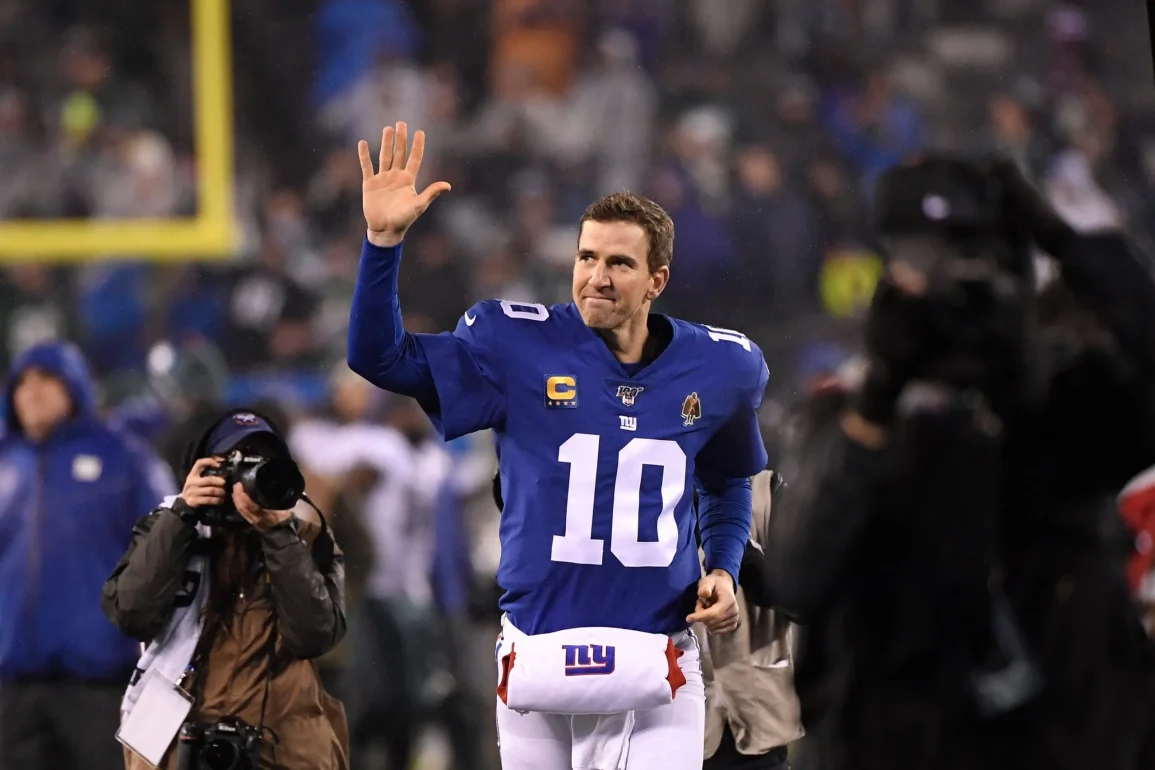
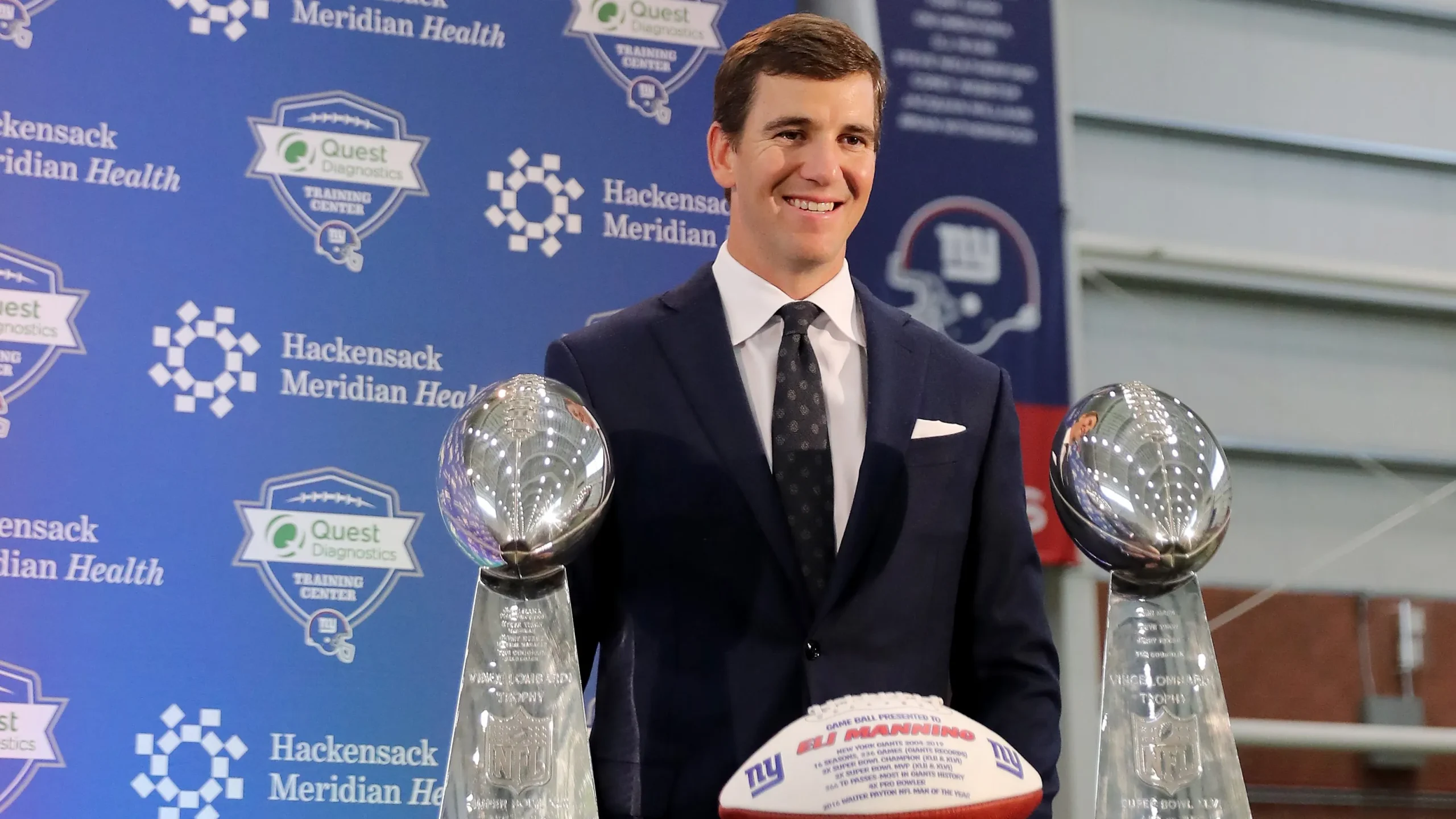
Manning’s decision comes despite his deep ties to the Giants organization. A two-time Super Bowl MVP and longtime franchise quarterback, Manning’s No. 10 jersey has been retired by the team, signifying his lasting legacy.
His comments suggested a genuine interest in being part of the franchise’s future, but he ultimately concluded that the timing and circumstances weren’t right. “I was kind of along for the ride,” he remarked, indicating his willingness to explore the opportunity, even if it didn’t materialize.
The Giants remain under the control of the Mara and Tisch families, each holding a 50% share. The franchise has been a family-run operation for nearly a century, with John Mara and Steve Tisch currently managing operations on behalf of their respective lineages.
The Tisch family entered the ownership picture in 1991, when Bob Tisch purchased his half of the team for $75 million. The Mara family’s connection dates back to the team’s founding in 1925, when Tim Mara bought the team for just $500.
Eli Manning Inspires Giants Players, Reconnecting Team Culture with Legacy, Standards, and Championship Values
Eli Manning, one of the most revered players in New York Giants history, made a surprise visit to the team following their first workout of the offseason. Invited by head coach Brian Daboll, Manning addressed the full roster — including veterans, rookies, and undrafted players — sharing what the franchise meant to him and what it takes to succeed.
He offered himself as a resource to anyone who needed guidance, encouraging players to approach him at any time. His brief yet impactful speech was met with admiration, with players like Russell Wilson and Jameis Winston expressing deep appreciation for the moment.
Coach Brian Daboll is using these visits from Giants legends as a deliberate strategy to rebuild and reinforce a winning culture after a disappointing 3-14 season. Alongside Manning, first-round draft picks Abdul Carter and Jaxson Dart have already heard from Hall of Famer Michael Strahan, among others.
This initiative is part of a broader effort to connect the current roster with the franchise’s proud legacy, providing both inspiration and a practical blueprint for success. Daboll’s plan is rooted in the belief that hearing from successful former players helps create a stronger, more focused team identity.
Giants Legends Return Often, Instilling Purpose, Pride, and Championship Wisdom in Players
The presence of legendary figures such as Lawrence Taylor, Victor Cruz, Justin Tuck, and Howard Cross is becoming a recurring theme at the Giants facility. Coach Daboll explained that these appearances are purposeful, designed to communicate what it truly means to be a New York Giant.
These icons not only bring credibility but also share insights from their championship experiences. Their messages are tailored, authentic, and meant to resonate with players who are forging their own path. For Daboll, it’s about using every available advantage to prepare his team for the challenges ahead.
Eli Manning Inspires Giants Players, Reconnecting Team Culture with Legacy, Standards, and Championship Values
The Giants have long maintained strong relationships with their alumni, and it’s not unusual to see former stars like Shaun O’Hara, Amani Toomer, or even Bill Parcells and Phil Simms around the team. This connection is more than ceremonial; it fosters a deep sense of belonging and continuity.
Michael Strahan emphasized this during his speech to the rookies, noting that former players take pride in the success of current Giants. This mentorship culture gives today’s players a tangible connection to the team’s storied past and a sense of shared purpose moving forward.
Legacy Lessons Shape Giants’ Future: Building Bonds, Standards, and a Championship Mindset Together
For young players like Abdul Carter, having access to legends like Strahan and Manning is more than motivational — it’s instructional. Seeing successful alumni return to give advice and support adds gravity to the opportunity they’ve been given.
The Giants’ deep roots, established in 1925, mean many former players still live in the area and maintain strong ties to the team. This enduring loyalty is captured in the phrase “Once a Giant, Always a Giant,” a sentiment echoed by former defensive lineman Chris Canty, who underscored how winning in New York creates a lifelong bond with the franchise.
Each visiting legend delivered a message tailored to their experience: Manning stressed camaraderie, Cruz urged hard work and seizing the moment, Strahan emphasized daily consistency, Tuck spoke about forming a unique identity, and Taylor talked about defensive dominance and discipline.
While not every word may stick, the cumulative effect is powerful. As offseason acquisition Jevon Holland noted, these talks provide a “blueprint” for success, aligning closely with the standards and philosophy being preached by the current coaching staff. Ultimately, these encounters may be the cultural catalyst the 2025 Giants need to return to prominence.
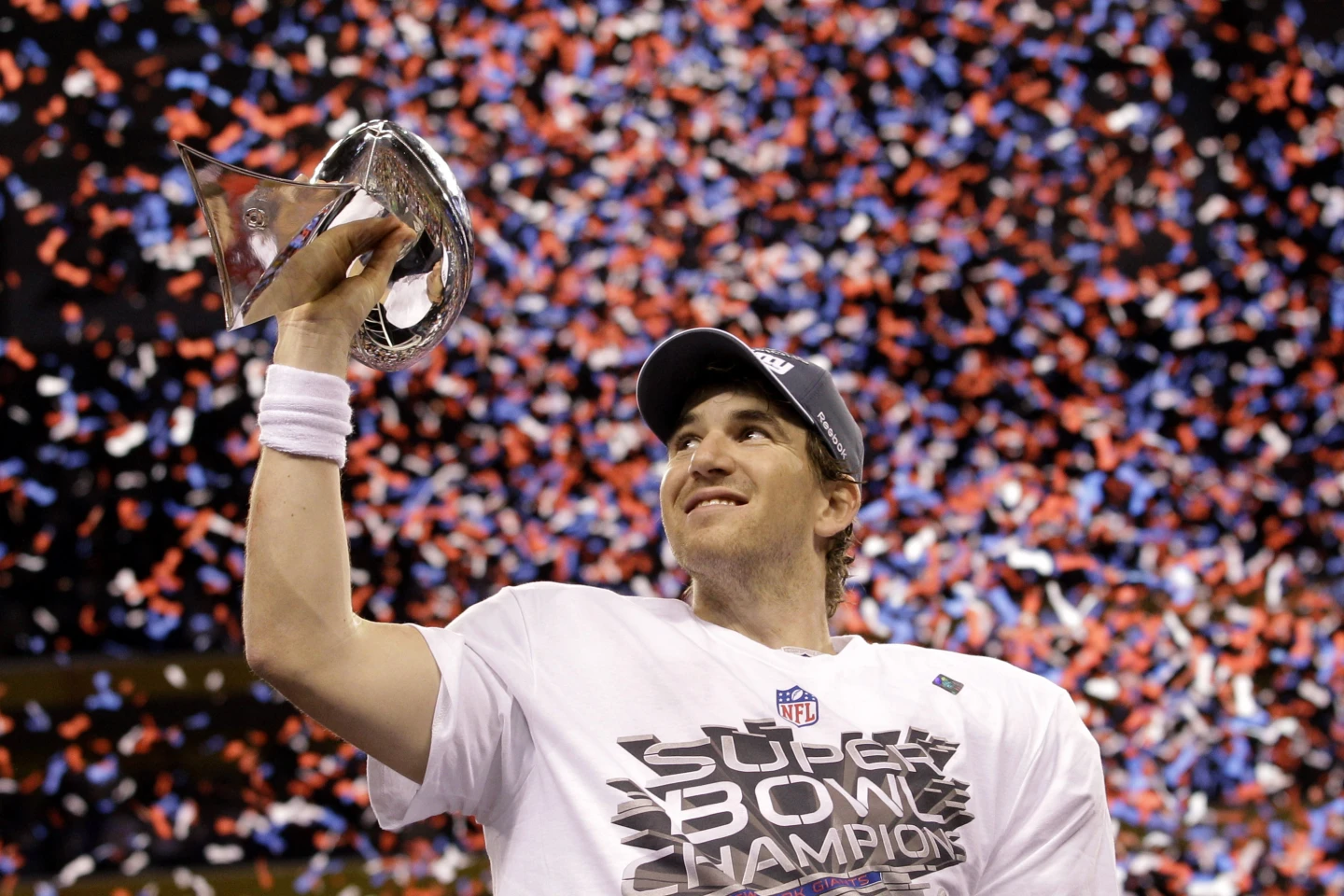
Eli Manning holds up the Vince Lombardi Trophy while celebrating the win
Eli Manning is a name synonymous with New York Giants football. As the franchise’s all-time leader in passing yards, touchdowns, and games started by a quarterback, Manning’s legacy is deeply tied to the team’s success and challenges during his career.
Manning’s journey in the NFL is a story of perseverance, resilience, and memorable moments that will be debated for years to come. From his two Super Bowl victories to his role in the Giants’ rebuilding process, Eli Manning’s legacy is not only defined by his triumphs but by the heart with which he played the game.
Manning was selected first by the San Diego Chargers in the 2004 NFL Draft, but his story with the Giants began after a trade on draft day. Manning’s first professional seasons were far from perfect. He had big shoes to fill, replacing the legendary Kerry Collins, and had to contend with an inconsistent offense and roster turnover.
However, as Manning developed over the years, he displayed an uncanny ability to thrive in the most difficult circumstances. Manning’s quiet confidence and work ethic made him a respected leader in the locker room, and he quickly became the face of the Giants’ franchise.
His breakthrough moment came during the 2007 season, when he led the Giants to an unlikely Super Bowl victory. Despite being considered underdogs against the undefeated New England Patriots, Manning guided the Giants through an impressive playoff run. His performance in Super Bowl XLII is forever etched in football lore.
Super Bowl MVP
Manning led a final drive that featured the unforgettable “helmet catch” by David Tyree, culminating in a 17-14 win. The victory not only gave the Giants their third championship but also solidified Manning’s place as a quarterback capable of delivering in clutch moments. Manning was named Super Bowl MVP for his performance, and his career took a giant leap forward.
The 2007 Super Bowl victory was a defining moment for Manning, but it was not his only championship. Four years later, in the 2011 season, he led the Giants back to the Super Bowl, once again facing the New England Patriots.
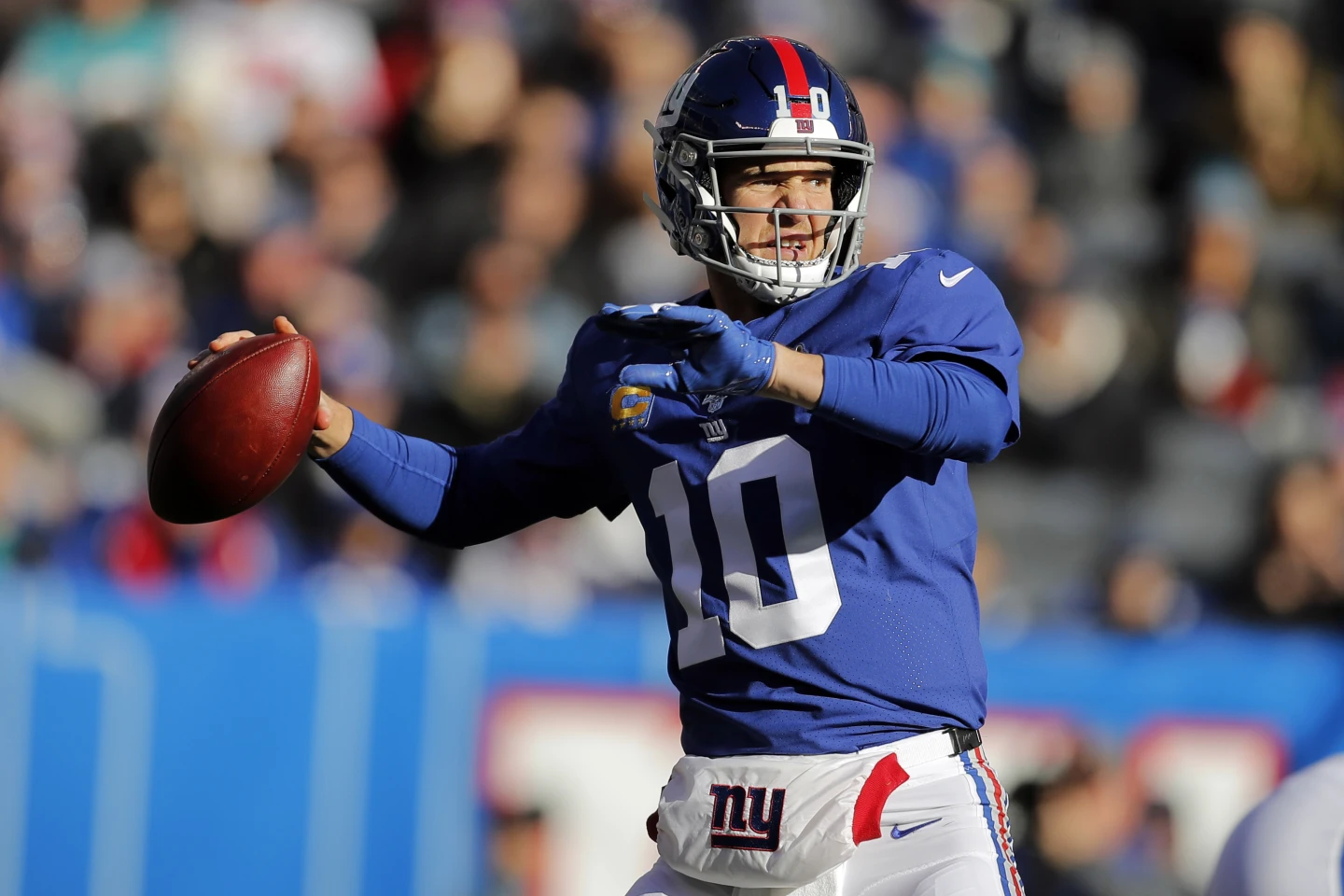
Eli Manning looks to pass in the 1st half
In a game that featured late-game drama and a dominant performance by the Giants’ defense, Manning played exceptionally well, throwing for 296 yards and one touchdown. The Giants won 21-17, giving Manning his second Super Bowl MVP award. The victory cemented Manning’s status as one of the greatest quarterbacks of his era.
While his two Super Bowl victories are what many remember, Manning’s career was far from perfect. Manning experienced inconsistency at times, especially in the years following the 2011 Super Bowl victory. Injuries and coaching changes affected the team’s performance, and the Giants experienced multiple losing seasons.
Manning, however, remained a symbol of stability, playing every game for the Giants from 2004 to 2017, a streak that demonstrated his durability and commitment to his team. His resilience through difficult times showed that Manning was not just a quarterback who could perform in the postseason, but one who could handle the grind of a long NFL career.
The debate around Manning’s Hall of Fame credentials has continued to spark discussion in the football world. Some argue that Manning’s two Super Bowl wins, including his victories over Tom Brady and the Patriots, should be enough to guarantee him a place in Canton.
Manning in an elite list
Manning is one of only five quarterbacks in NFL history to win two Super Bowl MVPs, and his postseason success against one of the most dominant teams in the history of the sport is impressive. His career passing numbers, which include over 57,000 yards and 366 touchdowns, are undeniable achievements.
However, critics point to Manning’s inconsistency in the regular season, where his numbers were often a mixed bag. Manning’s career completion percentage and passer rating are not as high as other Hall of Fame-caliber quarterbacks, and some believe that his performance in some seasons did not match his potential.
They argue that while Manning had moments of brilliance, he was also prone to stretches of underperformance that could leave his legacy up for debate.
Despite the criticisms, there’s no denying the impact Manning had on the New York Giants and the NFL. Manning may not have been the most statistically dominant quarterback of his time, but his performances in key moments set him apart.
Eli Manning (NFL)
His two Super Bowl victories, both of which were achieved in dramatic fashion, are a testament to his ability to rise to the occasion. For the Giants and their fans, Manning’s legacy is defined by his leadership, his calm demeanor in the face of pressure, and his ability to deliver in the most important games.
Manning’s relationship with his fans and teammates is another crucial part of his legacy. Throughout his career, Manning was never one for flashy displays of emotion or public attention. His humble and professional demeanor endeared him to the New York community.
While he wasn’t always the most vocal leader, Manning’s work ethic, dependability, and consistency made him the unquestioned leader of the team. He led by example and quietly carried the weight of the franchise on his shoulders, earning the respect of coaches, players, and fans alike.
Manning remained a low-key figure
He did not seek out the spotlight, and his focus was always on helping his team win games. His commitment to his craft and his desire to improve year after year made him one of the most respected quarterbacks in the NFL.
Manning’s leadership qualities extended beyond the football field, as he was involved in numerous charitable initiatives. Through his work with the Eli Manning Foundation, he helped raise funds for youth organizations and charitable causes throughout the country.
As Manning transitioned from active player to retiree, his legacy as a Giant remained intact. Though his career wasn’t always perfect, his place in Giants’ history is secure. He is a two-time Super Bowl champion and one of the most accomplished quarterbacks in the history of the NFL. The debate about Manning’s Hall of Fame credentials will likely continue, but for the Giants and their fans, Manning’s legacy is clear.
He delivered two championships, was a model of stability, and displayed the heart of a champion in some of the most dramatic moments in NFL history. Eli Manning may not have always been the flashiest quarterback, but his career proves that heart, leadership, and performance when it mattered most can leave an indelible legacy.
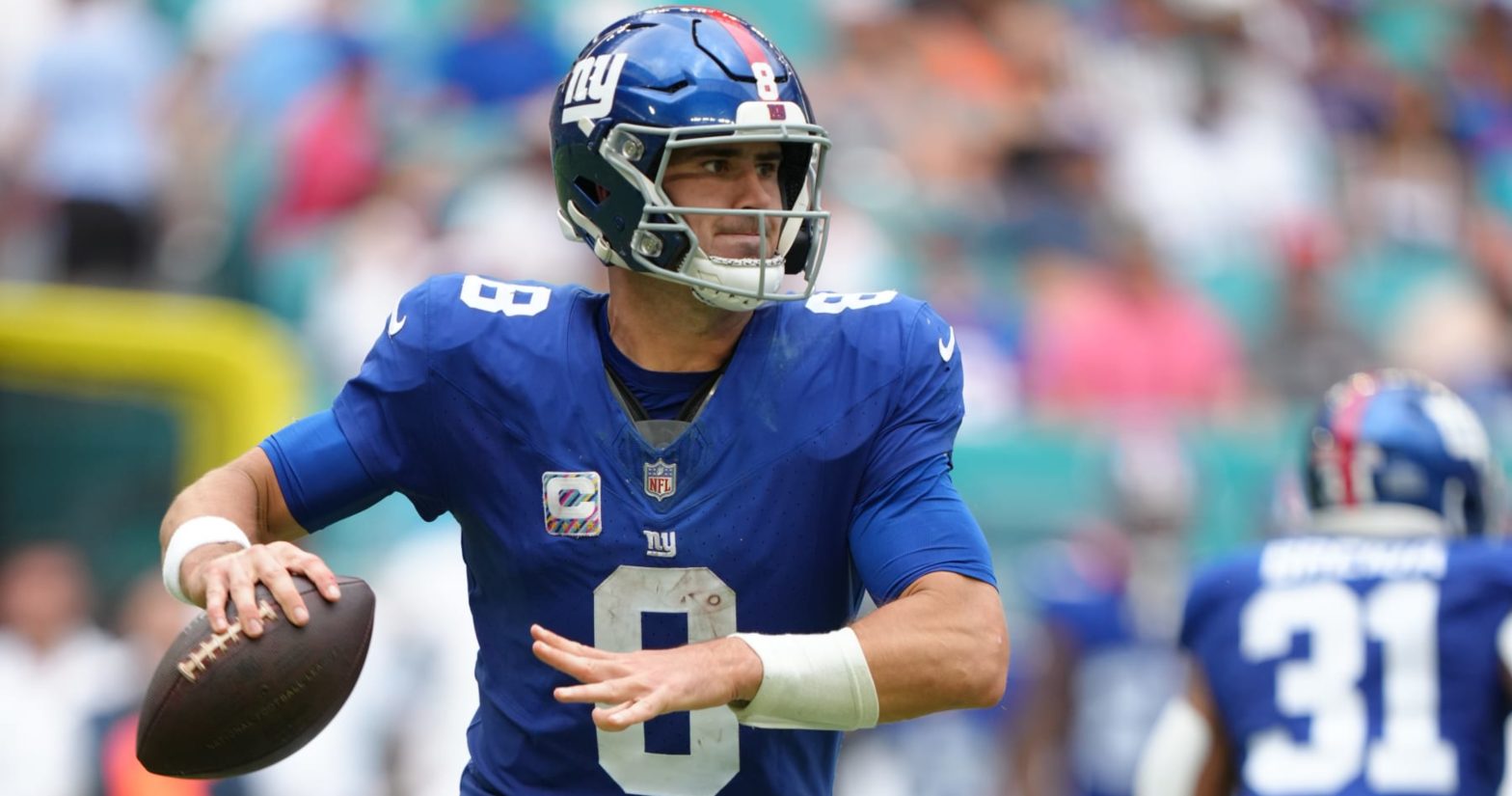
New York Giants icon Eli Manning is confident that Daniel Jones possesses the capability to lead the team despite facing challenges in the 2023 season.
During a charity event, Manning expressed his belief in Jones, stating that the young quarterback “has the mindset” required to succeed with the Giants:
“He had a tough start (last year). Many quarterbacks have faced similar challenges. Dealing with injuries is never enjoyable, but I know he’s determined. I know he wants to stay in New York. It’s not an easy place to play, but he has the mindset. He has the mentality. I’m confident he’ll do everything in his power to bounce back and perform at a high level.”
Eli Manning Supports Daniel Jones Amid Challenges (Credits: BVM Sports)
The optimism surrounding Jones and the Giants at the beginning of the season waned as they couldn’t replicate their success from 2022 when they finished with a 9-7-1 record and secured a playoff victory, marking their first since Super Bowl 46 in February 2012.
The 2023 season proved challenging for Jones and the team. Jones recorded two touchdowns and six interceptions and was limited to six games due to injuries, including a season-ending torn ACL in Week 9.
The Giants concluded the season with a 6-11 record, ranking in the bottom seven in both points scored and allowed per game in the NFL.
While speculation has arisen about the Giants potentially seeking another quarterback, General Manager Joe Schoen, in November, stated that the “expectation” is for Jones to be the starter in the upcoming season, though circumstances can change during the offseason.
Despite the disappointing season, moving on from Jones may be challenging, considering the team signed him to a four-year, $160 million contract in March 2023. With a $69.3 million dead cap hit in 2024, the Giants could face difficulties parting ways with him.
The upcoming free-agent market features notable quarterbacks like Kirk Cousins, Ryan Tannehill, and Baker Mayfield, with the possibility of Russell Wilson joining if released by the Denver Broncos.
The Giants also hold the sixth pick in the draft, providing options to explore quarterbacks like Jayden Daniels, Bo Nix, or J.J. McCarthy, though the top-tier prospects may be out of reach.
Alternatively, the Giants could choose to retain Jones and focus on drafting a wide receiver to alleviate some of the pressure on him.
With the offseason approaching, the Giants have two months to evaluate their options, considering free agency, the draft, and developing a comprehensive plan for the upcoming season.