Categories
NFL (American Football)

Cincinnati Honors Pete Rose After Posthumous Ban Lift, Fans Rally Behind Hall of Fame Hopes
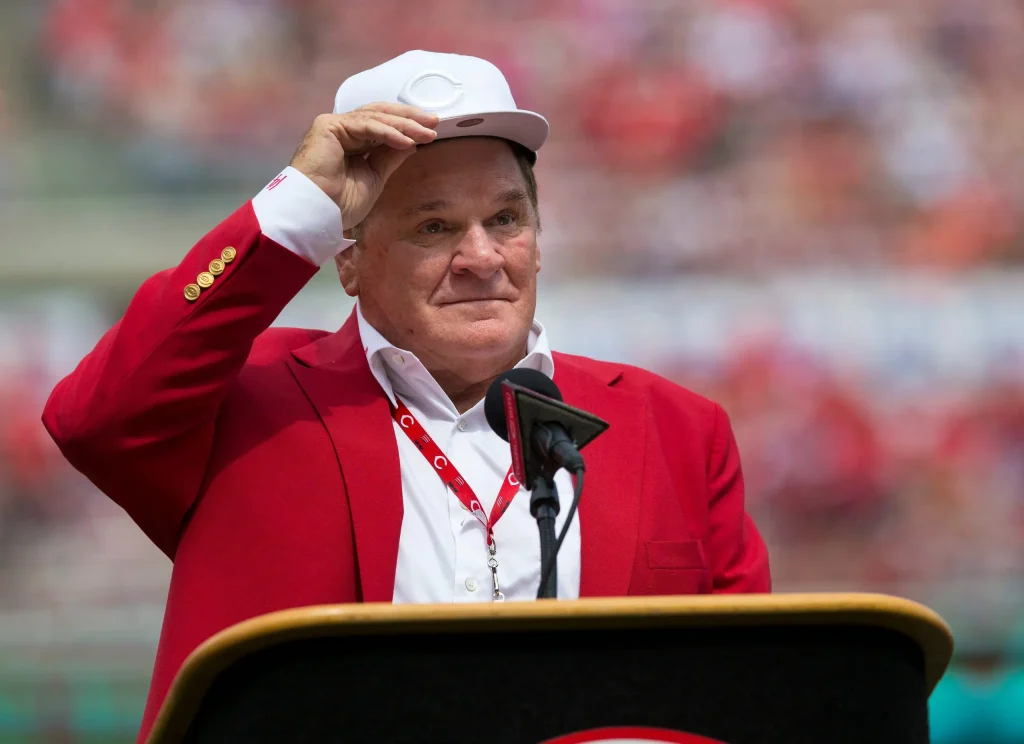
The Cincinnati Reds held a heartfelt tribute for Pete Rose on Wednesday night, just a day after Major League Baseball lifted his posthumous ban from the league’s permanently ineligible list. The celebration drew a crowd of over 43,000 fans who chanted “Pete! Pete!” and filled the stadium with No. 14 jerseys. A moment of silence was observed, and a choir from Rose’s high school performed the national anthem. Rose’s presence was felt throughout the ballpark, symbolizing the city’s deep connection to its most iconic player.

Family, Teammates Reflect on Rose’s Legacy Amid Posthumous Reversal of Gambling Ban

The ceremony included a pregame panel featuring Hall of Famer Barry Larkin, Eric Davis, and George Foster, who shared personal stories about Rose. Members of Rose’s family delivered the game ball, and Reds manager Terry Francona, who once played with and for Rose, praised his unmatched competitive spirit. Rose’s daughter, Fawn, described the deep connection between her father and the city, saying, “This city was my dad.” The Reds had announced plans to honor Rose after his death in September 2024 at age 83.

Cincinnati Honors Pete Rose After Posthumous Ban Lift, Fans Rally Behind Hall of Fame Hopes
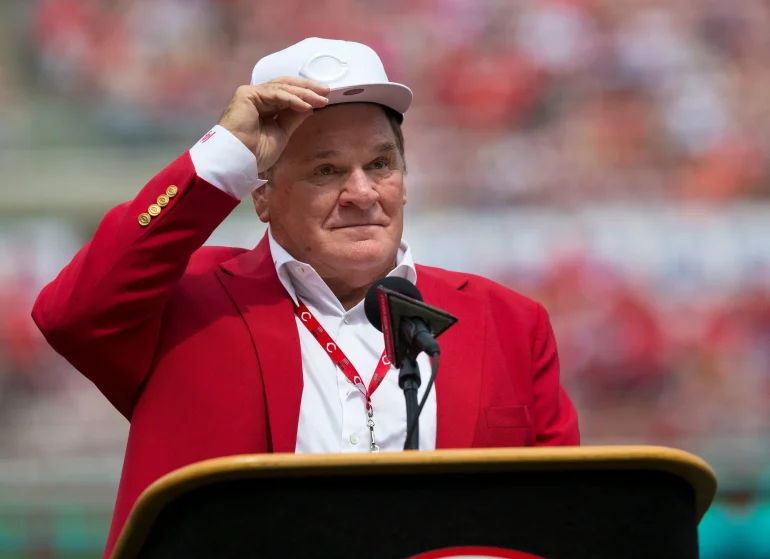

Pete Rose’s career was overshadowed by his 1989 lifetime ban due to gambling on games while managing the Reds. This week, Commissioner Rob Manfred reversed MLB’s policy, declaring that permanent bans now expire upon a person’s death. He met with Rose’s family in December, providing them an opportunity to share who Rose was beyond baseball. While the decision brought some closure, Rose’s son expressed frustration that it came too late for his father to experience the recognition firsthand.

Cincinnati Fans Celebrate Rose as a Hero Despite Hall of Fame Uncertainty

Despite national controversy over Rose’s actions, he remained beloved in Cincinnati, where fans continued to admire his work ethic and gritty playing style. The stadium was filled with emotional fans, some stopping at his statue for photos before the game. Local supporters like Bob Wunder expressed anger over the delay in lifting the ban, wishing the decision had come during Rose’s lifetime. Nevertheless, the tribute marked a proud and cathartic moment for the city.

With the ineligibility lifted, Rose is now eligible for consideration by the Hall of Fame’s Classic Baseball Era committee, which meets next in December 2027. The selection process is rigorous and far from guaranteed, requiring 75% approval from a 16-member voting panel. While fans and former players like Francona believe Rose’s on-field accomplishments warrant induction, his gambling history continues to cast a long shadow. Still, to many in Cincinnati, his Hall of Fame status is already settled in their hearts.

Categories
MLB (Baseball)

MLB Reinstates Pete Rose and Shoeless Joe Jackson After Deaths, Reigniting Hall of Fame Debate

Major League Baseball Commissioner Rob Manfred announced a landmark decision on Tuesday, reinstating Pete Rose and Shoeless Joe Jackson—both previously banned for gambling offenses. This reinstatement, which comes after Rose’s death eight months ago, also applies to 15 other individuals, including all eight members of the 1919 Chicago Black Sox.

The decision modifies MLB’s stance on “permanent ineligibility,” establishing that such bans will now expire upon an individual’s death. The announcement precedes Cincinnati’s scheduled Pete Rose Night, honoring the career hits leader despite decades of controversy.

Pete Rose accepted a permanent ban from baseball on August 23, 1989, after MLB’s investigation revealed that he bet on games while managing and playing for the Cincinnati Reds. Although Rose petitioned for reinstatement multiple times, including in 1997 and again in 2015, both attempts were rejected.

Commissioner Manfred maintained in 2015 that Rose had not demonstrated genuine reform. After Rose’s death on September 30, 2024, attorney Jeffrey Lenkov filed a new petition for his reinstatement in January 2025, which eventually led to this week’s policy shift.

Posthumous Policy Shift Sparks Debate Over Integrity, Legacy, and Hall of Fame Eligibility

Commissioner Manfred defended the policy change in a letter, stating that the objectives of Rule 21—to preserve the integrity of the game and serve as a deterrent—are fulfilled once an individual is deceased.

While many fans and figures welcomed the decision, Marcus Giamatti, son of the late Commissioner A. Bartlett Giamatti who originally banned Rose, expressed strong disapproval. He criticized the decision for undermining his father’s legacy and claimed it compromised the sport’s integrity.

MLB Reinstates Pete Rose and Shoeless Joe Jackson After Deaths, Reigniting Hall of Fame Debate
Pete Rose and Shoeless Joe Jackson (MLB)

Under current Hall of Fame regulations, anyone on MLB’s permanently ineligible list is barred from induction. With the bans lifted posthumously, both Rose and Jackson now become eligible for consideration by the Hall’s Classic Baseball Era committee.

This group, which meets next in December 2027, evaluates players whose primary contributions occurred before 1980. Candidates must receive at least 75% of the vote from a 16-member panel that includes Hall of Famers, executives, and historians. Rose was never officially on the BBWAA ballot due to his ban, though he received scattered write-in votes.

Hall of Fame Reconsiders Legends Amid Controversy, Redemption, and Statistical Greatness in Baseball History

Pete Rose’s career remains one of the most statistically impressive in baseball history. The 17-time All-Star still holds records for hits (4,256), games played, at-bats, and singles. He won Rookie of the Year in 1963 and MVP in 1973.

Shoeless Joe Jackson, banned for allegedly throwing the 1919 World Series, was a .356 career hitter—third-highest in MLB history—and remains a cultural icon due in part to his portrayal in Field of Dreams. With the ban lifted, both players’ legacies may now be fully re-examined by the Hall of Fame.

Although former President Donald Trump expressed support for Rose and even suggested a posthumous pardon, it’s unclear if he played any role in influencing MLB’s decision. Rose’s legal troubles extended beyond baseball—he was convicted in 1990 for filing false tax returns, resulting in prison time, fines, and community service.

Despite these issues, the new ruling from MLB allows for Rose’s baseball accomplishments to be reconsidered independently of his criminal record, reigniting debate over morality, redemption, and recognition in professional sports.

Categories
MLB (Baseball)

Rob Manfred Reviews Pete Rose’s Reinstatement Bid as Hall of Fame Debate Resurfaces

Commissioner Rob Manfred is currently reviewing a petition filed on January 8 by Pete Rose’s family, requesting his removal from Major League Baseball’s (MLB) ineligible list. The petition, spearheaded by Los Angeles lawyer Jeffrey Lenkov and Rose’s eldest daughter, Fawn Rose, follows a meeting with Manfred and MLB spokesman Pat Courtney on December 17.

Lenkov emphasized that the discussions were respectful and productive, aiming for Rose’s reinstatement so he could be considered for induction into the Baseball Hall of Fame posthumously.

This is not the first time Manfred has considered Rose’s reinstatement. In 2015, he denied a similar request after meeting with Rose personally. The latest petition, however, comes amid political involvement, as former President Donald Trump recently announced his intention to pardon Rose.

Trump criticized MLB for barring Rose from the Hall of Fame, arguing that Rose’s betting only involved his team winning and did not compromise the integrity of the game. Despite Trump’s support, Lenkov clarified that he had not sought White House intervention in the matter.

Rob Manfred
Rob Manfred (MLB)

MLB’s Stance on Rose’s Ban and the Hall of Fame Eligibility Debate

MLB sources confirmed that Manfred is reviewing the petition but declined to comment further. Historically, MLB has maintained a strict stance on Rose’s lifetime ban, citing the need to uphold the integrity of the game. In 1991, the Baseball Hall of Fame passed a rule stating that players on MLB’s ineligible list would not be considered for induction. This rule, often referred to as the “Pete Rose Rule,” effectively kept Rose off Hall of Fame ballots despite his status as the all-time hit leader in MLB history.

A key argument in favor of Rose’s reinstatement is that MLB informally ends lifetime bans upon a player’s death. In 2020, sources indicated that Manfred viewed the banned list as a punishment only during a player’s lifetime. However, this does not guarantee Hall of Fame eligibility, as the Hall has maintained that even deceased players on MLB’s banned list remain ineligible. Lenkov hopes that a decision to remove Rose from the ineligible list will create a precedent, allowing baseball writers to vote on his induction.

Rose’s Reinstatement Hopes Amid Past Gambling Admissions and Hall of Fame Debate

Throughout his lifetime, Rose had multiple opportunities to seek reinstatement but declined the conditions set by MLB. Former commissioner Bud Selig once offered a path to reinstatement if Rose admitted to gambling, avoided casinos, and ceased betting activities. Rose refused. In 2004, he acknowledged gambling as a manager but insisted he only bet on his team to win. Later investigations revealed he also placed bets as a player, further complicating his case for reinstatement.

Lenkov remains optimistic that Manfred will reinstate Rose, which could open the door for Hall of Fame consideration. He argues that Rose has already served his punishment and deserves a second chance. While there is no guarantee that Rose would be inducted even if removed from the ineligible list, Lenkov believes his legacy in baseball merits recognition. If Rose were to be inducted, it would be a momentous occasion, acknowledging his unparalleled achievements in the sport.

Categories
FEATURED

Pete Rose’s Legacy Balances Historic MLB Achievements with Lifelong Controversies and Hall of Fame Exclusion

Pete Rose, one of baseball’s most iconic figures and the all-time leader in MLB hits with 4,256, has passed away at the age of 83. Rose’s legendary on-field achievements remain uncontested, but his career was marred by significant controversies, including allegations of gambling on baseball games and an accusation of a sexual relationship with an underage girl. His troubled legacy extends beyond the diamond, as his actions and choices have led to his exclusion from the Hall of Fame despite his unparalleled baseball prowess.

The possibility of Pete Rose being inducted into the Hall of Fame has long been a contentious issue. Currently, and even posthumously, Rose remains permanently banned from baseball. This status stems from a Hall of Fame board decision that explicitly prohibits individuals banned from the sport from being considered for induction. Despite occasional public debate on the matter, there is no indication that this policy will be revisited or revised.

Pete Rose
Pete Rose (MLB)

Some argue that the growing association between professional sports and gambling could provide a rationale for revisiting Rose’s case. However, MLB’s stringent Rule 21, which explicitly bans players and other personnel from betting on baseball, remains steadfast. This rule, which carries severe penalties for violations, was prominently displayed in MLB clubhouses during Rose’s career. His extensive involvement in the sport meant he was well aware of this prohibition, making his actions even more egregious.

Rose’s decision to deny gambling allegations for 15 years before admitting them in a bid to sell books only compounded the controversy surrounding him. Had he shown contrition and sought reconciliation immediately, some speculate that his lifetime ban might have been reconsidered. Instead, his refusal to accept responsibility during critical years sealed his fate, both in terms of his reputation and his Hall of Fame prospects.

In the end, Pete Rose’s story is one of immense talent overshadowed by personal failings. His record-breaking career and competitive spirit place him among the greatest players in baseball history. However, his repeated disregard for the sport’s ethical boundaries ensured that his legacy would be as divisive as it is remarkable. For now, and likely forever, Rose will remain an icon of baseball’s complex interplay of excellence and fallibility.