

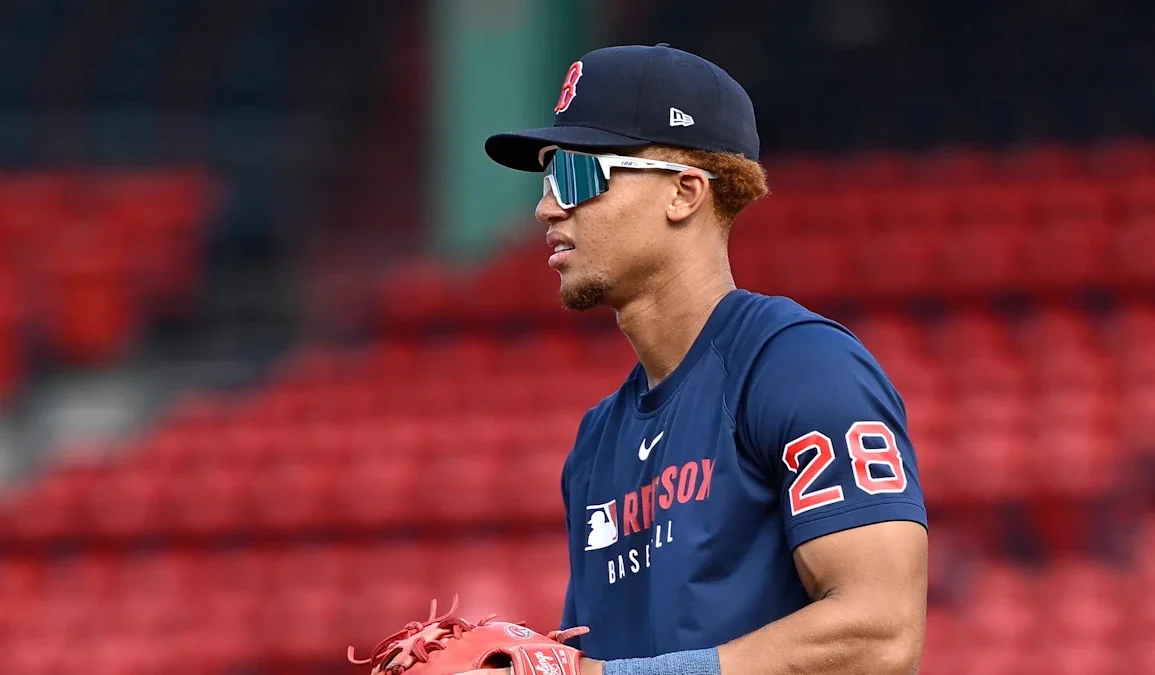
A year ago, Kristian Campbell was one of the most exciting young talents in baseball. Baseball America ranked him the fourth-best prospect in MLB following a breakout minor league season in which he hit .330/.439/.558. Campbell was widely viewed as the Red Sox’s second-best prospect, trailing only Roman Anthony, and even compared favorably to Marcelo Mayer.
The organization’s assessment seemed to align, as they built the trade package for Garrett Crochet around prospects Kyle Teel and Braden Montgomery rather than including Campbell or other top-tier talent.
Campbell made the Red Sox Opening Day roster despite a mediocre Spring Training performance. He began at second base and got off to a strong start, hitting .301/.407/.495 through April. His early success earned him an eight-year contract extension worth $60 million, giving Boston control for up to four additional seasons. At the time, Campbell appeared poised to become a cornerstone of the franchise.
Campbell Struggles at Plate and Second Base, Prompting Minor League Assignment
However, the remainder of his season did not meet expectations. From May to mid-June, Campbell hit just .159/.243/.222 over 140 plate appearances, prompting the Red Sox to option him to Triple-A on June 20. He remained there for the rest of the season. In the minors, Campbell posted respectable numbers with a .273/.382/.417 slash line over 319 plate appearances at Triple-A.
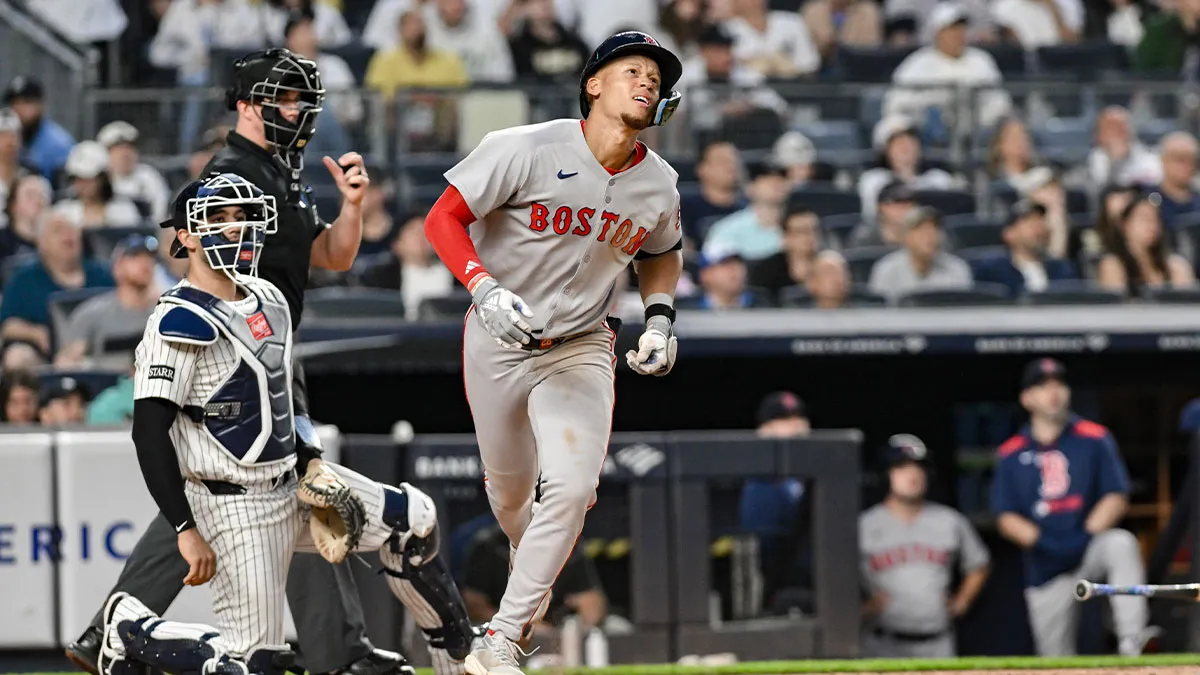 Kristian Campbell (MLB)
While that performance was above average for a 23-year-old, it was a step down from his breakout 2024 campaign. His strikeout rate rose to 26.3%, a six-point increase from the previous season. He also averaged only 84 MPH off the bat, with just 30% hard contact and over half of his batted balls on the ground. He walked frequently, which helped his production, but the batted ball metrics raised concerns about his offensive ceiling.
Defensively, Campbell struggled significantly. At second base, he graded 16 Defensive Runs Saved below average across 471 2/3 innings, ranking near the bottom of MLB at his position. Only Luis García Jr. had a worse DRS mark, and he played twice as many innings.
Campbell also ranked near the bottom in Statcast’s Outs Above Average metric, committed seven errors, and posted a .968 fielding percentage, the lowest among 38 second basemen with 400 or more innings. These struggles appear to have convinced the Red Sox that Campbell is unlikely to be a long-term solution at second base. He only started 11 games at second in the minors, with none after August 8, instead splitting time between left field, center field, and first base.
Red Sox Evaluate Campbell’s Role Amid Limited Playing Time and Position Uncertainty
The Red Sox remain in need of help at second base but appear unlikely to view Campbell as the answer. They are reportedly focused on defense, looking outside the organization to improve the position. Internally, options such as David Hamilton, Romy Gonzalez, and Nick Sogard are uninspiring. Meanwhile, Willson Contreras and Triston Casas occupy the catching and first base depth charts, leaving limited opportunity for Campbell.
The team is considering giving him a look in the outfield, where his athleticism could allow him to contribute, but playing time is scarce. The outfield is already stocked with Jarren Duran, Ceddanne Rafaela, Wilyer Abreu, and Roman Anthony, and the team has little incentive to trade established contributors to create space for Campbell.
The departure of left-handed hitter Rob Refsnyder in free agency does provide some openings, but Campbell would likely be limited to a platoon role against southpaws, which is not ideal for his development. The Red Sox could send him back to Triple-A, using his remaining minor league options, which would allow him to continue working on the outfield and potentially earn future playing time.
As Spring Training approaches, Campbell’s role remains unclear. While the Red Sox are not reportedly considering trading him, moving a young player with an eight-year deal after a single underwhelming season would likely result in minimal return. Injuries or other unforeseen circumstances early in the season could provide opportunities for Campbell to play.
Though he remains a highly regarded prospect, the rapid narrowing of his path to meaningful MLB playing time is a stark contrast to the high expectations set just a year ago. If he starts the season in the minors and the Red Sox are contending, he may become a trade candidate around the midseason deadline, but for now, his development and future impact remain uncertain.