
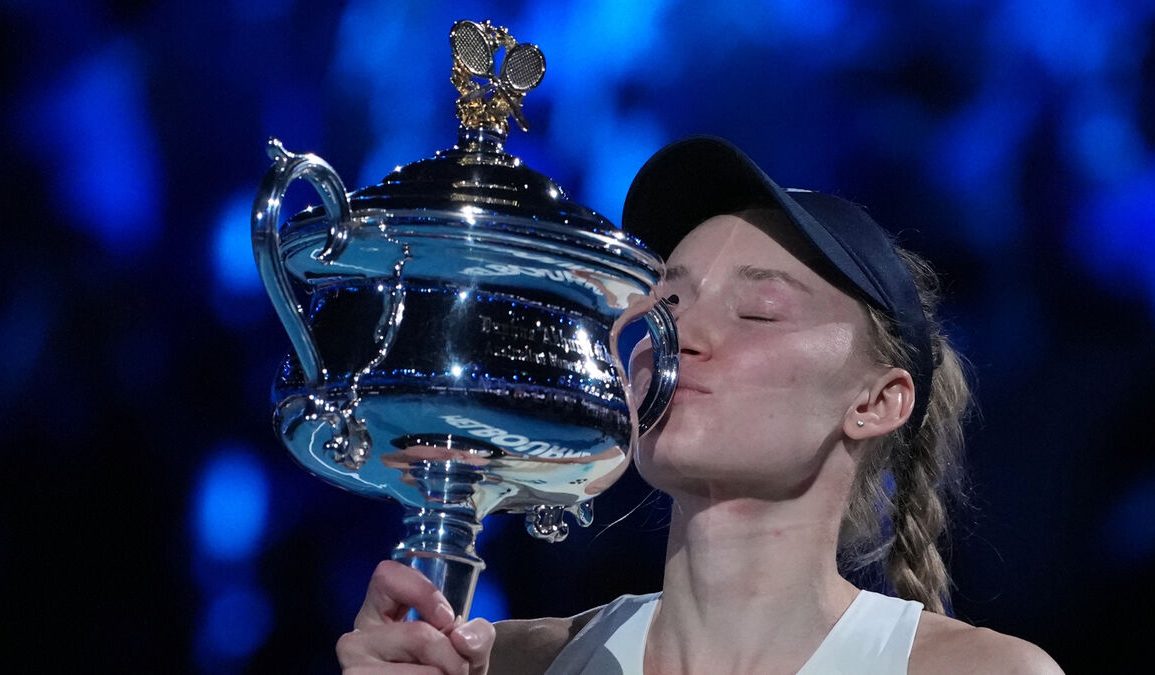
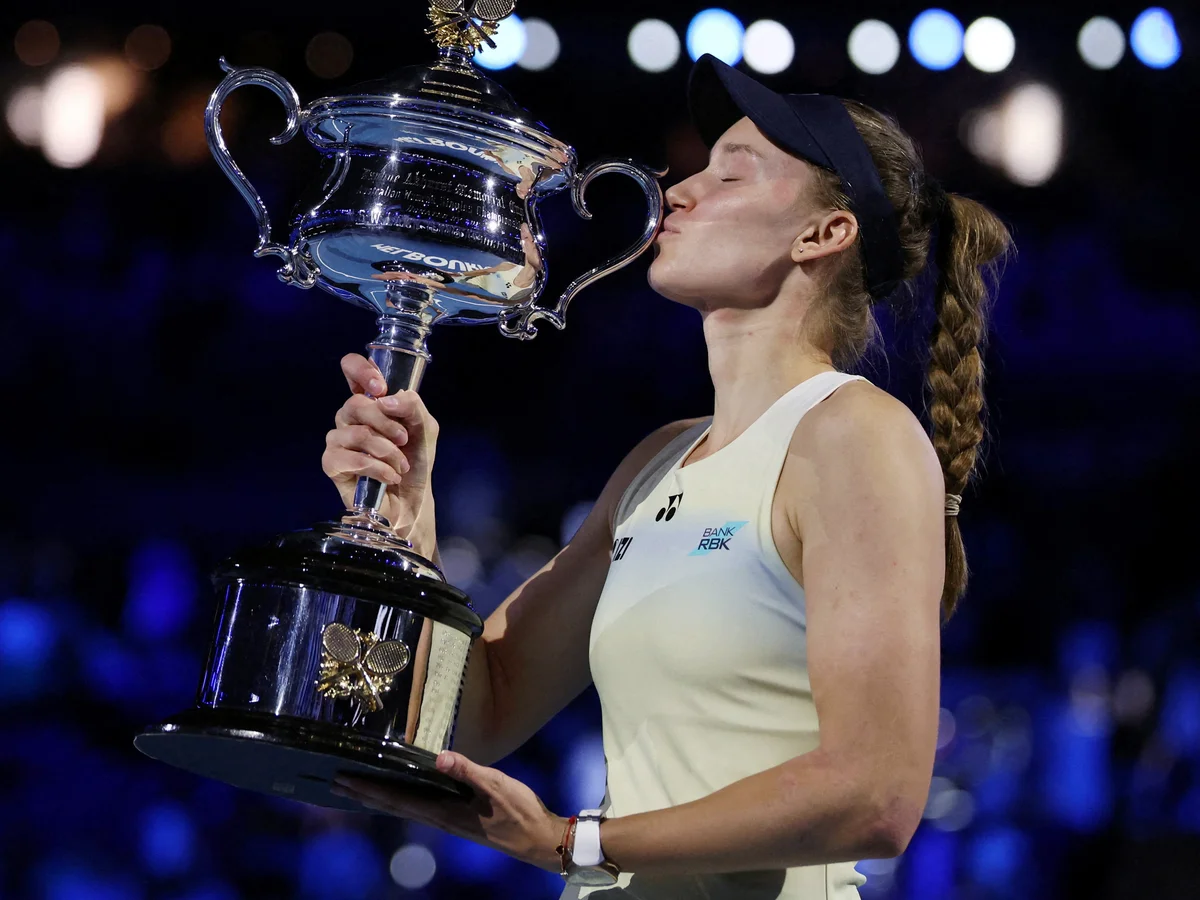
Elena Rybakina’s Australian Open triumph over world No. 1 Aryna Sabalenka was more than just a championship win. It was a statement about resilience, patience, and the power of understated excellence. On Saturday in Melbourne, the fifth-seeded Kazakhstani defeated Sabalenka 6-4, 4-6, 6-4 to claim her second Grand Slam title, completing a comeback that capped a turbulent year and marked a renewed upward trajectory in her career.
Rybakina’s celebration mirrored her personality and playing style. There were no dramatic gestures, just a small fist pump, a composed smile, and a quiet acknowledgment of the crowd after sealing the match with an ace. Inside, however, emotions ran high. She later admitted her heart was racing, even if her calm exterior never cracked. That ability to remain composed under pressure proved decisive, particularly given recent experiences where closing out matches had tested her nerves.
Rybakina Rewrites Past Final, Overcomes Turbulent Year to Reclaim Elite Form
The final itself followed a familiar yet ultimately reversed script. Rybakina broke Sabalenka early to take the first set, echoing their 2023 Australian Open final, which Rybakina also opened strongly before losing. This time, after dropping the second set and falling behind 3-0 in the third, she responded with authority. Five consecutive games shifted momentum firmly in her favor, showcasing her mental strength and tactical clarity when it mattered most.
 Rybakina’s Quiet Resolve Tops Sabalenka to Claim Australian Open Glory
This victory carried added significance because of the broader context of Rybakina’s past year. Early 2025 had been unsettled, highlighted by the suspension of her long-time coach Stefano Vukov. Despite those distractions, she finished 2024 on a high note by winning the WTA Finals in November. That momentum carried into Melbourne, where she rediscovered the form that once made her a Wimbledon champion in 2022.
While Sabalenka collected multiple major titles after defeating Rybakina in the 2023 Australian Open final, Rybakina’s results dipped for a stretch, and she failed to reach another Grand Slam final until this tournament. The turning point came late last season. A win over Sabalenka at the WTA Finals reshaped her confidence and belief, and since Wimbledon she has accumulated the most match wins on tour. Her current run includes 20 victories in 21 matches and a perfect 10-0 record against Top 10 opponents.
Against Sabalenka, Rybakina’s serve once again proved a cornerstone of her success. She fired six aces and saved six of eight break points, maintaining control during crucial moments. Apart from brief lapses late in the second set and early in the third, she dictated play with first-strike tennis, while Sabalenka’s emotions fluctuated as the match tightened.
Sabalenka Reflects on Defeat as Rybakina’s Teamwork and Composure Seal Triumph
For Sabalenka, the loss was another painful chapter in Melbourne, marking consecutive final defeats after last year’s upset loss to Madison Keys. She reflected candidly on the swing in the deciding set, noting how quickly a 3-0 lead turned into a deficit. Still, she struck an optimistic note, framing the loss as part of the broader rhythm of a long season.
Rybakina’s victory also highlighted the importance of her support system. She publicly thanked her team and paid tribute to Vukov, who has coached her since 2019. Despite last year’s challenges, she credited their long-standing partnership and constant technical feedback for helping her stay grounded and improve. Tournament organizers recognized Vukov with a silver plate as the champion’s coach, underscoring his role in her journey.
As the Kazakhstani flag unfurled inside Rod Laver Arena, the moment symbolized both personal and professional validation. The win lifts Rybakina back to No. 3 in the world rankings and restores her confidence heading into the rest of the season. More than anything, the Australian Open title reaffirmed that her quiet approach, built on discipline and precision rather than theatrics, remains a formidable force at the sport’s highest level.