
FIFA's Expanded Club World Cup Sparks Excitement and Criticism Amid Player Welfare and Financial Concerns
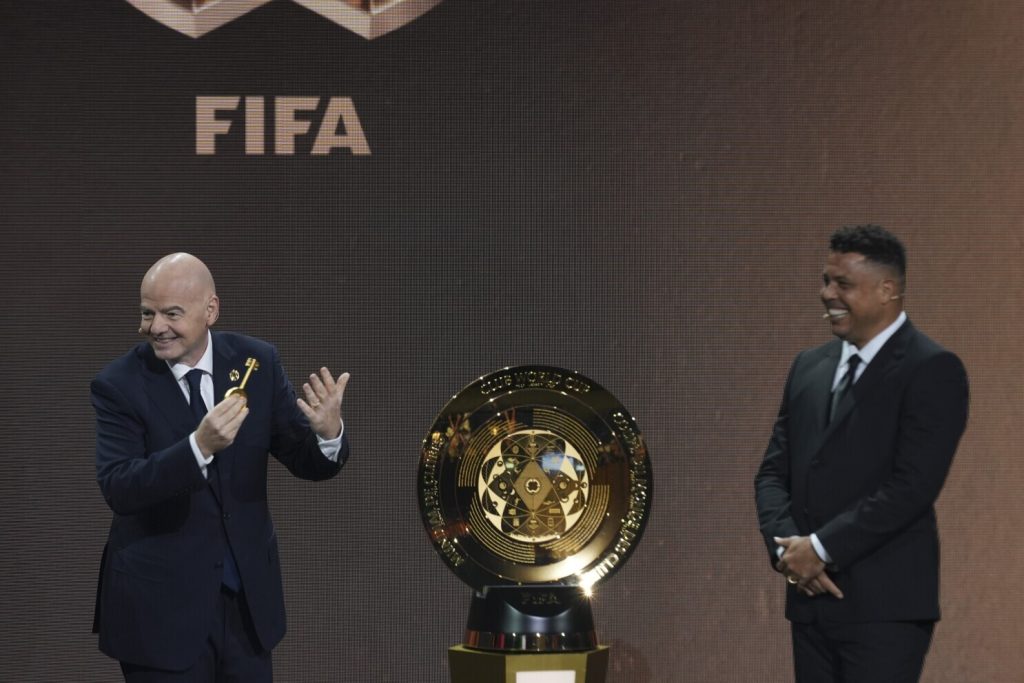
FIFA is set to revolutionize the Club World Cup by expanding it from a seven-club annual tournament to a 32-team event held every four years. The inaugural edition of this new format is scheduled for the summer of 2025 in the United States, a year ahead of the 2026 World Cup. This move is part of FIFA’s efforts to craft a more significant global club football competition. However, despite the excitement surrounding the inclusion of massive global clubs, the tournament has faced substantial criticism due to logistical and ethical concerns.
One of the primary criticisms of the 2025 Club World Cup revolves around its impact on the already overloaded football calendar. Players and clubs face increasing fixture congestion, with professional football seasons occupying most of the year and international competitions often filling the summer months. The addition of a month-long club tournament further strains players’ limited recovery time. Global football player union FIFPRO and prominent figures like Kevin de Bruyne have raised alarms about the physical toll on players, pointing out the lack of a true offseason and the risk of early-season injuries due to inadequate rest and preparation.
FIFA’s Expanded Club World Cup Sparks Excitement and Criticism Amid Player Welfare and Financial Concerns
Accusations of a Financial “Cash Grab”
Critics have accused FIFA of prioritizing financial gain over player welfare and logistical feasibility in organizing the expanded Club World Cup. Detractors label the tournament as a “cash grab,” with accusations that FIFA’s primary goal is to monetize top clubs and players while consolidating political power. High-profile figures, including Kevin de Bruyne, have voiced concerns that financial motivations outweigh the needs and voices of players. The controversy underscores growing tensions between FIFA and other footballing organizations, such as UEFA, over governance and decision-making.
FIFA’s promises of substantial financial benefits for participating clubs have also been met with skepticism. While FIFA initially suggested that each team could earn €50 million, reports indicate this figure is far from realistic. Instead, most clubs are expected to receive significantly lower payouts, especially those eliminated in the early stages. European clubs are likely to claim the lion’s share of the revenue, leaving teams from other confederations with minimal financial benefit. These disparities highlight the uneven distribution of wealth within global football and undermine claims of fostering global development.
FIFA’s Expanded Club World Cup Sparks Excitement and Criticism Amid Player Welfare and Financial Concerns
Challenges in Securing Broadcasting Revenue
The financial challenges of the expanded Club World Cup extend to broadcasting rights. FIFA has struggled to secure lucrative deals, with traditional partners like Fox offering modest bids. As a result, FIFA turned to DAZN for a global streaming partnership, reportedly valued at $1 billion—far less than the initially projected revenue. This shortfall reflects FIFA’s overestimation of the tournament’s commercial appeal and raises questions about its long-term sustainability.
The expanded Club World Cup has sparked mixed reactions, with excitement over its global scale tempered by concerns about player welfare, financial fairness, and logistical challenges. FIFA’s ambitious plans have exposed flaws in execution, including unrealistic financial projections and inadequate preparation for the strain on clubs and players. As the tournament approaches, FIFA faces pressure to address these criticisms and ensure the competition delivers on its promises of global growth and excitement for football fans worldwide. The success or failure of this venture could shape the future of international club football for years to come.
The offside rule has been one of the most debated aspects of soccer since its inception in 1863. Initially introduced in England, it penalized forwards who positioned themselves ahead of the ball when receiving a pass. However, the original rule allowed only backward passes, which stifled attacking play. This limitation led to its revision after just three years. Over the decades, the rule has undergone multiple changes, evolving into its current form. Despite these adjustments, it continues to be a source of controversy, particularly in the era of Video Assistant Refereeing (VAR). Now, a radical new proposal spearheaded by Arsène Wenger is poised to redefine the offside rule, potentially reshaping the game in unprecedented ways.
VAR has been a game-changer in modern soccer, enabling referees to make more accurate decisions on offside calls. However, the technology’s precision has also exposed the limitations of the current rule. Goals are frequently disallowed because a player’s toe, shoulder, or even a fraction of their body is deemed offside. These marginal calls, while technically correct, often feel unfair and disrupt the flow of the game. Semi-automated offside technology, recently introduced in international tournaments, has further emphasized the razor-thin margins by which players are judged. While these tools have increased fairness, they have also intensified debates over the rule’s application, highlighting the need for reform.
Arsène Wenger, the former Arsenal manager and FIFA’s Chief of Global Football Development, has proposed a groundbreaking revision to the offside rule. Known as the “Wenger Law,” this new rule suggests that a player should only be considered offside if their entire body is ahead of the last defender. Unlike the current rule, which penalizes even the smallest part of a player’s body being offside, Wenger’s proposal offers attackers more leeway. This adjustment aims to reduce the frequency of marginal offside calls, promote attacking play, and make the game more entertaining for fans.
Under the existing rule, a player is offside if any part of their body that can legally touch the ball is closer to the opponent’s goal than the ball and the second-last defender when the ball is played. This stringent interpretation has led to numerous disallowed goals, often by margins too small to perceive without technology.
The proposed rule changes the dynamics significantly. A player would only be offside if their entire body is ahead of the last defender. This means that as long as any part of their body overlaps or is level with the defender, they are considered onside. This shift would drastically reduce the number of marginal offside decisions, allowing for a more free-flowing and attacking style of play.
The Wenger Law would have profound implications for defensive tactics. Currently, teams often rely on high defensive lines to catch attackers offside. With the new rule, such strategies would become riskier, as attackers would have more room to position themselves advantageously without fear of being offside. This could force defenders to adopt deeper lines, staying closer to their goalkeeper to minimize the space behind them.
Defensive systems that emphasize pressing high up the pitch would also face challenges. Playing with a high line would become dangerous, especially against teams with fast forwards adept at exploiting space. Coaches would need to rethink their defensive strategies, balancing the need to press effectively with the risk of conceding goals due to the increased freedom for attackers.
One of the most exciting aspects of the proposed rule is its potential to increase goal-scoring opportunities. By allowing attackers more freedom to position themselves without fear of marginal offside calls, matches are likely to see a rise in goals. Currently, games average around 2.5 to 3 goals. With the Wenger Law, this figure could climb to 3.5 or even 4 goals per match.
Midfielders and playmakers would also benefit, as they would have greater success with through passes and creative plays. Strikers could make more daring runs behind the defense, knowing that the chances of their goals being disallowed for offside are reduced. This change would likely make soccer more entertaining for fans, aligning with FIFA’s broader vision of making the game more dynamic and engaging.
Several notable incidents illustrate how the new rule could have altered the outcomes of matches. In the 2014/15 El Clásico between Real Madrid and Barcelona, Gareth Bale’s goal was disallowed due to Cristiano Ronaldo being marginally offside in the buildup. Similarly, in the 2022/23 edition of the same fixture, Marco Asensio’s late goal was ruled out for being half a body ahead of the last defender, denying Real Madrid a potential victory.
Another infamous example is Mario Yepes’ disallowed goal for Colombia against Brazil in the 2014 World Cup. Despite appearing level with the last defender during the buildup, Yepes was ruled offside, nullifying what could have been a crucial equalizer. Under the proposed rule, all these goals would have stood, showcasing how the Wenger Law could change the sport’s history.
Challenges and Criticisms
Despite its potential benefits, the new rule is not without its drawbacks. Critics argue that it merely shifts the point of contention rather than eliminating it. Instead of debating whether a player’s toe or shoulder was offside, referees and VAR would now focus on whether the entire body was ahead of the defender. This could lead to similar controversies, albeit with different criteria.
Defenders are likely to face greater challenges, as they would need to adapt to a more permissive offside rule. The increased difficulty of maintaining a cohesive defensive line could lead to more mistakes and vulnerabilities. Additionally, some purists worry that the change might compromise the balance between attack and defense, fundamentally altering the nature of the game.
The International Football Association Board (IFAB) is set to discuss the proposed rule change in February 2025. Trials are already underway in lower-tier leagues in countries like Italy and Sweden, with data being collected to assess the rule’s impact on gameplay. If approved, the rule is expected to follow a phased implementation, similar to the rollout of VAR.
Youth and lower-division tournaments would likely adopt the rule first, allowing players, coaches, and officials to adapt before it is introduced at the elite level. This gradual approach ensures that any unforeseen consequences can be addressed before the rule is applied universally.
The Wenger Law represents a bold attempt to address longstanding issues with the offside rule. Reducing the frequency of marginal calls and promoting attacking play, has the potential to make soccer more exciting and enjoyable for fans. However, it also introduces new challenges, particularly for defenders and referees, who must adapt to the revised criteria.
Soccer has a history of successfully adapting to rule changes, from the major revision of the offside rule in 1925 to the introduction of VAR in 2018. While the Wenger Law is still in its experimental stages, its potential to reshape the game is undeniable. Whether it ultimately enhances the sport or creates new controversies remains to be seen, but one thing is certain: if implemented, this rule will mark a new era in soccer history.
FIFA Suspends Panama Soccer Chief Manuel Arias Over Fat-Shaming Remark About Marta Cox
FIFA has imposed a six-month suspension on Manuel Arias, the president of Panama’s soccer federation, for making derogatory comments about Marta Cox, a star midfielder on the national women’s soccer team. Arias’ comments, made after Cox criticized the setup of the team, referred to her as “fat.”
The comments came shortly after Panama’s women’s team qualified for the 2023 Women’s World Cup. FIFA’s decision follows the backlash over Arias’ offensive remark and highlights the ongoing challenges of combating body shaming and discrimination in sports.
The Suspension Details
According to a statement released by the Panamanian soccer federation, Arias is banned until July 14, 2025, during which time he will be prohibited from participating in any federated soccer-related activities.
This suspension will keep him from attending key matches involving the national men’s team, including Nations League games in March, two 2026 World Cup qualifiers in June, and the Gold Cup tournament scheduled for June and July 2025. Arias’ absence from these events could impact the administration of Panamanian soccer at a critical time for the national teams.
FIFA Suspends Panama Soccer Chief Manuel Arias Over Fat-Shaming Remark About Marta Cox
Arias acknowledged his actions in a post on social media, expressing regret for his “unfortunate language” used in March 2024. He admitted that his comments were inappropriate and should never have been made. His apology, however, did little to mitigate the consequences of his actions, which have now resulted in the suspension. Arias’ statement reflects an attempt to move past the incident but also highlights the significant public backlash that followed his fat-shaming comment.
Interim Leadership of the Federation
In light of Arias’ suspension, the Panamanian soccer federation has appointed vice president Fernando Arce as the interim leader. Arce will oversee the operations of the federation until the suspension expires in mid-2025. The federation also recognized that there is still much work to be done in improving women’s soccer within the country. This move is intended to stabilize the leadership while the focus shifts to the development of the women’s game, especially following the controversy that has clouded the sport in Panama.
Marta Cox, the player at the center of the controversy, recently signed with Turkish club Fenerbahce after a stint in Mexico with Xolos. Cox, 27, gained international attention during the 2023 Women’s World Cup, where she scored in a 6-3 loss to France in the group stage. Her performance on the global stage continues to elevate her status as a prominent figure in women’s soccer. Despite the controversy surrounding her, Cox’s focus remains on her career, and she continues to push forward as a key player in international women’s soccer.
Grupo Televisa Settles $95 Million FIFA Bribery Lawsuit, Highlighting Governance Failures
Grupo Televisa S.A.B., a major Mexican media company, recently settled a shareholder lawsuit for $95 million, resolving allegations of bribery involving FIFA officials. Filed with the U.S. Securities and Exchange Commission (SEC) on November 23, 2022, the settlement allocates $21.5 million from the company itself and the remainder from its directors’ and officers’ insurance policies. The allegations revolved around bribery to secure broadcasting rights for four World Cup tournaments, a key revenue source for the company. This agreement concludes over four years of litigation initiated in May 2018.
In 2022, Grupo Televisa merged with U.S.-based Univision, creating a $4.8 billion media powerhouse that now dominates Spanish-language television across North America, reaching an audience of 100 million. Besides media holdings, Grupo Televisa also owns Club América, a professional football club in Liga MX. The lawsuit, considered the largest U.S.-based shareholder class action involving a Mexican publicly traded company, highlights significant governance issues within Grupo Televisa, specifically failures in internal financial controls.
Grupo Televisa Settles $95 Million FIFA Bribery Lawsuit, Highlighting Governance Failures
Shareholders accused Televisa of orchestrating a bribery scheme with Torneos y Competencias SA, an Argentine marketing company, to gain FIFA’s broadcasting rights. The company allegedly concealed illegal payments and made misleading public statements about its compliance policies and financial controls. Revelations of material weaknesses in its internal controls, disclosed in January 2018, further substantiated the claims. Shareholders argued these actions led to artificially inflated stock prices, causing financial losses when the truth came to light.
This case is one among several recent high-profile ESG (environmental, social, and governance) failures where companies have been implicated in bribery scandals. Comparable cases include Petrobras’ $3 billion settlement in 2018 and Walmart’s $160 million settlement in 2019. Grupo Televisa’s settlement addresses claims against its Chairman Emilio-Fernando Azcárraga Jean III and Board Member Salvi Rafael Folch Viadero, following the court’s rejection of an appeal by the defendants.
The settlement awaits court approval, which is expected after the conclusion of the 2022 FIFA World Cup in Qatar. ISS Securities Class Action Services will continue monitoring developments, keeping stakeholders informed. This case underscores the growing scrutiny of corporate governance and the financial repercussions of ethical lapses, serving as a stark reminder for companies to prioritize robust compliance frameworks.
The selection of Qatar to host the FIFA World Cup marked a historic first for the Arab world, celebrated enthusiastically in Doha. However, from the outset in 2010, the decision drew widespread criticism over Qatar’s extreme summer heat, allegations of corruption in FIFA’s decision-making process, and concerns about human rights abuses. As the tournament approaches, Qatar is set to welcome over a million fans and billions of viewers, but the controversies remain unresolved, with even former FIFA President Sepp Blatter labeling the choice a mistake.
Qatar faced immense logistical challenges as the smallest nation to host the World Cup, lacking the necessary infrastructure when it won the bid. Massive construction projects were undertaken, relying heavily on migrant workers who comprise over 90% of the workforce. Reports highlighted exploitative and dangerous working conditions, with investigations estimating thousands of migrant worker deaths since 2010. Qatar disputes these numbers, stating only a handful of deaths were directly related to World Cup construction.
To address these concerns, Qatar introduced workers’ welfare standards in 2014, claiming improvements in labor conditions. However, advocacy groups argue that enforcement is inconsistent. Human rights organizations have called for a $440 million fund to compensate workers and their families for abuses endured during World Cup preparations, raising ethical questions for fans and players benefiting from these projects.
Qatar’s World Cup Sparks Celebration and Controversy Over Labor, Rights, and Corruption
In addition to labor issues, Qatar’s broader human rights record has come under scrutiny, particularly regarding LGBTQ rights and gender equality. Laws criminalizing homosexuality and extramarital sex, coupled with reports of harassment and conversion therapy, have drawn criticism. While Qatari officials assert that all visitors are welcome during the World Cup, they emphasize the importance of respecting local cultural norms, a stance condemned by international human rights groups.
Allegations of bribery and corruption have marred Qatar’s selection as a host. Many FIFA officials involved in the 2010 decision have faced bans or legal action for corruption, including former FIFA President Sepp Blatter. Although a 2014 FIFA inquiry cleared Qatar of impropriety, the selection process remains deeply controversial, with claims of backroom deals and political maneuvering influencing the outcome.
The tournament was rescheduled to November to avoid Qatar’s oppressive summer heat, disrupting professional soccer leagues worldwide. The change compressed league schedules, leaving players with minimal preparation and recovery time. A FIFPRO report warned of heightened risks of injury due to the packed schedule and intense demands, raising concerns about player health and performance.
Qatar presents the World Cup as an opportunity to showcase its culture and modernize its infrastructure. The government emphasizes progress in labor protections and its investment in world-class facilities. Critics, however, continue to spotlight systemic issues and question the long-term impact of these reforms on workers and human rights.
As the World Cup kicks off, Qatar’s hosting of the event symbolizes both a regional milestone and a source of global controversy. The tournament has brought attention to critical issues of labor rights, corruption, and social justice, leaving a complex legacy that extends far beyond the soccer field.
The FIFA World Cup, the pinnacle of football, has been the stage for countless moments that have captured the world’s imagination. Since its inception in 1930, the tournament has produced unforgettable events, ranging from miraculous goals to controversial incidents. Some moments have become part of football folklore, while others have sparked debates that continue to this day. From Diego Maradona’s incredible performances to unforgettable upsets, the World Cup is a treasure trove of history. Here, we highlight the top 10 most iconic moments that define the tournament’s legacy, showcasing both the beauty and the drama of the beautiful game.
1. Maradona’s ‘Hand of God’ Against England (1986 World Cup)
Another infamous moment from the 1986 World Cup was Diego Maradona’s “Hand of God” goal against England. Maradona used his left hand to punch the ball into the net, and the referee, despite protests from the English players, allowed the goal to stand. The incident became one of the most debated in football history, with Maradona claiming that it was the “Hand of God.” This controversial moment only added to Maradona’s legendary status in football, as he later scored his “Goal of the Century” in the same match, further cementing his place in World Cup lore.
Maradona’s ‘Hand of God’ Against England (1986 World Cup)
2. Gordon Banks’ ‘Save of the Century’ (1970 World Cup)
The 1970 World Cup in Mexico was filled with incredible moments, but none were as jaw-dropping as Gordon Banks’ miraculous save against Pele. During a group-stage match between England and Brazil, Pele rose to meet a cross from Jairzinho, directing a powerful header toward goal. With Pele convinced it was a certain goal, Banks made an impossible save, stretching backward to flick the ball over the crossbar with his fingertips. This moment, dubbed the “Save of the Century,” is etched in football history, showcasing not just Banks’ incredible reflexes but also the fierce competition between two footballing giants.
Gordon Banks’ ‘Save of the Century’ (1970 World Cup)
3. USA Defeats England: The Miracle on Grass (1950 World Cup)
The 1950 World Cup in Brazil saw one of the biggest upsets in football history when the United States, fielding a team of mostly semi-professional players, defeated England 1-0 in a group-stage match. At the time, England was widely regarded as the best team in the world, and a win over the U.S. seemed like a mere formality. However, Joe Gaetjens scored the only goal of the match in the 58th minute, securing a famous victory. Despite minimal preparation and little international recognition, the U.S. pulled off a miracle that would forever be remembered as the “Miracle on Grass.”
USA Defeats England: The Miracle on Grass (1950 World Cup)
4. Teenager Pele Scores a Brace in the 1958 World Cup Final
At just 17 years old, Pele made his World Cup debut in 1958, and by the end of the tournament, he had cemented his place as one of the game’s greatest players. In the final against Sweden, Pele scored twice, including a stunning volley that showcased his technical brilliance. His first goal, a controlled chest trap followed by a deft volley, was an example of his exceptional skill, while his second came in the 89th minute off a cross from Mario Zagalo. Brazil’s 5-2 victory secured their first World Cup, and Pele became the youngest-ever World Cup finalist and winner, signaling the rise of a football legend.
Teenager Pele Scores a Brace in the 1958 World Cup Final
5. Maradona’s ‘Goal of the Century’ (1986 World Cup)
One of the most iconic moments in World Cup history came in the 1986 quarterfinal between Argentina and England. Diego Maradona, already the protagonist of the infamous “Hand of God” goal, followed up with what is widely regarded as the “Goal of the Century.” In the 55th minute, Maradona picked up the ball in his own half and embarked on a mesmerizing run that saw him evade five England defenders, including goalkeeper Peter Shilton, before slotting the ball into the net. The 11-second dribble remains a testament to Maradona’s brilliance, and it secured Argentina’s 2-0 victory, propelling them toward their second World Cup title.
Maradona’s ‘Goal of the Century’ (1986 World Cup)
6. Suarez Sees Red but Has the Last Laugh (2010 World Cup)
In the 2010 World Cup quarterfinal, Uruguay and Ghana faced off in a match filled with drama and controversy. With the game tied 1-1 after 90 minutes, Ghana had a chance to win in the final moments of extra time when Asamoah Gyan stepped up to take a penalty. However, in a moment of desperation, Luis Suarez handled the ball on the goal line to prevent a certain goal. Suarez was sent off, but Ghana’s Gyan missed the penalty, and Uruguay triumphed in a penalty shootout. Suarez’s controversial actions became one of the most talked-about moments of the tournament, and while Ghana was heartbroken, Uruguay advanced to the semifinals.
Suarez Sees Red but Has the Last Laugh (2010 World Cup)
7. Zidane Headbutts Materazzi (2006 World Cup Final)
Zinedine Zidane’s headbutt to Marco Materazzi in the 2006 World Cup final shocked the world and marred what would have been a perfect conclusion to the French legend’s career. In the final against Italy, Zidane scored a brilliant header to equalize for France, but in extra time, the match took an unexpected turn. After an exchange of words with Materazzi, Zidane, in a moment of frustration, headbutted the Italian defender in the chest. Zidane was sent off with a red card, and Italy went on to win the match 5-3 in a penalty shootout. Zidane’s unexpected exit became one of the most controversial moments in World Cup history.
Zidane Headbutts Materazzi (2006 World Cup Final)
8. Kuwait’s Prince Stops Play (1982 World Cup)
The 1982 World Cup in Spain witnessed one of the most bizarre incidents in World Cup history, involving the Prince of Kuwait. During a group-stage match between Kuwait and France, the Kuwait players stopped playing after a controversial goal was scored. They mistakenly thought the referee had blown the whistle for a foul, but in reality, the sound had come from the crowd. The Kuwaiti players protested, and Prince Fahad Al-Ahmed Al-Jaber Al-Sabah stormed onto the field to confront the referee. After a lengthy discussion, the referee surprisingly disallowed the goal. Though the decision was later overturned, it added an unforgettable twist to a World Cup filled with drama.
Kuwait’s Prince Stops Play (1982 World Cup)
9. The World Sees the Cruyff Turn (1974 World Cup)
The 1974 World Cup introduced the world to one of football’s most iconic moves: the Cruyff Turn. In a group-stage match against Sweden, Dutch legend Johan Cruyff displayed a move that would revolutionize dribbling. With Swedish defender Jan Olsson tightly marking him, Cruyff feigned a pass and dragged the ball behind his standing leg, turning 180 degrees to escape his marker. The simplicity and effectiveness of the move made it one of the most imitated skills in football, and it remains a testament to Cruyff’s genius on the field, as well as the innovative spirit of the Netherlands’ “Total Football” philosophy.
The World Sees the Cruyff Turn (1974 World Cup)
10. Cameroon Shocks Argentina (1990 World Cup)
In the 1990 World Cup in Italy, defending champions Argentina, led by the legendary Diego Maradona, faced Cameroon in their opening match. Argentina was heavily favored, but in one of the most shocking upsets in World Cup history, Cameroon triumphed 1-0. The match was marked by aggressive play, with Cameroon finishing with only nine players after two red cards. The match’s defining moment came in the 67th minute, when Francois Omam-Biyik scored the only goal of the game, sending shockwaves through the footballing world. Cameroon’s victory was a historic moment for African football and marked the arrival of African teams on the global stage.
Cameroon Shocks Argentina (1990 World Cup)
The FIFA World Cup has provided some of the most unforgettable moments in sports history, where talent, drama, and controversy converge. From Pele’s rise to Maradona’s brilliance, to upsets like the USA’s victory over England and the shock of Cameroon’s triumph, the World Cup has been a stage for the world’s best to showcase their skills and for history to be made. These moments are woven into the fabric of football’s legacy, offering a constant reminder of the passion and unpredictability that make the World Cup the greatest show on earth.
A sign of the soccer association FIFA is seen at the headquarters
On Wednesday, FIFA officially named Saudi Arabia as the host for the 2034 World Cup in men’s soccer. This decision marks the biggest achievement for Saudi Arabia in its major investment in global sports, driven by Crown Prince Mohammed bin Salman.
Saudi Arabia was the only country to submit a bid, and the announcement was met with applause from more than 200 FIFA member federations during an online meeting hosted by FIFA President Gianni Infantino. “The vote of the congress is loud and clear,” said Infantino, who asked officials to clap their hands at head level to show their support.
At the same time, FIFA also approved the selection of Spain, Portugal, and Morocco to co-host the 2030 World Cup. This joint bid involves Argentina, Paraguay, and Uruguay, each hosting part of the 104 matches. This decision will mark the centenary of the first World Cup held in Uruguay in 1930.
The process leading to Saudi Arabia’s victory has been mostly unclear. FIFA helped guide the bid toward Saudi Arabia, with no competition and limited questions, while human rights groups have raised concerns about the safety of migrant workers.
Prince Mohammed bin Salman and Gianni Infantiono before the match
Prince Mohammed said in a statement, “We look forward to hosting an exceptional and unprecedented edition of the FIFA World Cup by harnessing our strengths and capabilities to bring joy to football fans around the world.”
FIFA and Saudi officials hope hosting the World Cup will lead to positive changes, including more rights and freedoms for women. Infantino called the World Cup “a unique catalyst for positive social change and unity.” He expressed trust that Saudi Arabia would address any issues and deliver a tournament that meets the world’s expectations.
However, rights groups have criticized FIFA’s decision, calling it a “reckless” choice to approve Saudi Arabia without public assurances. The Football Supporters Europe group said it was “the day football truly lost its mind.” FIFA fast-tracked the bidding process after accepting a three-continent hosting plan for the 2030 World Cup.
This meant only Asian and Oceanian countries could bid for 2034, and FIFA gave countries less than four weeks to submit bids. Saudi Arabia was the only one to respond.
This decision has sparked concerns about Saudi labor laws and the treatment of workers from South Asia who will help build 15 stadiums, as well as hotels and transportation networks for the 104-match tournament. Amnesty International warned that hosting the World Cup in Saudi Arabia “will put many lives at risk.”
Spain players celebrates with the team coach Luis de la Fuente
One planned stadium will be 350 meters above the ground in Neom, a futuristic city that does not yet exist. Another stadium is set to be atop a 200-meter cliff near Riyadh. During the bidding campaign, FIFA accepted limited scrutiny of Saudi Arabia’s human rights record, which was widely criticized this year at the United Nations.
Saudi and international rights groups and activists warned FIFA that it had not learned the lessons of Qatar’s controversial preparations to host the 2022 World Cup. “At every stage of this bidding process, FIFA has shown its commitment to human rights to be a sham,” said Steve Cockburn, Amnesty International’s Head of Labor Rights and Sport.
Saudi Arabia plans to spend tens of billions of dollars on projects related to the World Cup as part of Crown Prince Mohammed bin Salman’s Vision 2030, which aims to modernize Saudi society and its economy.
A key part of this plan involves spending on sports through the $900 billion Public Investment Fund, which the prince oversees. Critics have accused the country of using the World Cup to improve its image, calling it “sportswashing.”
The prince, known as MBS, has built a close working relationship with Infantino since 2017, aligning with FIFA rather than challenging the system as he did with the LIV Golf project. This smooth partnership has led to limited opposition from soccer officials, though some women international players have raised concerns.
Saudi Arabia’s influence in international soccer is expected to grow. FIFA has created a new sponsorship category for Saudi state oil company Aramco, and Saudi funding will support the 2025 Club World Cup in the United States.
The trophy is displayed on the pitch ahead of the World Cup Final
The Saudi government has also made deals with soccer bodies, including North America’s CONCACAF, and several FIFA member federations have signed agreements with Saudi counterparts.
In the past two years, Saudi clubs have spent large amounts of money on top players like Cristiano Ronaldo, Neymar, and Karim Benzema, injecting hundreds of millions of dollars into European soccer.
The timing of the 2034 World Cup could be influenced by Saudi Arabia’s growing power in soccer. The tournament’s dates might be affected by the holy month of Ramadan, which runs until mid-December, and Riyadh hosting the Asian Games.
January 2034 could be a possible option, as the International Olympic Committee sees no issue with clashing with the Winter Olympics, which starts in Salt Lake City on February 10, 2034. The IOC also has a commercial deal with Saudi Arabia to host the new Esports Olympics.
The beautiful game of football where passion runs high and the rewards are tremendous. A victory on the football field can turn you into an overnight sensation. However, winning a trophy in football means your name will be etched in the history books forever. That is the legacy of football trophies. There are many football tournaments all over the world. Some are extremely famous and with that fame comes a price which makes these trophies some of the most expensive in the whole wide world. Let us delve into the top 10 most expensive football trophies in the world and find out the legacies and stories each of them hold.
Also Read: Top 10 Biggest Football Stadium In The World
La Liga -$29,000
The Campeonato Nacional de Liga de Primera División, or La Liga as known to English-speaking countries, is one of the oldest tournaments in the world. Established over 93 years ago, it serves as the top division of Spanish football. It isn’t much known about the current history of the trophy. However, it is supposedly valued at $29000 and made of silver and wood. It has weighed around 18 kgs and is 70 cm in height. Being one of the oldest leagues in the world, the prestige and importance of the trophy cannot be overstated.
La Liga
UEFA Champions League – $50,000
The showcase of the immortals. UEFA Champions League is an annual tournament played among the best clubs in Europe. Qualification is based on the top standings in the respective leagues across the whole of Europe. Playing in the UEFA Champions League is considered as one of the greatest club achievements in European football. The tournament began in the year of 1955, with the inaugural champions being Real Madrid. Over the years, the tournament has garnered its prestige due to the quality of football it offers. Specifically, a grand stage for world-class players to compete against each other.
UEFA Champions League
The inaugural trophy was permanently awarded to Real Madrid in 1967. The current iteration of the trophy was forged in 1967 for 10000 Swiss Francs. Which amounts to around $50000 by today’s standards certainly places it among the Top 10 Most Expensive Football Trophies in the world. Made of pure silver, weighing 11 kgs and 74 cm in height, it is one of the most recognizable trophies in the world today.
Bundesliga Meisterschale – $57,102
The Bundesliga Meisterschale has been awarded to the top-tier German Football League champions since 1949. Literal translation of Meisterschale means champions’ bowl, it is considered as the highest honor in the German Football hierarchy. It was forged in the year 1949 and was first awarded to VfR Mannheim. Made of pure gold, silver, and tourmaline, the Meisterschale is estimated to be around $57,102. Currently, Bayern Munich have the distinction of holding being the league champions 32 times in their history, out of which they have been awarded the Mesiterschale 31 times. Before the Meisterschale, there was another trophy by the name of Viktoria, which went missing in 1944 during the second world war. Since then, the Meisterschale took its place and remains in contention to this day.
Bundesliga Meisterschale
Serie A trophy – $66,000
The Coppa Campioni d’Italia was forged in 1960 by sculptor Ettore Calvelli. Awarded to the champions of the Serie A, it remains one of the most prestigious and coveted trophy in world football. Made out of blue sodalite base and a gold ring in the middle, the trophy is the perfect representation of the legacy, importance, and the quality of the players involved in the tournament. The trophy is considered among the costliest in European football and thus is among the top 10 most expensive football trophies in the world. The passion and desire the Italian fans encompass is visible in the creation of this trophy. Valued at around $66,000, it certainly upholds the year-old traditions captured within the trophy.
Serie A trophy
DFB-Pokal trophy – $108,000
Standing at 52 cm tall and weighing 6.2 kgs, the DFB-Pokal trophies is one of the most coveted prizes in German football. Bayern Munich has the distinction of lifting the gem-studded trophy 18 times in their history. The trophy comprises of 42 gems in total comprising of tourmalines, rock crystals, and nephrites and is forged in pure sterling silver. It was created by Wilhelm Nagel in 1965 and is valued at $108,000. The trophy was recently expanded in 2021 in order to accommodate the names of future winners. This year the final will be played among SC Freiburg and RB Leipzig. A match to certainly look forward to for the fans of Bundesliga.
DFB-Pokal trophy
Africa Cup of Nations trophy – $150,000
There has been 3 iterations of the Africa Cup of Nations trophy. The current iteration of the trophy is a gold-plated cup that was forged in Italy in the year of 2001. Considered as the most precious and well-known trophy for African football, the gold-plated trophy is currently valued at $150,000. It is among one of the most expensive trophies in world football, and it stands to occasion of the fact that the passion the African football fans possess. Moreover, Egypt hold the distinction of being the only nation to win the competition 3 times and thus have a full-size replica awarded to them.
Africa Cup of Nations trophy
The FA Cup trophy – $1,180,000
Now we are getting into the absurd territory in regards to value of trophies. The FA Cup tournament is considered as the oldest national competition to exist in the world. Founded in 1871, the first trophy which was awarded cost $25.68 to make. At the time, it was considered a huge amount. However, the trophy was stolen in 1895, and a replica was used in place of the original.
The FA Cup trophy
In 1911, the trophy got a redesign, and the design is still currently in use till this day. The second iteration of the trophy standing at 61.5 cm in height, was manufactured by Fattorini’s of Bradford. The trophy was further replicated two more times. Once in 1992 and the other in 2014. The 2014 iteration of the trophy was forged using 925 sterling silver and weighed around 6.3 kgs. The height of the trophy has remained the same since 1911. It was evaluated to be around a whopping $1,180,000 in 2016.
UEFA Europa League trophy – $4.5 million
According to UEFA, the Europa League trophy is the heaviest among all UEFA trophies. It weighs around 15 kgs in weight and has a height of 65 cm. The Europa League trophy is awarded to the winners tournament, which is the second-tier competition of European club football, ranking below the UEFA Champions League. The trophy is made of silver and placed on a yellow marble plinth. It was designed and forged in Italy by the Bertoni workshop. Evaluated at an impressive $4.5 million, the Europa league trophy certainly is much more expensive than its first-tier competition, the UEFA Champions League.
UEFA Europa League trophy
Copa Libertadores trophy – $8.5 million
The Argentinian league trophy, Copa Libertadores, is simply astonishing. Valued at around $8.5 million, the trophy is made out of sterling silver, bronze, and hardwood plywood. . Originally, the trophy was not made to last a long time since there were only space for 18 names to be added to the trophy. However, the legacy and passion of South American football withstood the test of time, and the tournament is now one of the most important events in South American football. Similar to the UEFA Champions League, the tournament invites the champions and runner-ups of the respective football leagues across South America.
Copa Libertadores trophy
FIFA World Cup trophy – $20,000,000
Valued at a massive $20 million, the FIFA World Cup trophy is the most expensive trophy in the world. The trophy weighs around 6.175 kgs and stands at 36.5 cm tall. Made out of 18 carat gold, the structure of the trophy is made hollow. This is due to the fact that a solid trophy would weigh near about 80kgs and would be difficult to lift. The trophy was manufactured by the famed Bertoni workshop in Italy.
FIFA World Cup trophy
The trophy has undergone a few modifications over the years, like the addition of a plate on the bottom side of the trophy, which would contain the engravings of the winners. The winners name are engraved in their native language. Undoubtedly the most prestigious trophy in the footballing world. The price tag surprisingly defines the importance and legacy of the tournament it portrays.
FIFA World Cup always tends to be a special occasion for most people. With the Qatar 2022 World Cup just around the corner, FIFA, in association with Adidas, released the picture for the Qatar 2022 World Cup Official Match ball on their Twitter. The match ball has always been an integral part of the tournament as it encapsulates the true nature of game along with the culture of the host country. FIFA World Cup balls have always held the prestige of being a monumental part of the whole tournament. Even after the conclusion of the tournament, the FIFA World Cup balls carry on the legacy and memories of the event to future generations.
Ever since the inception of the tournament in 1930, the world cup has seen its fair share of memorable World Cup specific balls. With that in mind, let us take a stroll down memory lane and look at some of the World Cup footballs which were in use.
The first-ever football World Cup was held in Uruguay in 1930. There was no official ball allotted at the time, and thus a very controversial decision was made to swap out the footballs at halftime to give both the teams a fair chance with their own footballs. The finalists were Uruguay and Argentina in the 1930 World Cup. Argentina’s ball was called the ‘Tiento‘, and Uruguay used T-Model‘, which was a bit heavier. This proved to be a crucial factor in deciding the victor. With Argentina leading at halftime with a score of 2-1, the introduction of Uruguay’s football after halftime prompted the hosts to fire three goals. Thus they became the inaugural World Champions.
The footballs which started it all. Tiento and T-Model.
Federale 102 (1934)
Italy took the responsibility to host the 2nd World Cup, and they came up with the Federale 102 ball for the tournament. Over the course of 4 years, they were able to understand the importance of not switching the balls at halftime and instead stuck to a single ball throughout the competition. However, there were concerns raised regarding the quality of the ball. The finished product at the time depended on the ball inflater and how well versed was he at his craft. The more skillful they were, the more round the ball turned out to be. Unfortunately, the quality was not up to the mark, and they were often replaced by a backup ball which was made by the English people. Before each match, both the captains had the choice to select the match ball, and more often than not, the English ball was picked. This did not matter though, for the Italians as they marched on to win their first World Cup.
The official ball for the 2nd World Cup.
Allen (1938)
The third World Cup, which was held in France, saw a Paris-based manufacturer Allen be given the responsibility to produce the match ball for the tournament. This also marked the first time a company was able to brand their product. The design of the ball was more or less the same as the Federale 102, however the edges of the panels on the Allen ball were much more rounded than the Federale. This allowed for a more smooth and rounded finish for the ball. However, everything again depended on the skill of the inflater. As a result, there were still back up balls used to counter poor quality balls. The smooth design however would allow future manufacturers to adopt and work on perfecting the design of the ball in the years to come.
Allen was the official football for the 3rd World Cup held in France.
DUPLO T (1950)
With the unfortunate event of World War II, the tournament was put on hold for 12 years. That allowed the technology to advance almost a decade. In 1950, when the tournament was back in action, a complete overhaul of the ball was made which eliminated the requirement of a skilled inflater. The official balls were now made using closed leather sphere without laces, which was then protected by an outer layer of leather sheets. It was named the Duplo T.This allowed for the ball to be inflated with the help of a pump and needle through a tiny valve. Thus marking the first time a ball was used uniformly across all matches in the tournament.
Duplo T made a complete overhaul of the ball was made which eliminated the requirement of a skilled inflater.
Swiss World Champion (1954)
640
The next FIFA World Cup ball was manufactured by a Swiss company named Kost Sport. The event was held in Switzerland, and this time, they made another important innovation to the ball, which would define it for decades. The Kost Sport Company came up with the idea of an 18-panel structure, with the panels interlocking together in a zig-zag pattern. They named the ball the Swiss World Champion, and it had bright yellow color.
Top Star (1958)
For the 1958 World Cup, which was held in Sweden, FIFA decided to invite manufacturers from all over. They decided to put up a competition to select the official match ball. This was the first time FIFA decided to hold a competition to decide on the official match ball. They received 102 entries, out of which they selected the ball made by a company from Angelholm. They named the winning ball Top Star, and it was the first ball to be used in the World Cup to have 24 panels.
A competition was held to decide on the official match ball, and after 102 entries, Top Star was selected.
Crack (1962)
The Crack was a bold name at the time, and it certainly gained the notoriety of being one of the most divisive FIFA World Cup balls to be ever made for the tournament. The ball was created for the 1962 World Cup by a Chilean company Custodio Zamora. The unique feature of the ball which made it infamous was the fact that all 18 panels of the ball were of irregular shape. These probably were the reason for the poor performance of the ball as the players encountered abrasion, brittleness, and waterlogging. Nevertheless, one of the most important innovations to come out of the ball was the latex inflation valve, which was adopted for later iterations.
Crack was another ball which did not have a favorable review.
Challenge 4-Star (1966)
In 1966, the World Cup was hosted by England, which was considered as the birthplace of football. The English Football Association took a double-blind peer review process to select the FIFA World Cup Balls. Out of the 111 sent in that year, they managed to narrow it down to 8 final balls. In the end, Challenge 4-Star ball which was made by a racket-sports equipment company named Slazenger. The ball had 25 panels instead of the usual 24 and was used throughout the tournament.
Challenge 4-Star
Telstar (1970)
Telstar marked the arrival of Adidas into the foray. They were assigned with the task to create a ball which would improve the visibility of the ball on television. The 1970 FIFA World Cup also marked the first time it was set to be broadcast worldwide. Thus Adidas came up with the iconic black-and-white panels, which would ease the viewing experience from home. The Telstar was a 32-panel ball, and it the design became synonymous with football even to this day.
The iconic Telstar.
Telstar Durlast (1974)
Such was the brilliance of the first Telstar, Adidas decided it would be wise to leave the design alone. No need to fix what isn’t broken. This philosophy guided Adidas, who were now the official partners of FIFA, thus, they held the right to leave their branding on the ball. They applied a thicker coat of ‘Durlast’, and the FIFA World Cup ball was renamed as Telstar Durlast. The ball again was a huge hit worldwide and became iconic over a period of time.
With a thicker coat of ‘Durlast’ and the FIFA World Cup, ball was renamed as Telstar Durlast.
Tango (1978)
The 1978 FIFA World Cup saw the introduction of Tango. It was named after a famous dance in Argentina. Adidas were riding the success of Telstar balls, and they hit it out of the park once again. The FIFA World Cup ball had an all-white base with black triangles arranged in a circular pattern, creating a certain effect when the ball rolled across the grass. Once again a huge hit and easily became one of the most recognizable ball in the world at the time. However, the ball also marked an important phase in the history of FIFA World Cup balls. The Tango marked the end for the leather ball, which was soon set to be discontinued.
The success of Telstar was followed by Tango, which also was a extremely profitable for Adidas.
Tango Espana (1982)
With the success of Tango, they again followed their philosophy of not fixing which isn’t broken and introduced an improved version of the Tango, named Tango Espana. The improvements included water-resistance, durability of the ball, and no longer needing the coating of Durlast. This was mainly because the seams were welded together. The later years saw them adding a water-repellent polyurethane layer which would completely do away with requiring leather for the ball.
With an extra thick layer of Durlast, Adidas chose to stick with practically the same ball as its previous iteration.
Azteca (1986)
In 1986, the World Cup was hosted by Mexico, and they named the ball Azteca, which was named after the Aztec architecture and murals in the country; the design of the ball also honored the Aztec architecture in the country. The ball marked an important moment in the history of World Cup balls. The Azteca was the first synthetic ball to be used at a World Cup. They also started the tradition of designing the balls after the culture and heritage of the host country.. Something they follow it to this day. Synthetic balls proved to be a massive success as they did not require the use of animal leather, they were able to hold their shape after being kicked, they were extensively more water-resistant, and at the end of the day, a much more durable option than leather balls.
The design of the Azteca ball looked to honor the Aztec architecture in the country of Mexico, where the 1986 World Cup was being held.
Etrusco Unico (1990)
The Etrusco Unico paid homage to the Etruscans, which was a civilization of ancient Italy. The design was reminiscent of the Azteca and Tango, however, the triads were decorated with the heads of Etruscan lions. They continued their trend of using a fully synthetic ball. The ball had improved water resistance, durability, and rebound. It was also the first of its kind to receive an internal layer of black polyurethane foam.
With a design was reminiscent of the Azteca and Tango, the Etrusco Unico paid homage to the Etruscans, which was a civilization of ancient Italy.
Questra (1994)
The United States of America were the hosts of the 1994 FIFA World Cup, with Adidas introducing the official match ball to be the Questra. They went with the design owing to the space exploration programs (most notably the Apollo 11 mission) at the time and made a space travel-themed ball to honor that event. They improved the ball with a layer of polystyrene foam on the outside of the ball. This innovation apparently made the ball feel softer and easier to control, all the while increasing its speed at the same time. This was proven to be somewhat true as the tournament saw some of the most spectacular goals and was one of the highest-scoring World Cup.
The design was a homage to the space exploration programs (most notably the Apollo 11 mission) at the time.
Tricolore (1998)
Adidas kept up with their idea of reusing the design they started with Tango, however, blue, white, and red flairs were added to signify the French national flag.
The Tricolore was introduced to the world for the 1998 World Cup held in France. The Tango triads were present however, Adidas gave it a red, blue, and white flair to honor the French flag. The ball was more or less the same, with slight improvements in the foam layer that was introduced in the 1994 Questra. Other than the slight improvements, the addition of color to the ball gave it a new and refreshing feel, which felt long overdue after a series of similar designs. The next World Cup changed all of that,
Fevernova (2002)
The 2002 World Cup is iconic for various reasons. The Brazilian dream team, the surprising performance of South Korea, the dominating performance from the German team, and the Fevernova ball. The design of the ball at the time was unlike anything we had seen. A futuristic look for the ball with green, gold, and red triangular patterns made the ball feel special. They also made the ball feel lighter, according to the players than previous models. Adidas also claimed that the ball was their most precise ball they have ever made. It was a hit among the players and fans alike. Also, personally, the Fevernova holds a nostalgic place for the 90s kids growing up. It is still considered to this day as the best FIFA World Cup ball ever made, and we are not here to argue that.
The Fevernova. No explanation required. One of the best footballs in the history of FIFA World Cup.
Teamgeist (2006)
The 2006 World Cup was held in Germany, and the ball was named Teamgeist, which means team spirit. This was a tribute to hosts Germany’s tradition of collective strength over individual brilliance. Adidas had now begun experimenting with their designs. The success of Fevernova ignited their passion for a much more inspiring looking ball. The ball had a 14-panel design with fewer seams. This allowed the ball to be more rounder, consistent, and it was able to perform more consistently regardless of where it was hit. However, due to the over emphasis of making it rounder and smoother, it gave the ball a ‘knuckleball’ effect when the ball was airborne. This made the ball difficult and unpredictable at times.
The Teamgiest meant team spirit which encapsulated the German emphasis on teamwork.
Jabulani (2010)
Continuing their fascination of making the ball more round and consistent, Adidas produced an anomaly in the form of the Jabulani. The decreased the number of panels to 8 in order to make it smooth and round. However, that only increased the unpredictability of the ball tenfold. The goalkeepers were up in arms against this travesty. Famous players like Iker Casillas and Julio Cesar termed the ball as horrible and cheap. All aspects of the game was affected by the horrible design of the ball. Later it was found that the smooth surface allowed the ball to move much more in the air than intended making it unpredictable. With the conclusion of the 2010 World Cup, people were happy to put the ball to rest and never to speak again.
Quite infamous due to its excessive roundness. Jabulani remains one of the worst footballs to be made for the World Cup.
Brazuca (2014)
Adidas went back to the drawing board after their horrible time with the Jabulani. This time they rectified all their mistakes and stuck to the basics. There was a reduction of the number of panels on the ball with just 6 panels however the ball went on to perform adequately, and it was sent to players and teams worldwide to have extensive feedback before the tournament. After they were happy with the feedback, they launched the ball with the name Brazuca, which is a slang word for ‘Brazilian’. According to FIFA, the word was used to describe national pride or anything “Brazilianish”. The ball aimed to capture the spirit and passion of Brazilians when it comes to football, and it was the perfect name to honor that.
Brazuca is slang for all things Brazillian. No better way to capture the passion of Brazil when it comes to football.
Telstar 18 (2018)
Adidas were back at it again, with Telstar 18 bringing back the old classic, which made them iconic, however, with a modern twist in the design. The design of the ball comprised of a gradient, mosaic effect with black sections all over. A hint of gold was present throughout the ball, and the Adidas logo along with the name Telstar printed on the white surface of the ball. It had 6 panels arranged in a such a manner that it gave an effect of the classic 32-panel Telstar ball when it rolled. However, there were some criticisms regarding the grip of the ball. Goalkeepers David de Gea and Pepe Reina branded the ball as “strange”. However, the overall consensus of the ball was mediocre.
The Telstar 18. A re-imagining of the iconic Telstar.
Al Rihla (2022)
Al Rihla is poised to be the next FIFA World Cup ball for the 2022 Qatar World Cup. The ball design comprises of three stripes accompanying the logo of Adidas without the naming. A chic design, to say the least. Also, Adidas claims to have tested the ball numerous times and made it the fastest in flight’ ball in the history of the World Cup. We still need to hold out till the start of the tournament to have a conclusive decision as to how the football fares compared to others, but going by design, it looks pretty impressive for the tournament.
Al Rihla will be the official ball for the FIFA 2022 World Cup.